 Apr, 14 2026
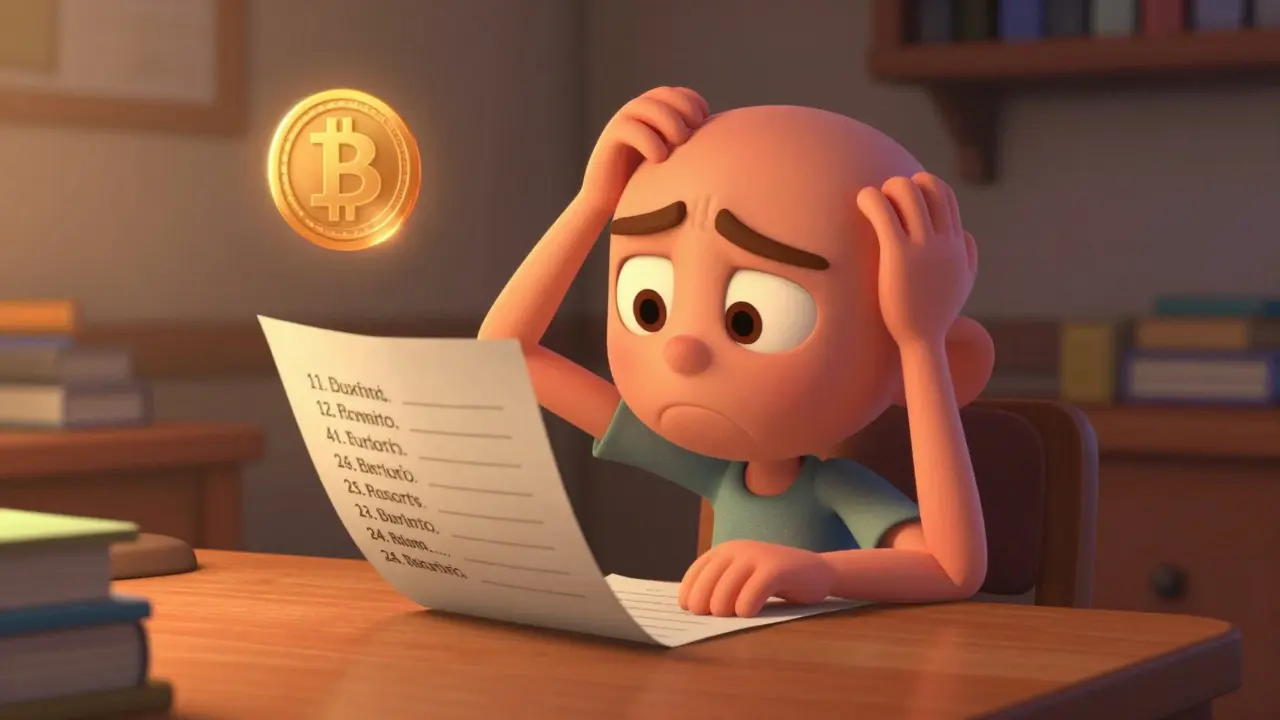
Imagine spending hours securing your digital assets, only to realize you're staring at a piece of paper with 24 words on it and wondering, "Did I really need all of these?" or "Is my 12-word backup actually a ticking time bomb?" This is the classic dilemma of the seed phrase is a human-readable sequence of words that acts as a master key to recover a cryptocurrency wallet. Whether you're using a Ledger, Trezor, or a software wallet, you've likely encountered this choice. The truth is, while more words sound like more security, the real danger usually isn't the length of the phrase-it's how you handle it.
The Technical Breakdown: What's Under the Hood?
To understand the difference, we have to look at BIP39, which is the Bitcoin Improvement Proposal that defines how to convert a random number (entropy) into a mnemonic seed phrase. Both 12- and 24-word phrases pull from the same dictionary of 2,048 specific words. The difference is simply how much raw randomness, or entropy, is baked into the key.
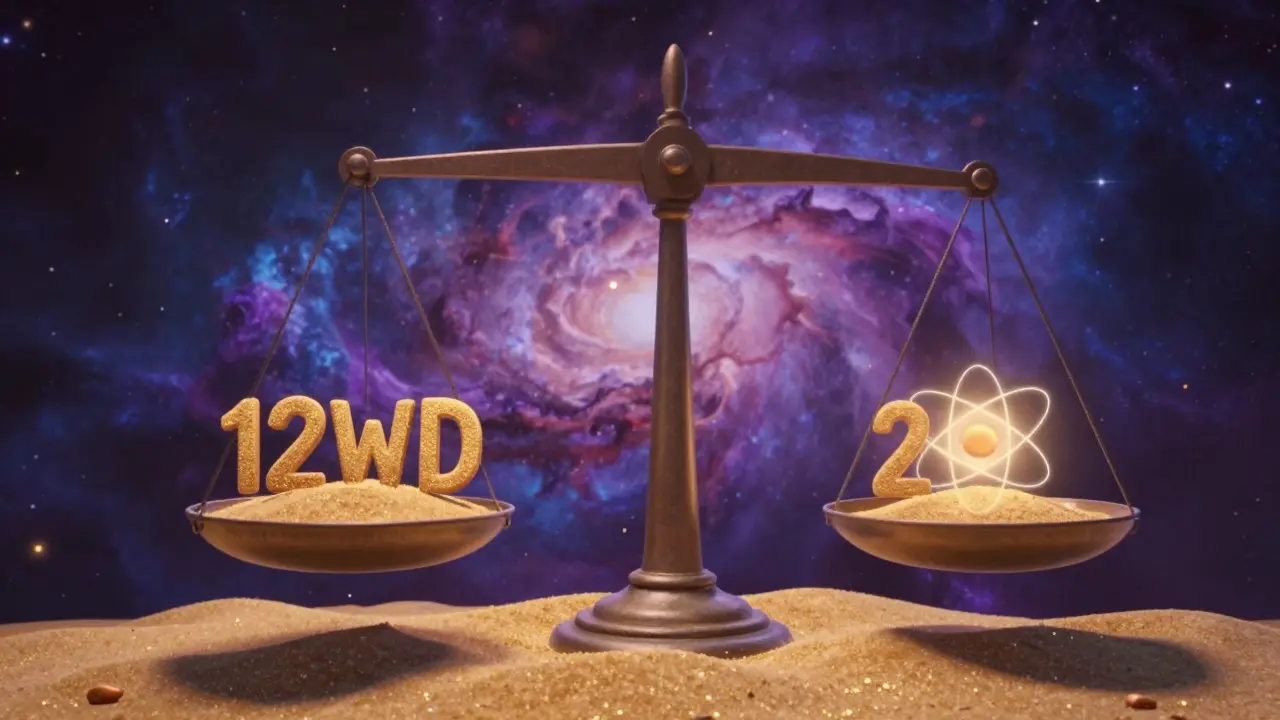
A 12-word phrase uses 128 bits of entropy plus a 4-bit checksum. This creates about 3.4 × 10^38 possible combinations. A 24-word phrase bumps that up to 256 bits of entropy and an 8-bit checksum, resulting in roughly 1.2 × 10^77 combinations. To put that in perspective, guessing a 12-word phrase is like trying to find one specific grain of sand among all the beaches on Earth. Guessing a 24-word phrase is like trying to find one specific atom in the entire observable universe. Does that sound like a huge difference? Mathematically, yes. Practically? Not so much.
| Feature | 12-Word Phrase | 24-Word Phrase |
|---|---|---|
| Entropy (Randomness) | 128 bits | 256 bits |
| Total Data (inc. Checksum) | 132 bits | 264 bits |
| Possible Combinations | ~3.4 × 10^38 | ~1.2 × 10^77 |
| Backup Effort | Lower (faster to write) | Higher (more room for error) |
| Primary Use Case | Retail / Everyday Users | Institutional / High-Value |
Is a 12-Word Phrase "Enough"?
There is a loud debate among cryptographers about this. On one side, experts like Adam Back and the team at Foundation Devices argue that 12 words are plenty. Their reasoning is simple: the underlying private keys used by the secp256k1 elliptic curve (the math Bitcoin uses) have a security strength of 128 bits. Since a 12-word seed provides exactly 128 bits of entropy, you aren't actually gaining any "extra" protection by adding more words. The lock on your door is only as strong as its weakest point; if the curve can be broken at 2^128 operations, having a 256-bit seed doesn't stop that.
However, not everyone agrees. Cryptographer Wei Dai has pointed out that 128-bit seeds could theoretically face "collision risks" as the number of global wallets grows into the hundreds of millions. While the odds are still astronomical, institutional players like Coinbase Custody and Fidelity Digital Assets stick to 24-word phrases to eliminate even the slightest theoretical risk. They aren't worried about a hacker guessing the phrase; they're worried about a mathematical fluke in a world with billions of keys.
The Hidden Risk: Human Error vs. Brute Force
Here is the irony: by trying to make your wallet "more secure" with 24 words, you might actually be making it easier to lose your funds. The biggest threat to your crypto isn't a supercomputer guessing your seed-it's you misspelling a word or losing a piece of paper.
Data from user communities on Reddit and forums show that 12-word phrases are significantly easier to manage. In usability studies for the Electrum wallet, users finished their backups 23% faster with 12 words and made far fewer mistakes during verification. Think about it: writing down 24 words requires double the effort. If you accidentally write "apple" instead of "apply" on word number 19, and you don't have a digital copy, your funds are gone. Some users have reported losing coins specifically because they botched the transcription of a longer 24-word phrase during stressful situations.
Furthermore, phishing attacks don't care how many words you have. According to CryptoScamDB, theft rates are nearly identical for both 12- and 24-word phrases. If you enter your seed into a fake website, it doesn't matter if it's 12 words or 100; the attacker has the keys to the castle.
When Should You Actually Choose 24 Words?
Despite the risks of human error, there is one scenario where 24 words are a lifesaver: poor entropy sources. If you are generating your own seed using something like dice rolls, and your method is slightly flawed or "unfair," a 24-word phrase provides a massive safety net. Because you have 256 bits of entropy to start with, even a flawed generation process usually leaves you with over 100 bits of actual security. With a 12-word seed, a bad dice roll could drop your security below a level that is actually guessable by a powerful computer.
If you are managing millions of dollars for a company or are a "whale" with a massive portfolio, the peace of mind provided by 24 words outweighs the extra five minutes of writing. But for the average person holding a few thousand dollars, the marginal security gain is almost invisible compared to the very real risk of writing a word incorrectly.
The Gold Standard: Storage Over Length
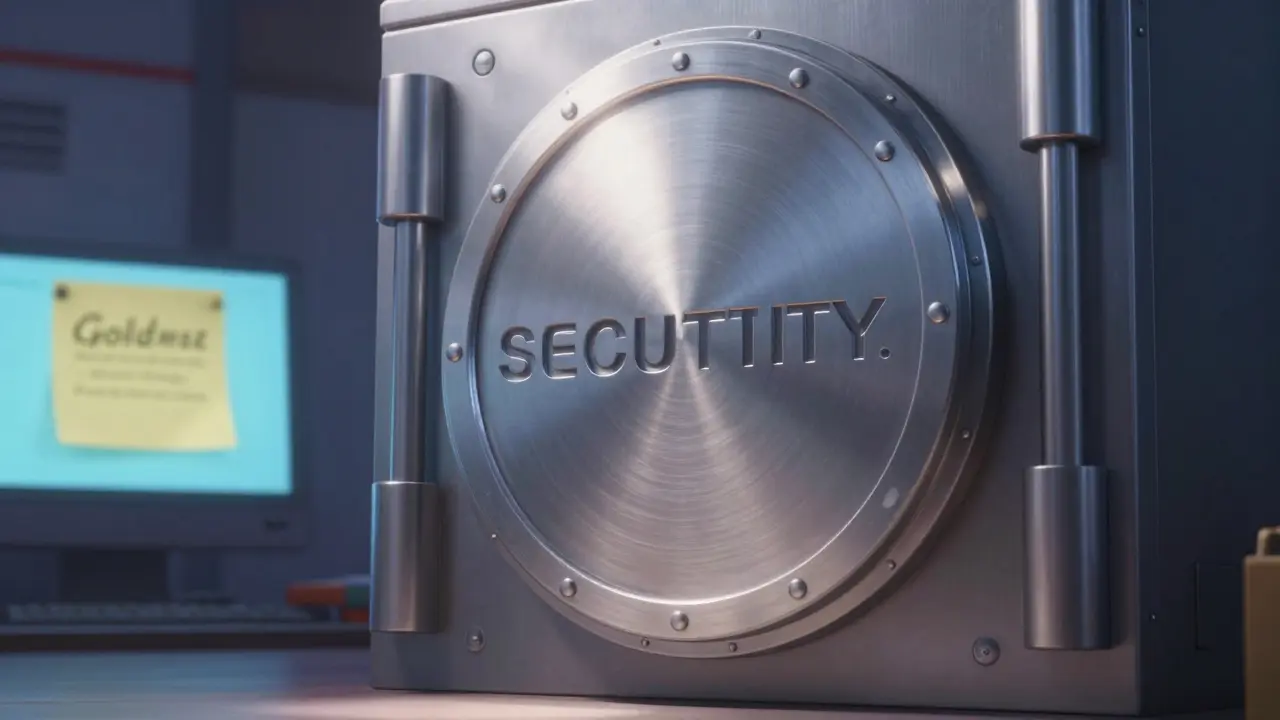
If you're still undecided, stop worrying about the number of words and start worrying about where those words live. A 12-word phrase etched into a stainless steel plate and locked in a bank vault is infinitely more secure than a 24-word phrase written on a Post-it note stuck to your monitor.
Industry leaders like Ledger and Blockstream emphasize that physical security is the only metric that truly matters now. We've reached a point in cryptography where the "math" is solved. Whether you use 12, 18, or 24 words, the cryptographic wall is high enough to keep out any current computer on Earth. Your job isn't to build a higher wall; it's to make sure you don't leave the key under the doormat.
Can I convert my 12-word seed to a 24-word seed?
No, you cannot simply "add" words to an existing seed. Seed phrases are generated from a specific amount of entropy at the start. To change your seed length, you would need to create a brand new wallet with the desired length and manually transfer your assets from the old wallet to the new one.
Are 12-word seeds vulnerable to quantum computers?
While quantum computing is a theoretical threat to the secp256k1 curve, moving from 12 to 24 words doesn't solve the underlying vulnerability of the elliptic curve itself. If a quantum computer can break the private key, it doesn't matter how the seed was generated. The industry will likely move toward "quantum-resistant" signatures rather than just longer seeds.
Which hardware wallets support both options?
Many modern wallets now allow user-configurable entropy. For example, BitBox02 and Coldcard allow you to choose between 12, 18, or 24 words. Older models often had a fixed default (like the Ledger Nano S often defaulting to 24), but the trend is moving toward giving the user the choice based on their balance and risk tolerance.
Is it safer to memorize my seed phrase instead of writing it down?
Memorizing a 12-word phrase is possible for some, but incredibly risky. Human memory is fallible; a single forgotten word makes the rest of the phrase useless. Writing it down on physical, non-digital media (like steel) is always recommended over relying on memory alone.
What happens if I lose just one word of my 24-word phrase?
If you are missing one word but know the others, it is computationally possible to recover the wallet because the BIP39 checksum will tell you which word is correct. However, if you lose 3 or 4 words, the number of combinations becomes too large to brute-force, and your funds will likely be lost forever.
Next Steps for Your Security
- For Beginners: Stick with 12 words. It's easier to record accurately and provides more than enough security for most portfolios.
- For Power Users: If you use a custom entropy source (like dice), go with 24 words to protect against potential biases in your randomness.
- For Everyone: Invest in a steel backup tool. Paper burns and ink fades; steel lasts forever.
- The Golden Rule: Never, ever enter your seed phrase into a computer, phone, or website-regardless of whether it's 12 or 24 words long.
Prachi Bhadarge
April 14, 2026 AT 09:54Oh wow, imagine actually thinking 24 words makes you a crypto god when you'll probably just spill coffee on the paper anyway. 🙄
Shannon Kelly Smith
April 16, 2026 AT 09:48Spot on! 🎯 I always tell my students that the human element is the weakest link in the chain. Let's all focus on the steel backups! 🛡️✨
Shantal Sanjur
April 16, 2026 AT 11:50Please, as if the 'mathematical fluke' thing isn't just a cover for the backdoors they've already built into the BIP39 standard. They want you to feel safe while the elites just bypass the entropy entirely. It's all a game to keep the retail traders compliant. 🙄
Kevin Lư
April 18, 2026 AT 06:25Totally agree with the part about the Post-it notes. I've seen people do that and it's just wild. Like, do you even want your money gone? lol
Vicky Duffala
April 19, 2026 AT 08:33This is a great reminder that security is a philosophy, not just a checklist. We strive for the balance between absolute lockdown and actual usability. 🌟
Alex Long
April 20, 2026 AT 05:58Too long. Just use 12 words and hope for the best.
Gillian Kent
April 21, 2026 AT 16:53i tried to do the 24 word thing and legit wrote two words wrong. it was such a mess tryin to fix it later. stick to the short ones guys
Adam Mann
April 22, 2026 AT 03:01I really appreciate how this explains the technical side without making it feel like you need a PhD in mathematics just to save your coins, because at the end of the day, we're all just trying to learn how to navigate this wild new digital frontier together, and if we can help each other avoid the common pitfalls like transcription errors, we all win in the long run! It's just so important to keep the community supportive while we figure this out.
Andrew Southgate
April 22, 2026 AT 05:19For anyone struggling with the choice, just remember that the 128-bit security of a 12-word seed is effectively the same as the security of the private key itself, meaning you aren't leaving a gap in your defense. I've helped a few people transition to hardware wallets recently, and the biggest hurdle is always the fear of the 'wrong' length, but once you realize that the physical storage-like a high-quality steel plate-is where the real battle is won, the anxiety usually disappears. Just take your time, double-check your words, and maybe have a friend witness the process without actually seeing the words to ensure you didn't skip a line.
Trudy Morse
April 23, 2026 AT 18:37Entropy is just a measure of disorder. The real disorder is people's lack of basic common sense.
Ian Chait
April 25, 2026 AT 07:48Proper cryptograhpy is dead and the state is probably already runnin quantum rigs to crack these seeds while the sheeple argue over 12 vs 24. Absolute madness.
Sean Douglas
April 26, 2026 AT 22:00The sheer, unadulterated agony of realizing you've transcribed a 24-word phrase incorrectly is a special kind of hell that I wouldn't wish upon my worst enemy!
Gaurav Undirwade
April 28, 2026 AT 17:24It is imperative that individuals exercise the utmost discipline in their record-keeping. Sloth in the transcription process is a moral failing that leads to the inevitable loss of assets.
Karen Mogollon Gutierrez
April 30, 2026 AT 06:36I find the suggestion that 12 words are 'sufficient' to be utterly scandalous given the volatility of the market and the sophistication of modern adversaries!
Tracy Sperandio
April 30, 2026 AT 08:35Let's ignite some passion for proper security! Whether it's 12 or 24, the real victory is taking ownership of your financial destiny with a steel backup!
Chintu Parikh
May 1, 2026 AT 10:39I concur wholeheartedly with the emphasis on physical security. It would be most prudent for all participants to adopt the steel plate methodology to ensure longevity.
Mike Kempenich
May 2, 2026 AT 02:17I'm confident that most of us will eventually settle on 12 words since the risk of a mistake is just too high to ignore, but it's great we have options for the whales.