 Dec, 21 2025
When the Taliban returned to power in Afghanistan in August 2021, few expected that within a year, the country would go from being one of the world’s fastest adopters of cryptocurrency to enforcing one of the harshest bans anywhere. By August 2022, the Taliban government declared all cryptocurrency activities haram-forbidden under Islamic law. Trading, mining, even holding Bitcoin or USDT became illegal. The message was clear: no digital money. No exceptions.
But here’s the twist: people still use it. Every day.
Just months before the ban, Afghanistan had climbed to 20th place globally in crypto adoption, according to Chainalysis. That’s not a small number. It means tens of thousands of Afghans-many without bank accounts, without stable income, without access to international aid-had turned to Bitcoin and stablecoins to survive. Then, in a single policy shift, the government turned their lifeline into a crime.
Why Did the Taliban Ban Crypto?
The Taliban didn’t ban crypto because it was technically dangerous. They banned it because it was spiritually dangerous.
In their interpretation of Sharia law, cryptocurrencies are gambling. They have no intrinsic value. No gold backing. No government guarantee. To them, that’s not money-it’s speculation. And speculation is haram. They compared it to betting at a casino. The same reasoning they use to ban stock trading or futures contracts.
But the real reason? Control.
After the U.S. and allies froze Afghanistan’s $9 billion in foreign reserves, the economy collapsed. Banks shut down. Salaries stopped. Aid dried up. Suddenly, people needed a way to send money across borders, buy food, pay for medicine. Cryptocurrency became that way. Peer-to-peer transactions through WhatsApp and Telegram bypassed the Taliban’s grip on the financial system. That’s not just inconvenient for a regime that wants total control-it’s a threat.
So they cracked down. In August 2022, they issued a formal decree: all crypto trading is banned. Exchanges must shut down. Miners must stop. Anyone caught using Bitcoin could be arrested.
The Immediate Impact: Crypto Use Plunged-But Didn’t Disappear
The ban worked-at first.
Monthly crypto transaction volume in Afghanistan dropped from $15 million in early 2022 to just $80,000 by November 2022. That’s a 99% drop. Officially, crypto was dead.
But here’s what the numbers don’t show: the underground market didn’t die. It adapted.
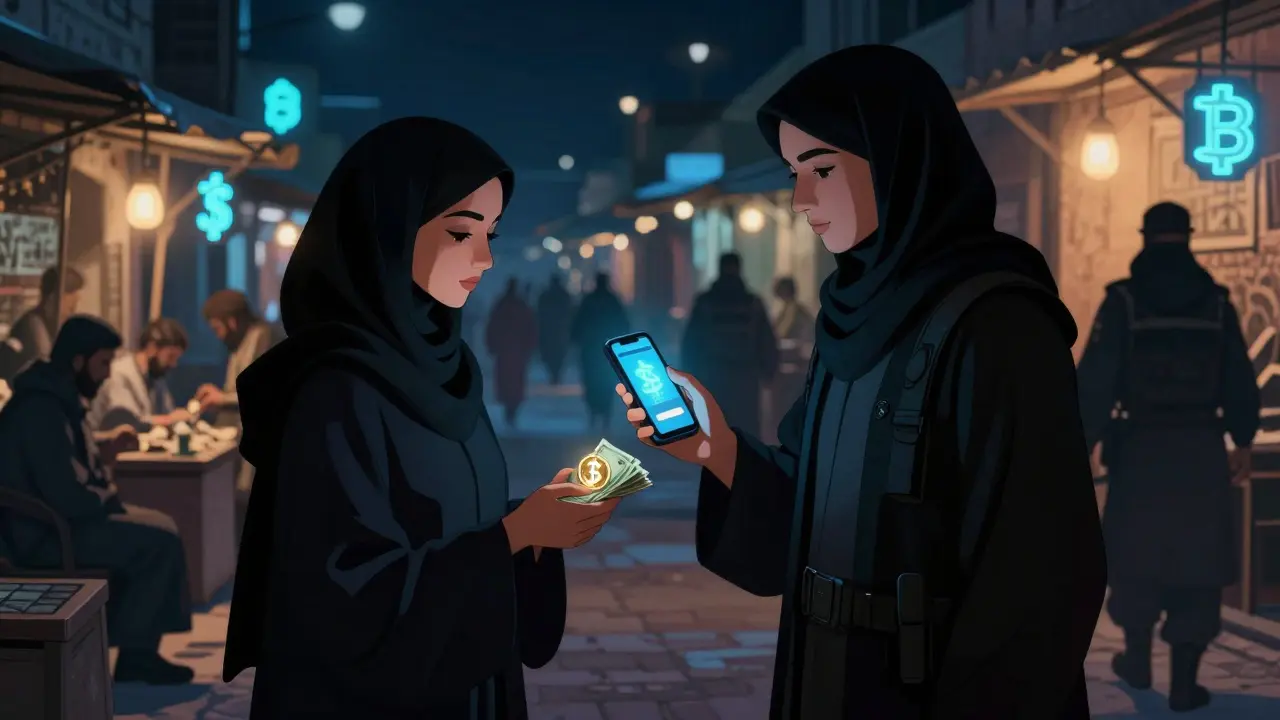
People stopped using exchanges. They stopped advertising. They moved to encrypted apps, cash-in-hand trades in marketplaces, and trusted networks of friends and family. USDT, the tethered stablecoin pegged to the U.S. dollar, became the silent currency of survival. Why? Because it’s stable. You can buy 10 kilograms of flour for 50 USDT. You can send it to your sister in Pakistan without a bank. You don’t need ID. You don’t need permission.
And the Taliban? They can’t stop it.
They don’t have the bandwidth to monitor every WhatsApp chat. They don’t have the tech to trace every blockchain transaction. They arrest a few traders here and there-but the demand is too high. The need is too urgent. People are starving. And crypto is the only thing keeping them alive.
Who’s Still Using Crypto-and Why?
It’s not just men. It’s not just tech-savvy youth.
Women are using it more than ever.
Under Taliban rule, women are banned from universities, barred from most jobs, and restricted from traveling without a male guardian. Many can’t even open a bank account. But they can buy Bitcoin. They can receive USDT from relatives overseas. They can pay for online courses or send money to a sister in another city.
Roya Mahboob, an Afghan tech entrepreneur now based abroad, runs a nonprofit that teaches women digital literacy. She says: “Bitcoin gives them a hope of financial freedom.”
Her organization works through hidden networks. Women use burner phones. They trade in secret. They store crypto on hardware wallets hidden under floorboards. For them, crypto isn’t an investment. It’s a lifeline.
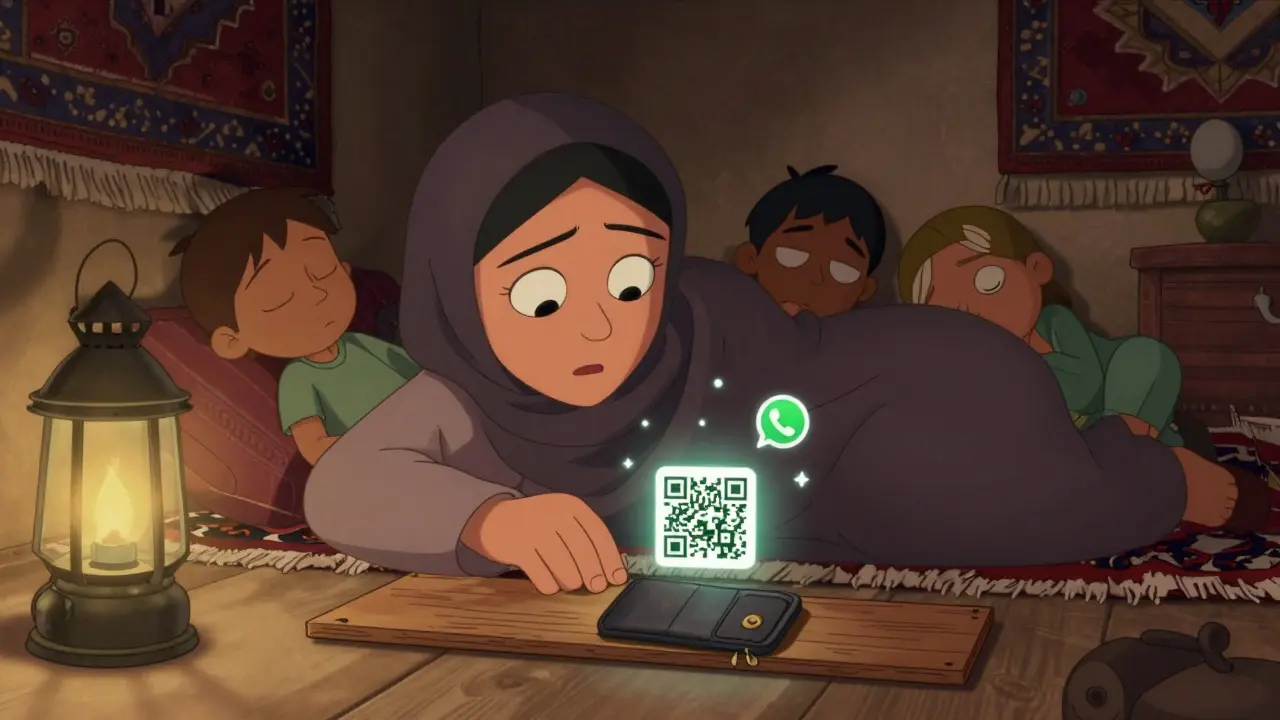
Even widows and single mothers are turning to crypto. Without a husband’s name on official documents, they’re locked out of the formal economy. But with a phone and a QR code, they can receive remittances from cousins in Turkey or Germany. They can buy groceries. They can pay for medicine.
The Human Cost of the Ban
The United Nations estimated in 2022 that 97% of Afghans would live below the poverty line. That’s nearly the entire population. Food is available in markets-but no one has money to buy it. The Afghan currency, the afghani, lost 70% of its value in 2022. Inflation hit 40%. Wages vanished.
Before the ban, crypto was a bridge. After the ban, that bridge was torn down-but people kept crossing anyway.
Some risk arrest. Others risk starvation.
There are stories of mothers selling their jewelry to buy USDT. Of students using crypto to pay for online education from Pakistan. Of doctors receiving payments from international NGOs through private crypto channels because the official aid system collapsed.
And yet, the Taliban still insists the ban is working. They claim they’ve “cleaned up” the financial system. But the truth? The system they’re trying to protect-the one controlled by warlords, corrupt officials, and foreign donors-is the one that failed. Crypto is the only thing that didn’t.
Where Does Afghanistan Stand Globally?
As of 2025, Afghanistan is one of only nine countries in the world that still outright ban Bitcoin. The rest? They’ve changed their minds.
Morocco lifted its ban in 2024. Nigeria, once hostile, now taxes crypto. Even China, which cracked down hard in 2021, now allows blockchain research and is testing its own digital yuan.
Afghanistan is an outlier. A relic.
And it’s getting lonelier. Countries that once followed its lead-like Iraq and Egypt-are now debating legalization. Experts say the global trend is clear: regulation, not prohibition. Taxation, not arrests. Oversight, not silence.
But Afghanistan doesn’t care about global trends. It cares about control. And right now, control means crushing anything that can’t be monitored, taxed, or stopped.
The Future: Can the Ban Last?
It won’t.
Not because the Taliban will change their minds. But because people won’t stop.
Crypto isn’t a fad. It’s not a luxury. In Afghanistan, it’s infrastructure. It’s the new electricity grid. The new banking system. The new way to survive.
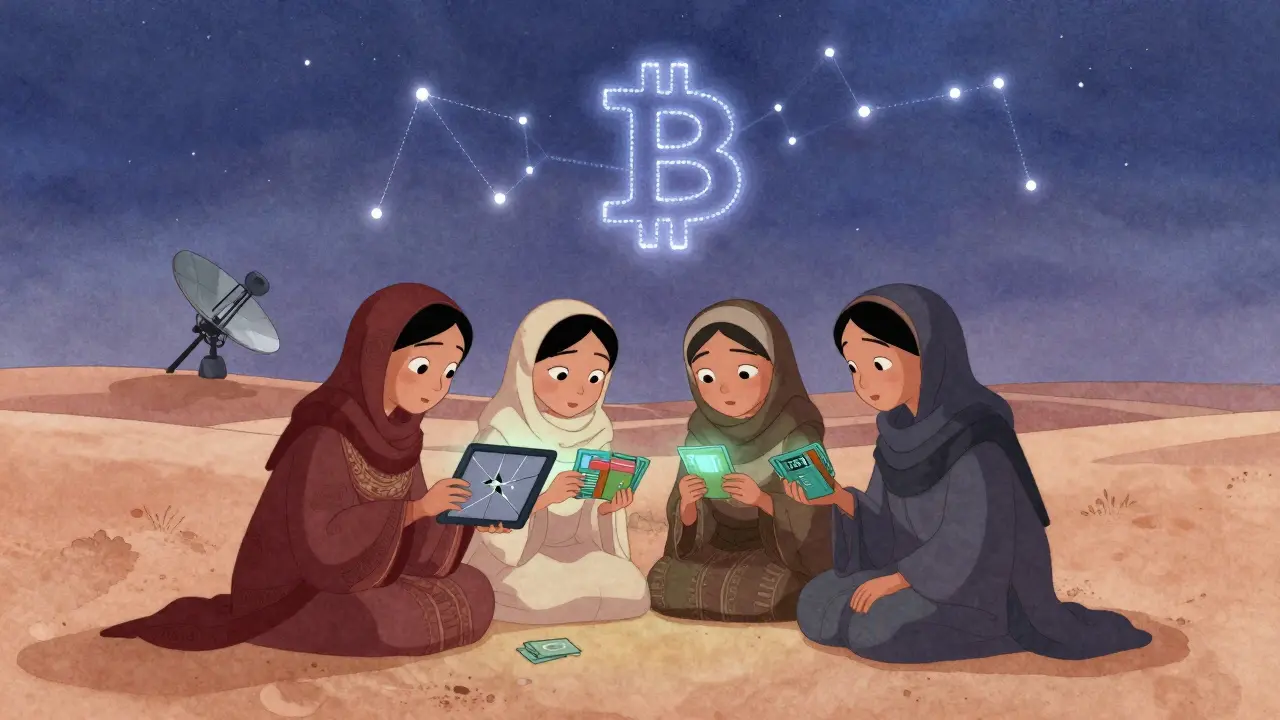
Even with high illiteracy rates, unreliable power, and no internet access for 80% of the population, crypto finds a way. People use SMS-based wallets. They trade cash for crypto in back alleys. They use satellite internet to send funds when the local network is down.
The Taliban can ban it. They can arrest traders. They can shut down internet cafes. But they can’t ban hunger. They can’t ban a mother’s need to feed her child. They can’t ban hope.
And as long as that hope exists, crypto will exist too.
By 2025, underground crypto transactions in Afghanistan are estimated to be back at $5 million per month-up from $80,000 in 2022. That’s not growth. That’s resilience.
The ban was meant to end crypto. Instead, it turned it into a revolution.
Brian Martitsch
December 21, 2025 AT 22:36vaibhav pushilkar
December 22, 2025 AT 23:59SHEFFIN ANTONY
December 23, 2025 AT 11:39Dan Dellechiaie
December 24, 2025 AT 12:23Jordan Renaud
December 24, 2025 AT 17:25Lloyd Yang
December 26, 2025 AT 04:27Sybille Wernheim
December 26, 2025 AT 23:45Rachel McDonald
December 28, 2025 AT 20:29Sophia Wade
December 28, 2025 AT 21:16Cathy Bounchareune
December 30, 2025 AT 06:05Sarah Glaser
January 1, 2026 AT 04:30Jake Mepham
January 2, 2026 AT 06:49Charles Freitas
January 2, 2026 AT 16:49Craig Fraser
January 4, 2026 AT 11:51Vyas Koduvayur
January 6, 2026 AT 00:32Jordan Renaud
January 6, 2026 AT 05:02