 Mar, 9 2026
Canada doesn’t treat Bitcoin or Ethereum like cash. The Canada Revenue Agency (CRA) sees cryptocurrency as property-not currency. That simple shift changes everything when it comes to taxes. If you’ve bought, sold, traded, mined, or even received crypto as a gift, you’re likely dealing with taxes. And if you haven’t reported it yet, you’re not alone. In 2025, over 3.2 million Canadians owned crypto, but nearly 30% admitted they didn’t fully report their transactions. The CRA is catching up-and they’re not playing around.
How Crypto Is Taxed in Canada
The CRA has been clear since 2013: cryptocurrency is a commodity. That means every time you dispose of it-whether you sell it for dollars, trade it for another coin, or use it to buy coffee-you’ve triggered a taxable event. The tax you pay depends on whether the CRA classifies your activity as a capital gain or business income.
Most people fall into the capital gains category. This applies if you bought crypto as an investment and held it for a while before selling. Only 50% of your profit is taxable. So if you bought $1,000 worth of Bitcoin and sold it for $3,000, your gain is $2,000. But only $1,000 gets added to your income. That’s a big difference compared to business income, where 100% of the profit is taxed.
Business income applies if you’re actively trading, mining, staking, or running a crypto-related business. If you’re buying and selling crypto daily, treating it like a job, or earning rewards from staking, the CRA will likely see this as income-not investment. That means every dollar of profit is fully taxable at your marginal rate.
What Counts as a Taxable Event?
Not every crypto action triggers a tax bill. Here’s what does:
- Selling crypto for Canadian dollars (CAD)
- Trading one cryptocurrency for another (e.g., Bitcoin for Ethereum)
- Using crypto to buy goods or services (yes, even a pizza)
- Receiving crypto as payment for work or services
- Earning rewards from staking, mining, or liquidity pools
- Receiving airdrops if you didn’t actively opt-in (the CRA still counts them)
And here’s what doesn’t:
- Buying crypto with CAD
- Holding crypto without selling (yes, HODLing is tax-free)
- Transferring crypto between wallets you own
- Receiving crypto as a gift (unless you later sell it)
That last one trips up a lot of people. If your friend sends you 0.5 ETH as a birthday gift, you don’t owe tax then. But if you turn around and sell it for $1,500, you now owe tax on the gain from the time you received it.
Capital Gains vs. Business Income: Which One Are You?
The CRA doesn’t just guess. They look at your behavior. If you’re trading once a year, you’re probably a capital gains taxpayer. If you’re trading daily, using leverage, or running a crypto-related business, you’re likely in the business income bucket.
Here’s how it breaks down:
| Factor | Capital Gains | Business Income |
|---|---|---|
| Typical Activity | Long-term holding, occasional trades | Daily trading, frequent swaps, active mining |
| Taxable Portion | 50% of profit | 100% of profit |
| Reporting Form | Schedule 3 (T1) | T2125 (Business Income) |
| Loss Offset | Can offset capital gains only | Can offset other business income |
| Example | Bought ETH in 2021, sold in 2025 | Staked SOL daily, earned $12,000 in rewards |
Here’s a real example: Sarah bought $5,000 in Solana in 2022. In 2025, she sold it for $18,000. Her capital gain is $13,000. Only $6,500 is taxable. If she were a day trader making $13,000 in profits this year, the full $13,000 would be taxed as income. That’s a difference of thousands in tax.
What Are the Tax Rates?
Canada uses a progressive tax system. Your crypto income gets added to your other income and taxed at your marginal rate. In 2025, the federal rates are:
- 15% on the first $55,867
- 20.5% on income between $55,868 and $111,733
- 26% on income between $111,734 and $173,205
- 29% on income between $173,206 and $246,752
- 33% on anything over $246,752
But that’s just federal. Your province adds more. In Ontario, for example, you pay an extra 5.05% on income under $49,231, up to 13.16% on income over $220,000. Quebec is even higher-25.75% on income over $121,375.
Let’s say you’re in Ontario, earning $90,000 a year, and you made $15,000 in capital gains. Your taxable gain is $7,500. That pushes your total income to $97,500. You’ll pay roughly $2,000 in tax on that gain. But if the same $15,000 was business income, you’d pay nearly $4,500.

What’s Tax-Free?
There are loopholes-legal ones. Buying crypto with Canadian dollars? No tax. Moving crypto between your own wallets? No tax. Receiving crypto as a gift? No tax at the time of receipt. You only pay when you sell or trade it.
Even creating a DAO? The CRA hasn’t clarified this fully, but if you’re not earning income from it, it’s likely not taxable. Still, keep records. If you later start earning from the DAO, you’ll need to track everything from day one.
Tax Loss Harvesting: How to Legally Reduce Your Bill
Lost money on crypto? You can use it to lower your tax bill. This is called tax loss harvesting. Sell a coin at a loss, then use that loss to offset gains from other trades.
But there’s a catch: the superficial loss rule. If you sell Bitcoin at a loss and buy it back within 30 days-before or after-the loss is denied. The CRA calls this a wash sale. You can’t game the system.
Example: You sell Ethereum for $8,000 that you originally bought for $12,000. You have a $4,000 loss. You wait 31 days, then buy it back. That loss counts. But if you buy it back on day 25? The loss disappears. Only 50% of the loss can be used to offset gains. So a $10,000 loss only reduces your taxable gains by $5,000.
Many Canadian traders use this strategy. One Reddit user, u/TaxSmartTrader, saved $3,200 in 2024 by selling losing positions and waiting 31 days to rebuy. He didn’t change his portfolio-he just timed it right.
How to Report Crypto on Your Tax Return
You’ll need two forms:
- Schedule 3 for capital gains and losses
- T2125 for business income (mining, staking, trading as a business)
You must report every sale, trade, or use of crypto. The CRA doesn’t care if it was on Coinbase, Kraken, or a peer-to-peer swap. If you did it, you report it.
Keep records of:
- Date of each transaction
- Type of transaction (buy, sell, trade, etc.)
- Amount of crypto
- Fair market value in CAD at time of transaction
- Cost basis (what you paid for it)
Most people use crypto tax software. Koinly, CoinLedger, and CryptoTaxCalculator are popular. They connect to exchanges, pull your history, and auto-generate CRA-ready reports. TurboTax Canada has improved, but users still complain it doesn’t handle complex trades well.
What Happens If You Don’t Report?
The CRA is auditing crypto like never before. In 2024, audits involving crypto rose 37%. Their tools now track blockchain activity, exchange data, and even wallet addresses linked to Canadian IP addresses.
Penalties are harsh:
- 5% of unpaid tax, plus 1% per month (up to 12 months)
- 10% of unpaid tax if the CRA finds gross negligence
- Criminal charges for intentional tax evasion
Most common mistakes? Misreporting cost basis (42%), calling gains “capital” when they’re “business” income (31%), and forgetting international exchange activity (27%).
One man in Alberta got audited after using a non-Canadian exchange. He didn’t report $18,000 in trades. He ended up paying $7,200 in penalties and interest on top of $5,400 in back taxes.
What’s Changing in 2026?
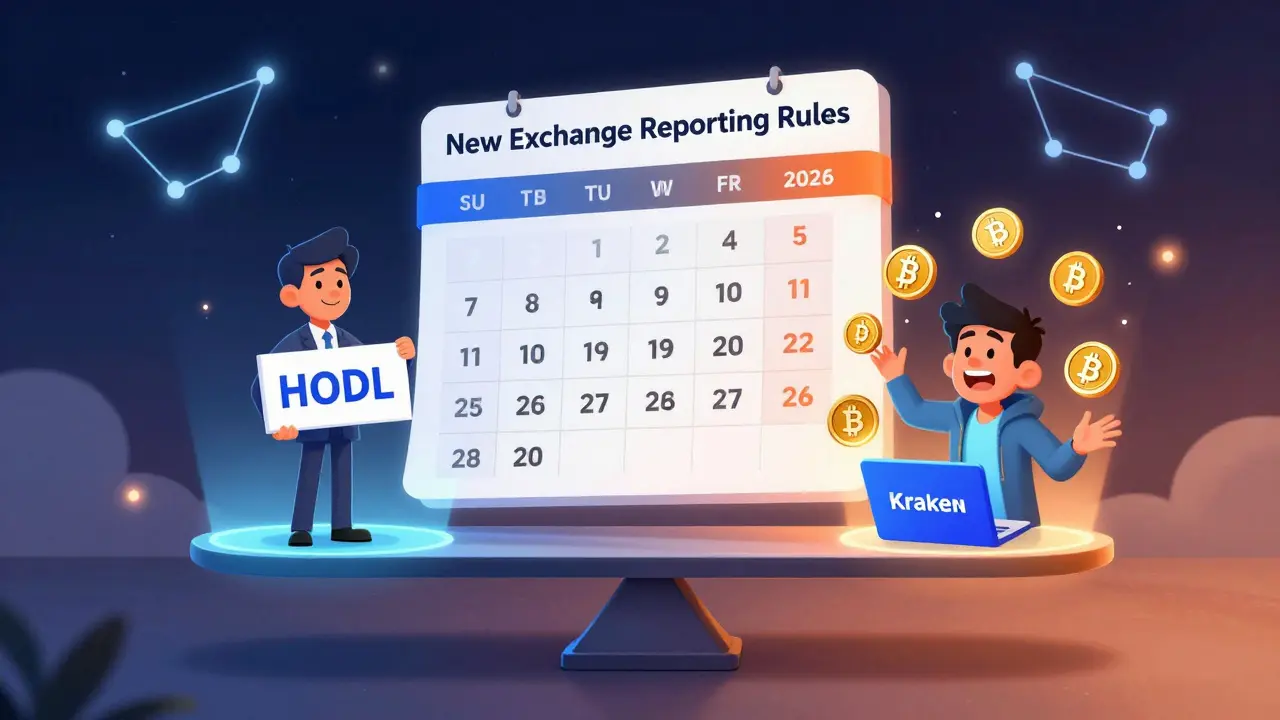
The draft legislation released in August 2025 is a game-changer. Starting in 2026, Canadian exchanges will be required to report transactions over $10,000 to the CRA-just like banks report cash deposits. Wealthsimple, Coinsquare, and Bitbuy are already preparing. By 2027, the government expects to collect $285 million more per year.
Also, crypto tax software is booming. The market will hit $34 million by 2027. Why? Because 54% of Canadian crypto owners say they feel unprepared. And 82% of tax pros say client questions about crypto have exploded since 2022.
Final Advice
Don’t wait until April 30 to figure this out. Start tracking now. Use software. Keep receipts. If you’re unsure whether you’re a trader or investor, assume the worst-business income. It’s safer.
And if you made mistakes in past years? The CRA has a voluntary disclosure program. You can come clean, pay what you owe, and avoid penalties. It’s not a get-out-of-jail-free card, but it’s better than getting audited.
Canada’s crypto tax rules aren’t perfect. But they’re clear. And the CRA isn’t going away. Stay compliant. Stay informed. And don’t let confusion cost you thousands.
Do I pay tax if I only buy crypto with CAD?
No. Buying cryptocurrency with Canadian dollars is not a taxable event. You only owe tax when you sell, trade, or spend it. Keep your purchase receipt, though-you’ll need it to calculate your cost basis later.
What if I trade Bitcoin for Ethereum?
Yes, that’s taxable. The CRA treats crypto-to-crypto trades as two separate events: selling Bitcoin for its fair market value in CAD, then buying Ethereum with that amount. You must calculate the capital gain or loss on the Bitcoin you sold. Even if you didn’t touch CAD, you still owe tax.
Are crypto staking rewards taxable?
Yes. Staking rewards are considered business income. You pay tax on the full fair market value of the reward in CAD at the time you receive it. If you later sell the staked coins, you may owe additional capital gains tax on any increase in value.
Can I deduct crypto losses from my regular income?
Only if they’re business losses. Capital losses can only offset capital gains. If you lost $10,000 on crypto and made $5,000 on stocks, you can only use $5,000 of the loss to offset the gain. The rest carries forward indefinitely, but you can’t reduce your salary or business income with crypto losses.
Do I need to report crypto from foreign exchanges?
Absolutely. The CRA requires all worldwide income to be reported, including crypto from foreign exchanges like Binance or Kraken. If you didn’t get a tax statement, you must calculate your own cost basis and fair market values. Failing to report foreign activity is one of the most common audit triggers.
Is receiving crypto as a gift taxable?
Receiving crypto as a gift is not taxable to you at the time of receipt. But your cost basis becomes the value of the crypto at the time the original owner bought it. If you later sell it, you’ll owe tax on the gain from that original cost basis-not the value when you received it.
What if I lost access to my crypto wallet?
If you lost your private keys and can’t access your coins, the CRA may allow you to claim a capital loss-but only if you can prove the loss is permanent. You’ll need documentation: screenshots, wallet backups, or exchange records showing the wallet was active and then became inaccessible. It’s not automatic, and the CRA scrutinizes these claims closely.
Next steps: If you’ve traded crypto in 2025, export your transaction history from all exchanges. Use a reputable tax tool to generate your Schedule 3. File by April 30. If you’re unsure, consult a Canadian tax professional who’s handled crypto before. Don’t guess. The cost of mistakes is too high.
Chelsea Boonstra
March 9, 2026 AT 17:16Let me get this straight - you're telling me I can't just trade ETH for SOL without the CRA breathing down my neck? I traded 3 times last week and thought I was being clever. Turns out I'm just a tax liability with a wallet. Why does everything have to be so damn complicated? I didn't sign up for accounting class when I bought Bitcoin.
Alex Thorn
March 11, 2026 AT 00:32It’s not about complexity-it’s about clarity. The CRA isn’t trying to punish you; they’re trying to bring order to chaos. Crypto isn’t cash, and pretending it is just creates more problems later. Think of it like this: every trade is a moment of truth. You either acknowledge the value shift-or you bury your head in the sand. And sand doesn’t pay taxes.
Lindsay Girvan
March 12, 2026 AT 07:45Stop pretending this is about fairness. This is about control. The government doesn’t care if you’re ‘investing’-they want to tax every flick of your finger. If you HODL, they’ll wait. If you move, they’ll pounce. Welcome to crypto in 2026: where your wallet is under surveillance and your gains are someone else’s budget line.
Douglas Anderson
March 12, 2026 AT 23:12I’ve helped over 200 people file crypto taxes in the last year. The biggest mistake? Assuming ‘I didn’t make money’ means ‘I don’t owe anything.’ You’d be shocked how many people forget that trading BTC for ETH is a taxable event-even if the value stayed flat. Keep records. Use software. Don’t guess. It’s not rocket science, but it does require attention.
Tina Keller
March 14, 2026 AT 03:08Here’s the quiet truth nobody talks about: crypto tax rules in Canada are actually one of the more rational systems out there. Compare it to the U.S. where every tiny swap triggers a capital gain, or the UK’s convoluted pooling rules. Canada’s 50% inclusion rate? That’s a gift. And yes, reporting staking rewards as income? Annoying-but fair. You’re earning. You’re not hoarding. Own it.
Also-yes, gifting crypto isn’t taxed on receipt. But that cost basis? It’s a landmine. If your uncle sent you 10 SOL in 2020 that he bought for $20 each, and you sell today for $150? You owe tax on $1,300 per coin-not $150. Most people miss that. And then they panic when the letter arrives.
William Montgomery
March 16, 2026 AT 02:05You people are ridiculous. If you’re too lazy to track your trades, don’t play in crypto. That’s not a tax policy-it’s personal responsibility. I’ve seen guys lose $50k because they ‘forgot’ to report 17 trades on Binance. You think the CRA cares that you ‘didn’t know’? No. They care that you didn’t care. Stop whining. Do the work.
Mara Alves Mariano
March 17, 2026 AT 17:25Canada thinks it’s so smart with its ‘property’ label. Meanwhile, the U.S. is just taxing everything like it’s income and calling it ‘fair.’ And now they’re going to force exchanges to report? Brilliant. Next they’ll start tracking your IP address when you open MetaMask. This isn’t taxation-it’s digital serfdom. I’m moving my coins to a hardware wallet and then to a bunker. Someone get me a VPN and a shovel.
Adam Ashworth
March 19, 2026 AT 11:26Just wanted to add: if you’re using Koinly or CryptoTaxCalculator, make sure you sync all your wallets-not just your exchange accounts. I had a user who forgot their self-custody wallet and missed $8k in gains. They got hit with a 10% negligence penalty. It’s not hard to export CSVs. Do it. Save yourself the stress.
Anshita Koul
March 19, 2026 AT 21:24Wow! This is so important! I am from India, and here, crypto tax is 30% flat-no deductions, no losses allowed! Canada’s 50% capital gain rule is actually kind and wise! I wish more countries followed this balanced path! Keep educating people! The future is decentralized-but taxes? They are here to stay. Embrace clarity, not fear!
PIYUSH KOTANGALE
March 21, 2026 AT 09:44One thing missing here: what about NFTs? If I mint an NFT and sell it for ETH, is that business income or capital? And if I trade it later? The article didn’t say. Also-thank you for the clarity on gifts. I gave my sister 0.2 ETH last year and panicked for weeks. Now I know I’m fine. 😊
vishnu mr
March 22, 2026 AT 12:05thanks for this! i just sold some ada and thought i was fine since i didnt cash out to cad… but now i know i need to track the eth to ada trade. also, i typoed my wallet addy once and lost 0.5 btc… hope i can claim that as a loss… fingers crossed