 Dec, 28 2025
By mid-2025, the crypto world had been shaken by the largest regulatory crackdown in its history. Over $6 billion in fines were handed out in just six months - not to random actors, but to major exchanges, trading platforms, and the executives running them. This wasn’t a warning. It was a reset.
OKX’s $500 Million Fall: A Wake-Up Call
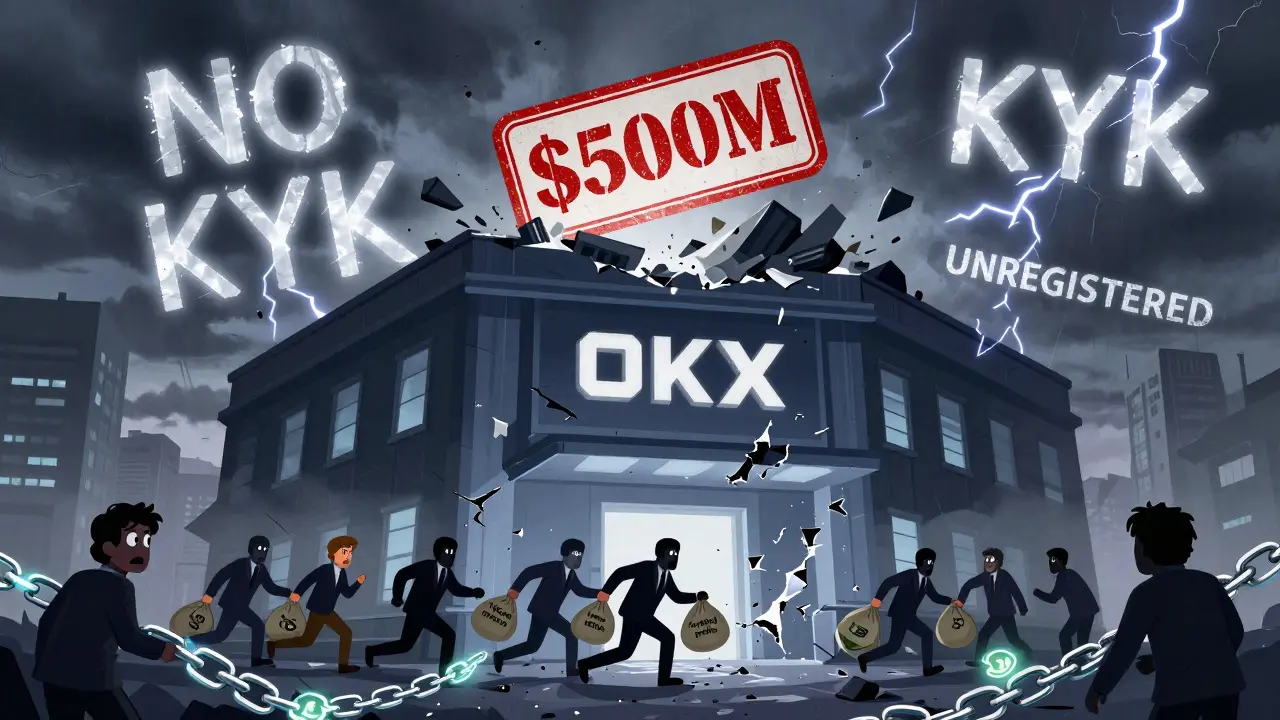
The biggest blow came in February when the U.S. Department of Justice fined OKX, a Seychelles-based exchange, over half a billion dollars. The number sounds unreal, but the details are worse. OKX claimed it banned U.S. users. Yet internal emails showed staff telling American customers how to fake IDs and bypass restrictions. They didn’t just ignore the rules - they taught people how to break them. The DOJ found over $5 billion in suspicious transactions flowed through OKX’s systems. Why? No proper KYC checks. No real transaction monitoring. No sanctions screening. And crucially, they never registered as a money service business with the U.S. Treasury - a legal requirement for any platform handling money across borders. OKX didn’t fight the charges. They pleaded guilty. The final settlement? $84 million in civil penalties and $420 million in forfeited profits. That’s not a fine. That’s a death sentence for a company that thought it could grow fast and ignore the law.Market Manipulation Gets Real
It’s not just about failing to check IDs. Regulators are now going after how crypto is traded. In October 2024, 17 people were charged in Massachusetts for using bots to manipulate prices of meme coins and obscure altcoins. These weren’t random traders. They were market makers - people hired to create liquidity - who instead created fake volume. How? Wash trading. Match trading. Bots placing buy and sell orders between accounts they controlled. The goal? Make a coin look popular so retail investors jump in, then dump it. The SEC and DOJ called it fraud. The courts agreed. These cases aren’t rare anymore. They’re becoming the norm.SEC Targets Fraud - Not Just Exchanges
The SEC didn’t wait for exchanges to clean up. They went straight for the people promising unrealistic returns. Ramil Palafox, founder of PGI Global, was charged in April for running a $57 million Ponzi scheme disguised as crypto trading. He told investors they’d earn 10% monthly. He used new money to pay old investors. He kept the rest. In August, the SEC won a $46 million judgment against MCC International, CPTLCoin Corp., and Bitchain Exchanges. Their scheme? Sell “mining packages” to investors, promising daily profits. But here’s the twist: the platform where investors could cash out - Bitchain - was owned by the same people. They could block withdrawals anytime. Investors thought they were trading crypto. They were trapped in a closed loop controlled by the scammers. These aren’t edge cases. They’re textbook fraud. And the SEC is now treating every crypto project that promises guaranteed returns as a potential security - meaning it must be registered, or face serious consequences.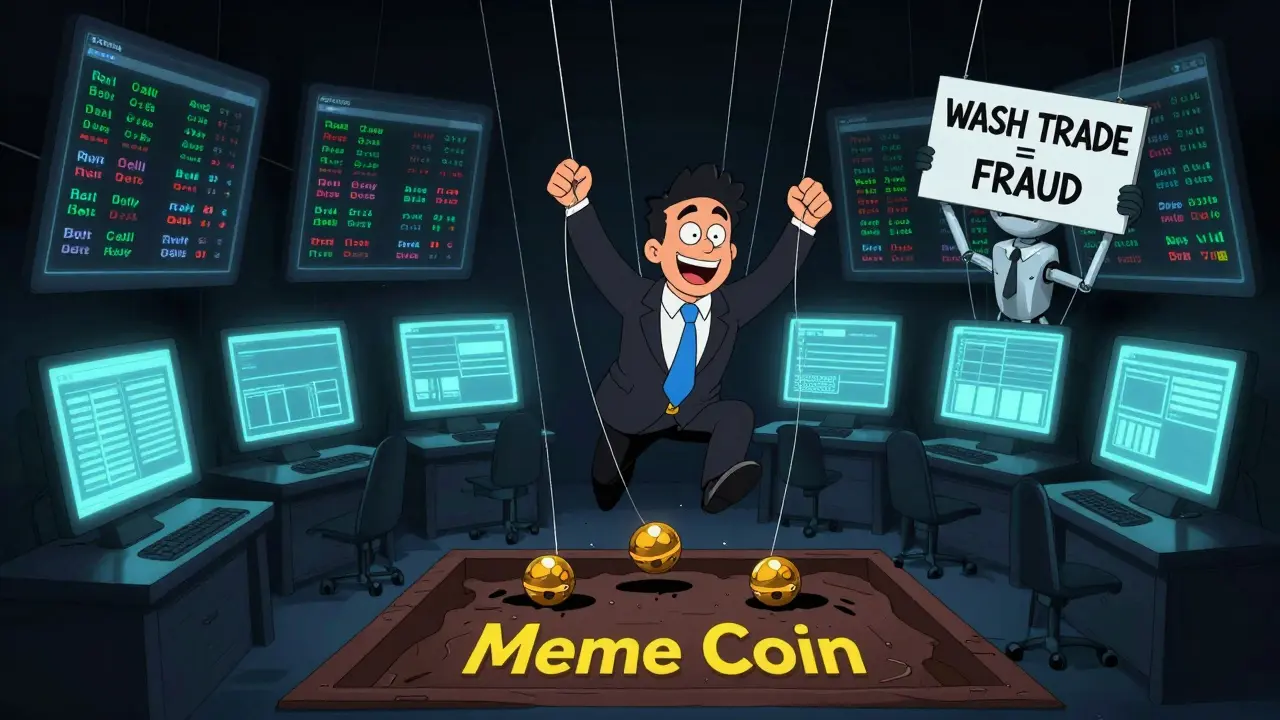
Broker-Dealers Are Getting Called Out Too
You might think only crypto-native platforms are in trouble. Think again. FINRA, the group that regulates traditional brokers, started going after firms that quietly offered crypto to their clients. In May and July 2025, two broker-dealers each paid $85,000 in fines. Why? They didn’t tell customers the crypto products were sold through unregistered affiliates. They didn’t explain the risks. They just added crypto to their website like it was a new mutual fund. That’s the new standard. If you’re a financial advisor, broker, or bank offering crypto, you’re now responsible for knowing if the product is legal, registered, and properly disclosed. Ignorance isn’t a defense anymore.Why This Is Different From Past Crackdowns
In 2020, regulators sent letters. In 2022, they issued warnings. In 2025, they seized assets and jailed people. The shift is in execution. Agencies now have specialized crypto units. Prosecutors understand blockchain analytics. The DOJ has a dedicated team in Massachusetts that’s built a reputation for winning complex digital asset cases. The message is clear: if you’re building a crypto business, compliance isn’t a department you hire after launch. It’s the foundation. Every exchange, trading bot, mining pool, or DeFi platform that touches U.S. users - even indirectly - must now have:- Verified customer identities (KYC)
- Real-time transaction monitoring
- Sanctions screening against OFAC lists
- Registration as a money service business (MSB)
- Clear disclosure of risks and ownership structures

What’s Next? The Rules Are Getting Tighter
The SEC announced Project Crypto - a company-wide push to double down on enforcement. Meanwhile, political pressure is growing. House Republicans want to cut the SEC’s budget by 7% and block new rules. But that won’t stop ongoing cases. The courts have already upheld penalties against OKX and MCC. The legal precedent is set. What’s changing is speed. Regulators are moving faster than ever. A startup that thought it had six months to build compliance might now have six weeks. The cost of delay isn’t just a fine. It’s a shutdown.What This Means for You
If you’re a trader: be careful where you put your money. Exchanges with no clear compliance history are high-risk. If they’ve never been fined, that might mean they’re still flying under the radar - not that they’re safe. If you’re building a crypto product: start with compliance. Don’t wait for a subpoena. Hire a legal expert who knows AML and securities law. Use third-party KYC tools. Log everything. Document your decisions. The regulators aren’t guessing anymore. They’re reviewing your emails, your logs, your server records. If you’re an investor: if a project promises guaranteed returns, walks away. That’s not innovation. That’s a red flag. The SEC doesn’t protect you from bad investments - it protects you from fraud. And fraud doesn’t care how many Telegram groups support it. The crypto era of ‘move fast and break things’ is over. The new rule is: build slow, build legal, or don’t build at all.What’s the biggest crypto fine ever issued in 2025?
The largest fine in 2025 was issued to OKX by the U.S. Department of Justice, totaling over $500 million. This included $420 million in forfeited illegal proceeds and $84 million in civil penalties after the exchange pleaded guilty to AML violations, including helping U.S. users bypass restrictions and failing to register as a money service business.
Why are crypto exchanges getting fined so heavily now?
Regulators have spent years learning how crypto works. In 2025, they’re no longer warning - they’re prosecuting. Fines are massive because exchanges failed basic legal requirements: no KYC, no transaction monitoring, no sanctions screening, and no registration. These aren’t technical glitches - they’re systemic failures that allowed money laundering and fraud.
Can a crypto exchange survive after a $500 million fine?
It’s extremely difficult. OKX paid $500 million but still operates - barely. The fine wiped out years of profits, damaged trust, and triggered mass user withdrawals. Most smaller exchanges wouldn’t survive. The message is clear: if you can’t afford compliance, you can’t afford to operate.
Are all crypto projects now considered securities by the SEC?
No, but the SEC is aggressively targeting any project that promises returns based on the effort of others - like mining packages, staking rewards, or token sales with guaranteed profits. If it looks and acts like an investment contract, the SEC will treat it like one, regardless of whether it’s called a coin or a token.
What should I do if I run a crypto business?
Start with these five steps: (1) Register as an MSB with FinCEN if you handle money, (2) Use a certified KYC provider, (3) Implement real-time transaction monitoring, (4) Screen all users against OFAC sanctions lists, and (5) Disclose ownership and risks clearly to users. Don’t wait for a subpoena. The cost of waiting is higher than the cost of compliance.
Is the U.S. the only country cracking down on crypto?
No. The UK, EU, Singapore, and Australia have all increased enforcement. But the U.S. leads in scale and severity. The $6 billion in fines in early 2025 came mostly from U.S. agencies. Other countries are watching U.S. actions and following suit with similar rules.
Can executives be personally fined or jailed?
Yes. In multiple cases, including OKX and the MCC scheme, individual executives were named in charges. The DOJ and SEC now routinely pursue personal liability for compliance failures. If you’re a founder or CTO and ignored AML rules, you’re not just risking your company - you’re risking your freedom.
What’s the difference between a DOJ fine and an SEC fine?
The DOJ handles criminal cases - think fraud, money laundering, and market manipulation. Fines here can include jail time. The SEC handles civil violations - like unregistered securities or investor fraud. Their penalties are financial, but they can freeze assets and ban people from the industry permanently. Both are dangerous.
Are crypto exchanges still safe to use?
Some are, if they’ve publicly disclosed compliance measures and passed regulatory audits. Look for exchanges that list their MSB registration number, explain their KYC process, and show they monitor for suspicious activity. Avoid any exchange that doesn’t clearly answer these questions. Safety now means transparency - not just security.
Will crypto regulation get worse in 2026?
It’s likely. Regulators have built the tools, trained the teams, and won key court cases. Even if political pressure slows new rules, enforcement will continue to ramp up. The focus will shift to DeFi protocols, stablecoins, and cross-border transactions. The era of regulatory gray zones is ending.
Daniel Verreault
December 29, 2025 AT 13:08Jacky Baltes
December 30, 2025 AT 04:15Alex Strachan
December 30, 2025 AT 17:14Antonio Snoddy
December 31, 2025 AT 02:38Rajappa Manohar
January 1, 2026 AT 16:59nayan keshari
January 2, 2026 AT 09:26Johnny Delirious
January 4, 2026 AT 04:28Bianca Martins
January 5, 2026 AT 04:34alvin mislang
January 5, 2026 AT 22:29Monty Burn
January 6, 2026 AT 02:38Kenneth Mclaren
January 7, 2026 AT 11:39Alexandra Wright
January 9, 2026 AT 06:41