 Oct, 8 2025
FCA Crypto Authorization Eligibility Checker
Check Your FCA Authorization Requirements
If you're running a crypto exchange or planning to serve UK customers, the FCA crypto authorization requirements aren't just paperwork-they're the difference between operating legally and being shut down overnight. Since January 2020, the UK Financial Conduct Authority (FCA) has required all cryptoasset exchange providers and custodian wallet providers to register under the Money Laundering Regulations. But that’s only the beginning. By late 2025, a new, far stricter regime under the Financial Services and Markets Act 2000 (FSMA) will take full effect, changing everything for crypto businesses operating in or targeting the UK market.
What You Must Register For Right Now
Right now, every crypto exchange or wallet provider serving UK customers must register with the FCA under the Money Laundering Regulations (MLRs). This isn’t optional. If you’re processing crypto-to-fiat trades, enabling peer-to-peer transfers, or holding customer crypto assets, you’re covered under this rule. The FCA doesn’t just want your business name-they want proof you’ve built real controls to stop money laundering and terrorist financing. Your application must show you’ve studied the Joint Money Laundering Steering Group (JMLSG) guidance, specifically Chapter 22, which lays out exactly how crypto firms should handle customer due diligence, transaction monitoring, and suspicious activity reporting. You’ll need to prove you’ve trained your staff, implemented risk-based checks, and can produce audit trails for every transaction. The FCA doesn’t accept vague policies-they want records, timestamps, and names. The registration process has four possible outcomes: approved, rejected, withdrawn, or refused. Rejection isn’t rare. Many applications fail because firms think checking a box on an online form is enough. The FCA looks for depth: How do you verify a customer’s identity if they’re using a pseudonym on a decentralized platform? How do you monitor transactions across multiple blockchains? If you can’t answer those questions clearly, your application will be turned down.The New FSMA Rules Coming in 2025
The MLR registration is just the entry ticket. Starting in 2025, the FCA will enforce full authorization under the Financial Services and Markets Act 2000. This isn’t an upgrade-it’s a complete overhaul. Under FSMA, five core activities now require formal FCA authorization:- Operating a qualifying cryptoasset trading platform
- Dealing in qualifying cryptoassets as principal
- Dealing in qualifying cryptoassets as agent
- Arranging deals in qualifying cryptoassets
- Safeguarding qualifying cryptoassets and specified investment cryptoassets
Who Needs Authorization? (It’s Not Just UK Companies)
One of the most surprising parts of the new rules is how far the FCA’s reach extends. You don’t have to be based in the UK to need authorization. If your platform is accessible to UK retail customers-meaning individuals not acting for business purposes-you must get FCA approval to operate a trading platform, deal in cryptoassets, or arrange trades. That means a crypto exchange based in Singapore, Canada, or even the US must apply for UK authorization if even one UK resident can sign up and trade. The FCA doesn’t care where your servers are. They care who’s using your service. There’s one exception: if you only serve UK institutional clients-like hedge funds, asset managers, or corporations-you don’t need authorization for trading or arranging deals. The FCA assumes these clients understand the risks and don’t need the same level of protection. But if you’re marketing to everyday people, you’re in the crosshairs.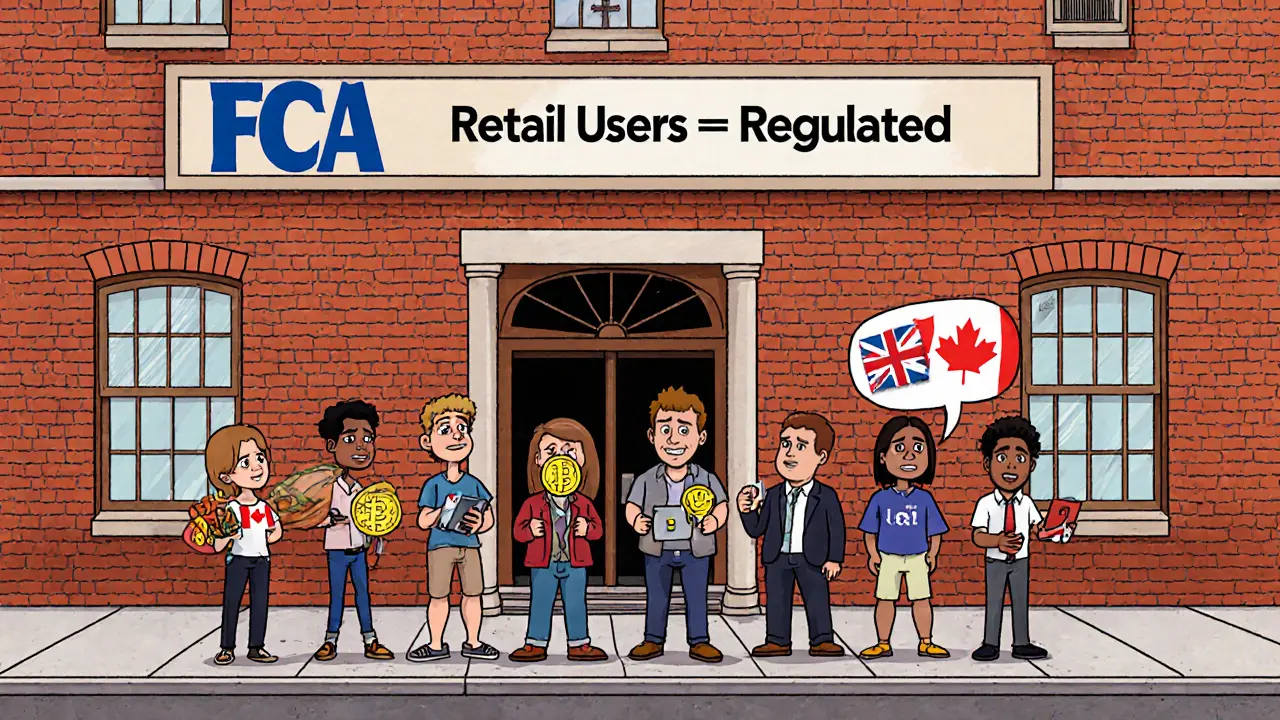
Stablecoins Have Their Own Rules
Stablecoin issuers face a different test. Unlike other crypto services, you only need FCA authorization if you’re issuing qualifying stablecoins from a physical establishment in the UK. That means if you’re a US-based company issuing a dollar-backed token from a server in New York, you don’t need UK approval-even if UK users hold it. But if you open an office in London and issue tokens from there, you’re now regulated. This physical presence rule is intentional. The FCA wants to control the origin of stablecoins, not every holder. It’s a narrow but powerful lever. If you’re building a stablecoin and want UK market access, you’ll need a legal entity, local compliance officers, and UK-based audits. No shortcuts.What Happens After You’re Authorized?
Getting approved doesn’t mean you’re done. Once authorized under FSMA, you’re held to the same standards as banks and brokers. You must meet Threshold Conditions (COND) and follow the Principles for Businesses (PRIN), with some exceptions. For example, Principles 6 (Customers’ Interests) and 9 (Relationships of Trust) don’t apply to professional clients trading on your platform. But for retail users, you’re on the hook for fair treatment, clear disclosures, and conflict management. You’ll also be subject to CASS audits-same as traditional financial firms. If you hold customer cryptoassets, you must prove they’re segregated from your own funds, stored securely, and recoverable in case of insolvency. The FCA will send auditors to check your wallet infrastructure, key management systems, and insurance coverage. One misstep, and your authorization can be revoked.
The Big Change: Retail Access to Crypto ETNs
On October 8, 2025, the FCA reversed its 2021 ban on retail trading of crypto exchange-traded notes (cETNs). Now, UK retail investors can buy crypto ETNs listed on FCA-approved UK investment exchanges. But there’s a catch: the ETNs must be issued by recognized investment exchanges, not crypto platforms. So you can’t buy a Bitcoin ETN directly from Binance or Coinbase UK-you have to go through a regulated exchange like the London Stock Exchange. This move signals a shift. The FCA isn’t trying to stop crypto. It’s trying to control how retail investors access it. By forcing exposure through regulated, transparent instruments, they reduce the risk of fraud, manipulation, and impulsive trading. It’s a middle path: allow access, but only through tightly controlled channels.What You Should Do Now
If you’re running a crypto exchange or planning to enter the UK market, here’s what to do:- If you haven’t registered under MLR, do it now. The FCA is actively rejecting late applications.
- Review the JMLSG guidance and FCA’s Financial Crime guide. Make sure your compliance team has read them line by line.
- Map out which FSMA regulated activities your business performs. Don’t guess-consult a legal expert familiar with UK crypto regulation.
- If you serve UK retail customers, start preparing your FSMA application. The FCA won’t delay enforcement.
- If you issue stablecoins, decide whether you’ll establish a UK entity. If not, you won’t be able to market to UK users.
- Start documenting your custody systems. The CASS audit will demand proof of segregation, insurance, and recovery plans.
Do I need FCA authorization if my crypto exchange is based outside the UK?
Yes-if you serve UK retail customers. The FCA’s rules apply based on who’s using your service, not where you’re headquartered. If a UK resident can sign up and trade on your platform, you need FCA authorization under FSMA. The only exception is if you only serve institutional clients or operate through a UK-authorized intermediary.
What’s the difference between MLR registration and FSMA authorization?
MLR registration is a baseline requirement to prevent money laundering-it’s a licensing step. FSMA authorization is full financial services regulation, putting your business under the same rules as banks and brokers. FSMA covers more activities, demands higher standards, and gives the FCA direct power to supervise, audit, and revoke your license.
Can I still operate if my FCA application is rejected?
No. Operating without FCA registration or authorization is illegal in the UK. The FCA can issue cease-and-desist orders, freeze assets, and refer cases to law enforcement. Even if you’re based overseas, the FCA can block your website from UK users and work with payment processors to cut off your funding.
Do I need authorization for staking services?
Yes-if you’re offering staking to UK retail customers. Staking is now a regulated activity under FSMA. You must be authorized to provide staking services directly to individuals in the UK. If you’re only staking for institutional clients or acting as a technical provider without customer-facing roles, you may be exempt-but you’ll need legal confirmation.
What happens if I don’t comply with CASS audit requirements?
Failure to meet CASS standards can lead to immediate suspension or revocation of your authorization. The FCA requires proof that client cryptoassets are fully segregated from your own funds, securely stored, and recoverable. If you can’t demonstrate this, you’re seen as a risk to consumers-and the FCA will act to protect them, even if it means shutting you down.
Can I still list new crypto tokens on my exchange?
Yes, but only if you’ve assessed each token under FCA guidance. You must determine whether it qualifies as a regulated security or a non-regulated cryptoasset. If it’s a security, you need additional permissions. The FCA expects firms to conduct thorough due diligence on each asset before listing, including checking for fraud risks, lack of transparency, or unstable value.
Leo Lanham
November 7, 2025 AT 03:36Brian Webb
November 8, 2025 AT 11:39Whitney Fleras
November 9, 2025 AT 08:01Colin Byrne
November 10, 2025 AT 16:53Eric von Stackelberg
November 11, 2025 AT 21:43Emily Unter King
November 13, 2025 AT 00:38Michelle Sedita
November 14, 2025 AT 00:49Ryan Inouye
November 14, 2025 AT 20:35Rob Ashton
November 15, 2025 AT 10:23Cydney Proctor
November 16, 2025 AT 15:59Cierra Ivery
November 17, 2025 AT 08:10Veeramani maran
November 17, 2025 AT 23:01Kevin Mann
November 18, 2025 AT 23:42Kathy Ruff
November 20, 2025 AT 13:56Robin Hilton
November 22, 2025 AT 12:23Nitesh Bandgar
November 23, 2025 AT 05:26Jessica Arnold
November 23, 2025 AT 09:44