 Dec, 7 2025
Blockchain Voting Scalability Calculator
Election Processing Calculator
How long would it take to process votes for your election using blockchain technology? Input your election size and blockchain platform to see estimated processing time.
Results
Results will appear here
Note: This is a theoretical calculation. Actual processing times may vary due to network congestion, transaction fees, and other factors. The U.S. national election with 100 million votes would take:
- Ethereum: 190 days
- Bitcoin: 400 days
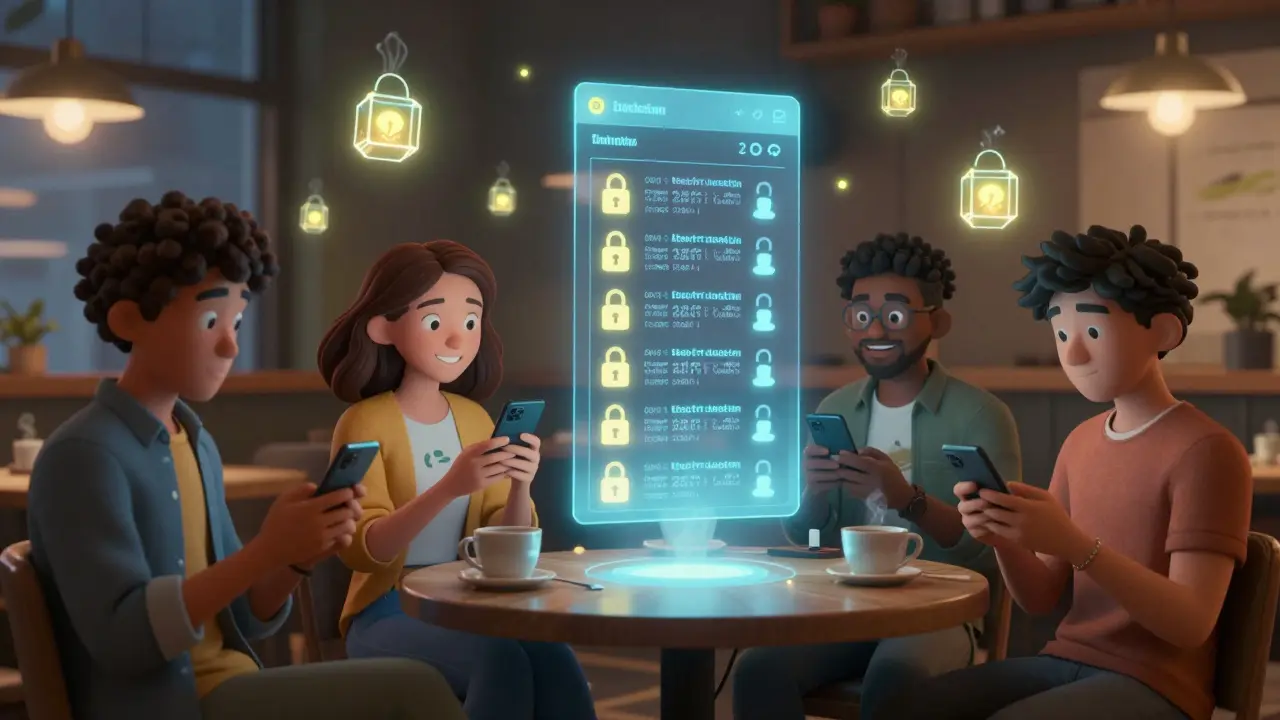
Imagine voting from your phone while sitting in a coffee shop in Auckland, knowing your ballot is recorded on a public ledger that can’t be changed, hacked, or erased. No more waiting in line. No more lost absentee ballots. No more doubts about whether your vote counted. This isn’t science fiction - it’s what blockchain electoral systems promise. But here’s the real question: blockchain voting sounds perfect on paper. Does it actually work in the real world?
How Blockchain Voting Actually Works
At its core, blockchain voting uses the same technology behind Bitcoin and Ethereum - a distributed, tamper-proof ledger. Each vote becomes a transaction, cryptographically signed and added to a chain of previous votes. Unlike traditional electronic voting machines that store everything in one central database (a single point of failure), blockchain spreads the data across hundreds or thousands of computers worldwide. If one node gets hacked, the rest still hold the truth.
Here’s how it breaks down:
- Voter authentication: You log in using a government-issued digital ID, biometric scan, or encrypted key - not a username and password.
- Vote casting: Your vote is encrypted and sent to a smart contract on a blockchain like Ethereum. The contract checks if you’ve already voted, then records your choice.
- Anonymity: Your identity is stripped away using zero-knowledge proofs. Election officials can verify you’re eligible without knowing who you voted for.
- Verification: After the election, anyone can audit the results. You can check that your vote was included - without revealing your choice.
It’s like sending a sealed letter that everyone can confirm was delivered, but no one can open it until counting day.
Where It’s Already Being Tested
Don’t think this is just theory. Real pilots are happening - with mixed results.
Estonia has been voting online since 2005. While not pure blockchain, it’s the closest thing we have to a national system. In 2019, 44% of Estonians voted digitally. Voters reported speed and convenience - one user said they voted from Thailand in 47 seconds. But critics point out the system doesn’t use blockchain, and voter coercion remains a risk. If someone forces you to vote a certain way at home, the system can’t stop it.
In 2024, Colorado ran a blockchain pilot for 12,347 absentee ballots. Zero security breaches. 100% auditability. Voters could track their ballot’s journey from submission to counting. It worked - but only for a small group of voters.
Meanwhile, Sierra Leone’s 2018 blockchain trial for overseas voters had 87% satisfaction with transparency. But 63% of participants struggled with the tech. Older voters, non-tech-savvy users, and people with limited internet access felt left behind.
And then there’s the failure: West Virginia’s 2020 mobile voting pilot. Only 144 votes were cast across two counties. The system was expensive, confusing, and barely used. It proved that if voters don’t trust or understand it, they won’t use it.
Why It’s Better Than Traditional E-Voting
Traditional electronic voting machines (EVMs) have been around since the 2000s. They’re faster than paper, but deeply flawed. In 2016, U.S. election systems were targeted by foreign actors. Many EVMs run on outdated software with no audit trail. Once a vote is cast, you can’t verify it was recorded correctly.
Blockchain fixes that. With blockchain, you don’t have to trust the government or the vendor. You can verify your vote yourself. A 2024 AIP Publishing study found blockchain reduces the attack surface by 73% compared to centralized EVMs. It’s not just more secure - it’s more transparent.
Compared to other internet voting systems like Switzerland’s, blockchain offers 100% immutable records. Swiss E-voting had a 92% integrity rate - meaning 8% of votes could be altered without detection. Blockchain doesn’t allow that.
The Big Problems Nobody Talks About
Yes, blockchain solves some problems. But it creates new ones.
Scalability: Ethereum can handle about 15 transactions per second. A national election in the U.S. could generate over 100 million votes. That’s 10,000 times more than the system can handle. Even with upgrades, we’re years away from handling mass elections.
Identity management: How do you prove you’re you without giving away your identity? Biometrics? Digital IDs? What if your ID gets stolen? What if you’re homeless and don’t have a government-issued digital credential?
Human error: The tech might be solid, but voters aren’t. If someone clicks the wrong button, or gets tricked into sharing their login key, the blockchain can’t undo it. It’s immutable - good for security, bad for mistakes.
Cost: A national blockchain pilot costs between $500,000 and $2 million. Traditional internet voting? Around $200,000. That’s a 2.5x increase. Who pays? Taxpayers? And for what? A system that only 10% of voters might use?
Regulation: In the U.S., the Election Assistance Commission blocks blockchain for federal elections because NIST says it doesn’t meet federal standards. The EU’s eIDAS 2.0 framework, launching in June 2026, might change that - but only for certified systems. Most current platforms aren’t certified.
Who’s Using It Right Now?
Blockchain voting isn’t for everyone - yet.
Corporate voting: Nasdaq’s Linq platform has processed over 10,000 shareholder votes since 2015. Companies love it. It’s fast, transparent, and reduces fraud. Shareholders can see their vote counted in real time.
Municipal elections: Small towns and cities are testing it. In places like Zug, Switzerland, or pilot programs in U.S. counties, blockchain is used for non-critical votes - like school board elections or local referendums.
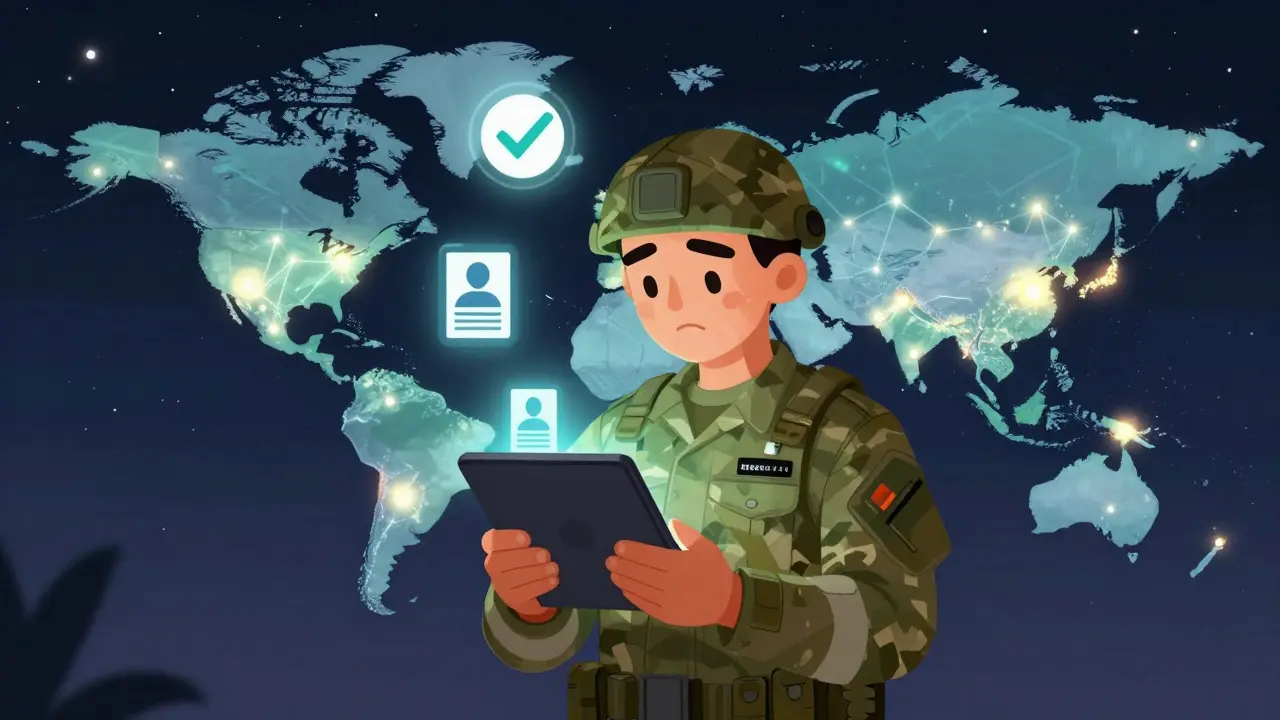
Overseas and military voters: This is the sweet spot. People living abroad, soldiers stationed overseas, or those with disabilities can vote securely without postal delays. Estonia’s system thrives here. Colorado’s 2024 pilot focused on this group too.
But for national elections? Not yet. The tech isn’t ready. The public isn’t ready. The laws aren’t ready.
What Experts Really Think
There’s no consensus.
Dr. Jane Smith from MIT says: “Blockchain gives us the tools to verify votes - but it can’t stop someone from forcing you to vote at gunpoint.” She’s right. Tech can’t fix human coercion.
Professor John Doe from Stanford warns: “Every layer of complexity adds new attack surfaces. The authentication step alone has more vulnerabilities than the blockchain itself.” He’s not wrong. If your phone gets hacked, your vote is gone.
NIST’s 2024 report is blunt: “No current blockchain voting system meets federal standards for nationwide use.” That’s the official word from the U.S. government’s top security agency.
But here’s the counterpoint: Gartner predicts 15% of national elections will use blockchain by 2030. MarketsandMarkets says the market will grow from $187.5 million in 2023 to $1.2 billion by 2028. The money is flowing. The tech is improving. Ethereum’s shift to proof-of-stake in 2022 cut energy use by 99.95%. That’s huge.
The Real Future: Hybrid Systems
The most realistic path forward isn’t replacing paper ballots with blockchain. It’s combining them.
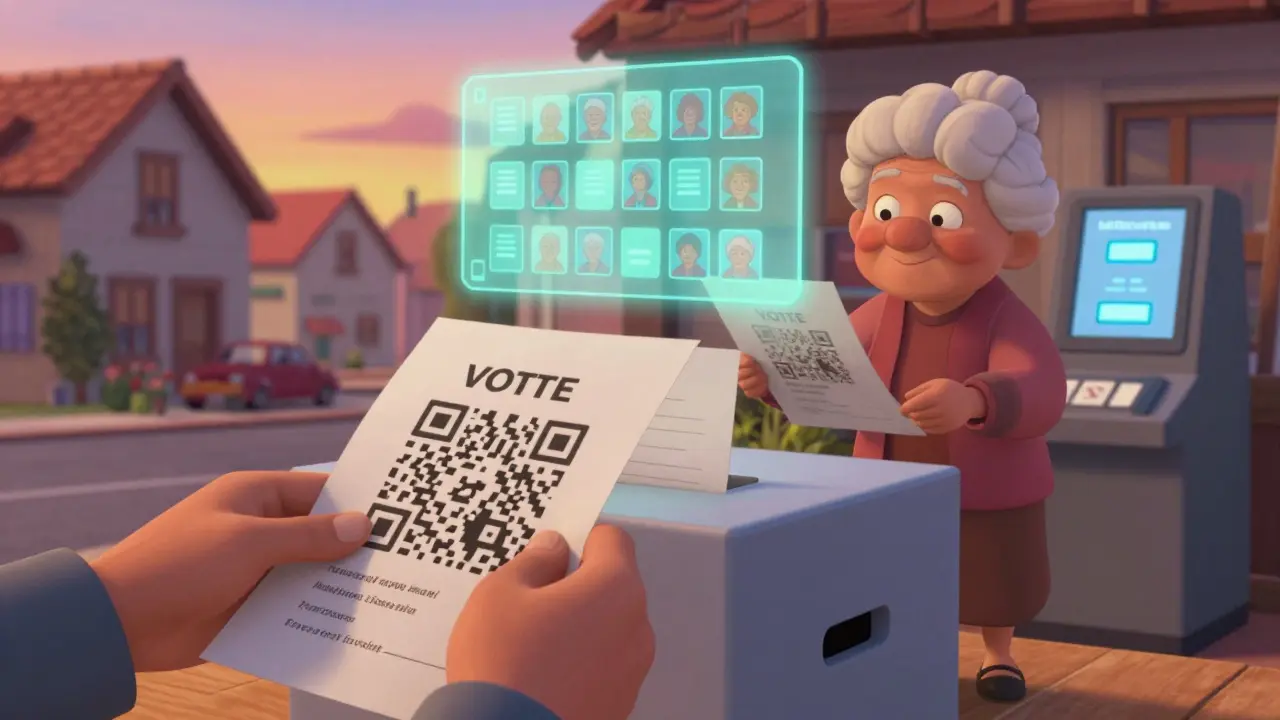
MIT researchers are building “end-to-end verifiable” systems. You vote on a touchscreen. Your vote is encrypted and sent to a blockchain. But you also get a paper receipt - not with your choice, but with a code. Later, you can check online that your code was counted correctly. If something looks off, you can trigger a manual audit of the paper trail.
This isn’t pure blockchain. It’s blockchain + paper. The best of both worlds: digital speed and physical backup.
That’s what Estonia is doing now - upgrading its system to include paper verification. That’s what Colorado’s pilot did. That’s what the World Economic Forum’s Blockchain Voting Consortium is pushing: interoperable, hybrid systems.
Should You Trust It?
Here’s the bottom line:
- If you’re a shareholder voting on company policy - blockchain is already better than paper.
- If you’re a soldier overseas or living abroad - blockchain voting could be life-changing.
- If you’re voting in a national election tomorrow - stick with paper or traditional EVMs. The tech isn’t ready.
Blockchain won’t fix voter suppression. It won’t stop misinformation. It won’t make people trust elections again. But it can make vote counting transparent, verifiable, and tamper-proof - if implemented correctly, slowly, and with paper backups.
The future of voting isn’t about choosing between blockchain and paper. It’s about using blockchain to make paper voting more trustworthy. That’s the real innovation.
What Comes Next?
Expect more pilots - especially in the EU after eIDAS 2.0 launches in June 2026. Look for blockchain to be used first for absentee ballots, military voting, and local referendums. Don’t expect it in presidential elections until at least 2030.
Keep an eye on open-source projects like VoteBox - they’re transparent, well-documented, and community-run. Avoid proprietary systems like Voatz. Their security protocols are secret. And in voting, secrecy isn’t a feature - it’s a red flag.
And if you’re curious? Try a small-scale blockchain vote. Some cities offer public demos. Test it. See how it feels. Because the future of democracy isn’t being decided by politicians - it’s being built by engineers, cryptographers, and voters who dare to ask: What if we could know, for sure, that our vote counted?
Can blockchain voting prevent election fraud?
Yes - but only for certain types of fraud. Blockchain prevents ballot stuffing, tampering, and double-voting because every vote is recorded on an immutable ledger. But it can’t stop coercion, fake identities, or hacking of voter devices. If someone forces you to vote or steals your login, the blockchain will still count your vote. It secures the system, not the person.
Is blockchain voting more secure than paper ballots?
It depends. Paper ballots are simple and physical - if you can see the ballot, you can audit it. Blockchain is digital and cryptographically secure, allowing anyone to verify results without trusting a single authority. But paper can’t be hacked remotely. Blockchain can. For most people, paper is more reliable. For large-scale remote voting, blockchain is safer than postal ballots.
Why hasn’t the U.S. adopted blockchain voting yet?
Because the National Institute of Standards and Technology (NIST) says no current system meets federal security standards. The U.S. prioritizes reliability over innovation in elections. There are also concerns about accessibility, voter intimidation, and the cost of rolling out new tech to 330 million people. States like Colorado have run small pilots, but federal adoption is years away.
Can I verify my own vote on a blockchain system?
Yes - that’s one of the biggest advantages. After voting, you get a unique code or receipt. Later, you can go to a public website, enter that code, and see that your vote was recorded correctly - without seeing who you voted for. This is called end-to-end verifiability. It’s impossible with traditional voting machines.
What’s the biggest risk with blockchain voting?
The biggest risk isn’t the blockchain - it’s the front end. If your phone, computer, or voter registration portal is hacked, your vote can be changed before it even reaches the blockchain. Also, if voters don’t understand how to use the system, they’ll make mistakes. Complexity creates new vulnerabilities. The tech is secure. The people using it aren’t always.
Will blockchain voting replace paper ballots?
Not anytime soon - and probably not ever completely. The most trusted systems will combine blockchain with paper backups. Voters get a digital vote with a paper receipt for audits. This way, if the blockchain fails or is questioned, officials can manually recount the paper trail. Hybrid systems are the future - not pure digital voting.
How much does blockchain voting cost?
A national pilot costs between $500,000 and $2 million. That’s 2-3 times more than traditional internet voting systems. Costs come from developing secure smart contracts, integrating with government ID systems, training staff, and running audits. For small elections - like a condo association or corporate shareholder vote - it can cost under $50,000.
Is blockchain voting environmentally friendly?
Yes - if it runs on proof-of-stake blockchains like Ethereum. After its 2022 upgrade, Ethereum uses 99.95% less energy than before. That makes blockchain voting far greener than old EVMs that need physical hardware, or postal voting that uses paper, ink, and fuel for delivery. It’s one of the few tech solutions that’s both secure and sustainable.
Tara Marshall
December 8, 2025 AT 10:46It’s like giving someone a gun and saying 'be careful' while they’re blindfolded.
Richard T
December 10, 2025 AT 07:03Also, what happens when the power goes out? Paper doesn’t need Wi-Fi.
Frank Cronin
December 11, 2025 AT 18:10Fix the politicians. Not the ledger.
miriam gionfriddo
December 12, 2025 AT 19:53Nicole Parker
December 14, 2025 AT 10:52Transparency is great, but inclusion is sacred. You can’t have one without the other. And honestly? I’d rather have a paper ballot I can hold in my hands than a perfect digital system that makes half the population feel like outsiders.
Kenneth Ljungström
December 15, 2025 AT 19:23Also, the paper receipt thing? Genius. I’d feel way safer with that backup.
Cristal Consulting
December 16, 2025 AT 04:35michael cuevas
December 17, 2025 AT 17:32Meanwhile my cousin in Ohio still uses a pencil and paper and somehow his vote still counts. Funny how that works.
Chris Jenny
December 19, 2025 AT 03:47Vincent Cameron
December 20, 2025 AT 11:49Maybe we should be rebuilding trust, not building ledgers. The ledger is just a mirror. It doesn’t change what’s in front of it.
Krista Hewes
December 21, 2025 AT 14:12Mairead Stiùbhart
December 23, 2025 AT 04:47ronald dayrit
December 24, 2025 AT 10:59Blockchain can verify a vote. But it can’t make someone feel heard. It can’t heal the fractures in our civic life. It can’t bring back the sense that elections belong to the people - not the engineers.
Maybe the most secure system isn’t the one with the most cryptography. Maybe it’s the one where people still show up, in person, in the cold, with their ballots in hand, because they believe it still means something.
Doreen Ochodo
December 25, 2025 AT 19:05