 Apr, 29 2026
Imagine waking up one morning to find that your primary source of income has been cut exactly in half, but your monthly bills-electricity, rent, and equipment maintenance-remain exactly the same. For thousands of crypto miners, this isn't a nightmare scenario; it's a programmed event called the Bitcoin halving is a protocol-level event that reduces the block reward for miners by 50% approximately every four years. Also known as a reward halving, it ensures a maximum supply of 21 million coins.
The most recent event on April 20, 2024, dropped the reward from 6.25 BTC to 3.125 BTC per block. While investors often focus on how this scarcity drives up the price, the people running the hardware face a brutal reality check. If you aren't running the most efficient gear with the cheapest power, the halving can turn a profitable operation into a money-pit overnight. But how does this actually change the game for the people securing the network?
The Revenue Shock: Block Rewards vs. Transaction Fees
To understand the impact, you first have to look at where miners actually make their money. A miner's income is a mix of two things: the block reward (newly minted BTC) and transaction fees (paid by users to have their transactions processed). Before the 2024 halving, block rewards accounted for about 98% of total revenue. When that 98% gets sliced in half, the financial shock is immediate.
This creates a temporary revenue gap. According to data from Fidelity Digital Assets, the months following a halving are the most volatile because the market price of Bitcoin needs time to adjust to the new supply dynamics. If the price doesn't climb fast enough to offset the 50% drop in rewards, miners start losing money on every single hash they compute.
There is a glimmer of hope in Transaction Fees is the payment made by users to prioritize their transactions on the blockchain, acting as a secondary income stream for miners . For example, the rise of BRC-20 tokens caused a 37% spike in fees in May 2024. While fees are becoming more important, they still represent a small fraction of total income, meaning miners can't rely on them to fully replace the lost block rewards just yet.
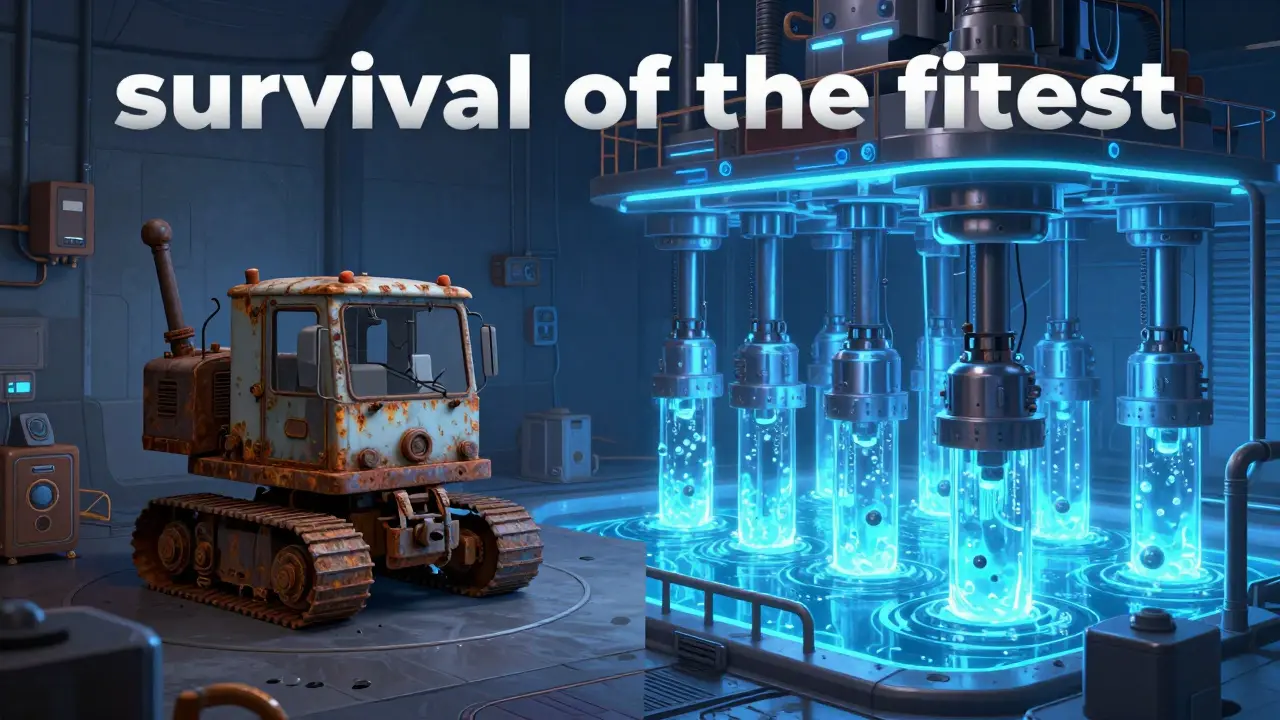
The Great Sorting: Who Survives the Crunch?
Halving events act as a natural selection process for the industry. Not all miners are created equal; some have electricity costs that would make a household homeowner cringe, while others operate in places where power is nearly free. This is where Electricity Cost Efficiency is the ratio of power cost per kilowatt-hour to the value of the Bitcoin produced, determining the break-even point for mining operations becomes the only metric that matters.
| Energy Cost (per kWh) | Break-even BTC Price | Survival Status |
|---|---|---|
| $0.02 - $0.03 (Hydro/Renewable) | Low (<$35,000) | Highly Profitable |
| $0.04 (Efficient Industrial) | ~$35,000 | Stable |
| $0.08 (Standard Grid) | ~$50,000 | At Risk |
| $0.10+ (Residential/Expensive Grid) | Critical | Unprofitable / Exit |
When the reward drops, the "break-even price" jumps. A miner who was making a profit at $28,000 might suddenly find they need Bitcoin to hit $49,000 just to cover their electric bill. This leads to a predictable pattern: inefficient miners shut down their rigs, causing a drop in the Hash Rate is the total computational power used to mine and process transactions on a Proof-of-Work blockchain . Historically, we see a 15-30% decline in hash rate after a halving, as the "weak hands" of the mining world are forced out.
Operational Pivot: How Pro Miners Adapt
The big players don't just sit and wait for the price to go up. They pivot. We're seeing a massive shift toward enterprise-level mining, which now controls 78% of the global hash rate. These companies have the capital to invest in hardware that would be too expensive for a hobbyist.
One major trend is the adoption of Immersion Cooling is a cooling method where mining hardware is submerged in a non-conductive dielectric fluid to improve thermal efficiency and hardware lifespan . For instance, Iris Energy boosted their efficiency by 18% using this tech, allowing them to stay profitable even when Bitcoin was at $32,000. Other miners are moving to "stranded energy" sites-like flared natural gas wells in Texas-where power costs can drop as low as $0.015 per kWh.
We're also seeing miners diversify. Since they already have massive power infrastructure and cooling systems, some are pivoting to AI compute and cloud services. By leasing their excess capacity to AI startups, they create a hedge against the volatility of Bitcoin rewards.
The Hardware Treadmill and Capital Reserves
If you're mining, the clock is always ticking. The halving accelerates the hardware refresh cycle. Before the 2024 event, a rig might have been viable for 24 months. Now, that window has shrunk to about 14 months. If you're using old Antminer S19j Pro rigs, you're likely fighting a losing battle unless your power is practically free.
Survival also requires a "war chest." Experts recommend holding at least six months of operational expenses in stablecoins or fiat. Why? Because there's often a lag between the halving and the price increase. If you're living paycheck-to-paycheck on your daily BTC payouts, a three-month dip in price combined with a 50% reward cut will bankrupt you before the bull market even starts.

Long-Term Security: Is the Network at Risk?
There's a legitimate concern about network security. If too many miners leave the network because it's not profitable, the hash rate drops. A lower hash rate theoretically makes the network more vulnerable to a 51% Attack is a situation where a single entity or group gains control of more than half of the network's mining power, allowing them to manipulate the blockchain .
However, the market usually self-corrects. When inefficient miners leave, the remaining miners get a larger share of the remaining rewards. This increase in "per-miner" revenue attracts new players or encourages existing ones to upgrade their gear. By July 2024, the hash rate had already recovered to 92% of its pre-halving peak. The system essentially purges the waste and rewards the efficient.
Does the halving always make mining unprofitable?
Not necessarily. It makes mining unprofitable for those with high electricity costs or outdated hardware. Miners with access to very cheap energy (below $0.04/kWh) or those who upgrade to the latest high-efficiency ASICs often remain profitable regardless of the reward cut.
What happens when the block reward eventually hits zero?
Bitcoin is capped at 21 million coins. Once all are mined, the only incentive for miners will be transaction fees. For this to work, the network must have enough transaction volume or a high enough fee-per-transaction to make it worth the electricity cost of securing the chain.
Can I still mine Bitcoin at home after a halving?
It's extremely difficult. Home electricity rates are typically much higher than industrial rates. Unless you have a specialized setup with solar power or a very specific cheap energy agreement, the cost of electricity will likely exceed the value of the Bitcoin you mine.
How does the halving affect the Bitcoin price for miners?
Miners need the price to increase to offset the lower amount of BTC they receive. If the reward is cut by 50%, the price theoretically needs to double for a miner's gross revenue to remain the same in USD terms.
What is a 'load-shedding agreement'?
This is a deal where miners agree to shut down their machines during peak electricity demand hours in exchange for lower overall power rates. About 23% of miners used these agreements in 2024 to survive the post-halving crunch.
What to do next?
If you're currently operating hardware, your first step is a brutal audit of your power costs. If you're paying more than $0.07 per kWh, you are in the danger zone. Look into demand-response programs with your utility provider or consider moving your rigs to a co-location data center that offers heat reuse or cheaper industrial rates.
For those looking to enter the space, stop looking at the current reward and start looking at the 2028 projection. The next halving will drop rewards to 1.5625 BTC. By then, the industry will rely far more on transaction fees. Investing in the most efficient hardware today is the only way to ensure you aren't wiped out by the next programmed shock.
Felix Eduardo Velasquez
April 29, 2026 AT 10:38The transition from block rewards to a fee-based model is the ultimate stress test for Bitcoin's security assumptions. While the current hash rate recovery suggests resilience, we are essentially betting that the layer-2 ecosystem and increased on-chain activity will generate enough value to sustain a decentralized network once the subsidy hits zero. It is a fascinating economic experiment in transitioning from a subsidized security model to a pure market-driven one, though the volatility in the interim will inevitably shake out anyone without significant capital reserves.
debra hoskins
April 29, 2026 AT 19:14Absolute nonsense to call this a survival guide when the house always wins and the small fry get crushed by the industrial conglomerates anyway.
Iestyn Lloyd
April 30, 2026 AT 02:30It's worth noting that the shift toward immersion cooling is becoming standard for larger operations in the UK and Europe to manage heat dissipation more effectively. The efficiency gains are tangible, and when coupled with renewable energy contracts, it significantly lowers the break-even point.
April D Thompson
April 30, 2026 AT 10:01Oh my god, the sheer drama of it all! Imagine the panic of a hobbyist watching their rig become a very expensive space heater in a single day! It's like a digital tragedy unfolding in real-time, a brutal awakening to the cold, hard reality of capitalism embedded in code! We are witnessing a spiritual purging of the weak-willed and the under-capitalized, leaving only the giants to rule the digital wasteland! I absolutely love how the protocol doesn't care about your feelings or your electricity bill-it just executes the code with a ruthless, divine indifference!
Kara Spadone
May 2, 2026 AT 01:21Some people just don't get that the universe rewards those who prepare. If you're crying about your S19j Pro now, you weren't really vibing with the long-term vision 🙄
Pramendra Singh
May 2, 2026 AT 10:58It's very heartening to see how the network self-corrects and finds a new equilibrium. Hopefully, more people will find a way to integrate sustainable energy sources to keep the dream alive.
Arti Jain
May 4, 2026 AT 03:02Typical Western struggle. India's infrastructure is evolving faster. We will dominate the hash rate soon.
Harvey Alford
May 5, 2026 AT 11:56I lost everything in 2022. Now I'm broke and miserable. Help me.
VIVEK SINGH
May 6, 2026 AT 05:29Oh, brilliant. Let's just trust that 'transaction fees' will magically save the day. I'm sure the network will be perfectly secure while we all pay exorbitant fees just to move a few sats. Pure genius.
Amanda Macy
May 7, 2026 AT 05:47The cyclical nature of these events forces a level of discipline that most investors ignore. It is not just about the hardware, but about the philosophy of scarcity and how it dictates behavior over a decade-long horizon.
Mitali Rajvanshi
May 7, 2026 AT 23:59I agree with the points on diversification. Moving into AI compute seems like a smart hedge for anyone with the infrastructure.
Lloyd I
May 9, 2026 AT 15:28Exactly! It's all about adaptability. If you can pivot your power usage to AI, you're not just surviving the halving, you're thriving in the new tech economy! Keep pushing forward!
Veronica Bago
May 10, 2026 AT 12:46Just vibing with the idea of solar mining. Seems like the only way to actually stay chill while the markets go crazy.