 May, 14 2026
For years, crypto traders in the United States operated in a regulatory gray zone. You knew the rules could change overnight, but you never quite knew what they were. That uncertainty ended in 2025. The passage of major federal legislation, specifically the GENIUS Act (Guiding and Establishing National Innovation for US Stablecoins Act) and the proposed CLARITY Act, has fundamentally reshaped how digital assets are traded, custodied, and regulated. If you are navigating the market today, understanding these changes is not just about staying compliant; it is about seizing new opportunities that were previously blocked by legal ambiguity.
The core shift is simple: the government has finally drawn clear lines. Instead of treating every token as a potential security under the old Howey test, the new framework categorizes assets into distinct buckets. This clarity affects everything from how institutions hold your Bitcoin to how small exchanges operate across state lines. Let’s break down exactly what this means for your trading strategy and risk management.
The Three Pillars of the New Regulatory Framework
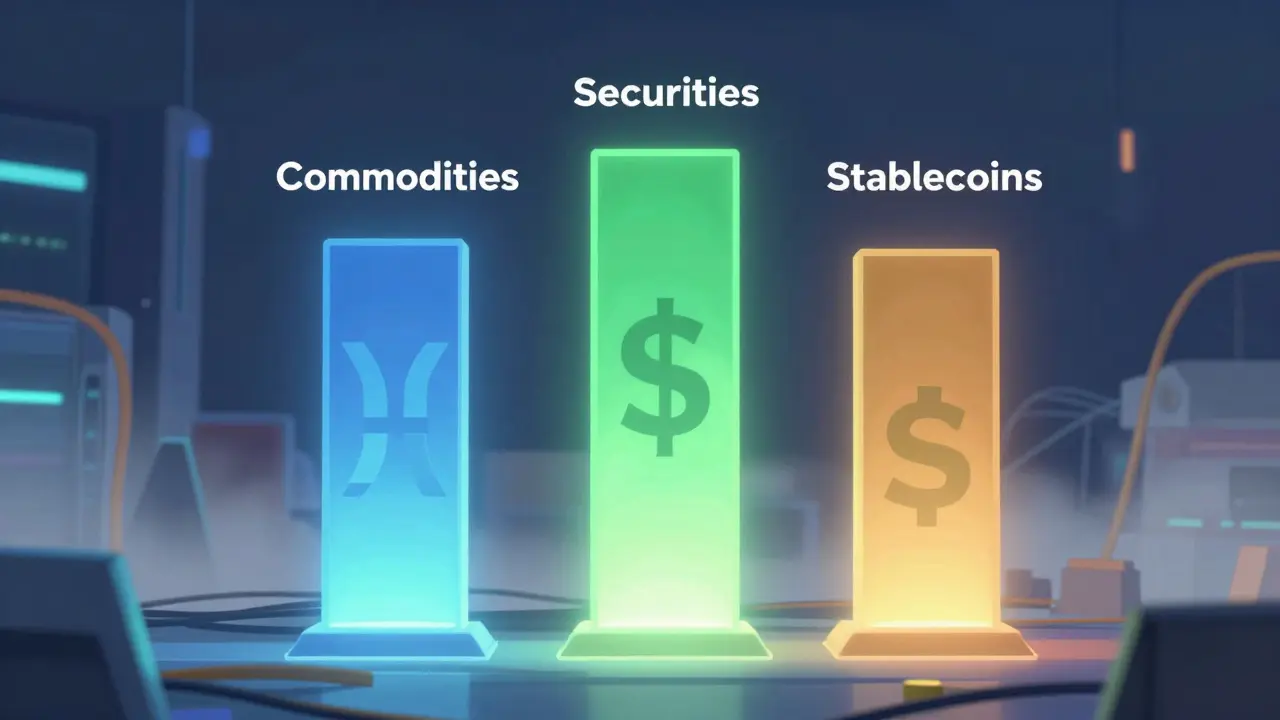
The heart of the legislative change lies in the classification system introduced by the CLARITY Act. Before 2025, the Securities and Exchange Commission (SEC) and the Commodity Futures Trading Commission (CFTC) often clashed over jurisdiction, leaving traders confused about which rules applied to their portfolios. The new law resolves this by splitting crypto assets into three specific categories.
First, we have digital commodities. Assets like Bitcoin and Ethereum fall here. They are now firmly under CFTC oversight. This is a massive relief for many traders because it removes them from the strict securities reporting requirements that previously made institutional adoption difficult. Second, there are investment contract assets. These remain under SEC jurisdiction, meaning they are treated similarly to traditional stocks. Finally, we have permitted payment stablecoins, which are regulated under the GENIUS Act. This creates a tripartite system where each asset type has a known regulator, eliminating the "regulation by enforcement" era that defined the previous decade.
This structure matters because it dictates who can trade what and where. For instance, registered broker-dealers and national securities exchanges can now legally handle digital commodities and permitted stablecoins without fear of losing their exemption eligibility. This opens the door for traditional financial institutions to offer crypto services alongside stocks and bonds, bringing unprecedented liquidity and stability to the market.
Stablecoins Get Their Own Rulebook
The GENIUS Act deserves special attention because stablecoins are the backbone of daily crypto trading. In 2025, USD-backed stablecoins processed over $1.8 trillion in monthly transaction volume. Before this act, issuers operated with minimal federal oversight, creating risks for users regarding reserve transparency and redemption rights.
Under the GENIUS Act, issuers of USD-backed payment stablecoins must meet rigorous standards. They need to maintain adequate reserves, undergo regular audits, and ensure instant redeemability at par value. For traders, this means higher confidence in the assets you use to park funds between trades. It also means that banks and money market funds can interact with stablecoin issuers more safely, potentially leading to better integration between fiat banking and crypto wallets.
However, this comes with trade-offs. Smaller stablecoin projects may struggle to meet the compliance costs required by the GENIUS Act. You might see consolidation in the stablecoin market, with only the largest, most compliant tokens surviving. As a trader, you should verify that the stablecoins you use are fully compliant with these new federal standards to avoid holding illiquid or de-pegged assets.
| Feature | |
|---|---|
| Jurisdiction Clarity | Pre-2025: Ambiguous overlap between SEC and CFTC |
| Jurisdiction Clarity | Post-2025: Clear split into Commodities (CFTC), Securities (SEC), and Stablecoins (GENIUS) |
| Institutional Access | Pre-2025: Limited due to custody and registration fears |
| Institutional Access | Post-2025: Broker-dealers and ATSs can handle digital commodities freely |
| State Laws | Pre-2025: Subject to varying state "blue sky" laws |
| State Laws | Post-2025: Digital commodities exempt from state blue sky laws as "covered securities" |

What This Means for Retail Traders
If you are a retail trader, the immediate benefit is access. Previously, many large platforms hesitated to list certain tokens due to regulatory fear. Now, with the CLARITY Act defining what constitutes a digital commodity, exchanges can list these assets with greater confidence. You will likely see more diverse trading pairs and deeper order books on major platforms.
Custody is another area of significant change. The SEC issued a no-action letter in September 2025 allowing registered investment advisers to hold crypto assets with qualified state trust companies. This means if you use an advisory service or a retirement account wrapper, your crypto holdings can now be stored in institutional-grade custody solutions rather than risky personal wallets or unregulated third parties. This reduces the risk of theft and loss, making crypto safer for long-term holds.
However, don’t expect anonymity to survive. With increased regulation comes increased surveillance. Platforms handling digital commodities must implement robust Know Your Customer (KYC) and Anti-Money Laundering (AML) protocols. While this protects the ecosystem from bad actors, it also means your trading activity is more visible to regulators. Privacy coins may face additional scrutiny or delisting from major exchanges if they cannot comply with these transparency requirements.
Compliance Burdens for Businesses and Advisors
For those running businesses or managing funds, the operational adjustments are substantial. Registered Investment Advisers (RIAs) must revise their compliance manuals. Under the old rules, any mention of crypto by an employee triggered complex reporting obligations under SEC Rule 204A-1. Now, because Bitcoin and other digital commodities are classified separately, RIAs can simplify their codes of ethics. Employees trading digital commodities do not necessarily trigger the same pre-clearance requirements as those trading securities.
This distinction allows firms to hire crypto-savvy talent without fearing inadvertent compliance violations. However, it requires precise tracking. If an advisor manages both security tokens and digital commodities, they may need dual registration strategies-operating as an RIA for securities and a Commodity Trading Advisor (CTA) for commodities. This adds complexity to business models but provides a clear path forward for professional management of mixed portfolios.
Technology infrastructure also needs upgrades. Broker-dealers and exchanges must modernize recordkeeping systems to accommodate blockchain-based books and records. This isn’t just a software update; it involves training staff to understand private key security, blockchain network risks, and the immutable nature of distributed ledger technology. Institutions that fail to invest in this infrastructure will find themselves at a competitive disadvantage.

Global Competitiveness and Market Growth
The U.S. regulatory framework of 2025 positions America as a leader in the global crypto race. Compared to the European Union’s Markets in Crypto-Assets (MiCA) regulation, which imposes heavy burdens on all crypto activities, the U.S. approach is more targeted. By focusing on USD-backed stablecoins and clearly defining commodities, the U.S. creates a business-friendly environment that attracts innovation while maintaining consumer protections.
This clarity is driving capital back to American shores. Many crypto businesses had moved offshore to jurisdictions like the Cayman Islands or Malta due to regulatory uncertainty in the U.S. Now, with a clear statutory framework, these companies are returning. Major financial institutions, such as State Street Global Advisors, are launching crypto investment products, including actively managed ETFs like the SPDR Galaxy ETFs. This institutional participation brings legitimacy and scale to the market, benefiting all participants through lower volatility and higher liquidity.
As we move into late 2026, the market capitalization of cryptocurrencies continues to grow, supported by this regulatory foundation. The successful launch of spot Bitcoin and Ethereum ETFs earlier in the decade paved the way, but the 2025 acts provided the structural integrity needed for sustained growth. Investors who adapt to these new rules will find themselves in a healthier, more transparent market.
Navigating the Transition: Practical Steps
To make the most of this new landscape, take these practical steps. First, audit your current holdings. Identify which assets are classified as digital commodities, security tokens, or stablecoins. This determines your tax treatment and reporting obligations. Second, review your custody solutions. Ensure your provider is compliant with the new state trust company guidelines if you are using an advisory service. Third, stay informed about ongoing rulemaking. The SEC’s Spring 2025 Regulatory Flex Agenda includes further updates on retail alternative investment products, so keep an eye on announcements from the Office of Information and Regulatory Affairs.
Finally, educate yourself on the differences between centralized and decentralized finance (DeFi) under the new laws. While the CLARITY Act clarifies centralized trading, DeFi protocols still operate in some gray areas. Until specific guidance is issued for decentralized autonomous organizations (DAOs), exercise caution when interacting with smart contracts that may be deemed unregistered securities offerings.
Does the Investment and Securities Act 2025 make crypto legal in the US?
Crypto was already legal, but the 2025 legislation provides clear regulatory frameworks for trading and custody. It ends the era of "regulation by enforcement" by defining specific roles for the SEC, CFTC, and stablecoin issuers, making it safer for institutions and individuals to participate.
Is Bitcoin considered a security under the new law?
No. Under the CLARITY Act, Bitcoin is classified as a "digital commodity" and falls under the jurisdiction of the Commodity Futures Trading Commission (CFTC), not the Securities and Exchange Commission (SEC). This distinction simplifies compliance for traders and advisors.
How does the GENIUS Act affect stablecoin users?
The GENIUS Act mandates stricter standards for USD-backed stablecoins, including reserve transparency and instant redeemability. For users, this means greater safety and reliability when using stablecoins for transactions or as a hedge against market volatility.
Can traditional banks now offer crypto services?
Yes. The legislation allows registered broker-dealers and national securities exchanges to handle digital commodities and permitted stablecoins. This enables traditional financial institutions to integrate crypto services into their existing offerings, subject to compliance with new recordkeeping and custody rules.
What happens to DeFi protocols under the new regulations?
While the CLARITY Act clarifies rules for centralized entities, DeFi protocols remain in a transitional phase. Some aspects may still be scrutinized under securities laws if they are deemed investment contracts. Traders should exercise caution and monitor future SEC guidance on decentralized autonomous organizations.
Sudarshan Anbazhagan
May 14, 2026 AT 13:36it is truly lamentable that the masses continue to misunderstand the profound implications of this legislative shift. one must consider that the classification of digital commodities under the CFTC is not merely a bureaucratic adjustment but a fundamental reordering of financial ontology. when we observe the removal of securities reporting requirements for assets like Bitcoin, we are witnessing the dismantling of archaic regulatory frameworks that served only to stifle innovation. furthermore, the GENIUS Act’s mandate for reserve transparency in stablecoins represents a necessary evolution toward fiscal responsibility, ensuring that the backbone of daily trading is not built on sand. those who fail to adapt their custody solutions to these new institutional-grade standards will inevitably find themselves marginalized by the very markets they seek to profit from. it is imperative that retail traders audit their holdings with rigorous precision, distinguishing between security tokens and permitted payment stablecoins, lest they incur unintended tax liabilities. the era of anonymity is conclusively over, and any resistance to KYC protocols is nothing short of obstinate ignorance of modern compliance necessities.
Gavin Wonnacott
May 15, 2026 AT 19:28you people are absolutely delusional if you think this brings any real safety. i have been trading since the dark days of Mt Gox and let me tell you, regulation is just another word for control. the fact that broker-dealers can now handle digital commodities means your money is no longer yours, it belongs to the institution holding it. do not trust these 'institutional-grade custody solutions' because they are designed to keep you dependent and vulnerable. the SEC may have stepped back on Bitcoin, but they are still lurking around every corner waiting to classify your next favorite altcoin as a security. wake up and smell the coercion.
Michael Berggren
May 16, 2026 AT 13:50i actually see a lot of positive potential here! 🌟 the clarity provided by the CLARITY Act is exactly what we needed to bring more legitimacy to the space. knowing that Bitcoin is firmly under CFTC oversight removes so much fear for long-term holders. plus, the idea that traditional banks can now offer crypto services feels like a huge step towards mainstream adoption. it makes me feel safer knowing that my retirement account could potentially hold crypto in qualified trust companies. let's embrace this growth together! 🚀💪
Pauline Larocco71
May 17, 2026 AT 22:37honestly im so confused about all this but i guess its good? i dont really trade much but i heard stablecoins are safer now which sounds nice. maybe i should try putting some money into an ETF or something? just wondering if anyone has tips on where to start without getting overwhelmed by all the legal jargon lol.
beti macedo
May 18, 2026 AT 10:17It is indeed a remarkable development that the United States has taken such decisive action to clarify the regulatory landscape for digital assets. The distinction between digital commodities and investment contract assets provides a much-needed framework for investors to navigate the market with confidence. I believe that the increased scrutiny on stablecoin issuers under the GENIUS Act will ultimately lead to a more robust and trustworthy ecosystem. We should all strive to educate ourselves on these changes to ensure our portfolios are aligned with the new compliance standards.
Michelle Bonahoom
May 20, 2026 AT 00:13typical american overreach. they always want to put their hands in everything. why do we need federal laws for crypto? let the states decide. i hate how they force everyone to use KYC now. privacy is dead and its all because of these politicians trying to control us. whatever.
Kimberly Herbstritt
May 21, 2026 AT 23:50i disagree with the hype surrounding this. while clarity is good, the consolidation of power among large institutions is dangerous. smaller exchanges will struggle to meet the compliance costs, leading to a monopoly situation where big banks dictate the terms. also, DeFi is still in the gray area so don't get too comfortable thinking everything is solved. the genie is out of the bottle and these laws are just band-aids.
Ellie Riddell
May 23, 2026 AT 19:58so basically, the government finally admitted they had no clue what was going on and decided to just pick sides instead of figuring it out properly. hilarious. i suppose calling Bitcoin a commodity is better than calling it a security, but it still feels like they're playing catch-up. at least now the lawyers have something to do. sarcasm aside, it does make things easier for the average joe who doesn't want to read 100 pages of legal text before buying ETH.
Tobias Gjerlufsen
May 23, 2026 AT 22:57you fools are missing the point entirely. this is not about safety, it is about surveillance. the moment you allow broker-dealers to handle your assets, you hand over your sovereignty. the CFTC is just another arm of the state looking to extract value from your trades. do not be fooled by the talk of liquidity and stability. these are mechanisms of control. the true believers in decentralization know that any regulated system is inherently flawed and will eventually corrupt the technology it seeks to govern.
Ruben Michel
May 25, 2026 AT 21:58The implementation of the GENIUS Act signifies a maturation of the financial sector. It is essential for sophisticated investors to recognize that the exemption of digital commodities from state blue sky laws facilitates cross-border efficiency. One must appreciate the nuanced approach taken by the legislature in separating payment stablecoins from speculative assets. This bifurcation allows for a more precise application of regulatory capital requirements. Those who dismiss these changes as mere bureaucracy fail to understand the complex interplay between risk management and market integrity.
Samara McCallum
May 26, 2026 AT 04:49i mean... sure, if you like living in a glass house where everyone knows your business then go ahead and love this new law. but for me, the idea of instant redeemability and audits feels like a prison sentence for my money. why do we need to prove who we are to buy digital coins? it seems like they are trying to kill the spirit of crypto. but hey, if you enjoy being monitored, i suppose this is your utopia. 🙄
Sheldon Friesen
May 27, 2026 AT 15:11Look, folks! It's time to face facts!! The regulations are here to stay!!! Whether you like it or not!!! You need to update your compliance manuals!!! If you are an RIA, you better get your dual registration strategies sorted out!!! Don't be lazy about this!!! The market is evolving rapidly!!! And those who ignore the rules will get left behind!!! So buckle up and learn the new game!!! 🎲📈
Tricia Alach
May 28, 2026 AT 03:53im not sure if this is good or bad tbh. on one hand, having clear rules sounds safe, but on the other hand, it feels like they are taking away the fun part of crypto. i miss when we could just buy anything without worrying about whether it was a security or a commodity. now we have to check three different agencies? sigh. i guess its better than getting sued though.
Jan Gilmore
May 29, 2026 AT 17:49Let me explain something to you all. The CLARITY Act is a masterstroke. By defining Bitcoin as a commodity, they have opened the floodgates for institutional capital. Do you realize what this means? Massive inflows of money from pension funds and endowments. These guys are smart enough to see that the volatility will decrease as liquidity increases. Stop complaining about KYC and start preparing for the bull run driven by Wall Street. They are coming for your bags.
Bradley Geldenhuys
May 29, 2026 AT 20:40man, i think this is pretty cool. finally some clarity after years of confusion. i always thought the SEC was messing with bitcoin for no reason. now that its under the CFTC, it feels more legit. also, the part about stablecoins needing audits is important. remember Tether? yeah, lets hope this stops that kind of stuff. i might start using my retirement account for crypto now if its safe. lets go!
robert Whitehead
May 31, 2026 AT 06:23You are all missing the moral decay inherent in this legislation. By legitimizing these unproven assets, the government is endorsing speculation over production. The fact that they are allowing broker-dealers to handle these risky instruments shows a complete lack of fiduciary responsibility. We should be ashamed that our financial system is built on sand. The only right move is to opt out entirely and hold physical gold. This crypto nonsense is a distraction from real economic issues.