 Jan, 23 2026
Iran’s government has spent years trying to shut down cryptocurrency use-but it’s not working. Despite banning crypto ads, blocking payment gateways, and forcing citizens to register every wallet with their national ID, millions of Iranians still use digital assets daily. Why? Because the rial keeps losing value. Inflation hit 42% in early 2025. People aren’t trading crypto for fun-they’re using it to save their money. And they’ve built a whole underground system to make it happen.
Why the government can’t stop crypto
The Central Bank of Iran (CBI) claims it wants to protect the economy. In reality, it’s trying to control money flow. They legalized mining-because Iran has cheap electricity and the state takes a cut. But they banned peer-to-peer trading, froze wallets, and forced exchanges to hand over user data. It sounds tight. But here’s the truth: 89% of Iranian crypto transactions now happen outside government control. People aren’t ignoring the rules. They’re outsmarting them. Every time the government blocks one channel, users find another. The result? A parallel financial system running on Telegram bots, encrypted VPNs, and decentralized stablecoins. It’s not perfect. But it works.Top 3 methods Iranians use to bypass crypto restrictions
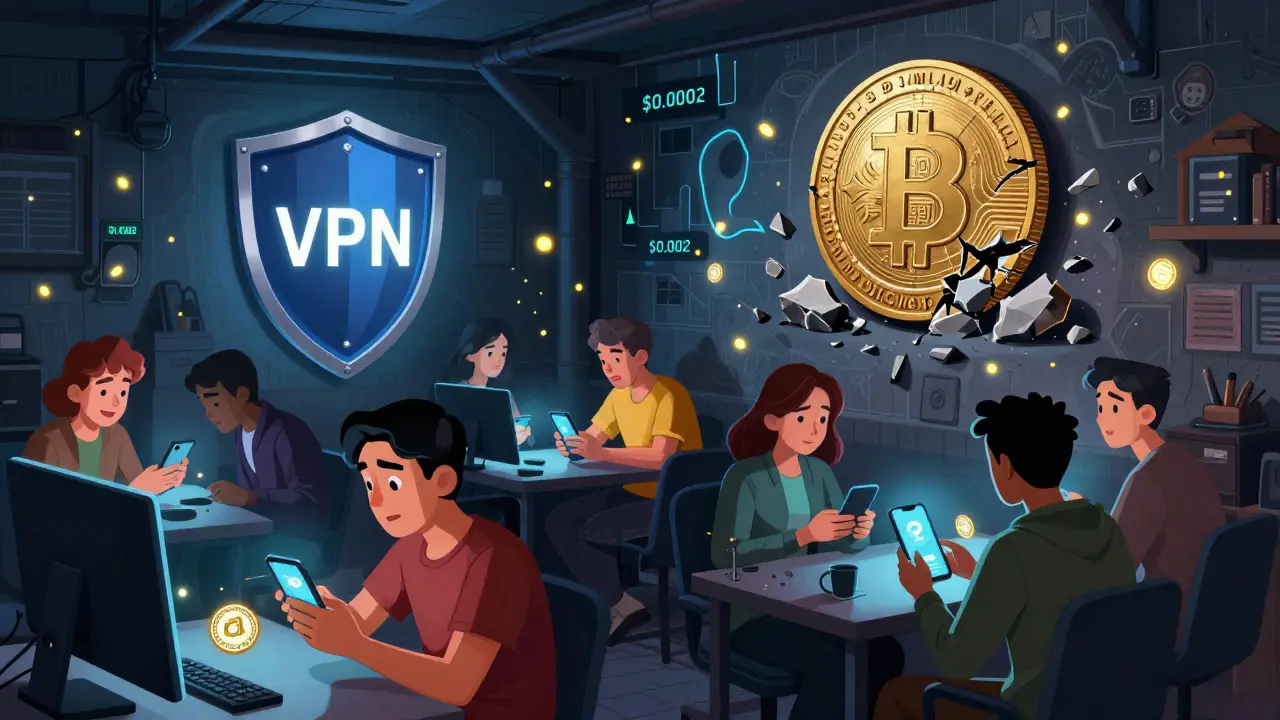
- Use DAI on Polygon instead of USDT - After Tether froze 42 Iranian wallets in July 2025, users fled USDT in droves. Within 28 days, DAI became the new default. Why? DAI runs on Polygon, which costs $0.0002 per transaction and confirms in under a second. USDT on TRC-20? $0.10 and 13 seconds. That’s the difference between paying for groceries and paying for a taxi ride.
- Connect via VPN with obfuscation - Most Iranians use NordVPN, ExpressVPN, or Surfshark. But not just any setup. They use “obfuscated servers” that hide the fact you’re using a VPN. Regular VPNs get blocked fast. Obfuscated ones? They work 83% of the time, according to users on Reddit’s r/IranCrypto. You need to manually select the obfuscation option in your app settings-it’s not automatic.
- Trade on Telegram bots, not exchanges - Nobitex, Iran’s biggest exchange, now only operates 10 AM to 8 PM. And even then, it’s slow and full of delays. Instead, people use Telegram bots like @IranCryptoBridge. You send USDT, the bot converts it to DAI on Polygon, and sends it to your MetaMask wallet. No KYC. No waiting. Takes 7 minutes. Fee under $0.50.
What tools you actually need
You don’t need fancy gear. Just three things:- Telegram - Used by 89% of Iranian crypto users. It’s the hub for bots, groups, and tutorials. Download the app, join a few crypto groups, and start reading. Most are in Farsi, but the steps are visual-screenshots and simple commands.
- MetaMask - The most common non-custodial wallet. Install it on your phone or browser. Make sure you back up your seed phrase on paper. Never store it on your phone. If your phone dies or gets stolen, you lose everything.
- A reliable VPN - Don’t use free ones. They’re slow and get blocked. Paid services like Surfshark cost $3.50/month if you pay yearly. That’s less than your daily coffee. Enable “obfuscation” or “stealth mode” in settings. Test it before you try to trade.
Most people spend 17-22 hours learning this system. Not because it’s hard-but because every update changes the rules. A bot gets shut down? You find a new one. A VPN server stops working? You switch to another. It’s a constant game of whack-a-mole.
What doesn’t work (and why)
Some methods look good on paper-but fail in Iran.- Government digital rial - Launched on Kish Island in 2025. Only 12,400 people use it. Why? It’s tied to your national ID. You can’t send it abroad. You can’t use it on international platforms. It’s a digital leash, not a currency.
- USDT on Ethereum - Tether froze Iranian wallets. Ethereum fees are too high ($1.75 per transfer). You’ll pay more in fees than you’re trying to send.
- Local exchanges without VPN - Nobitex and others require full KYC. They report to the government. If you deposit $10,000, they flag it. If you withdraw, they freeze it. They’re not safe for large transfers.
Real risks and how to avoid them
There are dangers. People lose money. Here’s how:- Transaction failures - Peak hours (4-6 PM local time) cause internet throttling. That’s when the government slows down traffic to crypto sites. Avoid trading then. Do it early morning or late night.
- Wallet mistakes - Sending DAI to a USDT address? Gone forever. Always double-check the token type and network. Polygon ≠ Ethereum. DAI ≠ USDT.
- Scams - Telegram groups are full of fake bots. If someone messages you saying “send 1 DAI, get 2 back,” it’s a trap. Never send crypto to strangers. Use only verified bots with public logs and community reviews.
One user, ‘RialProtector’, tracked his savings over six months. He held only crypto. His purchasing power stayed 85% higher than someone who kept cash in rials. The person holding US dollars? Lost 42% because black market rates swung wildly.
What’s next in 2026
The government is trying to catch up. In September 2025, they forced wallet providers to monitor every transaction in real time. So users responded with multisig wallets and decentralized exchanges that don’t require login. By Q1 2026, DAI on Polygon will make up 85% of all Iranian stablecoin trades. That’s up from 67% today. The digital rial? It’s dying. Only 0.02% of crypto users use it. No one trusts it. No one wants to be tracked. The real story? Iranians didn’t wait for permission. They built their own system. It’s messy. It’s risky. But it works. And it’s growing.If you’re in Iran and need to protect your money, you don’t need a lawyer. You need a VPN, a MetaMask wallet, and the patience to learn. The tools are out there. The community is strong. And the rial? It’s still falling.
Is it legal to use crypto in Iran?
It’s not officially legal to use crypto for payments or trading. The government bans unregulated exchanges and freezes wallets. But using crypto for personal savings-especially through decentralized tools like DAI and MetaMask-isn’t explicitly illegal. Enforcement is inconsistent. Most people are not targeted unless they’re moving large sums or running businesses.
Can I use Binance in Iran?
Yes, but only through a reliable VPN with obfuscation enabled. Binance is blocked by default. Many users report 83% success rates using Windscribe or NordVPN with stealth mode. Connection drops happen during government internet throttling, especially between 4-6 PM. Try connecting outside those hours.
Why is DAI better than USDT in Iran?
DAI on Polygon is faster, cheaper, and harder to freeze. USDT on TRC-20 has higher fees and was heavily targeted after Tether froze 42 Iranian wallets in July 2025. DAI transactions cost $0.0002 and finalize in under a second. It’s decentralized, so no single company can shut it down. That’s why 67% of Iranian stablecoin trades now use DAI.
What’s the best VPN for crypto in Iran?
Surfshark, NordVPN, and ExpressVPN are the top choices. All offer obfuscation or stealth mode to hide VPN traffic. Avoid free VPNs-they’re slow, unreliable, and often monitored. Paying $3-$8/month gives you stable access. Test your connection before trading. Use sites like downforeveryoneorjustme.com to check if your IP is blocked.
How do I avoid getting my wallet frozen?
Never use centralized exchanges that require KYC. Don’t send large amounts to the same address repeatedly. Use DAI on Polygon, not USDT. Avoid linking your wallet to your real name or phone number. Use a burner phone number for Telegram. Keep your seed phrase offline. Most freezes happen when users use regulated platforms or trigger reporting thresholds ($10,000+).
Are Telegram crypto bots safe?
Only if they’re verified by the community. Bots like @IranCryptoBridge have been running for months with public transaction logs and thousands of users. Never trust a bot that messages you first. Never send crypto to a bot without checking its history. Join Telegram groups like @IranCryptoUpdates to get real-time alerts about new or compromised bots.
What if my internet goes down?
Iran experiences 15-20 internet shutdowns per year, mostly during protests or elections. If your connection drops mid-transaction, wait. Don’t retry. Your transaction may still go through. Check your wallet balance after 24 hours. Always keep a backup of your seed phrase. If you lose your phone, you can restore your wallet on any device.
steven sun
January 24, 2026 AT 03:20bro i just used this stuff last week and my dai went through like butter no freeze no drama just pure speed
Shamari Harrison
January 24, 2026 AT 18:18This is actually one of the most clear-eyed breakdowns of crypto resistance I’ve seen. The shift from USDT to DAI on Polygon isn’t just technical-it’s a cultural pivot. People aren’t just avoiding censorship, they’re rebuilding financial sovereignty piece by piece. The fact that they’re using Telegram bots as de facto banks? That’s innovation born of necessity. And the 89% stat? That’s not a loophole. That’s a revolution.
David Zinger
January 25, 2026 AT 20:01USA says crypto is illegal then turns around and uses it to fund wars lmao 🤡💸
Arielle Hernandez
January 26, 2026 AT 14:20While the technical details are accurate, I must emphasize the profound human dimension here. The Iranian people are not merely circumventing regulations-they are constructing an alternative economic ecosystem with remarkable resilience. Their use of decentralized tools reflects not just technical literacy, but a deep, collective will to preserve autonomy in the face of systemic control. This is not merely about finance; it is about dignity.
carol johnson
January 28, 2026 AT 12:26OMG this is so extra 😭 I mean like… who even uses DAI on Polygon?? 😤 I just bought a Tesla with USDT on Solana and it was so easy 😌
Bonnie Sands
January 30, 2026 AT 11:20Wait… this is all a CIA psyop to destabilize Iran. They know the government will crack down harder if people think crypto is working. Then they use the chaos to justify sanctions. I’ve seen the patterns. This isn’t freedom-it’s engineered collapse. 🕵️♀️💣
Andy Simms
January 31, 2026 AT 03:06One thing missing here: the role of hardware wallets. While MetaMask is convenient, using a Ledger or Trezor with a burner phone and offline signing adds a layer of protection against remote exploits. Many users in Tehran are already doing this-especially those moving larger sums. It’s slower, yes, but if your seed phrase is on paper and your device is never connected to the internet, even a state actor can’t touch it.
Harshal Parmar
January 31, 2026 AT 23:13Man I live in India and we got our own problems with crypto bans and RBI crackdowns but honestly seeing how Iranians are handling this gives me hope like seriously they turned a total mess into a working system with just a phone and a VPN and some patience I mean if they can do it with 42% inflation and internet shutdowns every other week then we can definitely figure out something better than Paytm crypto
Matthew Kelly
February 1, 2026 AT 10:11Been using Surfshark with obfuscation since last year. Works like a charm. Just remember: if your connection drops, don't panic. Wait 10 mins. Transactions usually go through even if the app says failed. And never, ever share your seed phrase. I saw a guy lose $12k because he screenshot it for 'backup'. 😅
Sara Delgado Rivero
February 1, 2026 AT 10:26People are risking jail for this and you're acting like it's a tech tutorial? The government isn't just blocking transactions-they're arresting people. You're normalizing dangerous behavior by treating it like a hackathon
Nadia Silva
February 2, 2026 AT 17:29How can anyone take this seriously? The U.S. has been funding regime change operations for decades. This is not grassroots innovation-it’s a Western-backed subversion. Canada doesn’t need this nonsense. Stick to your oil money and stop exporting chaos.
Chidimma Catherine
February 3, 2026 AT 11:24This is an incredible resource for anyone trying to understand financial resilience in authoritarian contexts. The technical choices-DAI on Polygon, obfuscated VPNs, Telegram bots-are not just pragmatic, they are brilliant adaptations born from necessity. I’ve shared this with my students in Lagos. The parallels with Nigeria’s forex struggles are striking. What’s happening in Iran is not unique-it’s universal. People everywhere will find ways to preserve value when institutions fail. The tools may differ, but the will is the same. Thank you for documenting this with such clarity.
Melissa Contreras López
February 4, 2026 AT 12:21Reading this made me tear up a little. People are building a financial lifeline with nothing but a phone and grit. That’s not crypto-that’s courage. Keep going. You’re not alone. 🌍❤️
Clark Dilworth
February 4, 2026 AT 13:47From a protocol standpoint, the migration to DAI on Polygon represents a shift from centralized stablecoin infrastructure (USDT) to a permissionless, non-custodial, gas-efficient settlement layer. The marginal cost of settlement is effectively zero, enabling microtransactions at scale-something the Iranian informal economy requires. The obfuscated VPN layer functions as a transport-layer anonymity set, circumventing DPI-based censorship. This is not evasion-it’s protocol-level resilience.