 Jan, 16 2026
Security tokens aren’t just another crypto trend-they’re the bridge between traditional investing and blockchain technology. In 2026, you can own a fraction of a Manhattan apartment, a slice of a startup’s equity, or even a share in a vineyard in Napa-all as digital tokens on a blockchain. But unlike Bitcoin or Ethereum, these aren’t speculative coins. They’re legally recognized securities, backed by real assets and regulated by financial authorities. If you’re wondering how to invest in security tokens, here’s how it actually works-no fluff, no hype.
What Exactly Are Security Tokens?
Security tokens are digital representations of ownership in real-world assets. Think of them like shares in a company, but instead of paper certificates or brokerage accounts, they exist on a blockchain. They’re not utility tokens that give you access to a service. They’re not meme coins. They’re financial instruments-just digitized. A security token might represent:
- Ownership in a commercial property
- Fractional shares of a private company
- A stake in a gold reserve or oil pipeline
- Revenue rights from a music catalog or patent
These tokens are built to follow securities laws. That means they come with investor protections, reporting requirements, and restrictions on who can buy them. In the U.S., many are limited to accredited investors-those with a net worth over $1 million (excluding primary residence) or annual income over $200,000. But in places like Singapore, Switzerland, and parts of the EU, retail investors can also participate under specific rules.
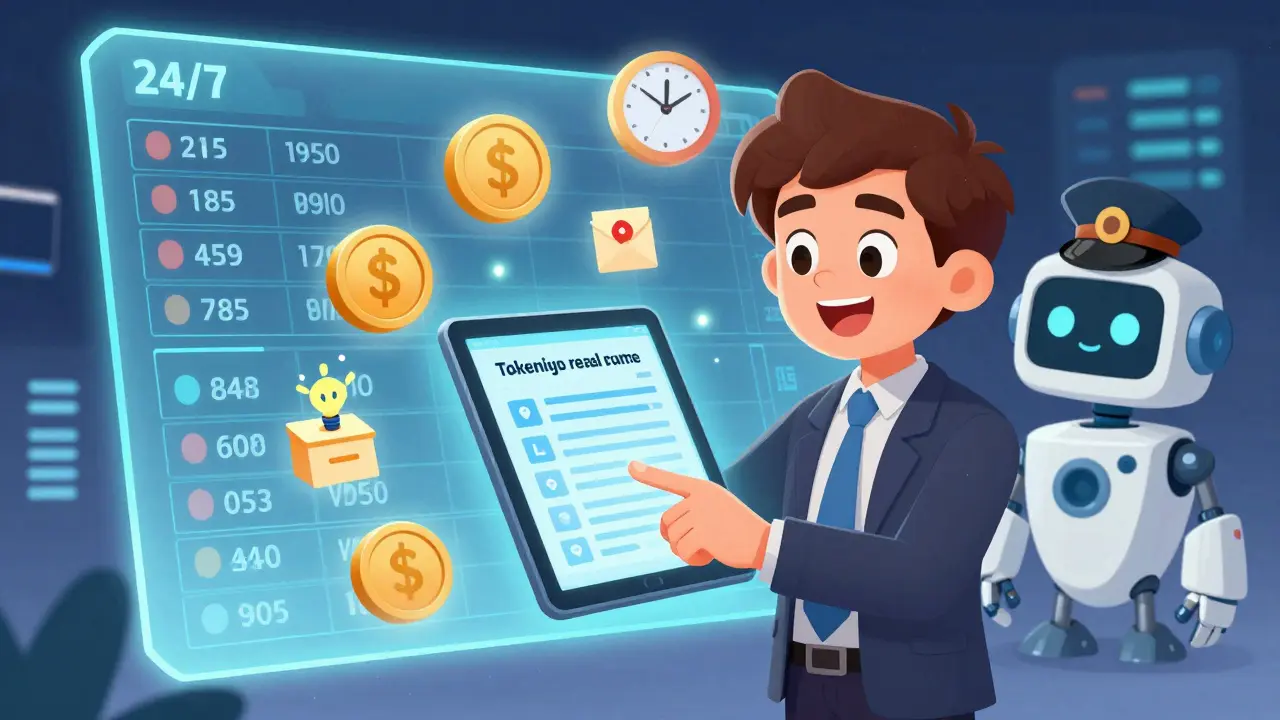
Unlike traditional stocks, security tokens trade 24/7. Settlement happens in minutes, not days. Dividends or rental income are paid automatically via smart contracts. And because ownership is recorded on a public ledger, fraud and double-selling are nearly impossible.
Why Now? The Market Has Matured
Five years ago, security tokens were mostly theoretical. Today, they’re live. The New York Stock Exchange’s parent company launched Bakkt’s institutional tokenized asset platform. The Swiss Exchange is building a regulated marketplace just for security tokens. Major banks like UBS and JPMorgan are testing tokenized bonds and private equity.
Why the shift? Regulatory clarity. In 2025, the SEC made it clear: if a token promises profit based on the efforts of others, it’s a security. That killed the wild west of ICOs and forced issuers to play by the rules. Now, platforms have to verify investors, track ownership, and report to regulators. That’s not a bug-it’s the feature.
Real estate is leading the charge. In 2025, over $8 billion in commercial and residential properties were tokenized globally. A single luxury apartment in Auckland or Dubai can now be divided into 10,000 tokens. Each one costs as little as $50. You don’t need to buy the whole building-you just buy a piece. And if you want to sell later, you can list it on a regulated exchange like Securitize or tZERO.
Step-by-Step: How to Invest in Security Tokens
Investing isn’t as simple as opening a crypto app. There are rules. But once you know the steps, it’s straightforward.
- Choose a regulated platform-Not every crypto exchange lets you buy security tokens. You need one that’s licensed and follows KYC/AML rules. Look for platforms like Securitize, Polymarket, Harbor, or Tokeny. These aren’t DeFi apps-they’re financial institutions with blockchain tech.
- Complete KYC and AML verification-This is non-negotiable. You’ll need to upload your ID, proof of address, and sometimes tax documentation. The platform checks your status: are you an accredited investor? Are you from a sanctioned country? This takes 1-5 business days.
- Fund your account-You can deposit fiat currency (USD, EUR, NZD) via bank transfer or use approved stablecoins like USDC or EURC. Some platforms don’t accept Bitcoin or Ethereum directly-only compliant digital assets.
- Browse available assets-Platforms list tokenized offerings with details: asset type, expected return, minimum investment, jurisdiction, and exit timeline. You might see a tokenized office building in Berlin with a 7% annual yield, or shares in a Canadian tech startup raising $5 million via STO.
- Buy your tokens-Click ‘Invest,’ enter the amount, and confirm. You’ll receive your tokens in a secure digital wallet tied to your verified identity. You can’t move them to a personal wallet like MetaMask unless the platform allows it-and even then, compliance rules still apply.
- Manage and monitor-Track dividends, voting rights (if any), and price movements on the platform’s dashboard. Some tokens lock up for 6-12 months. Others trade daily. Always read the offering terms.
Where Are Security Tokens Traded?
You can’t just buy them on Binance or Coinbase (unless they’ve added a regulated segment). Trading happens on specialized platforms:
- Securitize - U.S.-based, focuses on equity and real estate
- tZERO - Backed by Overstock, trades tokenized stocks and funds
- Tokeny - EU-compliant, popular for European real estate and private equity
- Swiss Exchange (SIX Digital Exchange) - Institutional-grade, regulated by FINMA
- Harbor - Specializes in U.S. real estate tokenization
These platforms connect institutional investors with retail buyers. They also handle the legal paperwork-so you don’t have to.
What Blockchains Power Security Tokens?
Most security tokens run on Ethereum because it supports smart contracts with built-in compliance features. But other chains are catching up:
- Ethereum - Still the leader. Supports ERC-1400 and ERC-3643 standards designed specifically for securities.
- Polygon - Lower fees, faster transactions. Used by some platforms for scaling.
- Polkadot - Interoperable, good for cross-border offerings.
- Algorand - Built for finance. Low energy use, high speed.
Smart contracts on these chains enforce rules automatically: no transfers to unverified wallets, no sales to investors from banned countries, mandatory holding periods. It’s compliance built into the code.
Real-World Examples: What Can You Own?
Here’s what’s actually being tokenized right now:
- Real Estate - A 12-unit apartment complex in Toronto was divided into 50,000 tokens. Each token = $200 value. Investors get 6% annual rent distributions.
- Private Equity - A New Zealand-based renewable energy startup raised $3 million via security tokens. Investors get equity and voting rights.
- Commodities - A gold-backed token issued by a Swiss mint lets you own 0.01 grams of physical gold, stored in Zurich vaults.
- Art - A Warhol print was tokenized into 100 shares. Owners get a share of future auction proceeds.
These aren’t hypotheticals. They’re live investments with real returns and real legal backing.
Pros and Cons: Is It Right for You?
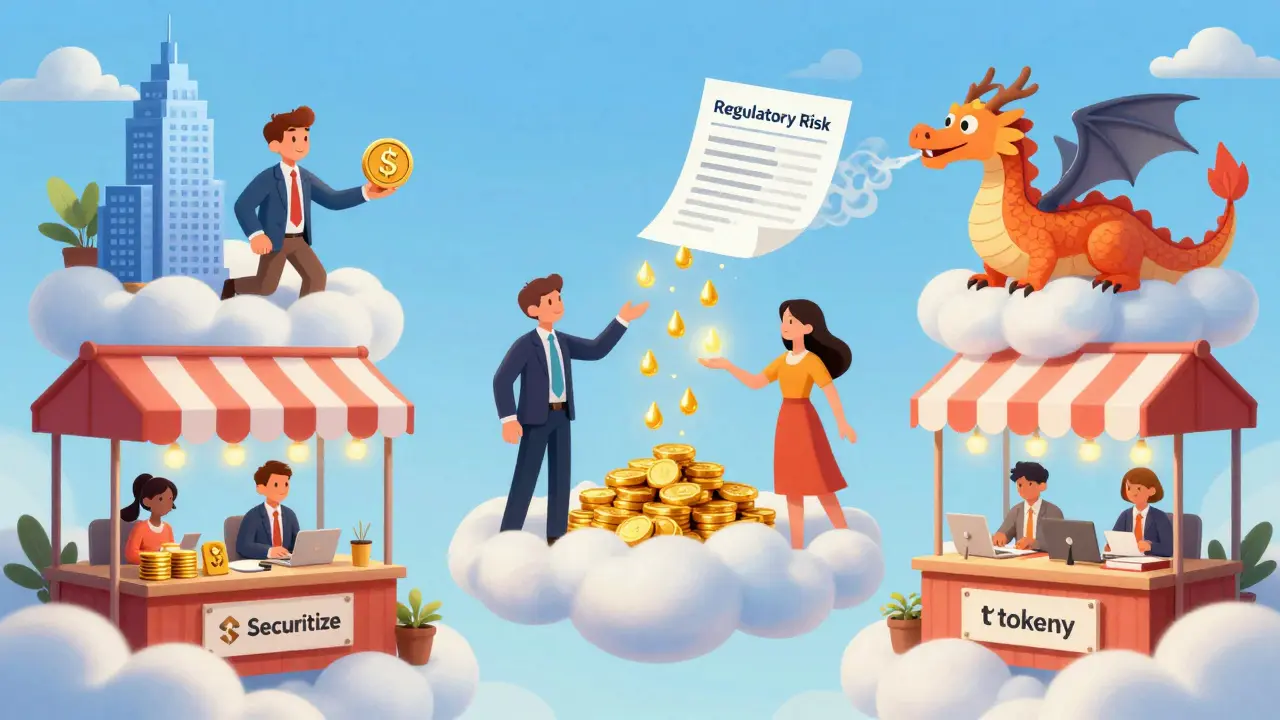
Security tokens offer big advantages-but they’re not for everyone.
| Pros | Cons |
|---|---|
| Fractional ownership: Invest $50 in a $5M property | Restricted access: Many only open to accredited investors |
| 24/7 trading and instant settlement | Limited liquidity: Some tokens can’t be sold for months |
| Automated dividends and transparent records | Regulatory risk: Rules change by country |
| Lower fees than traditional brokerage | Complex onboarding: KYC takes time |
| Access to assets once reserved for the wealthy | Still emerging: Fewer platforms, less public data |
If you’re looking for quick flips, skip this. If you want long-term, asset-backed exposure with legal protection, this is one of the most exciting developments in finance since ETFs.
Where to Start in 2026
Don’t jump in blindly. Here’s a practical path:
- Read the SEC’s guidance on digital assets (available on sec.gov). Understand what makes a token a security.
- Choose one regulated platform-start with Securitize or Harbor if you’re in the U.S., Tokeny if you’re in Europe.
- Complete KYC. Be patient. This step can’t be rushed.
- Start small. Invest $500 in one tokenized asset. Real estate is the safest entry point.
- Track your holdings. Learn how dividends are paid, how voting works, how to exit.
Security tokens won’t replace stocks or bonds. But they’ll expand them. In 10 years, owning a piece of a skyscraper or a patent might be as normal as buying Apple stock. Right now, you’re early. And that’s where the best opportunities are.
Are security tokens legal?
Yes, if they’re issued and traded on regulated platforms that follow securities laws. In the U.S., they’re governed by the SEC. In the EU, by MiCA regulations. In Singapore and Switzerland, they’re recognized as digital securities. Always verify the platform’s licensing before investing.
Can anyone invest in security tokens?
It depends. In the U.S., most offerings are limited to accredited investors. But some platforms offer Regulation A+ or Regulation CF offerings that allow non-accredited investors to participate with lower limits-usually under $10,000 per year. Outside the U.S., countries like Singapore, Switzerland, and Liechtenstein allow retail investors under specific conditions.
How are security tokens different from cryptocurrencies like Bitcoin?
Bitcoin is a decentralized digital currency. Security tokens represent ownership in real assets and are regulated as financial securities. Bitcoin has no underlying asset or income stream. Security tokens do-they pay dividends, rent, or interest. You can’t trade a security token on an unregulated exchange without breaking the law.
Can I transfer my security tokens to my own wallet?
Sometimes, but it’s not always allowed. Even if you can move them, the smart contract may block transfers to unverified wallets. Most platforms require you to hold tokens in their custodial wallet to maintain compliance. If you move them, you might lose the ability to sell or receive dividends until you re-verify.
What happens if the platform shuts down?
Your tokens are still yours. They’re stored on the blockchain, not on the platform’s servers. If the platform closes, you can still access your tokens using your private key (if you have one) or contact the issuer directly. Many platforms partner with regulated custodians like Anchorage or BitGo to ensure asset safety even if the front-end disappears.
Do security tokens pay dividends?
Yes, if the underlying asset generates income-like rent from a property or profits from a company. Smart contracts automatically distribute payments to token holders on set dates. No broker fees. No delays. Just direct, transparent payouts.
Are security tokens a good investment for beginners?
They can be-if you start small and stick to well-regulated platforms. Real estate tokenization is the most beginner-friendly option because the asset is tangible and income is predictable. Avoid speculative offerings with vague business models. Treat them like you would any other investment: research the asset, understand the risks, and never invest more than you can afford to lose.
Next Steps: What to Do Today
Don’t wait for the perfect moment. The window is open now.
- Visit one regulated platform-Securitize, Harbor, or Tokeny-and sign up for an account.
- Complete KYC. Even if you don’t invest today, getting verified now saves time later.
- Read the offering documents for one real estate token. Understand the property location, projected returns, and exit strategy.
- Set a budget. Start with $500. See how it feels.
Security tokens are not magic. They’re just better finance. Faster. Transparent. Accessible. If you’ve ever wanted to own a piece of something valuable but couldn’t afford it-this is your chance. The system is finally ready. Are you?
Katherine Melgarejo
January 16, 2026 AT 15:52So I can buy a sliver of a Dubai apartment for $50? Cool. Now tell me how I explain this to my tax guy without him calling the FBI.
Alexis Dummar
January 18, 2026 AT 06:21Man, this is the first time crypto actually feels like finance instead of a fever dream. I used to think blockchain was just people trading dog pictures. Now? I see it as the quiet revolution nobody’s talking about - like when banks stopped using ledgers and started using computers. Only this time, it’s not just digitizing paper, it’s democratizing ownership. And yeah, the KYC is a pain, but honestly? If you want to own part of something real, you gotta play by the rules. No more ‘trust me bro’ crypto. This is grown-up money now.
kristina tina
January 18, 2026 AT 14:16Let me guess - the SEC ‘approved’ this because they’re in bed with the same banks that caused the 2008 crash. Tokenized assets? More like tokenized control. They’re just repackaging Wall Street’s old scams with blockchain glitter. And don’t even get me started on ‘regulated platforms’ - name one that hasn’t been hacked or frozen user funds. This isn’t innovation. It’s surveillance with dividends.
Jason Zhang
January 18, 2026 AT 16:08Bro, I read this whole thing and my brain just said ‘nah’. I’m not doing KYC for $50 of a building in Berlin. What if I move to Mexico next year? Do I lose my tokens? Do I need a lawyer just to sell my 0.003% of a vineyard? I’ll stick with ETFs. At least those don’t make me feel like I’m signing a non-disclosure agreement to own a piece of a parking lot.
Michael Jones
January 19, 2026 AT 20:14One thing people miss: the real win here isn’t fractional ownership - it’s automation. Dividends paid on-chain, no human error, no delays. That’s the future. Also, if you’re worried about liquidity, start with real estate tokens on Securitize. They’ve got the most active secondary market. And yes, the onboarding sucks - but so did opening a brokerage account in 1998. This is the new normal. Embrace the friction.
Anna Gringhuis
January 19, 2026 AT 22:16Wow. Someone actually wrote a guide that doesn’t sound like a crypto influencer trying to sell you NFTs of a cat in a spacesuit. This is refreshingly honest. The part about Regulation A+ for non-accredited investors? That’s the hidden gem. Most people don’t know they can invest $10K/year legally. You don’t need to be rich to get in - just patient and careful. And yes, the platform shutdown question? Totally valid. But your tokens live on the blockchain - not their server. That’s the whole point.
Jill McCollum
January 20, 2026 AT 11:12Okay but real talk - I’m from a small town in Ohio and I just bought $200 worth of a tokenized maple syrup farm in Vermont. I didn’t even know that was a thing. Now I get quarterly updates with photos of the trees and a breakdown of syrup sales. My grandma thinks I’m a genius. My cousin thinks I’m crazy. But I get checks every quarter. And I didn’t need a trust fund. Just a laptop and 20 minutes of KYC. This isn’t finance. It’s magic. 🌲💰
Hailey Bug
January 20, 2026 AT 15:47Security tokens aren’t for everyone - but they’re not meant to be. This is infrastructure. Think of it like the internet in the 90s. Only the tech-savvy and patient were early adopters. Now? Everyone uses it. Same here. The platforms are still clunky, the regulations are messy, but the underlying tech is solid. If you’re not ready to dive in yet, just get verified on one platform. Keep it inactive. Wait. Watch. Then move when you’re ready. No rush. But don’t sleep on this.
Patricia Chakeres
January 21, 2026 AT 11:40Oh, so now we’re supposed to trust the same institutions that crashed the economy with CDOs? They just swapped paper for blockchain and called it ‘compliance’. You think the SEC cares about you? They care about control. And the minute you try to move your tokens off their platform, you’ll find out how ‘decentralized’ this really is. The moment they decide to freeze your wallet - poof. Your ‘ownership’ becomes a digital ghost. This isn’t investing. It’s a gated community with a blockchain fence.