 Mar, 19 2026
If you're tired of jumping between centralized exchanges and dealing with KYC, deposits, and withdrawal delays, IguanaDEX offers a different path. It doesn’t try to be the next Uniswap or PancakeSwap. Instead, it’s built for one thing: trading assets on the Etherlink network. That’s not just a technical detail - it’s the whole point. This isn’t a platform for beginners looking to swap Bitcoin for Ethereum. This is for users already in the Tezos ecosystem, trying to make sense of DeFi without leaving their chain.
What Exactly Is IguanaDEX?
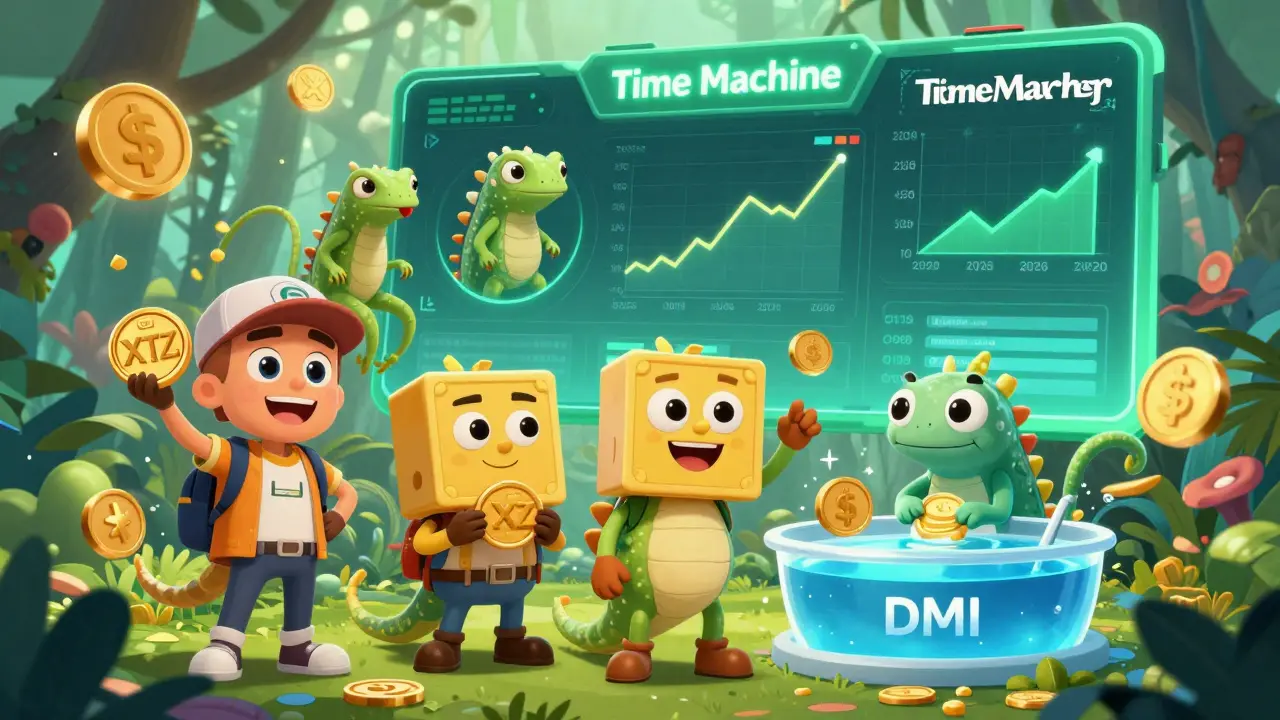
IguanaDEX is a decentralized exchange (DEX) that runs entirely on Etherlink, a Layer 2 scaling solution built on the Tezos blockchain. Unlike most DEXs that support dozens of blockchains, IguanaDEX focuses only on Etherlink. That means no Ethereum gas fees. No BSC congestion. Just faster, cheaper trades using XTZ as the base currency. The interface loads with a jungle theme - trees sway when you move your mouse, iguanas flick their tongues randomly, and leaves fall in the background. It’s playful, maybe even quirky. But it’s not just for show. The design reflects the platform’s identity: unconventional, experimental, and built for those who want something different.The core of IguanaDEX isn’t just swapping tokens. It’s built around something called the Digital Market Index (DMI). Think of it like a crypto index fund, but on-chain. DMI tracks a basket of Etherlink-based assets and rebalances automatically. You can trade directly against DMI, borrow against it, or even trade perpetual contracts tied to its value. There’s even a "Time Machine" feature that lets you see how DMI performed since January 2018. That’s rare. Most DeFi platforms don’t even show historical data this deep.
How Does It Work?
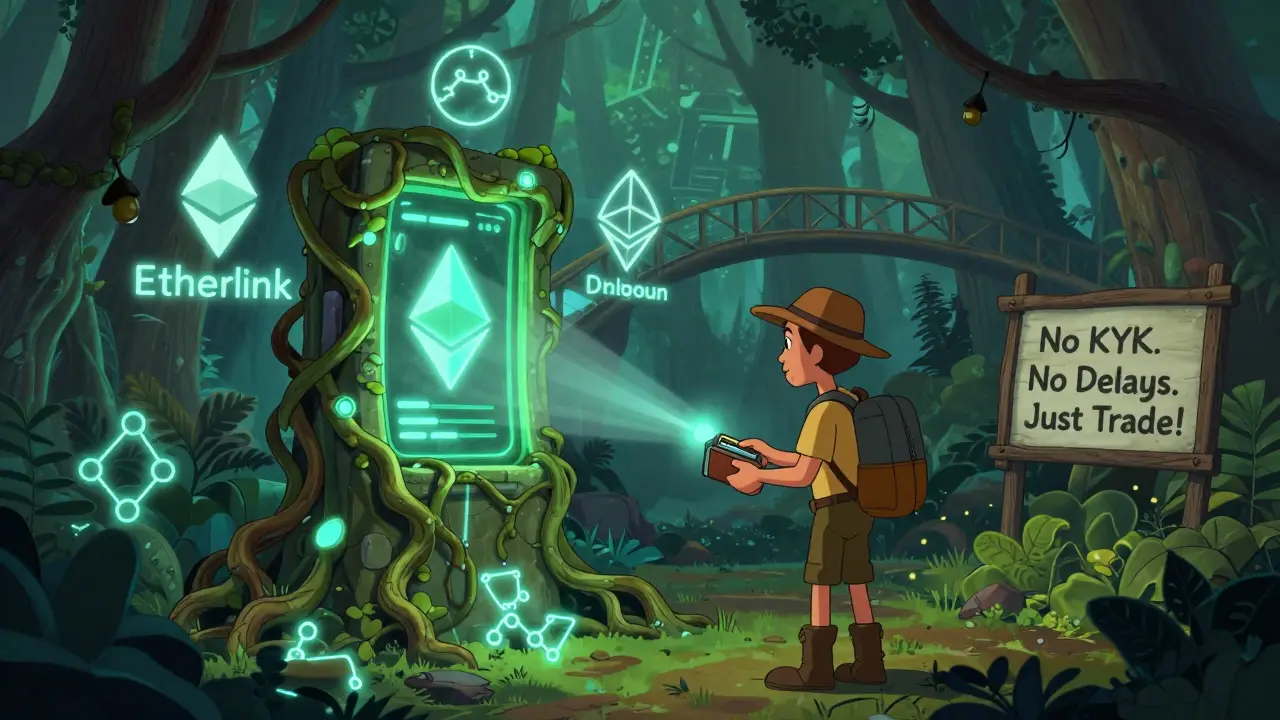
To use IguanaDEX, you need an EVM-compatible wallet - MetaMask, Rabby, or Coinbase Wallet. You also need XTZ tokens on Etherlink. No fiat on-ramps. No credit cards. You have to bring your own assets. If you don’t have XTZ, there’s a built-in bridge that connects your wallet to Etherlink from other chains like Ethereum or Polygon. It’s not perfect, but it works.Swapping tokens is straightforward. The default slippage is set to 0.1%, which is tighter than most DEXs. That means less price impact on small trades. The interface shows real-time prices. As of March 2026, XTZ is trading around $0.655. You can swap XTZ for USDC, or for any of the 15+ tokens native to Etherlink. No registration. No email. Just connect your wallet and trade.
There are six main tabs:
- Home - Overview of DMI performance and market trends
- Swaps - Swap tokens with low slippage
- DMI Pool - Add liquidity to DMI pools and earn trading fees
- DMI Borrow Market - Use your DMI holdings as collateral to borrow other assets
- DMI Perpetual Swaps - Trade leveraged positions against the DMI index
- DAO - Vote on platform upgrades using IGN tokens
The liquidity pools are where things get interesting. By adding liquidity to DMI pools, you don’t just earn swap fees. You also get IGN tokens - IguanaDEX’s native utility token. It’s not listed on any major exchange yet, so its value is tied entirely to platform usage. If trading volume grows, IGN could gain traction. If it doesn’t, it might stay worthless. There’s no guarantee. But for users who believe in Etherlink’s long-term potential, this is a chance to get in early.
What Makes It Different?
Most DEXs are built to be generic. IguanaDEX is built to be specific. It doesn’t compete with Uniswap. It competes with nothing. It’s the only DEX focused entirely on Etherlink. That gives it two big advantages:- Lower fees - Etherlink transactions cost pennies, not dollars.
- Faster confirmations - Trades settle in seconds, not minutes.
But there’s a trade-off: liquidity. On Uniswap, you can swap almost any token. On IguanaDEX, you’re limited to Etherlink-native assets. If you want to trade a new DeFi token, it has to be listed on Etherlink first. That means fewer options. Fewer traders. Less volume. That’s the risk.
The DMI is the real differentiator. No other DEX offers structured index products like this. You can’t buy a DMI ETF on Coinbase. But on IguanaDEX, you can trade it directly, leverage it, or use it as collateral. That’s a step beyond simple swaps. It’s DeFi with a financial engineering twist.
Is It Safe?
IguanaDEX claims to have undergone audits. It even has an "Audits" section in its docs. But here’s the problem: there are no public names. No firm like CertiK, Trail of Bits, or Quantstamp is mentioned. No report links. No dates. Just a placeholder. That’s a red flag. In DeFi, trust comes from transparency. If you can’t see who audited the code, you’re trusting a black box.The GitHub repository has 0 stars, 1 watcher, and 2 forks. That’s not a sign of a thriving community. It’s a sign of a project with very little external attention. The team includes three developers - Styliann, Dmitry, and Camillebzd - but there’s no public roadmap, no team bios, no Twitter presence. No Discord server with 10,000 users. Just a website and a GitHub repo.
That doesn’t mean it’s a scam. But it means you’re using a platform with minimal community oversight. If something goes wrong, there’s no large user base to demand accountability. No media coverage. No Reddit threads. Just you, your wallet, and a jungle-themed interface.
Who Is This For?
IguanaDEX isn’t for everyone. If you’re new to crypto, this isn’t your starting point. If you want to buy Bitcoin with a credit card, keep looking.This is for three types of users:
- Etherlink believers - You think Tezos’ Layer 2 has real potential. You’re already using XTZ. You want to do more than just hold it.
- DeFi power users - You’ve used Uniswap, Aave, and Curve. You’re looking for something more complex - index-based trading, leveraged positions, collateralized borrowing.
- Experimental traders - You like quirky interfaces. You don’t mind a little risk. You’re willing to try something no one else is using.
If you fit any of those, IguanaDEX is worth a look. But if you’re looking for safety, liquidity, or community trust - walk away.
The Verdict
IguanaDEX is bold. It’s niche. It’s under-the-radar. It doesn’t try to be everything. It tries to be the best DEX for Etherlink - and in that, it succeeds. The DMI is genuinely innovative. The interface, while odd, is functional. The fees are low. The speed is fast.But it’s also fragile. No audits. No community. No visibility. If the team disappears, the platform might vanish with them. There’s no backup. No insurance. No recourse.
If you’re comfortable with that risk - and you’re already in the Etherlink ecosystem - then IguanaDEX is one of the few places where you can truly engage with DeFi on this chain. It’s not the future of crypto. But for a small slice of the market, it might be the only future that matters.
Is IguanaDEX a centralized exchange?
No, IguanaDEX is a decentralized exchange (DEX). It doesn’t hold your funds, doesn’t require KYC, and doesn’t act as an intermediary. You trade directly from your wallet using smart contracts on the Etherlink network.
Can I trade Bitcoin or Ethereum on IguanaDEX?
Not directly. IguanaDEX only supports assets native to the Etherlink network. You can trade XTZ, USDC, and other tokens that have been bridged or minted on Etherlink. Bitcoin and Ethereum must be converted into wrapped versions first via the platform’s bridge.
What is the DMI, and why does it matter?
DMI stands for Digital Market Index. It’s a basket of Etherlink-based assets that automatically rebalances. You can trade against it, borrow against it, or use it as collateral. It’s designed to give users exposure to the broader Etherlink ecosystem without having to pick individual tokens. The "Time Machine" feature lets you see its historical performance since 2018 - something almost no other DeFi platform offers.
Do I need to own IGN tokens to use IguanaDEX?
No, you don’t need IGN tokens to trade or swap assets. But if you want to provide liquidity to DMI pools, you’ll earn IGN as a reward. IGN is also used for governance - if you hold it, you can vote on future changes to the platform.
Is IguanaDEX audited?
The platform mentions audits but doesn’t publish details. No audit firm, date, or report is publicly available. This lack of transparency is a significant risk. Always assume the code hasn’t been independently verified unless proof is provided.
Can I use IguanaDEX on mobile?
Yes, as long as your mobile wallet (like MetaMask or Rabby) supports Etherlink, you can access IguanaDEX through your browser. The interface is responsive and works on mobile, though the animated jungle theme may slow down older devices.
What happens if IguanaDEX shuts down?
Your funds remain in your wallet. IguanaDEX doesn’t hold your assets. If the website goes down, you can still access your liquidity pools or positions through other Etherlink-compatible interfaces - as long as the smart contracts are still live on-chain. The risk is losing access to the interface and support, not your crypto.
Next Steps
If you’re ready to try IguanaDEX:- Set up an EVM wallet (MetaMask recommended).
- Get XTZ on Etherlink using the built-in bridge.
- Connect your wallet to iguanadex.com.
- Start with a small swap - maybe XTZ to USDC.
- Explore the DMI Pool to see how liquidity provision works.
- Never deposit more than you’re willing to lose.
There’s no rush. This isn’t a get-rich-quick tool. It’s a long-term experiment in decentralized finance - and it’s only as strong as the people who use it.
Sarah Zakareckis
March 19, 2026 AT 20:12IGN tokens as liquidity rewards? Yes please. It’s not about listing on Coinbase tomorrow. It’s about building a self-sustaining ecosystem from the ground up. I’ve been watching this for months. The team might be quiet, but the product speaks louder than any Twitter thread.
Heather James
March 20, 2026 AT 05:56Sarah Hammon
March 21, 2026 AT 23:22ps: i think the audti thing is sketchy tho. no names? that’s a red flag. but the smart contracts seem fine so far.
iam jacob
March 23, 2026 AT 22:11Jesse Pals
March 25, 2026 AT 15:46Diane Overwise
March 26, 2026 AT 15:16Ann Liu
March 27, 2026 AT 11:14Dionne van Diepenbeek
March 29, 2026 AT 09:59Graham Smith
March 30, 2026 AT 11:21IGN tokens? Cute. But without exchange listings, they’re just digital confetti. I’m not holding your confetti.
Jerry Panson
March 30, 2026 AT 18:51Katrina Smith
March 31, 2026 AT 09:36Anastasia Danavath
April 1, 2026 AT 05:15anshika garg
April 2, 2026 AT 13:18So I’m here. Not to trade. But to witness.
Bruce Doucette
April 3, 2026 AT 06:43Marie Vernon
April 4, 2026 AT 10:57And if you’re worried about audits? Start small. Trade 1 XTZ. See how it feels. Then decide.
Ross McLeod
April 5, 2026 AT 02:13rajan gupta
April 6, 2026 AT 11:17Sarah Zakareckis
April 7, 2026 AT 17:12