 Jan, 26 2026
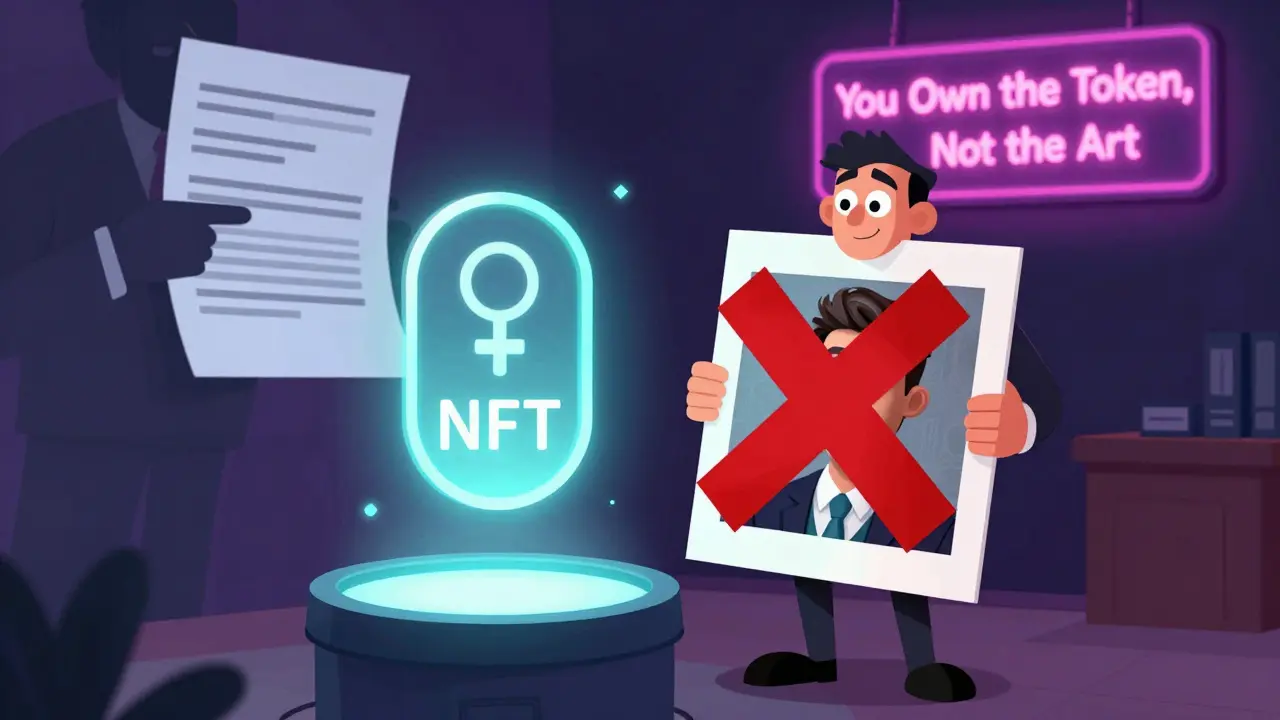
When you buy an NFT of a digital artwork, you’re not buying the art itself. You’re buying a digital certificate - a token on the blockchain - that proves you own one specific version of it. This is the biggest misunderstanding in the entire NFT space. People spend thousands, sometimes millions, thinking they now control the image, the right to print it on t-shirts, sell posters, or make a movie from it. That’s not how it works. And if you don’t understand this before you buy, you could be risking more than money - you could be risking a lawsuit.
What You Actually Own
Owning an NFT means you control a unique digital file stored on a blockchain, usually Ethereum or Solana. That file points to a digital image, video, or audio clip. But the actual artwork? That’s usually hosted elsewhere - on a server, in a cloud storage bucket, or on a decentralized network like IPFS. The NFT is just the key that says, “This is yours.” Think of it like buying a signed poster of a famous painting. You own the poster. You can hang it on your wall. You can even sell it later. But you don’t own the original painting. You don’t own the copyright. You can’t reproduce it, turn it into merchandise, or claim you made it. The same logic applies to NFTs. The token proves you own the verified copy. It doesn’t give you the rights to the content inside it. Legal firms like Arnold Porter and Norton Rose Fulbright have made this clear: buying an NFT does not transfer copyright. The artist or project creator keeps all intellectual property rights unless they explicitly say otherwise. In the case of Jack Dorsey’s first tweet NFT, the buyer paid $2.9 million for a token - not the right to use the tweet on a billboard or in an ad. The tweet itself? Still owned by Twitter (now X), and the copyright still belongs to Dorsey.Why This Confusion Exists
People assume NFTs work like physical art because they’re marketed that way. You see a Bored Ape on a Discord server, hear stories of people flipping them for six figures, and think, “I’m buying the art.” But the marketing doesn’t always explain the legal fine print. Most NFT marketplaces like OpenSea, Blur, or LooksRare don’t automatically include IP rights with a purchase. They’re just platforms - digital auction houses. They don’t set the rules. The project does. A 2023 survey by CoinGecko found that only 32% of NFT marketplaces display licensing terms clearly at the point of sale. That means nearly 7 out of 10 buyers are clicking “Buy Now” without knowing what they’re actually getting. Reddit threads are full of people asking, “Can I use my NFT as my profile picture?” or “Can I print this and sell it?” The answer is almost always: “It depends on the project.” And here’s the kicker: even if the project says nothing about rights, that doesn’t mean you have permission. Silence in the terms doesn’t equal permission. Under U.S. copyright law, if it’s not written out, you likely only have a very limited, non-exclusive license to view or display the image on your digital wallet or social media. Printing it? Selling prints? Making a TikTok video with it? That’s copyright infringement - even if you own the NFT.The Three Types of NFT Licenses
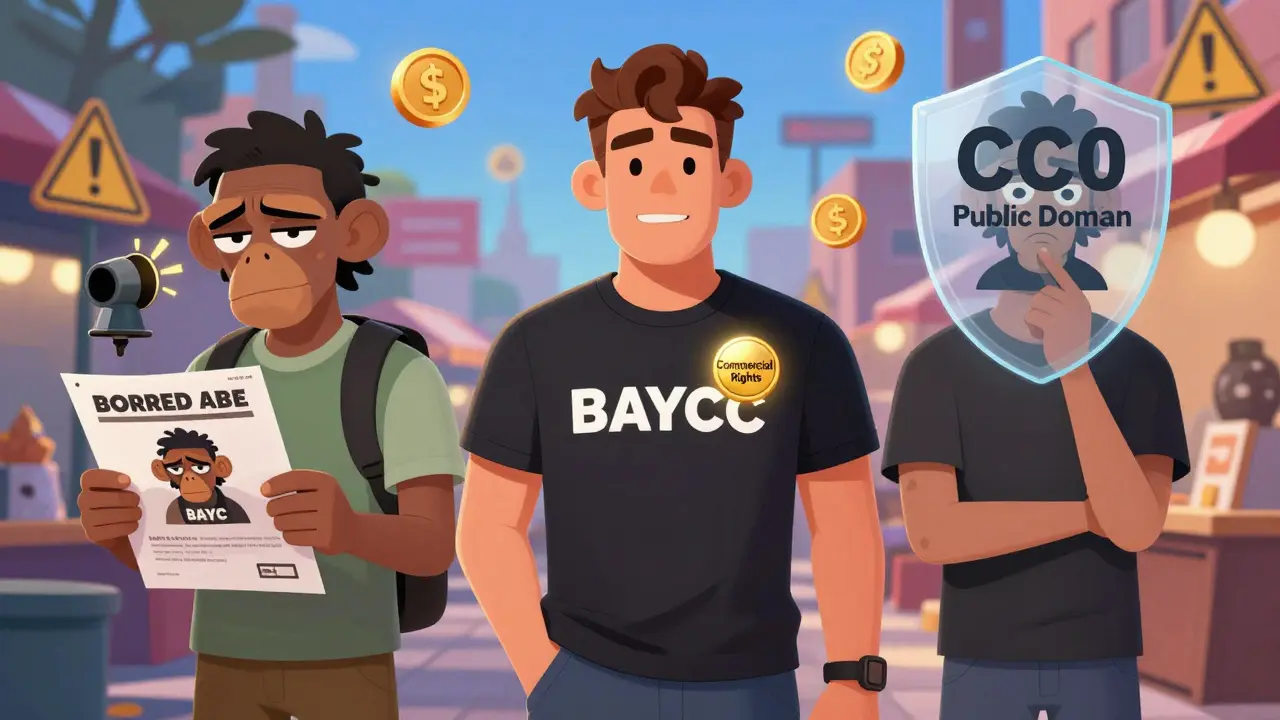
Not all NFTs are the same. The rights you get fall into three broad categories:- No Rights / Silence: Most early NFT projects - like CryptoPunks before March 2022 - didn’t grant any commercial rights. You could display the image, but that’s it. No merch, no YouTube videos, no NFT-inspired games. Even printing it could be illegal. Many indie artists still use this model. If the project’s website doesn’t mention licensing, assume you have zero commercial rights.
- Personal Use Only: Some projects let you display the NFT on your profile, use it as a Discord avatar, or even print a single copy for personal use. But selling it as merchandise? Still off-limits. This is common in smaller collections and generative art projects.
- Commercial Rights: This is the gold standard. Projects like Bored Ape Yacht Club (BAYC), CryptoPunks (after March 2022), and World of Women grant holders full commercial rights. You can make t-shirts, movies, games, or even start a brand around your NFT. You can license it to others. You can even trademark your specific ape or punk - as long as you don’t claim the whole collection is yours. These NFTs often sell for 30-40% more than similar ones without commercial rights, according to DappRadar’s Q2 2023 report.
Real-World Examples
Take Bored Ape Yacht Club. When you buy a Bored Ape, you get a license that lets you use your ape’s image for any commercial purpose - including selling products, running ads, or creating spin-off media. Yuga Labs, the company behind BAYC, even lets you sublicense those rights. That’s why you see Bored Ape-branded energy drinks, clothing lines, and even a movie in development. The owners have real creative control. Now compare that to CryptoPunks. Before March 2022, you could only display your punk. After that, Yuga Labs (who bought the collection) changed the license to match BAYC’s. Suddenly, thousands of holders could start businesses around their punks. That shift alone increased the floor price of CryptoPunks by over 50% in a few months. On the flip side, the Nouns NFT project uses a CC0 license - meaning the artwork is in the public domain. Anyone can use, modify, or sell Nouns images without asking permission. But here’s the catch: you can’t trademark “Nouns” as a brand. Only the original creator can do that. So while you can make Noun-themed socks, you can’t call your company “Nouns Apparel.” That’s still protected.What Creators Should Know
If you’re an artist minting NFTs, you need to be crystal clear about what rights you’re giving away. If you don’t want people turning your art into merch, say so in your terms. If you want to let them, make sure the license is written in plain language. Don’t just copy-paste a legal template. Most buyers won’t read it anyway. Put the key info on your project’s homepage: “Own this NFT? You can use the image for commercial projects.” And never mint someone else’s artwork. Even if it’s popular on Instagram or Twitter, if you didn’t create it, you don’t own the copyright. The original artist can sue you - and the NFT marketplace will remove your token. Several artists have already faced lawsuits for minting AI-generated art that copied styles from living painters.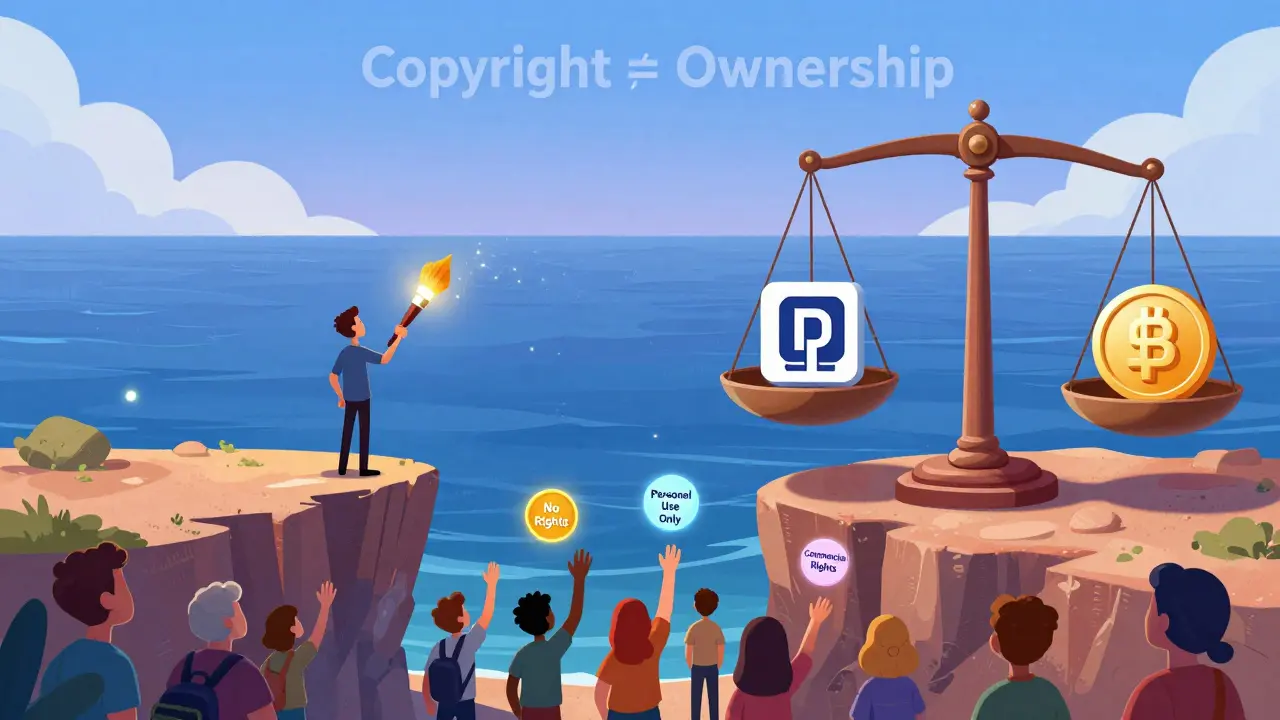
What Buyers Should Do
Before you buy any NFT, do this:- Go to the project’s official website - not the marketplace.
- Look for a section called “License,” “Terms,” or “IP Rights.”
- Read it. Even if it’s long. If it’s unclear, search for “NFT [project name] rights” on Google.
- If you’re spending over $10,000, consider hiring a lawyer who understands digital IP. A one-hour consultation could save you thousands in legal fees later.
- Never assume. If it’s not written down, you probably don’t have the right.
The Bigger Picture
The NFT market has cooled since its 2021 peak, but the legal questions are only getting more complex. The U.S. Copyright Office has received over 1,200 applications for NFT-related artwork since 2022 - but almost all of them are for the art, not the token. That’s because the token itself isn’t copyrightable. It’s just data. AI-generated NFTs are another gray area. If you use Midjourney or Stable Diffusion to create an image and mint it as an NFT, you might not even own the copyright. The U.S. Copyright Office ruled in 2023 that AI-generated content without significant human input isn’t eligible for copyright. That means your “original” NFT could be legally worthless - even if you own the token. Governments are starting to take notice. The EU’s Digital Markets Act, which came into force in 2023, includes provisions for digital ownership. But there’s still no global standard. What’s legal in the U.S. might be illegal in the EU. What’s allowed in Singapore might be banned in New Zealand. This lack of clarity is why experts say the next big wave of NFT litigation is coming.Final Advice
NFTs aren’t magic. They’re digital certificates with legal terms attached. Treat them like software licenses - not like buying a painting. If you want to use the image, you need permission. If you’re buying for investment, know exactly what you’re investing in. A Bored Ape with commercial rights is a different asset than a CryptoPunk without them. One can be turned into a business. The other? Just a JPEG in your wallet. Don’t let hype override common sense. The most valuable NFTs aren’t the ones with the prettiest art. They’re the ones with the clearest rights.Do I own the copyright to the artwork if I buy its NFT?
No. Owning an NFT gives you ownership of the token on the blockchain, not the copyright to the artwork. The artist or project creator retains all intellectual property rights unless they explicitly transfer them in writing. This is true for nearly all NFT projects. Always check the license terms before buying.
Can I print my NFT art and sell it as posters?
Only if the project’s license explicitly allows commercial use. Most NFTs do not. Printing and selling artwork without permission is copyright infringement, even if you own the NFT. Projects like Bored Ape Yacht Club and CryptoPunks (post-March 2022) allow this. Most others don’t. Always verify before printing.
What happens if I use my NFT in a commercial project without permission?
You could face legal action. The original artist or rights holder can issue a takedown notice, sue for damages, or force you to stop using the image. Several cases have already happened - including one where someone tried to trademark a CryptoPunk image and was sued by Yuga Labs. Even if you didn’t know the rules, ignorance isn’t a legal defense.
Do NFT marketplaces like OpenSea give me rights to the art?
No. Marketplaces like OpenSea, Blur, or LooksRare are just platforms. They don’t grant any intellectual property rights. The rights come from the project that created the NFT. OpenSea’s terms state clearly that buyers are responsible for understanding the license terms set by the artist or collection.
Can I trademark my NFT character?
You can trademark the specific image you own - but only if the project’s license allows commercial use and you don’t claim rights to the entire collection. For example, BAYC holders can trademark their specific ape, but not the word “Bored Ape” itself. The project’s creator still owns the brand. Nouns holders can’t trademark “Nouns” at all - even though they can use the image freely under CC0.
Are AI-generated NFTs protected by copyright?
In the U.S., AI-generated art without significant human creative input is not eligible for copyright. The U.S. Copyright Office ruled this in 2023. So if you mint an image made entirely by Midjourney or DALL·E, you likely don’t own the copyright - even if you own the NFT. This makes many AI NFTs legally risky to use commercially.
Brenda Platt
January 26, 2026 AT 22:38Okay but like... I bought a Bored Ape thinking I could make merch and now I'm scared I'm gonna get sued 😅. Can someone explain what 'commercial rights' actually means in plain English? I'm not a lawyer but I want to know if I can put my ape on a coffee mug. 🤔
Mark Estareja
January 27, 2026 AT 16:49The legal architecture surrounding NFT IP is fundamentally misaligned with retail buyer expectations. The ERC-721 standard confers token ownership, not copyright transfer. Absent explicit licensing via smart contract or ancillary legal instrument, the holder possesses only a non-exclusive, non-transferable display license under 17 U.S.C. § 106.
carol johnson
January 28, 2026 AT 18:17Ugh, I can't believe people still don't get this. It's not even 2021 anymore. If you bought an NFT thinking you owned the art, you're basically buying a JPEG and calling it a masterpiece. 🙄 I mean, come on. Even my cat knows copyright doesn't transfer with a blockchain token. #NFTLiteracy #ArtIsNotData
Paru Somashekar
January 29, 2026 AT 21:06Dear reader, it is imperative to understand that ownership of an NFT constitutes a cryptographic proof of provenance, not intellectual property rights. The copyright remains vested in the original creator unless explicitly assigned via a written instrument. Kindly verify the license terms on the official project website prior to acquisition. Thank you.
Steve Fennell
January 30, 2026 AT 09:13Biggest mistake I made? Buying a CryptoPunk before March 2022. Thought I could use it as my Twitch overlay. Got a cease-and-desist from Yuga Labs. Lesson learned: always check the license. Now I only buy projects with clear commercial rights. If it's not spelled out, it's not yours. 🙏
Melissa Contreras López
February 1, 2026 AT 02:19Hey everyone, I just wanted to say you’re all doing amazing just by asking these questions. Seriously. NFTs are confusing AF, and it’s okay to not know. The key is to always check the project’s website-not the marketplace. If you’re unsure, DM the team. Most are happy to explain. You’re not dumb-you’re just new. 💪❤️
Mike Stay
February 1, 2026 AT 20:55It is worth noting that the cultural perception of digital ownership has been significantly distorted by marketing narratives that conflate scarcity with authorship. The blockchain, while immutable, does not confer moral or legal rights to the underlying creative work. The distinction between possession and proprietorship remains legally and philosophically critical. Furthermore, the absence of standardized global frameworks for digital IP exacerbates the risk of litigation across jurisdictions. One must therefore approach NFT acquisition with the same diligence as one would a real estate transaction.
Tammy Goodwin
February 2, 2026 AT 22:08So… if I own a Bored Ape, can I use it in my YouTube video? I just want to make a funny skit. I’m not selling anything. Just… like… for fun?
Andy Simms
February 3, 2026 AT 16:39Yes, you can use it in a YouTube video if it's non-commercial. But if you monetize it-even with ads-it’s a violation unless the license explicitly permits it. BAYC and CryptoPunks (post-March 2022) allow it. Most others don’t. Always check the license PDF on the project’s site. Don’t guess.
Shamari Harrison
February 5, 2026 AT 08:05Just wanted to add: if you're buying an NFT for $10k+, don't just rely on Reddit. Hire a lawyer who’s done IP work in digital art. One hour of their time costs less than a lawsuit. Seriously. I did this last year and saved myself $40k.
Nadia Silva
February 6, 2026 AT 15:17Why do Americans think they own everything they pay for? In Canada, we know a token isn’t a title. You bought a receipt. Not the painting. Grow up.
Deepu Verma
February 8, 2026 AT 01:10Guys, I’m from India and I’ve seen so many artists here get ripped off because people mint their art as NFTs. Please, please, please-only buy from verified creators. And if you’re an artist? Protect your work. Don’t just trust the platform. Read the terms. Even if it’s boring. Your art is your legacy.
Julene Soria Marqués
February 9, 2026 AT 18:29Wait… so if I bought a CryptoPunk before the license change, and now Yuga Labs says I can use it commercially… does that mean they can just change the rules whenever they want? Like… what if they change it back next month? 😳
Bonnie Sands
February 10, 2026 AT 22:29THEY’RE LYING. This whole thing is a front for the Fed to track your digital assets. They don’t care about copyright-they care about control. NFTs are just the first step. Next they’ll tax your memes. Mark my words.
MOHAN KUMAR
February 12, 2026 AT 07:54Simple truth: NFT = proof of purchase. Not proof of rights. If you want to print it, you need permission. No shortcut. No loophole. Stop hoping.
katie gibson
February 13, 2026 AT 22:33so like… i bought a punk and now i’m like… can i make a punk-themed bar? like… with a punk logo on the napkins? idk i’m just vibin 😭
Jonny Lindva
February 14, 2026 AT 09:28Just read the license. Like, actually read it. It’s not that hard. If it’s not there, assume you can’t. If it’s there, celebrate. Most projects are cool about it. Just don’t be the guy who gets sued because he thought ‘it’s just an image’.
Jen Allanson
February 15, 2026 AT 18:45It is a moral and legal imperative to acknowledge that intellectual property rights are not subject to market speculation. To conflate ownership of a cryptographic token with the proprietary rights of a creative work is not merely erroneous-it is ethically indefensible. The proliferation of such misunderstandings constitutes a degradation of artistic integrity and legal accountability.