 Feb, 17 2026
When you live in Dubai, Cairo, or Casablanca and want to buy Bitcoin, most global crypto exchanges feel like they were built for someone else. The interfaces are in English only. The fiat options don’t match your bank. The coins listed don’t reflect your local economy. That’s where Palmex comes in - a crypto exchange built for the Middle East and North Africa, not just operating there.
What Palmex Actually Offers
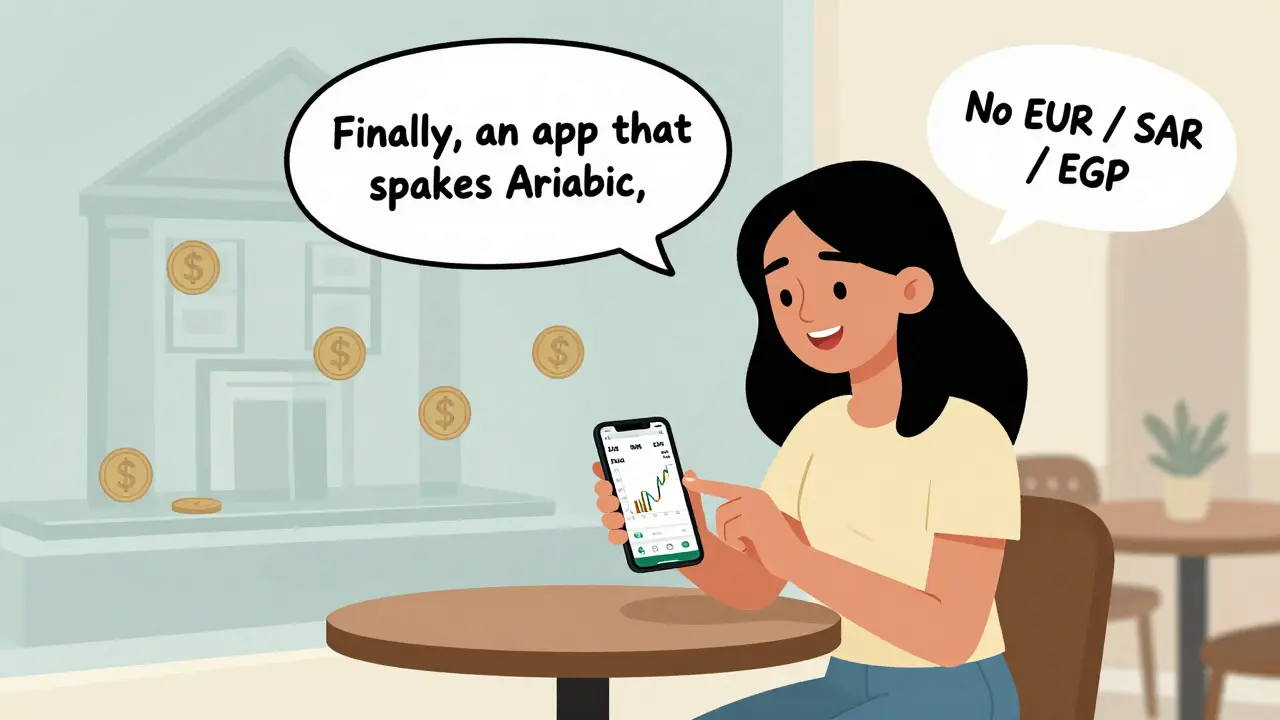
Palmex doesn’t try to be everything. It doesn’t list 500 coins like Binance or Coinbase. Instead, it lists seven. That’s it. Bitcoin (BTC), Ethereum (ETH), Litecoin (LTC), Bitcoin Cash (BCH), and then two versions of DubaiCoin - DBIC and DBIX. Plus Jibrel Network Token (JNT). If you’re wondering why DubaiCoin is there twice, it’s because Palmex treats them as separate assets, even though they’re both tied to the same regional initiative. DBIX is marketed as the first decentralized cryptocurrency from the MENA region. Whether that’s true or not, it’s clear Palmex wants to put local blockchain projects on the map.Fiat? Only USD. No EUR, no SAR, no EGP. If you’re in Saudi Arabia and your bank doesn’t send USD directly, you’ll need to use a third-party service to convert first. That’s a real hurdle. But for users who already hold USD - whether from freelance work, remittances, or business - it’s straightforward.
The platform runs on both web and mobile. The apps are on iOS and Android. No weird app store restrictions. No region-locking. You can download them anywhere in the MENA region. The interface is clean. No overwhelming charts. No complex order types like iceberg or OCO. It’s designed for people who are new to crypto or just want to buy and hold. But it also has basic candlestick charts, volume indicators, and order books - enough for someone who wants to trade actively without getting lost.
Who Is This For?
Palmex isn’t for traders chasing meme coins or leveraged positions. It’s for people in Egypt, Jordan, Algeria, or Sudan who want to get into crypto without jumping through hoops. Think about it: if you’re in a country where PayPal doesn’t work, and Wire Transfer to Binance takes days, and you can’t use a credit card because your bank blocks crypto - Palmex gives you a local option. The app supports Arabic and English. You can toggle between them. The menus, buttons, help texts - all in Arabic. That’s rare.It’s also for people who care about regional tokens. DubaiCoin isn’t a top-100 coin. It doesn’t move markets. But if you believe in local blockchain ecosystems - and you live in the region - holding DBIX might feel like supporting something real. It’s not just speculation. It’s identity.
What’s Missing? A Lot.
Here’s the problem: Palmex doesn’t tell you much about itself. No founding date. No team page. No LinkedIn profiles of the founders. No press releases. No security audits published. No proof-of-reserves. No information on cold storage. No details on how they protect user data. That’s not normal. Even smaller exchanges like BitMart or KuCoin publish at least basic security info.And then there’s liquidity. Trading volume is tiny. You won’t find real-time data on CoinGecko or CoinMarketCap. The numbers are too low to be listed. That means if you want to buy $5,000 worth of ETH, you might not find enough sellers. Or if you try to sell, the price could swing wildly because there’s no depth. This isn’t a flaw - it’s a reality of being new. But it’s something you need to accept.
Customer support? No one’s talking about it. No Reddit threads. No Trustpilot reviews. No Twitter complaints. That doesn’t mean support is good - it just means not enough people are using it to generate feedback. That’s a red flag for anyone who’s ever had an account freeze or forgotten a password.
How Palmex Compares to the Giants
| Feature | Palmex | Binance / Coinbase / Kraken |
|---|---|---|
| Cryptocurrencies Listed | 7 | 500+ |
| Fiat Currencies | USD only | 20+ (EUR, GBP, AUD, SAR, etc.) |
| Language Support | Arabic + English | English mostly, some other languages |
| Regional Focus | MENA only | Global |
| Trading Volume | Very low | Billions daily |
| Security Transparency | None published | Regular audits, proof-of-reserves |
| Mobile Apps | Yes (iOS/Android) | Yes |
So if you’re in Dubai and want to trade Solana, Shiba Inu, or Arbitrum - Palmex won’t help. But if you want to buy Bitcoin with USD, hold DubaiCoin, and use an app that speaks Arabic - it’s one of the few places that does.
Is Palmex Safe?
There’s no public answer. No third-party audit. No SOC 2 report. No insurance policy details. The website doesn’t mention cold storage. It doesn’t say if they use multi-sig wallets. It doesn’t even say where the company is registered. That’s not normal. In 2026, even small exchanges publish this stuff. If you’re investing money here, you’re doing it blind.That said, the platform has been live for over a year. No major hacks reported. No mass withdrawals failed. No user complaints on Telegram groups or local forums. That’s not proof of safety - but it’s not proof of danger either. It’s a gray zone.
Here’s what you should do: only deposit what you can afford to lose. Don’t store large amounts long-term. Use it like a trading account - buy, hold a bit, sell when you need to. Don’t treat it like a bank.
Should You Use It?
Yes - if you’re in the MENA region and you’re frustrated with global exchanges that ignore your language, your currency, and your local context. Palmex is the first exchange that says: “We see you.” It’s not perfect. It’s not big. It’s not secure by industry standards. But it’s real.If you’re a beginner, and you want to dip your toes into crypto without dealing with a confusing interface or a language barrier - Palmex is worth trying. If you believe in regional blockchain projects and want to support DubaiCoin - this is one of the few places you can.
If you’re a serious trader, or you need high liquidity, or you want to trade dozens of coins - walk away. Use Binance, Kraken, or a local exchange with better volume and transparency.
Palmex isn’t the future of crypto. But for now, it’s the only bridge between the global crypto world and the MENA region. And sometimes, that’s enough.
Is Palmex a scam?
There’s no evidence Palmex is a scam. It’s not a phishing site. It doesn’t ask for your private keys. It’s a functioning exchange with real trading activity. But it lacks transparency - no team info, no audits, no security details. That’s not the same as being safe. Use it cautiously, like a small, experimental platform - not a trusted bank.
Can I withdraw USD from Palmex?
No. Palmex only accepts USD deposits and allows you to trade crypto with USD. You cannot withdraw USD back to your bank account. You can only sell crypto and receive crypto in return. To convert crypto to USD, you’ll need to transfer your coins to another exchange that supports fiat withdrawals, like Binance or Kraken.
Why does Palmex only list 7 coins?
Palmex focuses on the most widely traded cryptocurrencies (BTC, ETH, LTC, BCH) plus two regional tokens - DBIC and DBIX - and JNT. This keeps the platform simple and focused on users in the MENA region. It avoids overwhelming beginners and prioritizes assets that matter locally. It’s a curated list, not a full exchange.
Is DubaiCoin (DBIX) a good investment?
DubaiCoin is not a major cryptocurrency. It has no significant market cap, no major partnerships, and no clear use case beyond being promoted by Palmex. If you’re interested in it because you’re from the region and want to support local blockchain efforts, that’s fine. But don’t treat it as a serious investment. Its value is tied to Palmex’s success - and Palmex itself is still very small.
Does Palmex work in Saudi Arabia and Egypt?
Yes. Palmex is available across most Middle Eastern and African countries, including Saudi Arabia, Egypt, UAE, Morocco, Jordan, and Algeria. The mobile apps are accessible via official app stores in those regions. There are no known restrictions on access from these countries.
george chehwane
February 18, 2026 AT 16:04Let me get this straight - Palmex is the ‘MENA-native’ crypto exchange that lists DubaiCoin twice like it’s a crypto version of ‘original’ and ‘deluxe’ edition? Wow. The real innovation here is the audacity to call a glorified local token ‘the first decentralized cryptocurrency from the region.’ If I had a dime for every ‘first’ crypto project that was just a Discord admin’s side hustle, I could buy a whole Bitcoin. And yet, here we are, applauding a platform that doesn’t even publish its own address. This isn’t DeFi. This is crypto theater with Arabic subtitles.
kieron reid
February 20, 2026 AT 10:56USD only? Really? So if you’re in Egypt and your only income is EGP, you gotta convert it to USD through some sketchy middleman first? That’s not a feature - that’s a trap. And they call this ‘accessible’? Bro, it’s just another way to extract fees from people who can’t afford to play the global game.
Avantika Mann
February 22, 2026 AT 10:51I love how Palmex actually speaks Arabic. That alone makes it feel more human than most global platforms. I’m from India, but I’ve seen how language barriers stop so many people from even trying crypto. This feels like a small step toward inclusion. Not perfect, but real. And hey - if you’re new to this, starting with just 7 coins is actually kind of nice. Less noise, more focus.
yogesh negi
February 24, 2026 AT 02:23Guys, I think we’re missing the point here. Palmex isn’t trying to compete with Binance - it’s trying to create a space for people who’ve been ignored. The fact that it supports Arabic, has clean UI, and lists regional tokens? That’s revolutionary in a space where everything’s built for Wall Street bros. Sure, liquidity is low, security is vague - but maybe, just maybe, this is how grassroots crypto starts. Not with audits, but with trust. And sometimes, that’s enough.
Chris Thomas
February 25, 2026 AT 22:25Oh wow, a ‘regional’ exchange with zero transparency and no proof-of-reserves? How quaint. You know what’s even funnier? People are calling this ‘empowering.’ Empowering? It’s a black box with an Arabic button. If you’re not running a full node and verifying every transaction yourself, you’re not investing - you’re donating to a mystery cult. And DubaiCoin? Please. It’s not a blockchain project - it’s a branding exercise for a real estate developer’s LinkedIn profile.
Kyle Tully
February 27, 2026 AT 19:24So you can’t withdraw USD? Just hold crypto forever? Cool. That’s not an exchange. That’s a crypto prison. And you’re proud of this? This isn’t innovation - it’s a loophole. A way to avoid regulation while pretending to serve the people. And the ‘Arabic interface’? Cute. But if your security is nonexistent, your language options are just a pretty wrapper on a dumpster fire.
Sasha Wynnters
February 28, 2026 AT 03:15This isn’t an exchange. It’s a love letter to regional identity wrapped in a thin layer of blockchain glitter. DubaiCoin isn’t a currency - it’s a cultural artifact. And Palmex? It’s the museum that doesn’t have a security camera. But you know what? Maybe that’s okay. Maybe crypto doesn’t need to be a bank. Maybe it just needs to be a place where people feel seen. Even if it’s a little broken. Even if it’s quiet. Even if no one’s auditing it. Sometimes, meaning matters more than metrics.
Rajib Hossaim
March 1, 2026 AT 04:54I appreciate the intent behind Palmex. The focus on simplicity and regional relevance is admirable. However, the lack of transparency regarding team members, audits, and security protocols remains a significant concern. In any financial ecosystem, trust must be built on verifiable facts - not optimism. Until that changes, I would recommend using this platform only for minimal, experimental exposure.
Jenn Estes
March 2, 2026 AT 17:51They list DBIC and DBIX as separate assets? That’s not a feature - that’s a red flag. Either they don’t understand blockchain, or they’re deliberately confusing users to inflate trading volume. Either way, this isn’t a platform for beginners. It’s a trap for the gullible. And no one’s talking about it? That’s because no one’s using it. And if no one’s using it… why is it even live?
Nikki Howard
March 3, 2026 AT 11:12Wow. Just… wow. A crypto exchange that doesn’t even publish its company registration? In 2026? I’m not even mad. I’m impressed. It’s like they took every warning sign from a Nigerian scam email and turned it into a business model. And yet… people are still using it? I guess hope is the most powerful crypto of all.
Tarun Krishnakumar
March 3, 2026 AT 23:30Let me tell you something - this isn’t about crypto. This is about control. Who funds Palmex? Who owns the servers? Who has access to the private keys? No one knows. And that’s not an accident. This is a front. A quiet, Arabic-speaking front for something bigger. Why else would they avoid audits? Why else would they list two versions of the same token? Because they’re not building a platform - they’re building a honeypot. And you? You’re the fly. Don’t touch the syrup.
jennifer jean
March 4, 2026 AT 11:24I really hope this works for people in the region 🤞 I mean, imagine being able to use an app in your own language and not feel like you’re on a foreign website. That’s huge. Yeah, the security stuff is sketchy… but maybe it’s a start? Maybe someday they’ll grow into it? I’m rooting for them 😊
Ian Plunkett
March 5, 2026 AT 10:21They don’t list Solana? They don’t list Shiba? They don’t even have a meme coin? Oh my god. This isn’t crypto. This is a museum exhibit. ‘Here lies the first attempt to make crypto feel human.’ Rest in peace. You were noble. You were quiet. You were doomed.
Aileen Rothstein
March 5, 2026 AT 11:53I’m not saying Palmex is perfect - but it’s trying. Most global exchanges treat the MENA region like an afterthought. Palmex? It’s the only one that says, ‘Hey, we see you.’ And yeah, the liquidity is low. And yeah, the security info is missing. But if you’re new to crypto and you’re in Cairo or Casablanca? This might be your first real doorway. Don’t dismiss it just because it’s not Binance. Sometimes, small is better.
Jennifer Riddalls
March 6, 2026 AT 20:10Honestly? I’m just happy someone made an app that works in Arabic. I don’t care if they list 7 coins or 700. If I can buy Bitcoin without translating a 50-page FAQ, I’m in. The rest? We’ll figure it out. Baby steps.
Alan Enfield
March 6, 2026 AT 23:11It’s funny - the global exchanges are trying to be everything. Palmex? It’s trying to be something specific. And maybe that’s the future. Not big. Not flashy. Just… there. For the people who need it. I’m not saying it’s safe. But it’s real.
Angela Henderson
March 8, 2026 AT 20:34I’ve been using Palmex for like six months now. Bought some BTC, held DBIX. Never had an issue. No withdrawals? Yeah, that’s annoying. But I don’t need to cash out. I just want to learn. The app is slow but it works. The Arabic interface? Life saver. I don’t care if it’s not audited. I care that it’s here. And that’s more than I can say for most of the giants.
James Breithaupt
March 10, 2026 AT 04:06Let’s not pretend this is crypto. It’s cultural infrastructure. Palmex isn’t building a financial platform - it’s building a digital identity. The fact that it exists, that it speaks Arabic, that it gives space to DBIX - that’s not about trading. That’s about belonging. You can’t audit belonging. But you can feel it. And for a lot of people in this region? That’s worth more than a proof-of-reserves.