 Jan, 30 2026
China banned crypto exchanges in 2021. But people are still trading crypto - quietly.
It’s 2026. If you ask someone in Beijing or Shanghai if they can buy Bitcoin, they’ll likely say no. Officially, China outlawed all cryptocurrency trading and mining in September 2021. Banks were told to cut off services. Exchanges like Huobi and OKX were shut down. The government said it was to stop financial crime and capital flight.
But if you talk to people who’ve been doing it since then, the story’s different. They’re not trading on apps. They’re not using Chinese exchanges. They’re trading directly with strangers - person to person. That’s peer-to-peer (P2P) crypto. And despite the ban, it’s still alive.
How? Because you can’t ban ownership. Chinese courts have ruled since 2018 that crypto is virtual property. You can own it. You just can’t trade it on regulated platforms. That tiny legal loophole became the lifeline for millions.
How P2P crypto trading actually works in China today
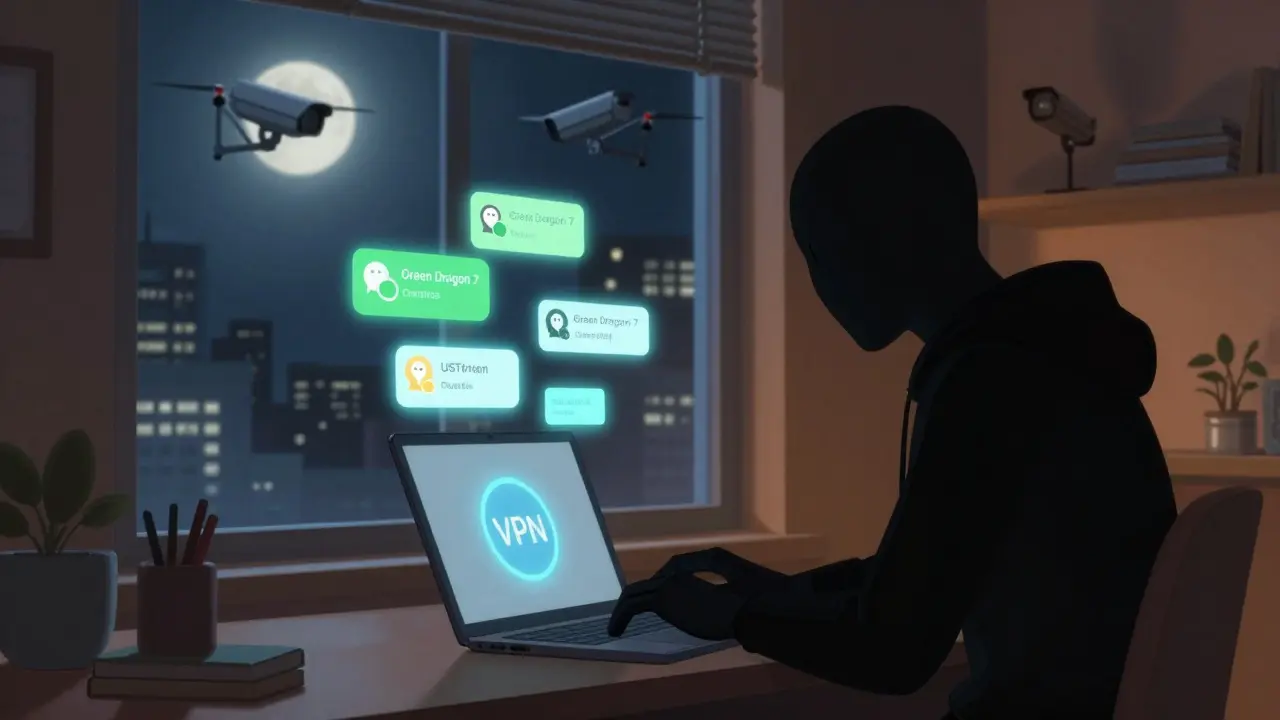
There’s no app called “ChinaCryptoTrade.” No logo. No customer service. Instead, traders use encrypted messaging apps - mostly Telegram and WeChat - to find buyers and sellers. Groups operate under code names like “Green Dragon 7” or “Ocean Bridge.” You join one, verify your identity with a photo ID (sometimes), and start messaging.
Most trades use USDT (Tether), the stablecoin pegged to the US dollar. Why? Because Bitcoin swings too much. If you’re trying to move money out of China to pay for a child’s education in Canada or buy equipment from Germany, you need stability. USDT gives you that.
The process is simple but risky:
- You message someone who wants to sell 50,000 RMB worth of USDT.
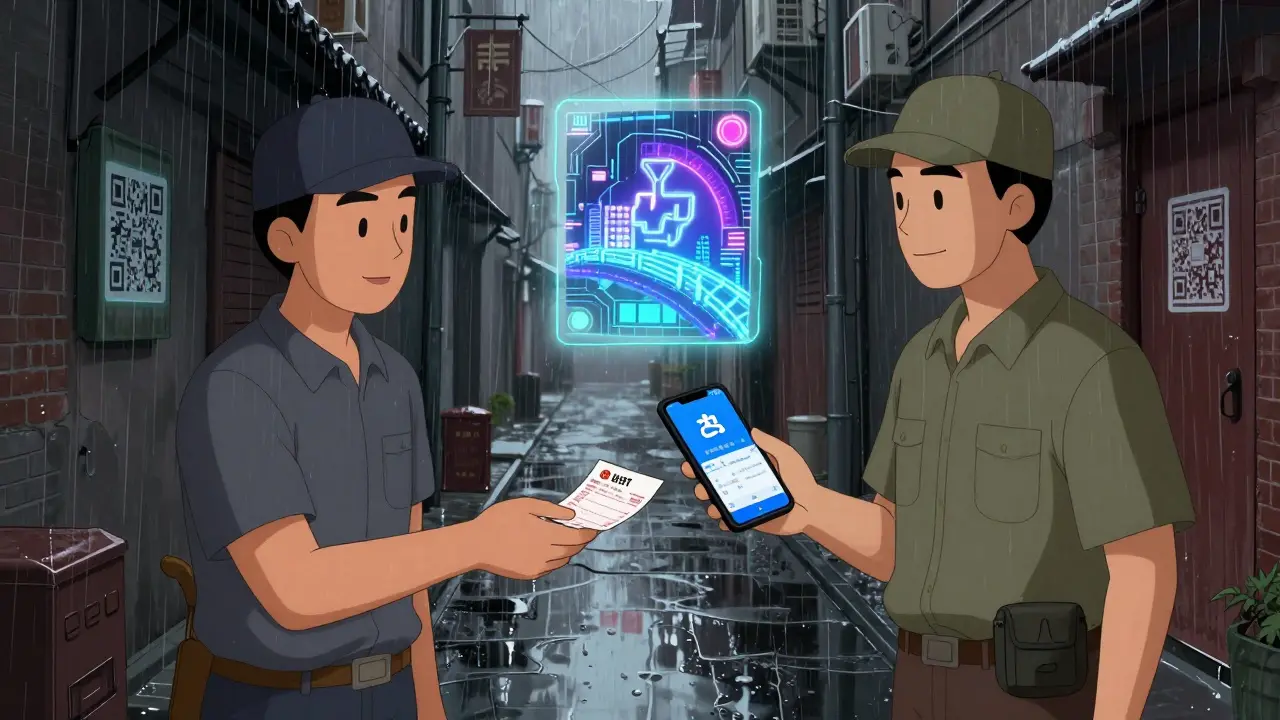
- You send them money via Alipay or WeChat Pay - often using the “friend transfer” feature, which doesn’t trigger bank alerts as easily.
- They send you USDT to your non-Chinese wallet (like Trust Wallet or MetaMask).
- You confirm receipt. Done.
But here’s the catch: you can’t trust screenshots. Scammers send fake payment confirmations all the time. That’s why experienced traders use multi-step verification - asking for bank statement snippets, checking the sender’s account age, even calling the person on a burner phone.
The tools you need to even try this
You can’t do this on your normal phone with your normal apps. The Chinese government’s Great Firewall blocks international crypto platforms like LocalBitcoins and Paxful. So you need a VPN - NordVPN or ExpressVPN are the most common. But even those get blocked randomly. Users rotate between five or six different providers.
You also need a non-Chinese email. No 163.com or QQ.com. Gmail or ProtonMail. You need a wallet that doesn’t show Chinese language options. You need to avoid linking anything back to your real identity.
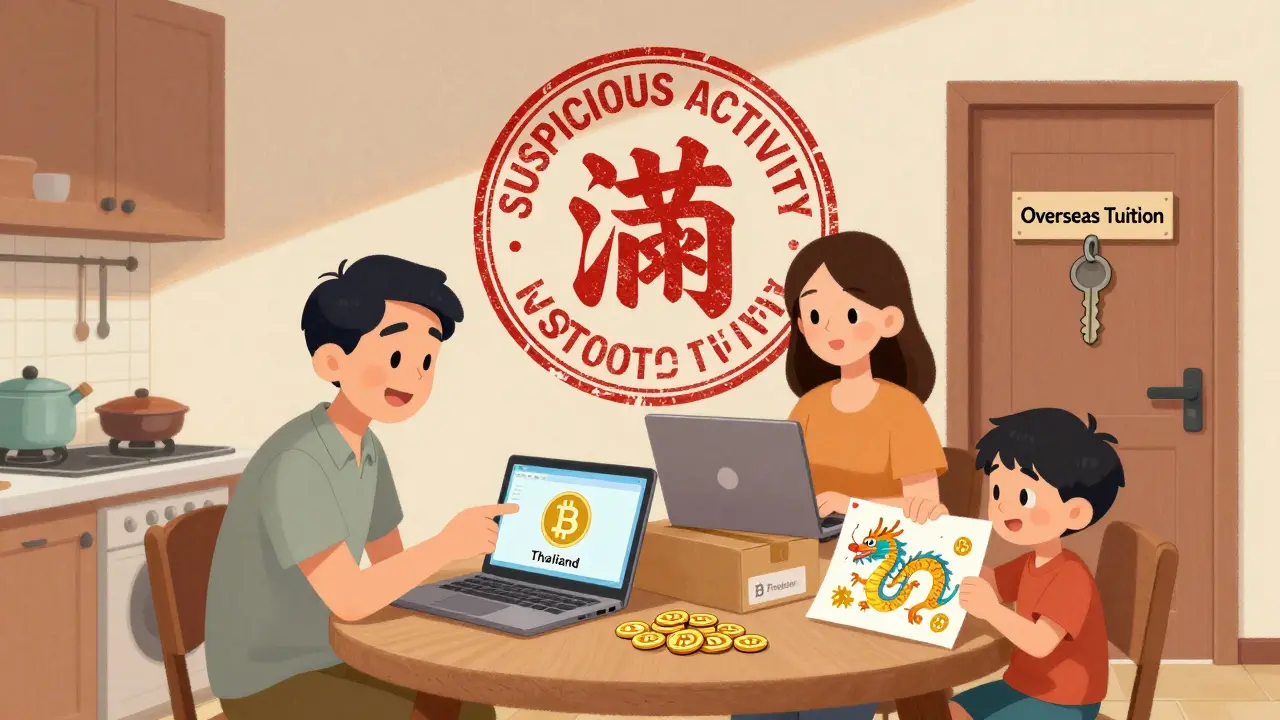
And you need patience. One trader on Reddit said it took him three weeks just to learn how to send a transaction without triggering a bank freeze. Most people lose money the first time. One user lost $25,000 after accepting a fake bank transfer screenshot. Another had their entire savings locked up when their bank flagged a series of small transfers as “suspicious activity.”
Why it’s still growing - even with crackdowns
Chainalysis found that P2P trading volume from Chinese IP addresses jumped 300% in early 2022, right after the ban. That didn’t drop. It kept climbing. By 2023, China still accounted for 4.2% of global crypto transaction volume - down from 23% in 2020, but far from zero.
Why? Because the reason people started trading crypto in the first place never went away.
It’s not about speculation. It’s about control. China has strict capital controls. You can’t legally take more than $50,000 out of the country per year. But if you own USDT, you can send it to someone in Singapore, and they send you cash. No paperwork. No bank approval. No waiting.
That’s why traders are mostly urban professionals - 25 to 45 years old, college-educated, with family overseas or international business ties. They’re not gamblers. They’re parents, small business owners, engineers working for foreign companies. They need a way to move money without the state watching every step.
The hidden costs: risk, fees, and scams
There’s no safety net. If someone runs off with your money, the police won’t help. Courts won’t enforce crypto contracts. You’re on your own.
That’s why fees have skyrocketed. Pre-ban, P2P trades cost 0.5% to 1%. Now? 3% to 5%. That’s the risk tax. You’re paying extra because the system is broken - and dangerous.
Scams are everywhere. One popular trick is “flash freezing.” A scammer sends you a fake payment screenshot. You send the crypto. Then they call their bank and say, “I didn’t authorize this!” The bank freezes your account. You lose your crypto. And your money. And your access to your own bank.
Some traders have started using “transaction bridges” - a trusted middleman holds the crypto until both sides confirm payment. But finding someone you can trust? That’s harder than finding the crypto itself.
What’s new in 2025? NFTs, barter, and evasion tactics
The government didn’t stop. In January 2023, the People’s Bank of China issued new rules targeting “any form of decentralized transaction.” They’re using AI to scan WeChat messages and bank transfers for keywords like “USDT,” “BTC,” or “transfer crypto.”
So traders adapted again.
Some now use NFTs as value carriers. They sell a worthless digital art piece for 10,000 USDT. The buyer sends the NFT to their wallet. Then they sell it on an international marketplace. No direct crypto transfer. Just a digital token passed between two people.
Others trade crypto for physical goods. Buy a laptop in China for 8,000 RMB, pay with USDT. The seller ships it to your cousin in Thailand. Your cousin sells the laptop for $1,000 cash. You never touched crypto directly. The bank sees a laptop purchase. Not a crypto trade.
These aren’t just fringe ideas. They’re becoming common. A 2024 survey by the Blockchain Transparency Institute found 18% of active traders had used barter or NFTs in the past year.
Can China ever shut this down?
They’ve tried. In 2022, China’s State Administration of Foreign Exchange investigated over 1,200 crypto cases. Nearly 900 people were convicted. Over $150 million in fines were handed out.
But here’s the problem: you can’t arrest every person who sends a message on WeChat. You can’t shut down every Telegram group. You can’t stop every bank transfer that looks like a “friend payment.”
As the IMF put it in a 2022 report: “China has successfully eliminated formal cryptocurrency markets. But the persistence of P2P trading demonstrates the fundamental challenge all nations face in regulating decentralized financial technologies that operate across borders.”
HSBC’s research team says it best: “The cat is out of the bag.” Even if China banned all smartphones tomorrow, someone would still find a way. People want control over their money. And when the state takes that away, people build their own systems.
Is it worth it?
Some say yes. One trader in Shanghai told a journalist, “I don’t care if it’s illegal. I care that I can pay my daughter’s tuition in London without begging the government for permission.”
Others say no. A former engineer in Hangzhou lost $30,000 in a scam. He quit. Now he uses legal channels - even if it takes months and costs more.
The truth? It’s not a game. It’s a high-stakes balancing act. You’re trading money, privacy, and freedom - all while walking a legal tightrope.
China may never fully stop P2P crypto. Not because it’s easy. But because the need behind it - the desire to move money freely - is too deep to ban.
Frequently Asked Questions
Is it legal to trade crypto peer-to-peer in China?
No, it’s not legal. The Chinese government banned all cryptocurrency trading on regulated platforms in 2021 and later expanded the ban to include P2P transactions. However, owning crypto as virtual property is still recognized by courts. Trading privately is a gray area - you won’t be arrested for one small trade, but you risk bank freezes, fines, or even criminal charges if you’re caught doing it repeatedly or at a large scale.
What’s the safest crypto to trade in China right now?
USDT (Tether) is by far the most common. It’s stable, easy to transfer, and widely accepted. Bitcoin is too volatile for most users who need to move real value - like paying for overseas education or medical bills. USDT acts like digital cash. Even though it’s not perfect, it’s the least risky option in a high-risk system.
Can the Chinese government track my P2P crypto trades?
Yes, they can - and they do. Banks monitor transfers for keywords like “USDT” or “crypto.” WeChat and Alipay use AI to flag suspicious activity. Even encrypted apps like Telegram aren’t foolproof - if you’re careless, your phone number or IP address can be traced. Most successful traders use burner phones, temporary bank accounts, and avoid linking anything to their real identity. But no method is 100% safe.
How much money can I realistically move using P2P crypto?
Most people stick to under 50,000 RMB ($7,000) per transaction. That’s because Chinese banks flag larger transfers automatically. To move more, traders split payments into multiple smaller transfers over days or weeks. Some move $50,000 to $100,000 per month, but that requires serious experience, multiple accounts, and trusted contacts. Going bigger increases risk dramatically.
What happens if I get caught trading crypto in China?
Most first-time offenders face bank account freezes and warnings. Repeat offenders or those moving large sums can be fined up to 1 million RMB ($140,000) or even face criminal charges for “illegal financial activity.” In 2022, nearly 900 people were convicted. But prison is rare unless the case involves organized crime, money laundering, or large-scale capital flight. For most, it’s a financial penalty and a scare.
Are there any legal alternatives to P2P crypto in China?
Yes - but they’re slow and limited. You can use China’s official cross-border payment channels, like the Cross-Border Interbank Payment System (CIPS), but they require paperwork, approval, and have strict limits. Some people use overseas bank accounts or family members abroad to transfer money legally. But these methods take weeks and cost more in fees. For many, P2P crypto is faster, cheaper, and more private - even if it’s risky.
Pamela Mainama
January 31, 2026 AT 18:31Will Pimblett
February 2, 2026 AT 05:36Elizabeth Jones
February 3, 2026 AT 13:27Gurpreet Singh
February 4, 2026 AT 15:24Mark Ganim
February 5, 2026 AT 06:58Meenal Sharma
February 7, 2026 AT 00:06Gavin Francis
February 7, 2026 AT 10:26Dahlia Nurcahya
February 8, 2026 AT 12:37Rob Duber
February 8, 2026 AT 22:09Wayne mutunga
February 9, 2026 AT 17:42Parth Makwana
February 10, 2026 AT 05:46mary irons
February 12, 2026 AT 01:28Edward Drawde
February 13, 2026 AT 17:49Tressie Trezza
February 15, 2026 AT 05:42