 Dec, 27 2025
When you hear about blockchain scaling solutions, you often hear about layer 2s like rollups. But there’s another path that’s been around just as long - sidechains. They’re separate blockchains that connect to the main chain, letting you move assets back and forth. Sounds simple, right? But here’s the catch: sidechain security isn’t automatic. If you don’t get it right, your funds can vanish - and the main chain won’t save you.
How Sidechains Actually Work (The Two-Way Peg)
At the heart of every sidechain is the two-way peg. It’s the bridge that lets you lock tokens on the main chain and get equivalent tokens on the sidechain - and then reverse the process. Think of it like depositing cash into a casino chip system. You hand over $100 in real money, and you get $100 in chips. You can play with the chips on the floor, but when you want cash back, you return the chips and get your money. The magic happens through smart contracts. On the main chain, your Bitcoin or Ethereum gets locked in a special address. That address doesn’t let anyone move the funds unless the sidechain proves it’s safe to unlock them. On the sidechain, an equivalent amount of wrapped tokens appears. These aren’t the original coins - they’re claims backed by what’s locked up. When you want to move back, you burn the sidechain tokens, and the main chain releases your original assets. But here’s where things get risky. If the smart contract has a bug, or if the sidechain’s validators lie about what happened, you could lose your money. That’s why the security model isn’t just about the tech - it’s about who’s watching the bridge.Who Keeps the Sidechain Safe? Consensus Matters
Main chains like Bitcoin and Ethereum use proof-of-work or proof-of-stake to secure billions in value. Sidechains? They often use lighter, faster consensus methods. Some use delegated proof-of-stake (DPoS), where a small group of elected validators handle block production. Others use proof-of-authority, where trusted entities sign off on blocks. This flexibility is the whole point. You don’t need Bitcoin-level security for a gaming sidechain. But that freedom comes with trade-offs. A sidechain with only 10 validators is way easier to attack than Ethereum with over 1 million stakers. A 51% attack on a small sidechain doesn’t threaten Bitcoin - but it can wipe out everyone’s funds on that sidechain. That’s why some sidechains, like Polygon’s zkEVM or Rootstock, layer on extra security. They use fraud proofs, zero-knowledge proofs, or even borrow security from Ethereum by submitting block headers back to the main chain. Others, like Liquid Network, rely on a federation of trusted parties - companies like Bitfinex and Blockstream - to validate transactions. It’s faster, but less decentralized. There’s no one-size-fits-all. Your security depends on who runs the sidechain and how much economic value is at stake.Why Isolation Is Both a Feature and a Flaw
One of the biggest selling points of sidechains is isolation. If a sidechain gets hacked, the main chain keeps running. That’s why developers use them for risky experiments - DeFi protocols, NFT marketplaces, or high-frequency trading apps. You don’t want a glitch in a new game to crash Bitcoin. But here’s the problem: the whole system is only as strong as its weakest link. If a sidechain holds $500 million in locked assets and only has 50 validators, it becomes a juicy target. Attackers don’t need to break Ethereum - they just need to break the sidechain. And if that sidechain’s security is weak, users lose everything. This is the security paradox: sidechains protect the main chain by being separate - but they make the entire ecosystem vulnerable to the least secure sidechain. A single compromised sidechain can erode trust in the whole ecosystem. That’s why projects like Arbitrum and Optimism (which are rollups, not sidechains) chose to anchor security to Ethereum. Sidechains, by design, don’t.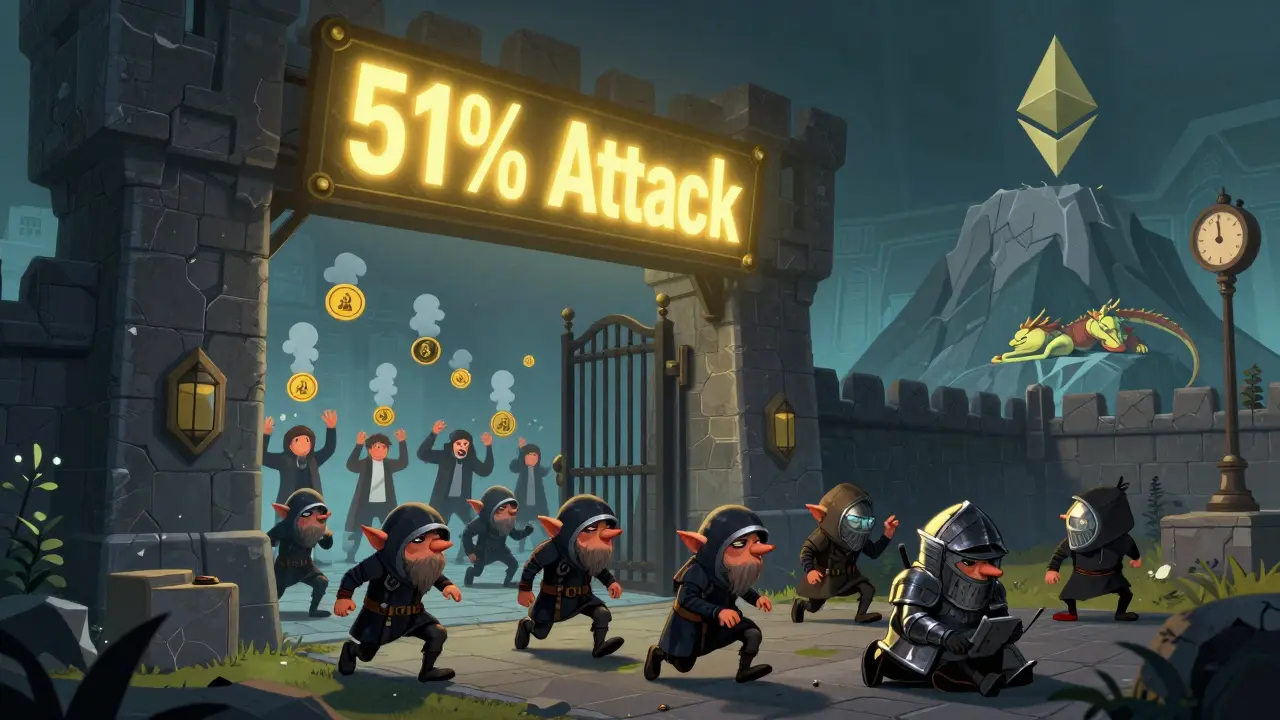
The Biggest Threats: Oracles, Gateways, and Fake Blocks
Sidechains aren’t just attacked through consensus failures. There are other sneaky ways hackers steal funds:- Oracle manipulation: Many sidechains rely on oracles to confirm events on the main chain. If a single oracle says, “This user locked $10,000,” and it’s lying, the sidechain mints fake tokens. The fix? Use multiple oracles and require a majority vote before releasing funds.
- Gateway attacks: The smart contracts that lock and unlock assets are the gateways. If they’re poorly coded, someone might exploit a reentrancy bug or a logic flaw to drain funds. This happened on several early sidechains before audits became standard.
- Fake blockchain attacks: An attacker could create a secret, private sidechain with their own blocks. They lock $1 million on the main chain, then secretly mine 100 blocks on their fake sidechain. They then submit those blocks to the main chain’s gateway, claiming they’ve earned $1 million in sidechain tokens. The fix? Withdrawal delays. If you have to wait 24-72 hours to withdraw, honest users can detect and challenge the fraud.
Synthetic Assets: A Different Kind of Sidechain Security
Not all sidechains move actual tokens. Some use synthetic assets - digital copies that track the value of real ones. For example, you lock 1 BTC on the main chain, and the sidechain mints 1 sBTC (synthetic Bitcoin). You trade sBTC, but the original BTC stays locked. This model avoids the need to move actual coins, which reduces complexity. But it adds new risks: what if the smart contract that mints sBTC is compromised? What if someone mints more sBTC than they’ve locked? That’s why synthetic systems need strict collateralization ratios and over-collateralization. If you lock $1.50 worth of ETH to mint $1 of sBTC, you’re safer than if you lock $1.01. Projects like RenVM and WBTC use variations of this. WBTC, for instance, is backed by real BTC held by trusted custodians. It’s not fully decentralized, but it’s been around for years with zero major losses.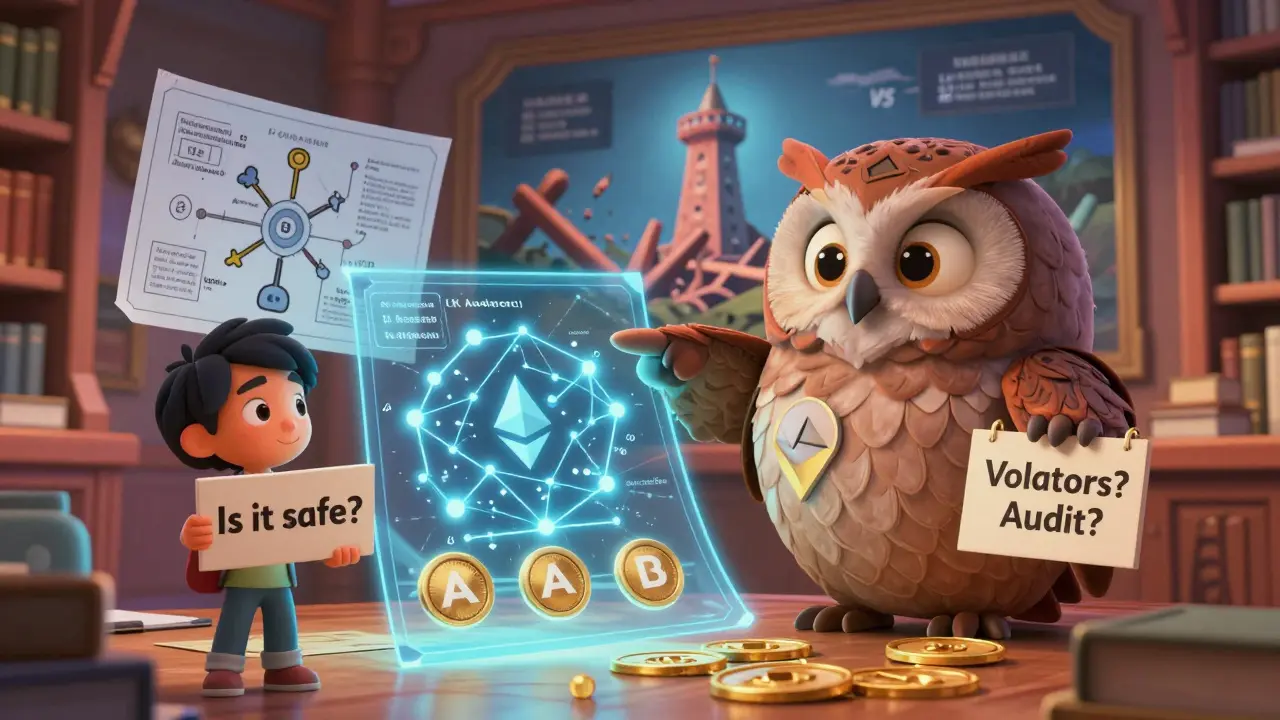
What’s the Best Sidechain Security Model?
There’s no perfect answer. It depends on what you’re building:- For high-value assets (like BTC or ETH): Use sidechains with Ethereum-level security, like those using ZK-proofs or fraud proofs. Avoid federated models unless you trust the operators.
- For games or low-value apps: A DPoS sidechain with 20+ validators is fine. The cost of attacking it exceeds the reward.
- For institutional use: Look for audited, regulated sidechains with insurance pools and multi-sig withdrawal controls.
What Happens If a Sidechain Fails?
History gives us real examples. In 2022, the Ronin Network sidechain lost $625 million because its validator nodes were compromised. The main chain (Ethereum) was fine - but users lost everything on Ronin. No one could recover it. In contrast, Liquid Network, operated by Bitfinex and Blockstream, has never been hacked. Why? Because it uses a federation of 15 trusted parties, and every transaction requires 11 signatures. It’s not decentralized - but it’s secure by design. The lesson? Security isn’t about how fancy the tech is. It’s about who controls it, how many people need to agree before money moves, and how long you wait to withdraw.What’s Next for Sidechain Security?
The future isn’t about choosing between sidechains and rollups. It’s about hybrid models. We’re already seeing sidechains that submit block summaries to Ethereum as proof. We’re seeing zero-knowledge proofs used to verify sidechain state without trusting validators. We’re seeing insurance protocols that reimburse users if a sidechain fails. But the core challenge remains: you can’t have maximum security, maximum decentralization, and maximum speed all at once. Sidechains will always be a trade-off. The smart user doesn’t assume safety - they check the model. Who are the validators? How long is the withdrawal delay? Are there fraud proofs? Is the code audited? If you’re moving funds to a sidechain, treat it like a bank. Would you trust your life savings to a bank with no FDIC insurance and no audits? Probably not. The same rules apply to blockchain.Are sidechains safer than centralized exchanges?
It depends. Centralized exchanges hold your keys - if they get hacked or go bankrupt, you lose everything. Sidechains give you control of your keys, but you’re trusting their security model. A well-run sidechain with multi-sig and withdrawal delays can be safer than a shady exchange. But a poorly secured sidechain? That’s riskier. Always check who controls the bridge and how funds are protected.
Can I lose my Bitcoin on a sidechain?
Yes - but only if the sidechain’s security fails. Your original Bitcoin stays locked on the main chain. You don’t lose it unless the sidechain’s smart contract is exploited during the unlock process, or if the validators collude to block your withdrawal. If you follow proper withdrawal procedures and wait for confirmation delays, your Bitcoin is recoverable. But if the sidechain shuts down or is hacked, you might not get it back.
Do all sidechains use the same security model?
No. Sidechains vary wildly. Some use federated validators (like Liquid), others use proof-of-stake with hundreds of nodes (like Polygon PoS), and some use zero-knowledge proofs to verify everything back to Ethereum (like zkEVM sidechains). The security model is chosen by the developers - there’s no universal standard. Always research the specific sidechain before using it.
Why not just use Ethereum layer 2s instead?
Layer 2s like rollups inherit Ethereum’s security - they’re anchored to it. Sidechains operate independently. That makes rollups safer for high-value transactions. But sidechains are faster and cheaper for things like gaming or social apps where you don’t need Ethereum-grade security. It’s a trade-off: security vs. performance.
How do I know if a sidechain is secure?
Check three things: (1) Who are the validators? Are they well-known and reputable? (2) Is there a withdrawal delay? At least 24 hours is standard. (3) Has the smart contract been audited by a top firm like CertiK or Trail of Bits? If any of these are missing, treat it as high risk.
Rajappa Manohar
December 28, 2025 AT 00:18Sidechains are just glorified IOUs with more steps. If you can’t trust the validators, why bother?
Mike Reynolds
December 29, 2025 AT 17:20I’ve used Polygon PoS for gaming NFTs and never had an issue. But I wouldn’t put my life savings in it. Know your risk.
dayna prest
December 30, 2025 AT 06:20Oh wow, so now we’re comparing sidechains to banks? Next you’ll tell me to check if the blockchain has a 24/7 customer service line. 😏
Brooklyn Servin
December 31, 2025 AT 08:12Let’s be real - if you’re using a sidechain without withdrawal delays or audits, you’re basically handing your keys to a guy in a hoodie who says he’s ‘trustworthy.’ I’ve seen too many ‘decentralized’ projects implode because devs thought ‘community trust’ was a consensus mechanism. ZK-proofs aren’t magic, but they’re the closest thing we’ve got to real security without relying on humans. And yes, I’ve audited a few. They’re not perfect, but they’re better than 15 corporate entities signing off with a Slack message.
Ryan Husain
January 2, 2026 AT 05:00It’s important to recognize that sidechains aren’t inherently dangerous - they’re tools. The danger lies in misalignment between economic incentives and security design. A sidechain with $500M TVL and 10 validators is a mathematical inevitability for attack. The real innovation isn’t in the tech, but in the governance models that align validator incentives with user safety. Projects that implement slashing conditions, bonded validators, or economic finality are moving in the right direction. We need more of that - not just more ZK proofs.
Alex Strachan
January 3, 2026 AT 10:17So… you’re telling me I can’t just trust the internet anymore? 😭 I thought we were past this. Also, ‘federation of trusted parties’ sounds like a fancy way to say ‘rich guys with access to the keys.’ 🤷♂️
Antonio Snoddy
January 5, 2026 AT 05:18Think about it: we’ve built an entire financial ecosystem on trustless systems… only to replace it with trust-based bridges. Isn’t that ironic? We don’t trust banks, but we trust Bitfinex to hold our BTC? We don’t trust governments, but we trust a 15-member council to sign off on withdrawals? We built blockchain to escape centralized control - and then we built sidechains that are just centralized systems with a blockchain sticker on them. We’re not evolving. We’re just redecorating the cage.
And don’t get me started on ‘synthetic assets.’ sBTC? That’s not Bitcoin. It’s a promise written in code, signed by people who don’t have skin in the game. It’s like buying a house with a contract that says ‘I promise I own it’ - and the only witness is the guy who sold it to you.
Maybe the real question isn’t ‘how do we secure sidechains?’ but ‘why are we still building them?’ If you want security, use a rollup. If you want speed, use a centralized exchange. Don’t pretend you’re getting the best of both worlds - you’re getting the worst of both.
And yet… here we are. Still clicking ‘Confirm’ on the bridge. Still hoping the validators won’t vanish. Still believing in the myth that ‘decentralization’ means anything when your keys are held by a consortium of VC-backed firms.
Maybe the next blockchain revolution won’t be about tech. Maybe it’ll be about humility. We thought we were building the future. Turns out we just built a new kind of casino. And we’re all still betting.
nayan keshari
January 5, 2026 AT 20:21Andy Reynolds
January 6, 2026 AT 03:07Man, I love how this thread turned into a crypto therapy session 😅 I get it - sidechains feel sketchy, but sometimes you just need speed. I run a game on a DPoS sidechain with 40+ validators. It’s not perfect, but it’s way cheaper than Layer 2 gas fees, and we’ve had zero exploits in 18 months. My players don’t care if it’s ‘decentralized’ - they care if the NFTs load fast and their trades don’t get stuck. Sometimes the best security model is the one that actually gets used. Not the one that sounds cool on a whitepaper.
Also, shoutout to Brooklyn for calling out the ZK stuff - that’s the real MVP. If you’re locking real BTC, go ZK. If you’re trading pixel art, go DPoS. Don’t let the purists make you feel bad for using the right tool for the job.
And Phil? Yeah, we’re building a casino. But at least this casino lets you own your chips. 🎰
Phil McGinnis
January 7, 2026 AT 01:24Let’s not pretend this is innovation. We’re just outsourcing risk to countries with weaker regulations and fewer audits. The US and EU are cracking down on centralized exchanges - so now we’re moving the same risks to ‘sidechains’ run by anonymous teams in offshore jurisdictions. It’s regulatory arbitrage dressed up as decentralization. And the people who lose money? They’re not crypto degens - they’re regular folks who thought ‘Bitcoin sidechain’ meant ‘same security as Bitcoin.’ Spoiler: it doesn’t.
We need real regulation. Not ‘community audits’ or ‘trusted federations.’ We need legal liability. If your sidechain loses $600M, your CEO should be in court. Not just ‘oops, we got hacked.’
Until then, this is just a new way to launder money under the banner of ‘Web3.’
Ian Koerich Maciel
January 8, 2026 AT 15:05I’ve spent the last year studying sidechain failures - Ronin, Wormhole, the whole list. What struck me wasn’t the code. It was the human factor. The teams that succeeded didn’t have the fanciest tech - they had clear, documented, multi-sig withdrawal procedures, public validator rosters, and emergency pause buttons. The ones that failed? They had ‘trust us’ as their whitepaper. If you’re moving money, treat the bridge like a vault. Ask: Who holds the keys? How many need to agree? Can I pause withdrawals if something’s off? If the answer is ‘I don’t know’ - walk away. No amount of ZK proofs fixes a team that doesn’t take responsibility.
And yes - I’ve lost money on a sidechain. It wasn’t the tech. It was my own impatience. I skipped the 24-hour delay. I thought ‘it’s fine.’ It wasn’t. I learned the hard way: in crypto, patience isn’t passive. It’s your last line of defense.
Rick Hengehold
January 9, 2026 AT 08:36Enough with the philosophy. If you’re not using a sidechain with a 72-hour withdrawal delay and a public audit from CertiK, you’re not serious. Stop wasting time. Either do it right or don’t do it at all.