Crypto Leverage: How to Use Borrowed Capital in Trading Without Getting Wiped Out
When you trade with crypto leverage, a trading method that lets you borrow funds to increase your position size. Also known as margin trading, it’s like renting extra power to amplify your wins—or your losses. Most beginners think leverage is a shortcut to big profits. It’s not. It’s a tool that turns small price moves into massive gains or total wipeouts.
Real traders use crypto leverage, a trading method that lets you borrow funds to increase your position size. Also known as margin trading, it’s like renting extra power to amplify your wins—or your losses. Most beginners think leverage is a shortcut to big profits. It’s not. It’s a tool that turns small price moves into massive gains or total wipeouts.
Real traders use leverage trading, the practice of using borrowed capital to control larger positions in crypto markets only when they know the risks. They watch liquidation risk, the point at which your position is automatically closed because your collateral dropped too low like a hawk. If you borrow 10x and the market drops 10%, you’re gone. No second chances. Platforms like Binance, Bybit, and DeFi protocols such as Aave and MakerDAO let you borrow, but they don’t protect you from bad decisions.
It’s not about how much leverage you use. It’s about how well you manage your DeFi loans, crypto loans secured by digital assets that allow you to trade or hold without selling your holdings. The best traders don’t max out their leverage. They use 2x or 3x, keep extra cash on hand, and never risk more than 5% of their portfolio on one trade. That’s how you survive a bear market.
You’ll find posts here about exchanges that offer leverage, how to pick collateral for loans, and why some platforms vanish overnight. Some airdrops and NFT projects tie into leverage strategies—like using borrowed ETH to farm yield, then betting the returns. Others warn about fake platforms pretending to offer safe leverage. You’ll see real examples: how Nigeria’s P2P traders use leverage to bypass banking limits, how the SEC cracks down on unregistered margin platforms, and why a zero-volume exchange like SoupSwap isn’t worth touching—even if it says it offers 50x leverage.
This isn’t about getting rich quick. It’s about staying in the game long enough to make smart moves. If you’re new, start with 2x. If you’re experienced, know your liquidation price before you click "borrow." The market doesn’t care if you’re a beginner or a pro. It only cares if you have enough collateral to cover your bet. And when it goes wrong? There’s no customer support. No refund. Just a empty wallet and a lesson you won’t forget.

Understanding Leverage in Crypto Trading: How It Works and Why Most Beginners Lose Money
Leverage in crypto trading lets you control large positions with little capital, but it multiplies both gains and losses. Learn how it works, why most beginners lose money, and how to trade it safely.
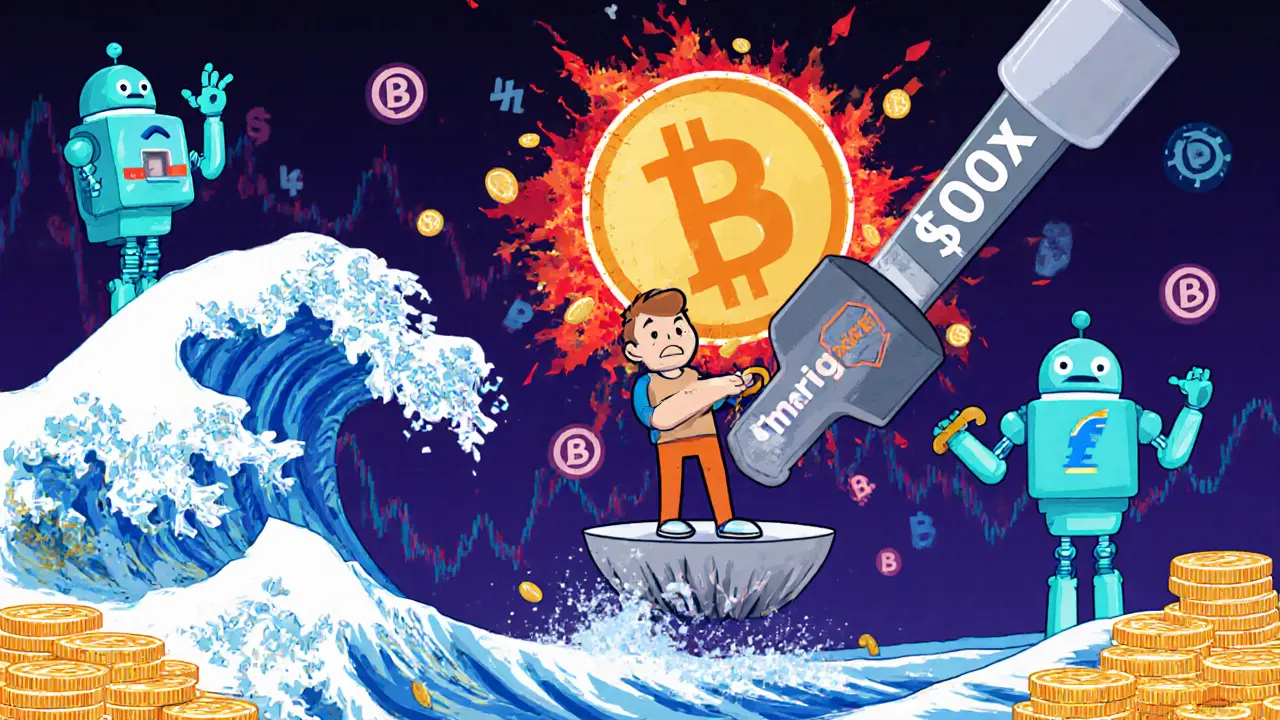
Understanding Leverage in Crypto Trading: How It Works and Why Most Beginners Lose Money
Leverage in crypto trading amplifies both gains and losses. Learn how it works, why most beginners lose money, and how to trade it safely with realistic risk management.