DeFi Gaming: How Blockchain Games Are Changing How You Earn and Play
When you think of DeFi gaming, a fusion of decentralized finance and video games where players earn real crypto through gameplay. Also known as GameFi, it’s not just about killing monsters or building empires—it’s about owning your progress, your items, and your income. Unlike traditional games where your loot vanishes when you log off, DeFi gaming gives you actual digital assets tied to blockchain ledgers. You don’t just play—you participate in an economy.
These games rely on blockchain games, games built on public blockchains like Ethereum, BSC, or Solana, where in-game items are NFTs. Think of a sword you bought in a game that’s actually a unique token you can sell on a marketplace. Or a plot of virtual land that generates tokens just by sitting there. The most successful titles, like BLOCKLORDS (LRDS), a medieval strategy game where the LRDS token governs upgrades and rewards, prove that real utility beats flashy graphics. Players aren’t just chasing hype—they’re betting time on systems that pay out in crypto.
But not all crypto rewards are created equal. Some games promise daily earnings but have no real economy behind them. Others, like the FARA airdrop, a 2021 token drop tied to the Faraland game on BSC, gave players actual tokens that still hold value in the game’s ecosystem. The key difference? Real demand. If people are buying, selling, or using the tokens inside the game, it’s alive. If it’s just a ticker on a website with no activity, it’s dead weight.
What makes DeFi gaming sticky is the blend of ownership and incentive. You’re not just a player—you’re a stakeholder. Your actions affect the game’s economy, and sometimes, you even vote on updates. That’s why some players spend hours farming tokens not because it’s fun, but because it’s their side hustle. And with over $24 billion in real-world assets now tokenized, the line between play and work is blurring fast.
But here’s the catch: most DeFi games fail within a year. The ones that last have strong tokenomics, active communities, and real gameplay. They don’t just hand out tokens—they give you reasons to stay. Whether it’s earning through battles, renting out NFTs, or staking for passive income, the best games make earning feel natural, not forced.
You’ll find posts here that cut through the noise. Some break down how the FARA airdrop actually worked. Others warn you about dead platforms like SoupSwap that look like DeFi games but have zero volume. You’ll learn what collateral matters in DeFi loans tied to gaming, how to spot fake airdrops, and why some blockchain games are just scams with better graphics. No fluff. No hype. Just what’s real, what’s dead, and what’s still worth your time in 2025.
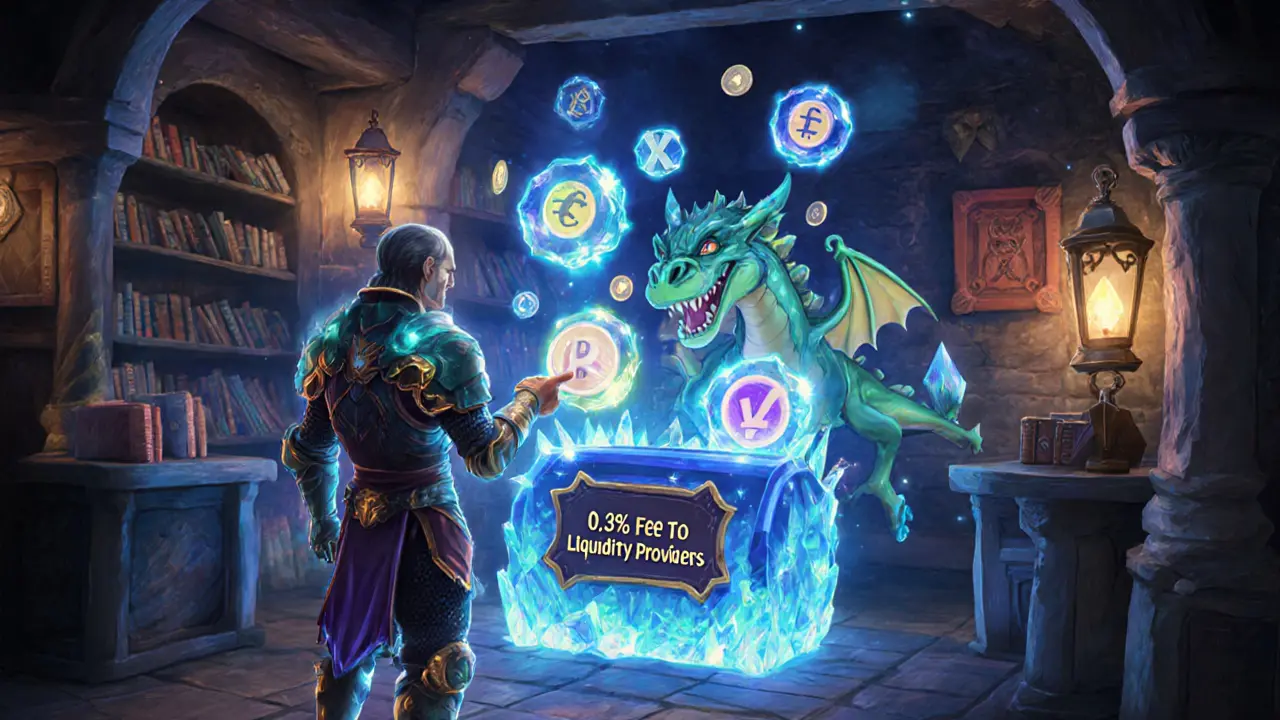
DeFi Kingdoms Crystalvale Exchange Review: Game or Real Crypto Trading?
DeFi Kingdoms Crystalvale isn't a real crypto exchange - it's a game that teaches you how DeFi works. Learn how to trade, provide liquidity, and understand blockchain mechanics while playing a fantasy RPG.