NFT Metadata: What It Is, Why It Matters, and How It Powers Digital Ownership
When you buy an NFT, you’re not just buying an image—you’re buying a bundle of data called NFT metadata, the structured information that defines an NFT’s appearance, properties, and ownership history. Also known as NFT attributes, it’s what turns a random JPEG into a unique digital collectible with verifiable traits. Without metadata, an NFT is just a file with no context—like a painting with no title, artist, or signature. The metadata tells you the name, rarity, animation, traits, and even where the image is stored. Most NFTs use JSON files to store this info, linked to the token via a smart contract. If the metadata breaks, your NFT becomes a broken link—or worse, a placeholder image.
Where the metadata lives matters just as much as what’s inside it. Many early NFT projects stored images directly on-chain, which was expensive and slow. Today, most use decentralized storage like IPFS or Arweave, but if the project’s server goes down or the link dies, your NFT turns into a blank square. That’s why NFT provenance, the permanent, tamper-proof record of an NFT’s origin and ownership chain is only as strong as its metadata’s durability. Projects like Bored Ape Yacht Club and CryptoPunks built long-term value because their metadata is locked in decentralized storage and tied to a well-audited NFT smart contract, the code that governs how NFTs are created, transferred, and verified on the blockchain. But thousands of other NFTs? Their metadata is hosted on a startup’s AWS server—and that server could vanish tomorrow.
And it’s not just about images. Metadata powers utility. In games like Ertha or BLOCKLORDS, your NFT’s traits—like terrain type or weapon stats—are stored in metadata and read by the game’s code. If the metadata changes or disappears, your in-game asset stops working. Even in art, metadata can include creator royalties, licensing terms, or access keys to private communities. That’s why scammers create fake NFTs with stolen metadata—they copy the look but break the link to real utility. Real NFTs don’t just look good; they’re built to last.
What you’ll find below are real-world examples of how NFT metadata works—or fails. From airdrops that gave away NFTs with broken links to projects that used metadata to unlock real-world access, these posts show you what separates lasting value from digital ghosts. You’ll see how some NFTs became useless overnight because their metadata vanished, and how others turned simple traits into powerful digital rights. This isn’t theory. It’s what’s happening right now, in every wallet, on every chain.
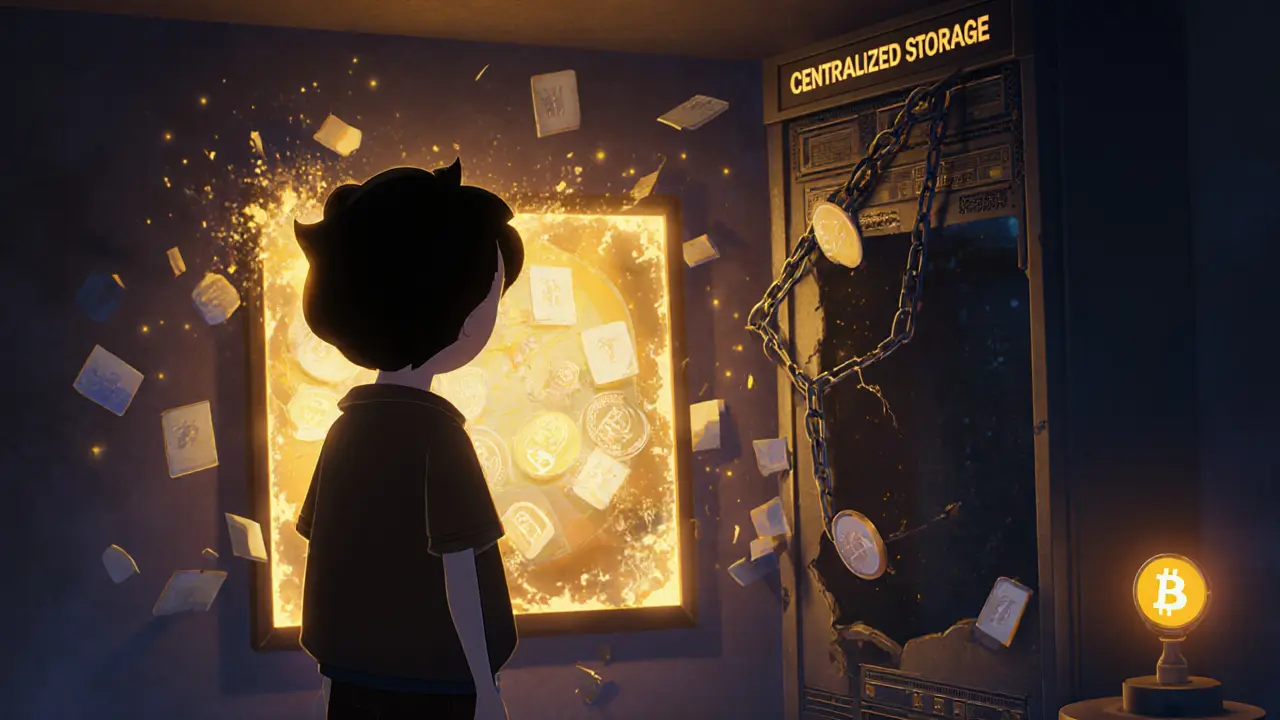
IPFS vs Centralized NFT Storage: Which One Actually Keeps Your Digital Art Safe?
Most NFTs rely on centralized storage that can vanish overnight. IPFS offers a decentralized alternative, but many projects still use centralized services pretending to be decentralized. True permanence requires Arweave, Filecoin, or self-hosted pinning.