NFT Storage: How to Keep Your Digital Assets Safe and Accessible
When you buy an NFT, you’re not really owning the image or video—you own a token that points to it. That’s where NFT storage, the system that holds the actual digital file linked to your NFT token. Also known as digital asset storage, it’s the hidden layer that determines whether your NFT will last or vanish overnight. Most people think their NFT is safe because it’s on the blockchain. But the blockchain only stores a link. If that link points to a server that shuts down, or a file that gets deleted, your NFT becomes a dead placeholder. That’s not speculation—it’s happened to thousands of collectors.
There are two main ways NFTs get stored: centralized servers and decentralized networks. Centralized storage means the file lives on a company’s server—like a traditional website. If that company goes under, your NFT’s artwork disappears. Decentralized storage, like IPFS or Arweave, spreads the file across thousands of computers. That’s why projects using Arweave can still show your NFT art years later—even if the original team vanishes. The difference isn’t technical jargon—it’s survival. Your NFT’s value depends on whether the file behind it still exists.
Metadata is another hidden risk. That’s the data attached to your NFT: name, description, attributes, and the link to the file. If the metadata is stored on a centralized database and the project updates its website, your NFT could suddenly show the wrong image or lose all details. That’s why some serious collectors only trust NFTs with metadata and files both stored on IPFS or Arweave. You can check this yourself—look up your NFT on Etherscan or OpenSea, click the link to the metadata, and see if it points to an ipfs.io or arweave.net address. If it doesn’t, you’re at risk.
And then there’s the wallet. Your NFT might be stored safely on IPFS, but if your private key is lost, stolen, or compromised, you lose access. That’s why cold wallets like Ledger or Trezor matter. They keep your keys offline, away from hackers. But even that’s not enough. Some NFT projects require you to sign transactions to claim rewards or unlock features. If you’re not careful, you could accidentally approve a scam contract that drains your wallet. NFT storage isn’t just about where the file lives—it’s about who controls access to it.
There’s no single perfect solution. But the safest NFTs combine three things: decentralized file storage, on-chain metadata, and secure wallet management. Projects like CryptoPunks and Bored Apes use Arweave for permanence. Newer collections often cut corners to save costs—and you pay the price later. The market is full of NFTs that look valuable today but could become digital ghosts tomorrow. You don’t need to be a tech expert to protect yourself. Just know where the file is stored, check the link, and keep your keys safe.
Below, you’ll find real-world examples of what went wrong—and what worked—when NFT storage failed or succeeded. From dead projects with vanished art to collectors who kept their assets intact through smart choices, these stories show why storage isn’t an afterthought. It’s the foundation.
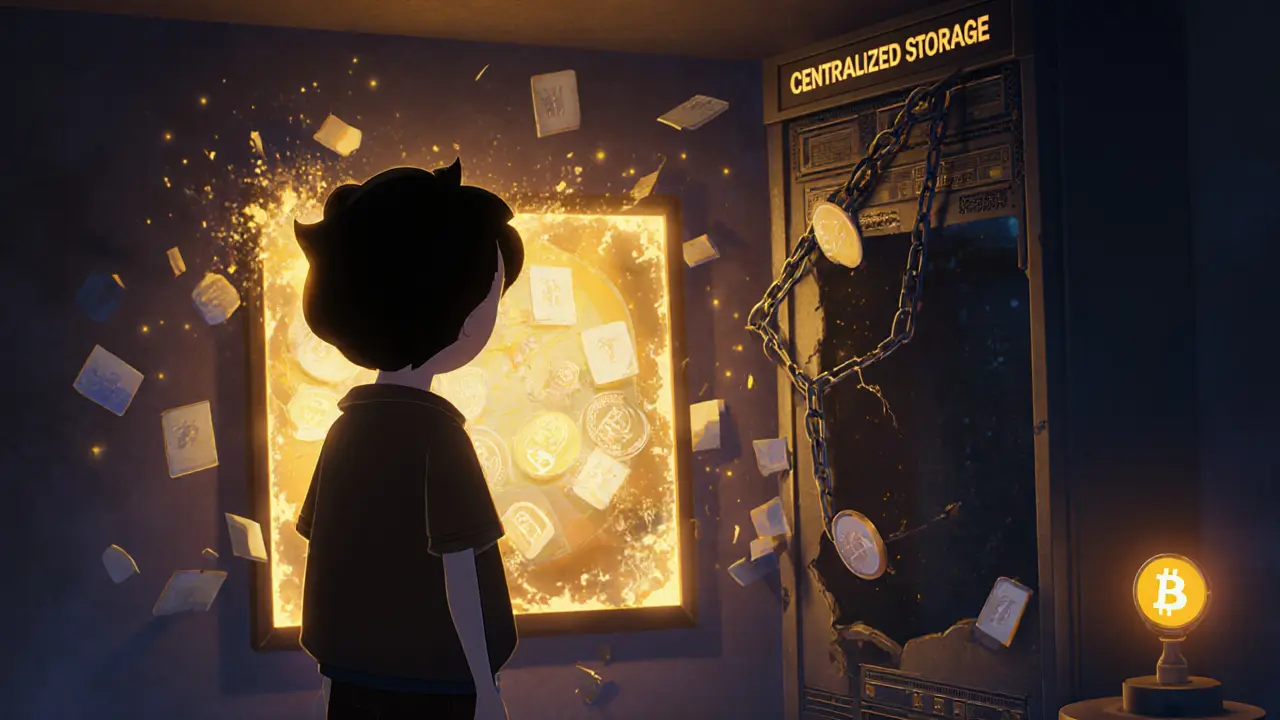
IPFS vs Centralized NFT Storage: Which One Actually Keeps Your Digital Art Safe?
Most NFTs rely on centralized storage that can vanish overnight. IPFS offers a decentralized alternative, but many projects still use centralized services pretending to be decentralized. True permanence requires Arweave, Filecoin, or self-hosted pinning.