SEC Gensler: What He Controls, How He Shapes Crypto, and What It Means for You
When it comes to crypto regulation in the U.S., SEC Gensler, the chair of the U.S. Securities and Exchange Commission who has taken a hardline stance on cryptocurrency enforcement. Also known as Gary Gensler, he’s the single most influential person deciding which tokens are securities and which exchanges can operate legally. If you’ve ever wondered why some coins disappear from Coinbase or why airdrops suddenly vanish from CoinMarketCap, the answer usually starts with him.
SEC Gensler doesn’t write laws—he interprets them. He treats most cryptocurrencies as unregistered securities, meaning they need to follow the same rules as stocks. That’s why exchanges like Binance and Kraken got slammed with lawsuits: they let people trade tokens without registering them as securities. He’s also cracked down on DeFi platforms that act like exchanges but claim they’re "decentralized." The message is clear: if it looks like a stock exchange and acts like one, the SEC will treat it like one—even if it runs on blockchain.
This isn’t just about big exchanges. It affects you too. If you’re chasing a new airdrop, like the Sphynx Network (SPH) or VOW token, and the project hasn’t filed with the SEC, you’re risking participation in something that could be shut down tomorrow. Even if the token is free, the SEC doesn’t care if you paid with time or money—what matters is whether it’s an investment contract. That’s why some airdrops listed on CoinMarketCap vanish overnight: they weren’t compliant. And if you’re using a crypto exchange like ProBit or EarnBit, you’re likely trading tokens that SEC Gensler could classify as securities at any moment.
He’s also pushing for stablecoin rules, custody standards, and transparency in tokenomics. That’s why you’ll see articles here about FCA crypto authorization in the UK or Nigeria’s underground crypto economy—those are the workarounds people turn to when U.S. rules get too tight. SEC Gensler didn’t create crypto’s volatility, but he’s made it more unpredictable. His actions have forced projects to choose: comply, leave the U.S., or disappear.
What you’ll find below isn’t just a list of articles. It’s a map of how SEC Gensler’s policies ripple through real crypto use cases—from airdrops that vanish to exchanges that get flagged as scams. You’ll see how traders in Cuba and Nigeria adapt when U.S. rules tighten, how DeFi borrowers navigate liquidation risks under regulatory pressure, and why some tokens labeled as "meme coins" are quietly classified as securities behind the scenes. This isn’t theory. It’s what’s happening right now—and if you’re trading crypto, you need to understand it.
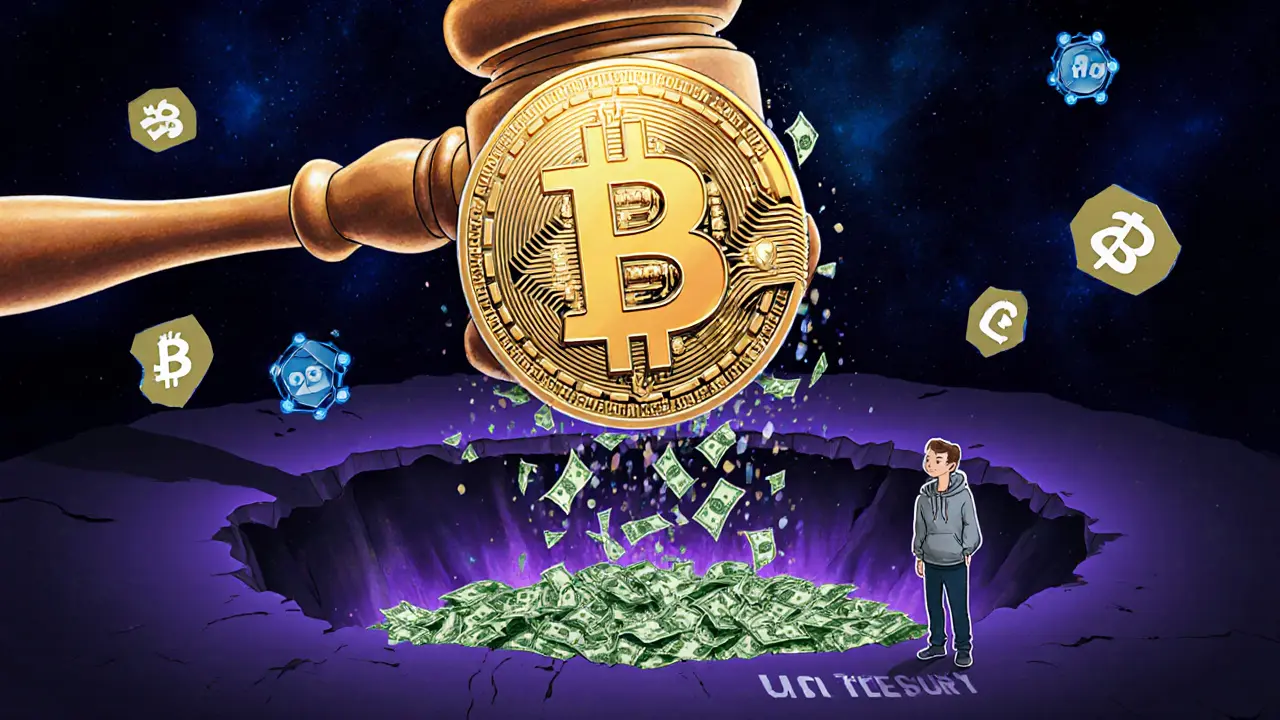
SEC Crypto Enforcement Fines: How 2024 Saw a 3,018% Surge in Penalties
SEC crypto fines surged 3,018% in 2024, hitting $4.98 billion - mostly from one $4.5 billion case. The agency shifted from quantity to impact, targeting unregistered securities and DeFi platforms with record penalties.