SEC Penalties 2024: What Crypto Projects Got Fined and Why It Matters
When the SEC penalties 2024, enforcement actions taken by the U.S. Securities and Exchange Commission against crypto firms for violating securities laws. Also known as crypto regulatory fines, these actions aren’t just paperwork—they’re warnings that the era of loose rules is over. In 2024, the SEC didn’t just send letters. They filed lawsuits, froze assets, and forced companies to pay millions in fines. This wasn’t random. It was a pattern: projects that sold tokens like stocks without registering them, exchanges that acted like brokerages without licenses, and platforms that promised returns without disclosing risks.
One big target was crypto exchanges, platforms where users buy, sell, and trade digital assets. Also known as centralized crypto platforms, they’re now under heavy scrutiny for listing tokens that the SEC calls unregistered securities. Several exchanges got hit for letting users trade tokens like $XRP, $DOGE, and others without proving they weren’t investment contracts. Then there’s crypto airdrops, free token distributions often used to build community and drive adoption. Also known as token giveaways, they’re now a red flag if they’re tied to promises of future profits. The SEC says if you’re giving away tokens to people who expect to make money from them, you’re selling securities. That’s why airdrops tied to DeFi platforms or NFT games got flagged—especially when marketing materials talked about "future value" or "price pumps."
The real shift? The SEC stopped chasing only big names. In 2024, they went after small teams, anonymous developers, and even influencers who promoted tokens without disclosing they got paid. If you’re running a project and telling people "this will go up," you’re now legally responsible. No more hiding behind "it’s not a security" slogans. The courts are siding with the SEC more often, and the message is clear: if it walks like a security and talks like a security, it’s a security.
What does this mean for you? If you’re holding tokens from a project that got fined, your asset might be delisted or frozen. If you’re running a project, you need legal clarity before launching anything. And if you’re just trading? You can’t ignore compliance anymore. The days of blindly jumping into every new coin are over. The market is maturing—and the SEC is making sure it doesn’t grow up too fast.
Below, you’ll find real examples of what happened when projects ignored the rules. Some lost everything. Others learned the hard way. These aren’t hypotheticals—they’re case studies in how regulation is reshaping crypto right now. Read them. Learn from them. And don’t assume you’re too small to be next.
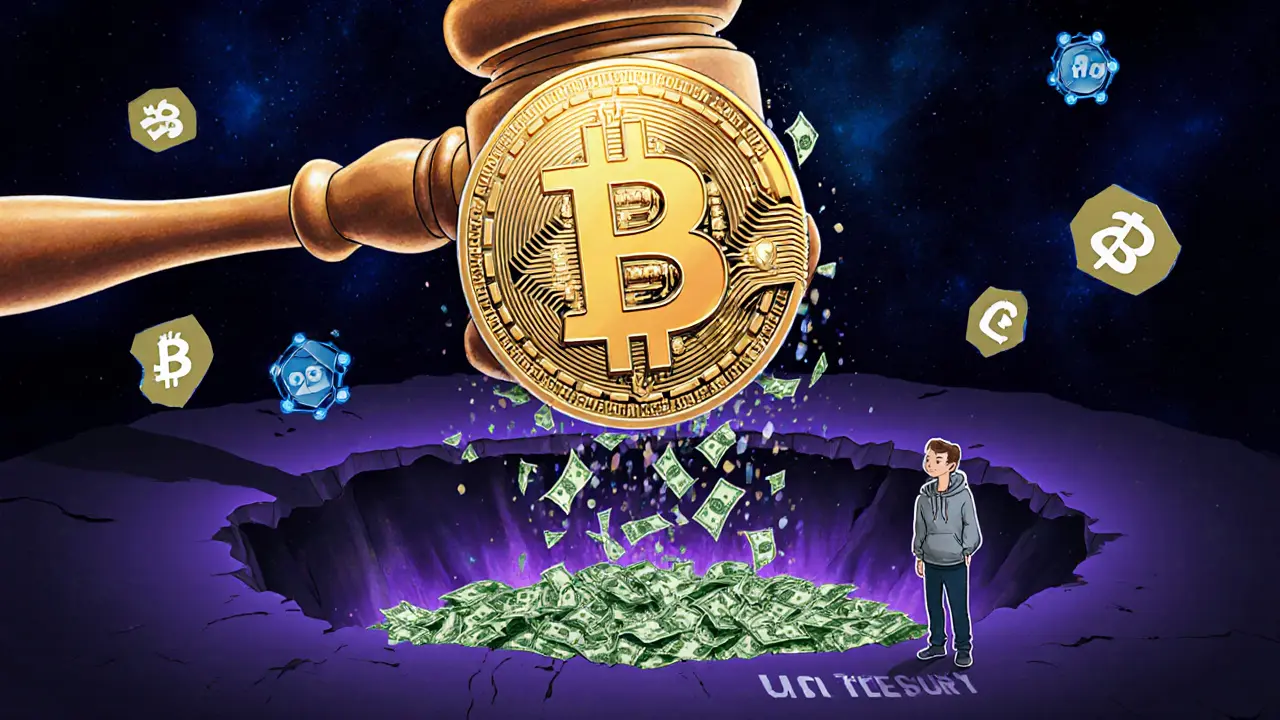
SEC Crypto Enforcement Fines: How 2024 Saw a 3,018% Surge in Penalties
SEC crypto fines surged 3,018% in 2024, hitting $4.98 billion - mostly from one $4.5 billion case. The agency shifted from quantity to impact, targeting unregistered securities and DeFi platforms with record penalties.