SoupSwap DeFi: What It Is, How It Works, and What You Need to Know
When you hear SoupSwap DeFi, a decentralized exchange built on Binance Smart Chain that lets users trade tokens directly from their wallets without intermediaries. Also known as SoupSwap DEX, it’s one of many platforms trying to make crypto trading faster and cheaper by cutting out centralized middlemen. Unlike big exchanges like Binance or Coinbase, SoupSwap doesn’t hold your funds—you control your keys, and trades happen through smart contracts. That’s the core idea behind DeFi: giving power back to users.
But SoupSwap isn’t just another DEX. It’s built for users who want low gas fees and quick swaps, especially on BSC where transaction costs are a fraction of Ethereum. It supports popular tokens like BNB, BUSD, and dozens of smaller altcoins that don’t make it to major exchanges. You’ll find liquidity pools where people lock up tokens to earn trading fees, and sometimes special incentives for early adopters. That’s why you see posts about BSC DEX, decentralized exchanges running on the Binance Smart Chain, known for speed and low costs compared to Ethereum popping up in the same space—SoupSwap fits right into that ecosystem. It’s also tied to DeFi liquidity, the amount of crypto locked in trading pools that enables smooth buying and selling without big price swings. Without enough liquidity, even the best DEX feels sluggish or risky.
But here’s the catch: most users don’t realize how thin the safety net is. SoupSwap has no public audit reports, no known team, and no regulatory oversight. That’s not unusual in DeFi, but it’s risky. You’ll see posts warning about fake tokens, rug pulls, and liquidity drains—all things that can happen fast on a DEX with low volume. If you’re trading there, you’re not just betting on price—you’re betting on the platform staying alive. That’s why people compare it to other obscure DEXs like MetaTdex or MiaSwap v2, which turned out to be dead ends. SoupSwap might be active now, but is it built to last?
What you’ll find in the posts below are real stories from people who’ve used SoupSwap—or tried to. Some found quick gains. Others lost money because they didn’t check token contracts. There are guides on how to connect wallets, how to spot fake tokens, and how to track liquidity changes in real time. You’ll also see how it stacks up against bigger players like PancakeSwap, and why some traders stick with it despite the risks. This isn’t a review of a polished product. It’s a look at a wild, unregulated corner of crypto where opportunity and danger live side by side.
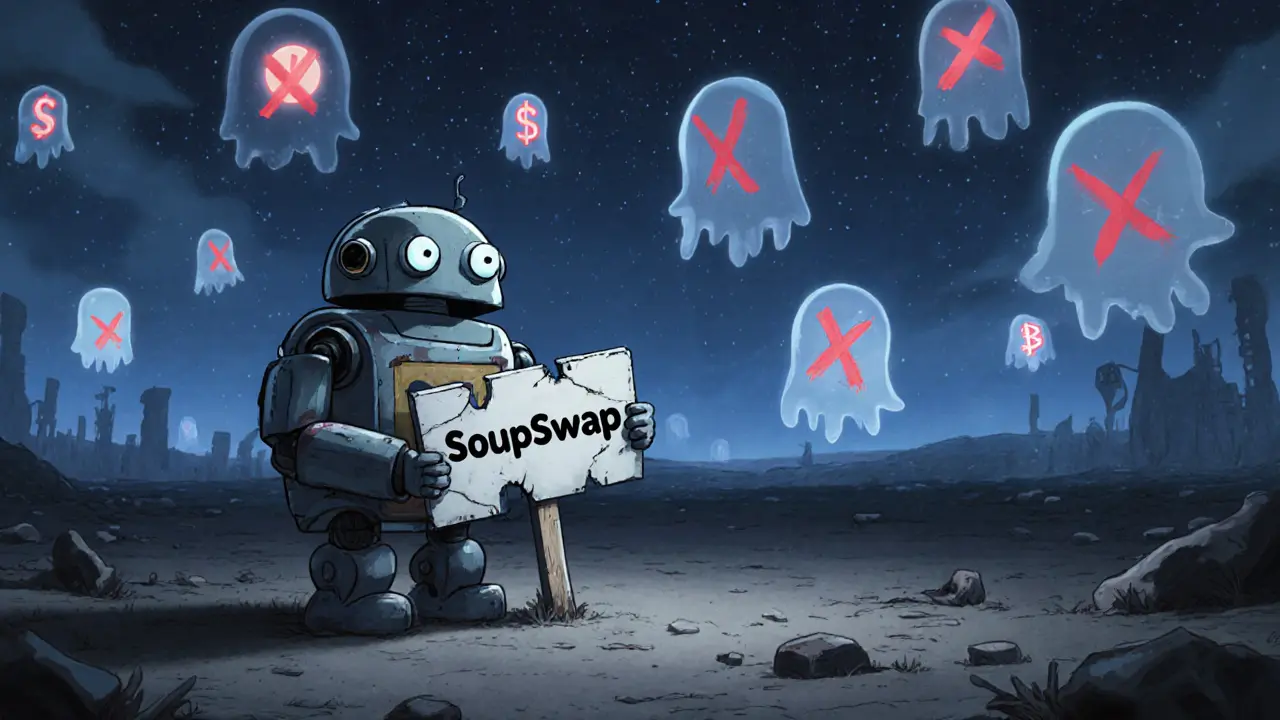
SoupSwap Crypto Exchange Review: Is This DeFi Platform Still Active?
SoupSwap claims to be a DeFi exchange on BSC, but as of 2025, it has zero trading volume, no audits, no community, and no active development. This review reveals why it's best avoided.