Underground Crypto Economy: Hidden Markets, Unregulated Exchanges, and How They Really Work
When you think of crypto, you probably imagine Bitcoin on Coinbase or Ethereum on Uniswap. But beneath that surface lies the underground crypto economy, a network of unregulated platforms, abandoned tokens, and shadow airdrops that operate outside official oversight. Also known as the dark crypto ecosystem, it’s where projects with zero trading volume still get listed, where exchanges vanish overnight, and where free NFTs often come with hidden traps. This isn’t science fiction—it’s the daily reality for thousands of traders who stumble into these spaces looking for quick gains.
The unregulated crypto exchange, a platform that operates without licensing, audits, or public accountability. Also known as shadow DEX, it is the backbone of this hidden world. Look at MetaTdex—$4.7B in claimed volume, no audits, no fees, no reviews. Or SoupSwap, which has zero trading activity but still shows up in search results. These aren’t glitches—they’re features. The underground economy doesn’t need trust; it needs anonymity and speed. And it thrives where regulators can’t reach: on BSC, HECO, and other chains with weak oversight. These platforms aren’t just risky—they’re often outright scams designed to drain wallets before disappearing.
Then there are the crypto scams, projects built to look legitimate but designed to vanish after collecting user data or tokens. Also known as rug pulls, it show up as airdrops—SHF CMC X SHIBAFRIEND, VOW, Sphynx Network—promising free NFTs or tokens in exchange for connecting wallets. Many of these are dead before they launch. Lepasa Polqueen NFTs? Still usable in the metaverse, but no new drops. Pussy In Bio? A dead Solana token with zero buyers. These aren’t mistakes—they’re bait. The underground economy doesn’t sell value; it sells hope. And it knows exactly how to exploit the desire to get something for free.
What ties all this together? The decentralized exchange, a peer-to-peer trading platform that removes intermediaries but also removes accountability. Also known as DEX, it is the engine. It lets anyone launch a token, list it, and attract traders without a single signature from a regulator. That’s freedom—but also chaos. The same tech that enables DeFi loans and real-world NFT land ownership also powers fake exchanges like IslandSwap and MiaSwap v2, which don’t even exist. The underground economy doesn’t care if you win or lose. It only cares if you click, connect, and send.
And then there’s the human side. People in Cuba use crypto to bypass sanctions. People in Nigeria use it to send money home. But in the shadows, it’s not about empowerment—it’s about exploitation. The same tools that help the unbanked also help the unscrupulous. You can’t separate the good from the bad without understanding both. That’s why this collection exists—not to scare you, but to arm you. Below, you’ll find real breakdowns of dead tokens, fake airdrops, and invisible exchanges. No fluff. No hype. Just what’s actually happening where no one’s watching.
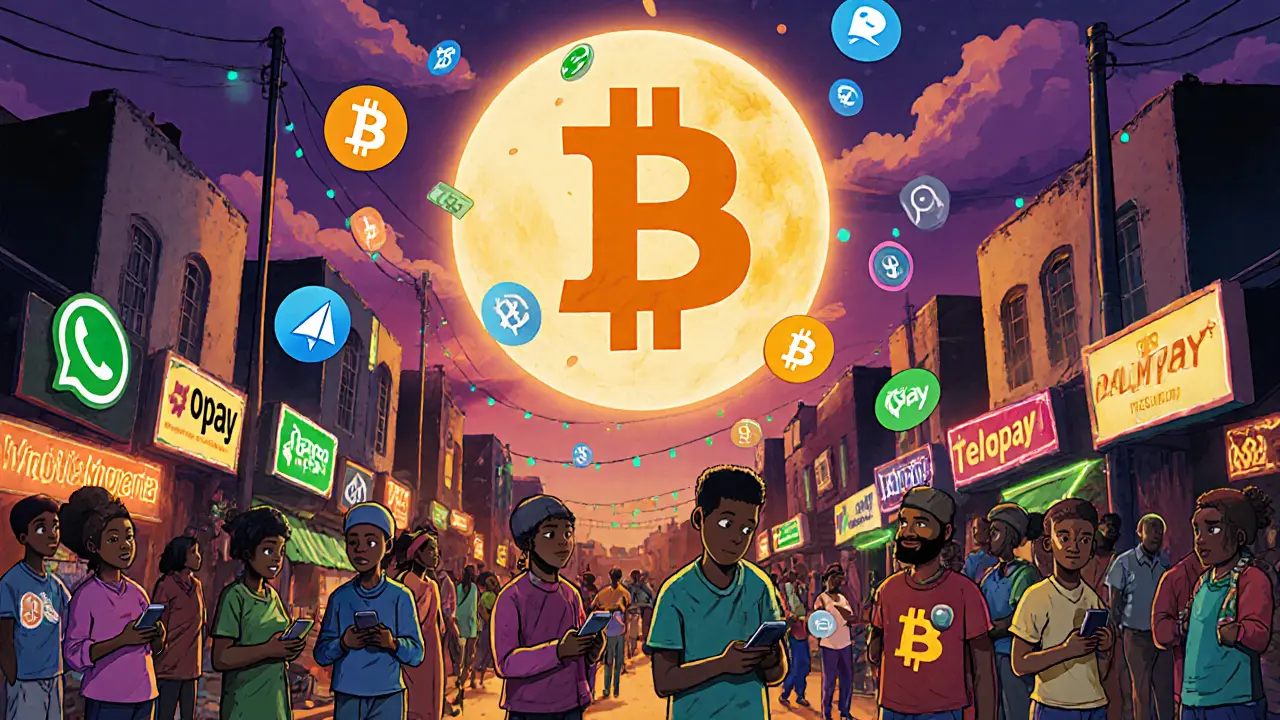
How Nigeria's Underground Crypto Economy Thrived During the Bank Ban
Despite a 2021 bank ban on crypto, Nigeria became the world's second-largest crypto adopter through a thriving underground P2P economy powered by WhatsApp, Telegram, and Binance P2P.