 Aug, 1 2025
Utility Token Comparison Tool
Top Utility Tokens
Compare key metrics of the most promising utility tokens for 2025
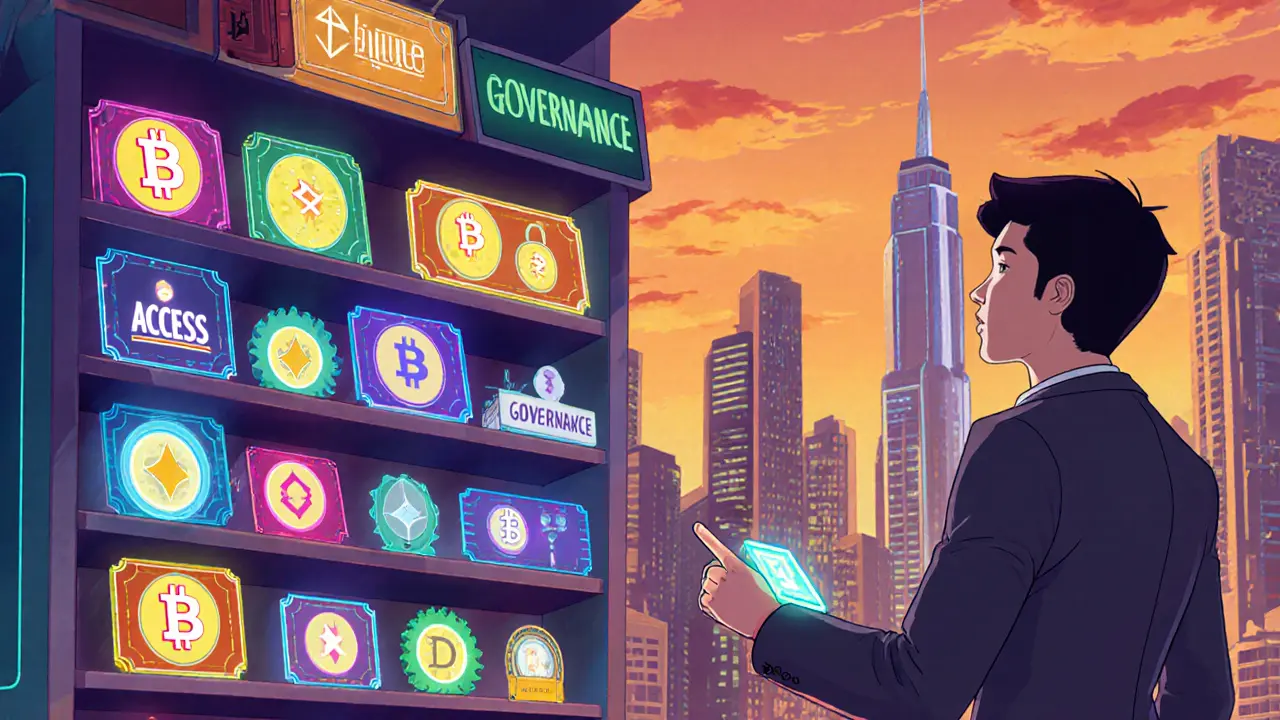
If you’ve been scanning the crypto market for the past few months, you’ve probably noticed that utility tokens are pulling ahead of meme coins and pure speculative assets. They promise real‑world access, governance rights, or platform rewards - all things that can keep demand steady even when the market wobbles. This guide walks you through what utility tokens are, why they matter for investors right now, and which projects deserve a closer look for a 2025 portfolio.
What Exactly Is a Utility Token?
Utility token is a cryptographic asset that grants holders access to a specific product, service, or function within a blockchain ecosystem. Unlike security tokens, which represent ownership or profit‑share rights, utility tokens are designed to be used - think of them as the digital equivalent of a prepaid ticket or a software license. The first widely recognized utility token was Basic Attention Token (BAT) in 2017, and the concept exploded after Ethereum introduced the ERC‑20 standard in 2015, making token creation cheap and fast.
Why Utility Tokens Are Hot for Investors
Three forces are driving the surge:
- Real‑world adoption: Projects like real‑estate platforms or AI compute markets need actual usage to succeed, which creates a baseline demand for their tokens.
- Governance incentives: Many protocols hand out voting power as a token reward, tying price performance to community participation.
- Infrastructure upgrades: Ethereum’s recent EIP‑4844 and Solana’s Firedancer client have cut fees and boosted reliability, making token‑driven applications more viable.
According to a ZebPay market report (Oct2025), utility tokens now represent 63.2% of the $2.87trillion crypto market and are growing at 28.4% annually - outpacing the broader crypto space.
How to Pick a Winning Utility Token
Before you throw money at any token, run through this quick checklist:
- Clear use case: Does the token solve a real problem (e.g., real‑estate settlement, AI compute, DeFi lending)?
- Active development: Look for recent code commits, audits, and a roadmap with concrete milestones.
- Liquidity & market depth: Tokens with thin order books can swing wildly; aim for daily volume >$5M.
- Tokenomics: Fixed supply, reasonable inflation, and transparent reward distribution are key.
- Regulatory posture: Projects that have engaged with regulators (MiCA, Swiss FINMA) lower the risk of a sudden shutdown.
Applying these criteria points you toward a short list of high‑potential tokens for 2025.

Top Utility Tokens to Watch
Propy (PRO) is a blockchain‑based real‑estate platform that tokenizes property titles and enables cross‑border transactions.
Market cap: $70M; price: $0.70. The token fuels property listings, escrow services, and a loyalty rewards program. Users have reported successful land‑registry filings in the US, EU, and Southeast Asia. Main risk: transaction fees rise during peak network congestion (average 14seconds per trade on Ethereum).
io.net (IO) powers a decentralized AI compute marketplace, letting developers rent GPU clusters on‑chain.
Market cap: $117M; price: $1.23. IO token holders earn a share of compute fees and can stake for up‑to‑12% APY. The platform supports 30000GPU nodes and plans to double capacity by year‑end. Main risk: technical onboarding is steep - 23% of users hit configuration hiccups.
BlockchainFx offers multi‑chain trading tools, staking rewards, and an AI‑driven trade engine.
Market cap: $45M; price: $0.85. Stakers receive an advertised 18% APY, while the AI engine claims to generate 2‑3% daily alpha on average. The token is BEP‑20 compatible, meaning low fees on BNB Chain. Main risk: user‑support delays have been noted by 32% of reviewers.
Best Wallet Token (BEST) powers a multi‑chain wallet that bundles DeFi, NFT, and fiat‑on‑ramp services.
Market cap: $38M; price: $0.44. The token is used for fee discounts (up to 0.8% per transaction) and governance voting. Onboarding takes about 1.5hours for most users. Main risk: fee structure is slightly higher than competing wallets, hurting price upside.
Aave (AAVE) is a DeFi lending protocol whose token grants governance rights and fee share.
Market cap: $13B; price: $82. Aave’s tokenomics include a 5‑year vesting schedule for new tokens and a 10% protocol fee returned to stakers. The platform holds $13B TVL, making it a “gold standard” for utility token design. Main risk: price is tightly correlated with broader DeFi sentiment, which can be volatile.
Side‑by‑Side Comparison
| Token | Platform | Market Cap (USD) | Primary Use Case | Typical APY / Reward | Avg. Tx Fee | Key Risk |
|---|---|---|---|---|---|---|
| PRO | Ethereum | $70M | Real‑estate tokenization | ‑ | $1.20 | Network congestion |
| IO | Ethereum / Solana (hybrid) | $117M | Decentralized AI compute | 12% (staking) | $0.40 | Technical onboarding |
| BlockchainFx | BNB Chain | $45M | Multi‑chain trading + AI | 18% (staking) | $0.20 | Customer‑support lag |
| BEST | Ethereum / BNB | $38M | Wallet fee discounts & governance | ‑ | $0.15 | Higher fee vs rivals |
| AAVE | Ethereum | $13B | DeFi lending & governance | 5‑10% (fee share) | $0.70 | DeFi market swings |
Risk Management Tips for Utility Token Investors
Even the best‑run tokens can bite if you ignore the basics. Here are three practical steps:
- Diversify across sub‑categories: Mix DeFi (Aave), infrastructure (io.net), and application‑specific (Propy) tokens to smooth out sector‑specific shocks.
- Use hardware wallets: Multi‑sig vaults protect treasury funds, especially for tokens that hold significant value in staking contracts.
- Stay on top of regulatory news: Follow the EU MiCA updates and SEC guidance; a sudden re‑classification can impact token legality and exchange listings.
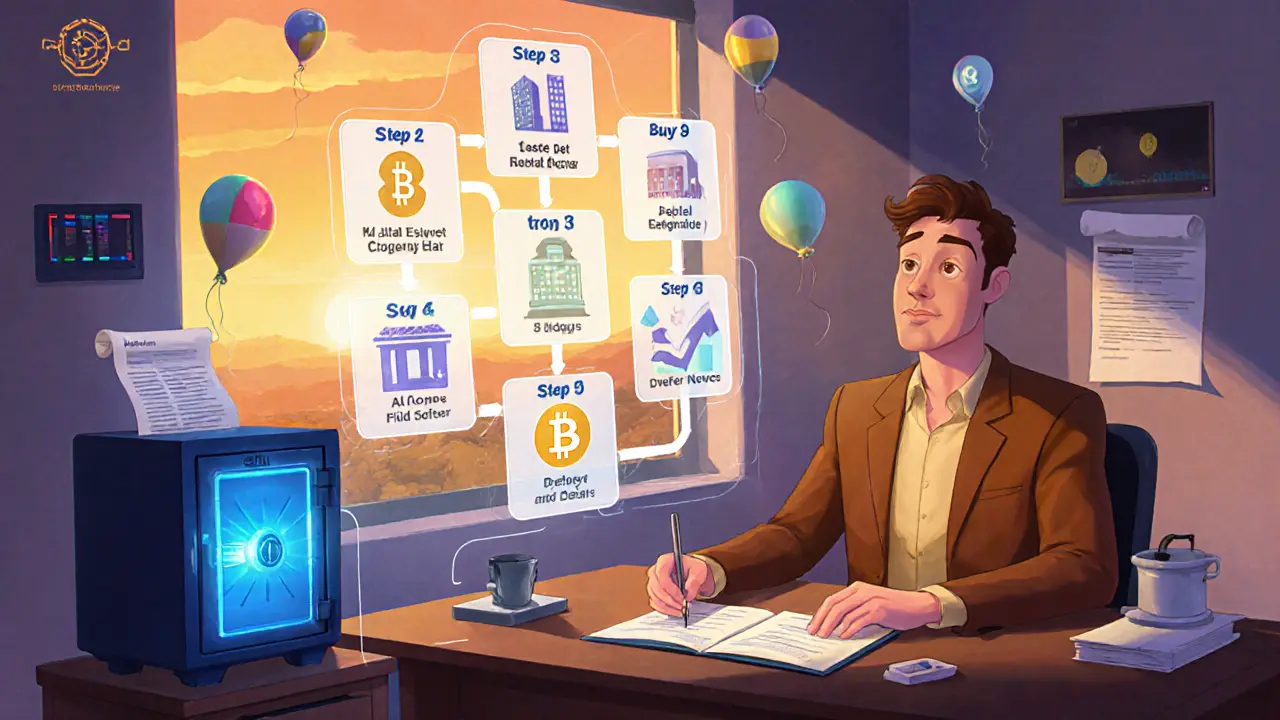
Getting Started: A Simple 5‑Step Playbook
- Set up a compatible wallet: MetaMask works for Ethereum‑based tokens; Trust Wallet covers BNB Chain and Solana.
- Buy a base crypto (ETH or BNB): Most utility tokens trade against these pairs on major exchanges like Binance, Coinbase, or Kraken.
- Swap for the target token: Use a DEX (Uniswap for ERC‑20, PancakeSwap for BEP‑20) or a centralized CEX if liquidity is better.
- Stake or lock if the token offers rewards: Follow the project’s official staking portal - usually a web UI or a smart‑contract call.
- Monitor metrics weekly: Track TVL, daily volume, and governance proposals. Adjust positions if usage drops or fees spike.
Following this routine keeps you hands‑on without getting overwhelmed.
Frequently Asked Questions
Frequently Asked Questions
What makes a utility token different from a security token?
Utility tokens give you access to a product or service - like a software license - while security tokens represent ownership stakes, dividends, or profit‑sharing rights.
Do I need to be a developer to hold utility tokens?
No. Most tokens can be bought and held like any other crypto. Only a few, such as io.net, may require extra technical steps if you want to run a node or stake compute power.
How risky is investing in newer utility tokens?
A ZebPay risk model (Oct2025) shows about 78% of utility tokens launched in the last 18months fail due to weak tokenomics or regulatory setbacks. Focus on projects with audited code, clear roadmaps, and real‑world partners.
Can I earn passive income with utility tokens?
Yes. Many projects offer staking rewards, fee rebates, or revenue shares. Aave, BlockchainFx, and io.net all have staking programs ranging from 5% to 18% APY.
What tax implications should I consider?
In most jurisdictions, buying a token is a taxable event when you sell or swap it. Staking rewards are usually treated as ordinary income. Consult a local tax professional for precise guidance.
Utility tokens are still early‑stage, but the data points to solid growth through 2026. By focusing on clear use cases, strong development teams, and transparent tokenomics, you can position your crypto portfolio to capture the next wave of blockchain‑driven value.
David Moss
August 1, 2025 AT 00:46Listen up, folks; the crypto hype train is rigged, every glossy utility token you see is just a front for a hidden agenda, a centralized grab‑and‑pull of your hard‑earned cash, and the regulators are either asleep or complicit, so before you throw money at PRO or IO, remember that the same people who built these tokens are the ones who’ll sell the rug once the market dips, and that’s why you need to stay vigilant, question every “real‑world adoption” claim, and keep your portfolio in assets that have proven scarcity and utility beyond marketing fluff.
Pierce O'Donnell
August 5, 2025 AT 16:10Aave is overhyped; size isn’t a guarantee of value.
Vinoth Raja
August 10, 2025 AT 07:50When evaluating utility tokens one must first abstract away the market noise and consider the underlying protocol economics, which fundamentally hinge on token velocity and demand elasticity, the concept of token velocity reflects how frequently a token circulates within its ecosystem and directly influences its price stability, a low velocity suggests hoarding whereas a high velocity indicates active utility and network effects, consequently projects like io.net that monetize GPU compute inherently drive token turnover, aligning incentives between providers and consumers, similarly, governance token models, exemplified by Aave, embed voting rights that can catalyze community‑driven upgrades, yet the efficacy of such governance is contingent upon token distribution breadth, if a token is overly concentrated, the supposed decentralization becomes a façade, moreover, liquidity depth serves as a protective buffer against price manipulation, ensuring that daily trade volumes exceed $5M mitigates slippage for sizable investors, the tokenomics design-fixed supply versus inflationary models-must be scrutinized for long‑term sustainability, a modest inflation can reward stakers without diluting value excessively, but runaway inflation erodes holder confidence, regulatory posture cannot be ignored; jurisdictions like the EU are drafting MiCA guidelines that could reclassify certain utility tokens as securities, introducing compliance costs, while projects engaging proactively with regulators signal lower legal risk, finally, the rapid iteration cycles of blockchain development mean that today’s leading platform could be eclipsed tomorrow by a more efficient Layer 2 solution, thus a diversified exposure across real‑estate, AI compute, and DeFi utility tokens hedges sector‑specific volatility, and continuous monitoring of code commits, audit reports, and partnership announcements provides early indicators of project health. Stay skeptical but open‑minded as the market evolves.
Cecilia Cecilia
August 14, 2025 AT 23:46Thank you for the comprehensive overview; the checklist you provided is practical and will help many newcomers structure their due diligence effectively.
Miguel Terán
August 19, 2025 AT 15:10The token landscape in 2025 feels like a global bazaar where every project claims to be the next big thing, yet the cultural underpinnings matter just as much as the code, for instance PRO taps into real‑estate traditions that resonate with investors seeking tangible assets, while IO leverages the AI compute frontier that’s been a hot topic across continents, the beauty of blockchain is its borderless nature, allowing developers from Bangalore to Buenos Aires to collaborate on the same protocol, however this also means regulatory patchwork varies wildly, so a token’s success often hinges on its ability to navigate these legal mosaics, I appreciate the side‑by‑side comparison because it strips away the hype and lets us see fee structures, market caps, and real use‑cases side by side, ultimately, investors should align their risk appetite with the sector-be it property, AI, or DeFi-and not be swayed solely by marketing buzz.
Shivani Chauhan
August 24, 2025 AT 06:33When considering utility tokens, it is essential to verify the authenticity of their on‑chain activity, examine the recent audit reports, and ensure that the tokenomics are transparent; a clear supply schedule and a defined reward distribution model can mitigate inflation concerns, moreover, assessing the team’s public engagements and partnership announcements provides insight into the project’s credibility, all while maintaining a respectful distance from unfounded speculation, which helps preserve a professional discourse.
Schuyler Whetstone
August 28, 2025 AT 21:56Look, these so‑called “utility” tokens are just shiny scams for the gullible, and anyone who blindly buys PRO or BEST without reading the fine print is basically handing over cash to crypto cults, get your head out of the cloud and realize that most of these projects are built on hype, not substance, so stop being a sheep and start questioning everything.
Jason Zila
September 2, 2025 AT 13:20The real edge comes from staking IO and watching the compute marketplace grow; it’s a solid play if you want active returns.
lida norman
September 7, 2025 AT 04:43Wow, this guide really opened my eyes to the hidden potential of utility tokens 😲 – it’s like discovering a secret garden in the crypto desert!
Jessica Cadis
September 11, 2025 AT 20:06From a global standpoint, utility tokens represent a shift towards decentralized finance that bridges economies, yet the aggression in marketing often masks the underlying technical challenges that developers must overcome.
Katharine Sipio
September 16, 2025 AT 11:30It is commendable that the article emphasizes risk management; adhering to diversification, secure storage, and regulatory vigilance will undoubtedly fortify investors’ portfolios.
Shikhar Shukla
September 21, 2025 AT 02:53The inclusion of Aave alongside lesser‑known projects raises concerns regarding analytical consistency; juxtaposing a market‑dominant protocol with nascent tokens without clear criteria may mislead readers about relative risk profiles.
Deepak Kumar
September 25, 2025 AT 18:16For newcomers, start by allocating a modest portion of capital to well‑audited tokens, set up a hardware wallet, and regularly review on‑chain metrics such as TVL and active addresses; this disciplined approach will help you stay ahead of market swings.
Matthew Theuma
September 30, 2025 AT 09:40Utility tokens are an interesting evolution in the space 🌐 – they offer real use‑cases, but remember that volatility is still part of the game.
Carolyn Pritchett
October 5, 2025 AT 01:03Honestly, the so‑called “top” utility tokens are a Dumpster fire of overpromised returns and underdelivered tech; investors would be wiser to steer clear.
Sara Stewart
October 9, 2025 AT 16:26While the tokenomics look solid on paper, the real test will be how the ecosystem handles scaling pressure; any misstep could trigger a cascade of sell‑offs.
Laura Hoch
October 14, 2025 AT 07:50Delving into the semantics of utility tokens reveals a paradox where freedom and control intertwine; the aggressive push for adoption must be balanced by sober analysis, otherwise we risk building castles in the air that crumble at the slightest regulatory gust.