 Apr, 12 2026
Picking a crypto exchange often feels like a gamble. You want low fees, but you also want your money to actually be safe. If you've been looking at options in the African market or are hunting for a platform with an aggressive fee structure, you've likely come across VALR is a South African-based cryptocurrency exchange and digital broker that aims to bridge traditional fiat finance with digital assets. Launched in 2018 and fully operational by 2021, it has grown into a regional powerhouse with over 1.5 million users. But does it hold up against the global titans like Binance or Coinbase?
The Bottom Line: Quick Takeaways
- Best for: South African residents and traders who prioritize ultra-low fees and a simple interface.
- The Big Win: 0% maker fees for spot and futures trading.
- The Trade-off: A much smaller selection of coins compared to global giants.
- Risk Level: Mixed. Strong security via Bittrex, but lacks major international regulatory licenses (like FSCA).
How the Trading Experience Actually Feels
If you're tired of bloated registration processes that take an hour, you'll appreciate VALR. Getting an account set up usually takes under five minutes. The interface is clean and doesn't try to scare you with a million flashing lights and complex charts right on the home page. It's designed to be intuitive, whether you're using the web portal or their mobile app, which currently holds a solid 4.3-star rating on the Google Play Store.
One of the most interesting features is VALR Pay, a tool that lets you send cash or crypto to any mobile number or a specific ID using QR codes. It turns the exchange into something more like a digital wallet for daily use, which is a huge step up from just holding assets for the long term.
Breaking Down the Costs: The Fee Structure
Fees can eat your profits alive, especially if you're day trading. This is where VALR crypto exchange review data really shines. They've taken a very aggressive approach to attract market makers. If you're providing liquidity (making the trade), you pay nothing. If you're taking the trade, the costs are still significantly lower than the industry average.
| Trading Type | Maker Fee | Taker Fee |
|---|---|---|
| Spot Trading | 0% | 0.05% |
| Futures Trading | 0% | 0.04% |
To make it even cheaper, they offer a referral program that can shave another 15% off your fees. For those who prefer to play the role of a market maker, VALR actually pays you 0.01% of the trade value when using the Exchange Buy/Sell service. That's essentially getting paid to trade.
Asset Variety: Beyond Just Bitcoin
VALR isn't the place to go if you're hunting for the latest obscure "moon coin." They offer around 75 different cryptocurrencies. You'll find the heavy hitters like Bitcoin, Ethereum, and Solana, but the list is shorter than what you'd find on a global platform.
However, they are doing something very smart with xStocks, which are tokenized versions of traditional stocks. This allows users to diversify their portfolio without leaving the crypto ecosystem. It's a move toward Real-World Assets (RWAs) that puts them ahead of many smaller regional exchanges.
Security and Safety: Is Your Money Secure?
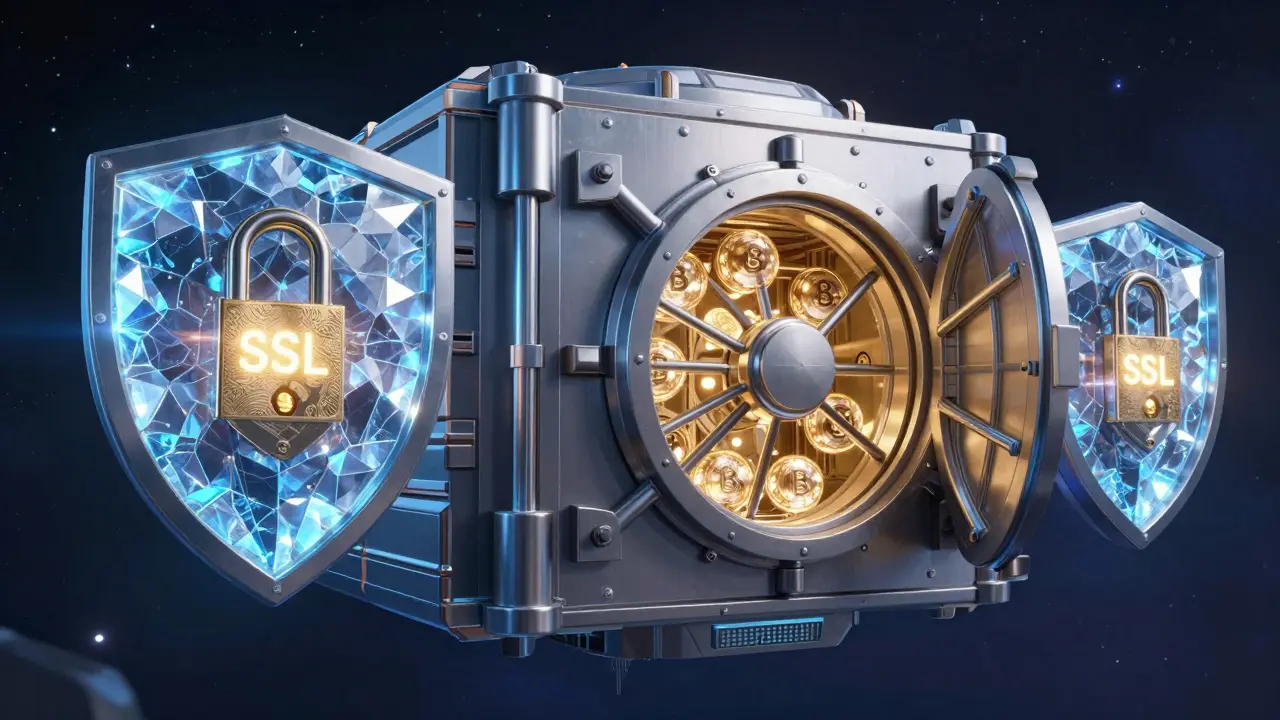
When it comes to security, VALR doesn't just rely on a few passwords. They use a combination of Two-Factor Authentication (2FA) and SSL encryption. More importantly, they store a significant portion of funds within the international Bittrex system and utilize cold storage to keep assets offline and away from hackers.
That said, there is a regulatory gap. While they have backing from heavyweights like Pantera Capital and Coinbase Ventures, they don't hold licenses from the Financial Sector Conduct Authority (FSCA) or other major global bodies. For a casual trader, this might not matter, but for institutional investors, it's a point of caution.
Passive Income: Staking and Lending
If you're a "HODLer," VALR offers a few ways to make your assets work for you. Their staking service is particularly appealing because it distributes rewards hourly. Most platforms do this daily or weekly, so the immediate feedback loop is a nice touch.
They also provide margin trading with leverage up to 1:10. While this can amplify gains, it's a double-edged sword that can lead to quick losses if the market swings against you. For those who prefer lower risk, their DeFi lending solutions allow you to earn yield on your deposits with very little manual setup.
The Downside: Where VALR Falls Short
It's not all sunshine and rainbows. The biggest hurdle for new users is the lack of educational materials. There are no demo accounts to practice with, and the trading guides are sparse. If you've never traded crypto before, you'll likely have to look for external tutorials on YouTube or other blogs to understand advanced strategies.
Then there's the geography problem. While VALR claims to be global, it's very much a South African entity. If you aren't using a South African bank, depositing and withdrawing fiat currency can be a nightmare. Furthermore, they are strictly off-limits in several countries, including the US, Canada, and India. If you live in those regions, you simply cannot use this platform.
What are the fees on VALR?
VALR is highly competitive, offering 0% maker fees for both spot and futures trading. Taker fees are 0.05% for spot and 0.04% for futures trading.
Is VALR safe to use?
Yes, it uses industry-standard security like 2FA, SSL encryption, and cold storage. It also leverages the Bittrex system for additional fund protection, though it lacks some major regulatory licenses.
Can I trade stocks on VALR?
You can't trade traditional stocks directly, but VALR offers xStocks, which are tokenized versions of stocks that allow you to trade them within the crypto exchange environment.
Who can use VALR?
VALR is available to users in many regions, but it is restricted in the USA, Canada, India, Russia, and several other countries. It is most optimized for users with South African bank accounts.
Does VALR have a mobile app?
Yes, VALR has apps available for both Android and iOS, allowing users to trade and manage their portfolios on the go.
Next Steps: Getting Started or Troubleshooting
If you're in South Africa or a supported region and want to try VALR, the path is simple: download the app, complete the KYC (Know Your Customer) verification, and deposit your first few Rand or Dollars. To avoid any hiccups, ensure your bank account name matches your registration name exactly to prevent delays in EFT transfers.
If you find the interface too simple or are missing a specific altcoin, your best bet is to use VALR as your primary "fiat-to-crypto" gateway. Deposit your money, buy a major asset like Bitcoin or Ethereum, and then transfer those funds to a private wallet or a larger global exchange for more diverse trading options. This allows you to take advantage of VALR's low entry fees while still accessing the wider crypto market.
Rob Mitchell
April 13, 2026 AT 02:24Great breakdown. For those in Africa, using it as a fiat on-ramp is the smartest move.
Carroll Foster
April 14, 2026 AT 07:33Oh joy, another regional exchange promising the moon while lacking actual regulatory oversight. The 'innovation' here is just a fancy way of saying 'we operate in a grey area' so they can offer zero maker fees. I'm sure the lack of FSCA licensing is just a minor detail for the 'institutional investors' they're courting. Absolute peak comedy.
Samson Selleck
April 14, 2026 AT 18:10The architectural decision to utilize the Bittrex ecosystem is a transparent attempt to offset their own systemic liquidity deficits. One must analyze the delta between their nominal fee structure and the actual slippage experienced during high-volatility events. It's a rudimentary play for retail capital under the guise of accessibility, devoid of any real structural sophistication.
Tracie and Matthew Hartley
April 14, 2026 AT 21:39who cares bout the coins tho?? i just want my money back lol
Omotola Balogun
April 16, 2026 AT 17:19Actually, the 0% maker fee is quite revolutionary for the region. Many people don't realize that liquidity providors-excuse me, providers-are the backbone of any exchange. VALR is simply optimizing the incentive structure to attract more volume, which in turn lowers the spread for everyone involved.
Alan Seiden
April 18, 2026 AT 05:43Typical rubbish. Why are we even discussing a South African platform when the UK markets are far more robust? It's a waste of time talking about a 'giant' that's basically a pebble compared to the real exchanges in the West.
Artavius Edmond
April 19, 2026 AT 03:00I can see where you're coming from, but let's be real, different regions have different needs. It's actually pretty cool how they're trying to bring stocks into the crypto space with those xStocks.
william manes
April 20, 2026 AT 05:40US banks are better 🇺🇸. Don't trust foreign apps! 🚩🚩
ssjuul z
April 22, 2026 AT 00:49I totally agree that the user interface sounds like a win! Keep pushing for those low fees everyone! 🚀✨
Chidinma Sandra okafor
April 22, 2026 AT 03:02Oh, how wonderful that we're celebrating a platform that basically treats the rest of the world as a secondary thought. Truly a masterpiece of regionalism. I love how 'global' they claim to be while blocking half the planet. Simply heartwarming.
Akshay Gorad
April 22, 2026 AT 15:46It is unfortunate that India is on the restricted list, as there is a massive community there that could benefit from such a fee structure, provided the security remains airtight.
Rima Dinar
April 23, 2026 AT 05:45I really feel that for a lot of people who are just starting out, the lack of educational guides is a huge hurdle because the world of cryptocurrency is already so intimidating and confusing for the average person who just wants to save some money, so if VALR could just implement a simple set of tutorials or even a basic FAQ that explains the difference between a maker and a taker fee in plain English, it would probably help a lot of beginners feel more confident in their trading journey without having to spend hours scrolling through confusing YouTube videos that might be outdated anyway.
logan bates
April 24, 2026 AT 08:07American exchanges are the only ones that matter.