 Feb, 8 2026
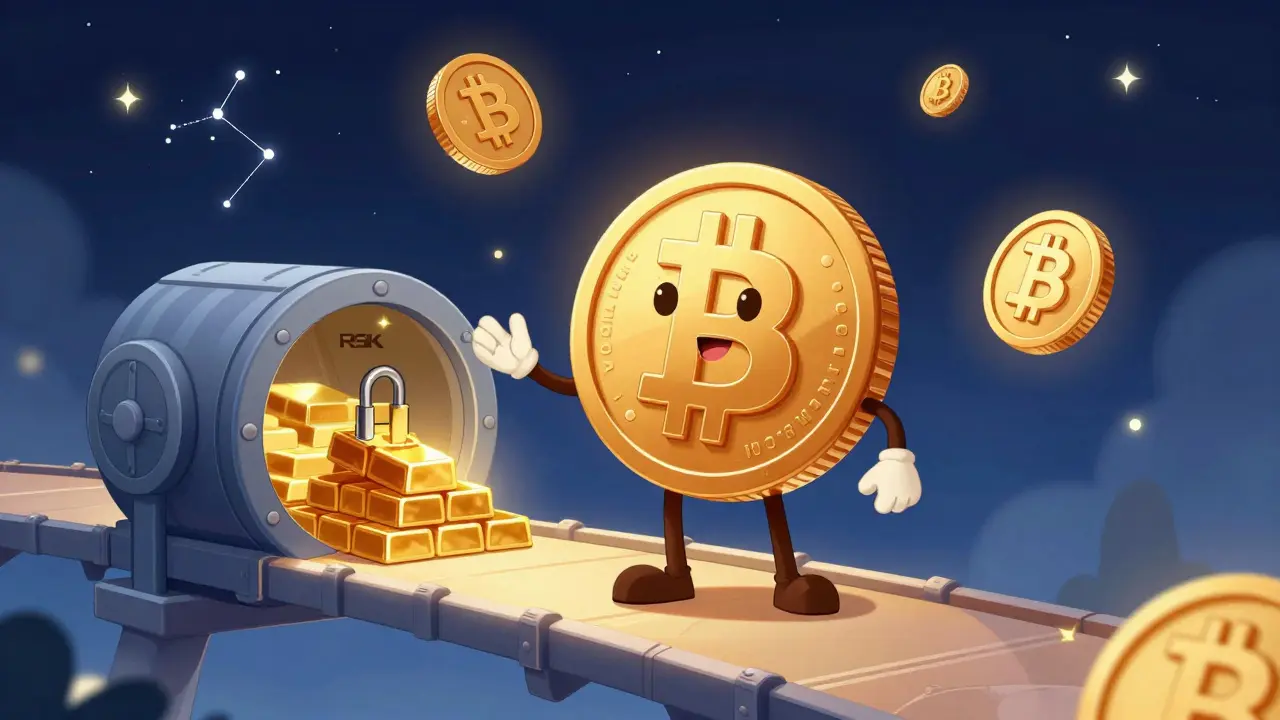
Dollar on Chain (DOC) isn't just another stablecoin. While most stablecoins like USDT or USDC are backed by dollars sitting in bank accounts, DOC is backed by something far more fundamental: Bitcoin. It’s the first stablecoin that uses Bitcoin as its only collateral, meaning every DOC token you hold is tied directly to Bitcoin locked in smart contracts-not to a company’s bank balance. This makes it uniquely resistant to bank failures, government freezes, or regulatory crackdowns. If you’re a Bitcoin holder who wants stable value without leaving the Bitcoin ecosystem, DOC was built for you.
How DOC Stays Pegged to $1
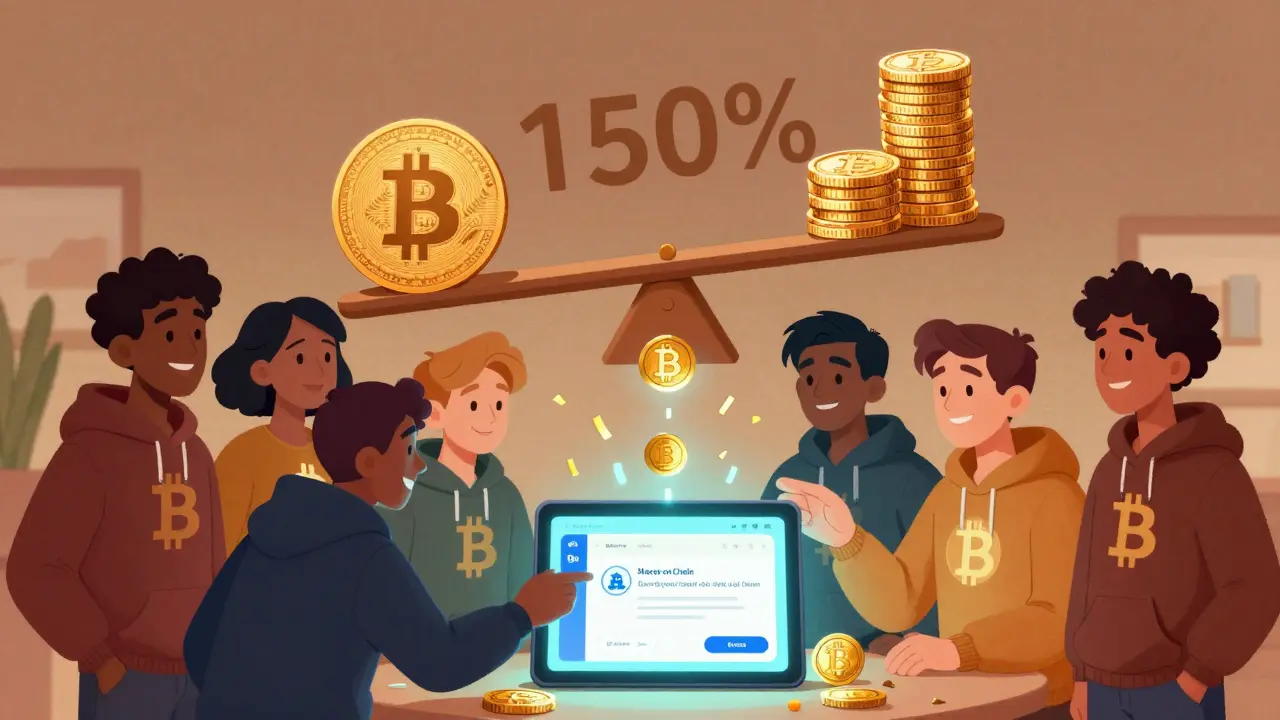
DOC doesn’t rely on algorithms or complex token swaps to stay at $1. Instead, it uses a simple, transparent system: you lock up Bitcoin (in the form of rBTC) to mint DOC. For every 1 DOC you want to create, you need to deposit at least $1.50 worth of rBTC. That 150% collateral ratio acts as a safety cushion. If Bitcoin’s price drops, the extra collateral absorbs the shock so DOC doesn’t lose its peg. There’s no liquidation risk-unlike some DeFi loans where you get wiped out if prices swing too hard. The system uses smart contracts to automatically adjust incentives, encouraging users to mint or redeem DOC based on market conditions. It’s not magic. It’s math.
The Three-Token System Behind DOC
DOC doesn’t work alone. It’s part of a trio of tokens built on the Rootstock (RSK) network, which connects Bitcoin to Ethereum-like smart contracts. The three are:
- DOC: The stablecoin you use for payments, savings, or trading. Always pegged to $1.
- BPRO: A leverage token. Bitcoin holders can use it to earn yield without selling their BTC. Think of it as a way to get paid in Bitcoin while still holding your coins.
- BTCX: A derivative token that helps stabilize DOC during volatility. It’s used behind the scenes to balance supply and demand.
This three-token structure lets the system self-correct without needing a central authority. You don’t need to trust a company. You just need to trust Bitcoin’s security and the code running on RSK.
Why DOC Is Different From USDT, USDC, and DAI
Let’s compare DOC to the big names:
| Feature | DOC | USDT / USDC | DAI |
|---|---|---|---|
| Collateral Type | Bitcoin (rBTC) | US Dollars (bank reserves) | Ethereum assets + USDC |
| Counterparty Risk | None | High (banks, regulators) | Medium (Ethereum, centralized assets) |
| Transparency | Full on-chain audit | Partial audits | Full on-chain audit |
| Network | Rootstock (RSK) | Ethereum, Solana, etc. | Ethereum |
| Best For | Bitcoin maximalists, DeFi on RSK | General crypto trading | Ethereum DeFi users |
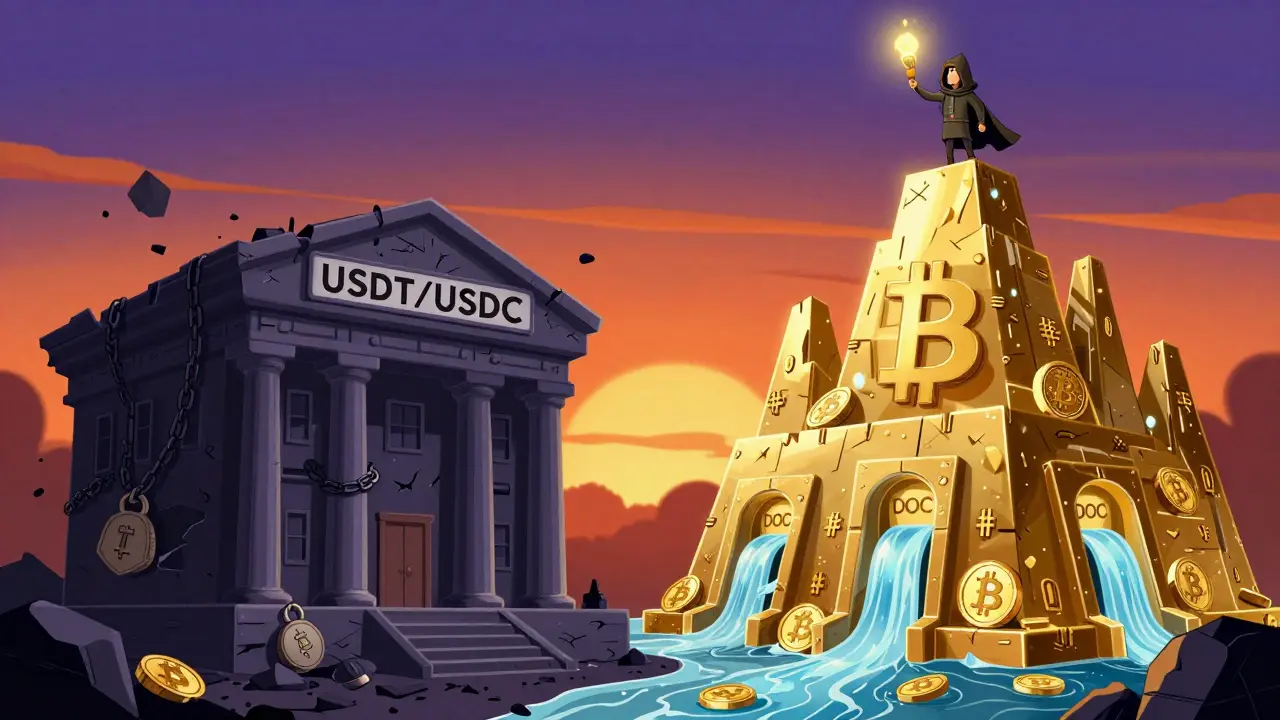
USDT and USDC are convenient, but they’re vulnerable. If a bank freezes funds or a regulator shuts down Tether’s reserves, your stablecoin could lose value. DAI is better-it’s decentralized-but it still relies on Ethereum and sometimes even USDC as collateral. DOC? It’s pure Bitcoin. No banks. No central entities. Just Bitcoin locked in open-source code.
Where DOC Is Used Today
DOC isn’t on Coinbase or Binance. It’s mostly used within the RSK ecosystem. You’ll find it in:
- Decentralized lending platforms like Sovryn, where you can borrow against your rBTC using DOC.
- Bitcoin-native DeFi apps that want to avoid Ethereum gas fees and complexity.
- Peer-to-peer trades between Bitcoin holders who want to hedge short-term price swings.
As of February 2026, DOC has a circulating supply of about 4.5 million tokens, with a market cap near $4.6 million. That’s tiny compared to USDT’s $110 billion. But within Bitcoin DeFi, DOC holds about 18% of the market share. It’s the leader in its niche.
How to Get DOC
You have three ways to get DOC:
- Buy it on one of the few exchanges that list it-like MEXC, Bitrue, or Uniswap V2 on RSK.
- Receive it from someone else, like a peer-to-peer trade.
- Mint it yourself using the Money on Chain dApp. This is where it gets interesting.
To mint DOC, you need:
- A Bitcoin wallet that supports RSK (like Defiant, MetaMask with RSK network added, or Nifty Wallet).
- Some rBTC (Bitcoin locked on RSK via the RSK bridge).
- At least 150% collateral value in rBTC.
- Enough rBTC to pay gas fees (around $0.50-$1 per transaction).
The process takes about 3 minutes. You connect your wallet, enter how much DOC you want, and the system locks your rBTC. You get DOC instantly. To redeem, you send DOC back and get your rBTC released. It’s reversible, non-custodial, and transparent.
Who Uses DOC-and Who Doesn’t
DOC’s user base is small but passionate. A January 2026 survey of 247 users found:
- 78% praised its decentralization and Bitcoin-only backing.
- 65% complained about low liquidity-some had to split large sells across 3 exchanges to avoid slippage.
- 92% said they’re Bitcoin holders first, crypto traders second.
It’s not for everyone. If you’re buying DOC to flip it for quick profits, you’ll be frustrated. Its daily volume is around $28,000-barely a blip next to USDT’s $50 billion. But if you’re a long-term Bitcoin holder who wants to:
- Use stable value for payments without converting to fiat,
- Earn yield on your Bitcoin without selling,
- Or avoid centralized stablecoins altogether,
Then DOC isn’t just useful-it’s revolutionary.
What’s Next for DOC
The DOC team has a clear roadmap:
- Q2 2026: Cross-chain bridges to Ethereum and Polygon.
- Q3 2026: Integration with Bitcoin Lightning Network wallets.
- 2026: Listing on 3 more centralized exchanges to boost liquidity.
If these happen, DOC could grow from a niche tool into the go-to stablecoin for Bitcoiners. Some analysts believe it could hit $100 million in market cap by 2028. Others say it’ll stay small unless it gets on Coinbase. The truth? It doesn’t need to be big to be important. It just needs to work.
Is DOC Safe?
It’s as safe as Bitcoin. Since DOC’s collateral is Bitcoin locked in open-source smart contracts, there’s no single point of failure. No bank. No CEO. No secret ledger. The system has survived Bitcoin’s 2024 and 2025 crashes without breaking its peg. It’s been audited multiple times. The code is public. And unlike UST (which collapsed because of algorithmic failure), DOC has real assets backing it.
The only real risks are:
- RSK network downtime (unlikely-it’s been live since 2018).
- Smart contract bugs (audits show none so far).
- Low liquidity leading to price swings (a problem, not a flaw).
DOC isn’t perfect. But it’s honest. And in crypto, that’s rare.
Final Thoughts
Dollar on Chain (DOC) is a quiet revolution. It doesn’t shout. It doesn’t need to. It just lets Bitcoin holders use stable value without leaving their network. For those who believe Bitcoin should be money-not just speculation-DOC is one of the few tools that actually delivers on that promise. It’s not the biggest stablecoin. But it might be the purest.
Is DOC backed by real Bitcoin?
Yes. Every DOC token is backed by Bitcoin locked on the Rootstock (RSK) network as rBTC. The collateral is held in transparent smart contracts and can be independently verified on-chain. No bank accounts or fiat reserves are involved.
Can I buy DOC on Coinbase or Binance?
Not yet. DOC is currently listed on only 8 exchanges, mostly decentralized ones like MEXC, Bitrue, and Uniswap V2 on RSK. It is not available on Coinbase, Binance, or Kraken as of February 2026. Future listings are planned for 2026.
How do I mint DOC myself?
You need a compatible wallet (like Defiant or MetaMask with RSK network added), some rBTC (Bitcoin on RSK), and at least 150% collateral value. Go to the Money on Chain dApp, connect your wallet, deposit rBTC, and mint DOC. Gas fees are paid in rBTC and cost around $0.75 per transaction.
What happens if Bitcoin’s price crashes?
The 150% collateral buffer absorbs the drop. If Bitcoin falls 30%, your collateral still covers 105% of the DOC value. The system uses smart incentives to encourage users to add more collateral or redeem DOC, keeping the peg intact. There are no forced liquidations.
Is DOC better than DAI?
It depends. DAI is more liquid and widely used on Ethereum. But DOC is more secure because it uses only Bitcoin as collateral, while DAI uses Ethereum assets and sometimes USDC. If you want pure Bitcoin-backed stability, DOC is superior. If you need broader DeFi access, DAI wins.
Ace Crystal
February 8, 2026 AT 12:32Tammy Chew
February 9, 2026 AT 00:09Keturah Hudson
February 9, 2026 AT 11:20Christopher Wardle
February 11, 2026 AT 08:56Brittany Meadows
February 13, 2026 AT 07:21SAKTHIVEL A
February 14, 2026 AT 04:18Lindsey Elliott
February 15, 2026 AT 01:21Andrea Atzori
February 16, 2026 AT 01:29Claire Sannen
February 16, 2026 AT 22:49Robbi Hess
February 17, 2026 AT 04:58krista muzer
February 19, 2026 AT 03:21blake blackner
February 19, 2026 AT 17:38Donna Patters
February 21, 2026 AT 09:07Santosh kumar
February 21, 2026 AT 19:24