 Feb, 25 2026
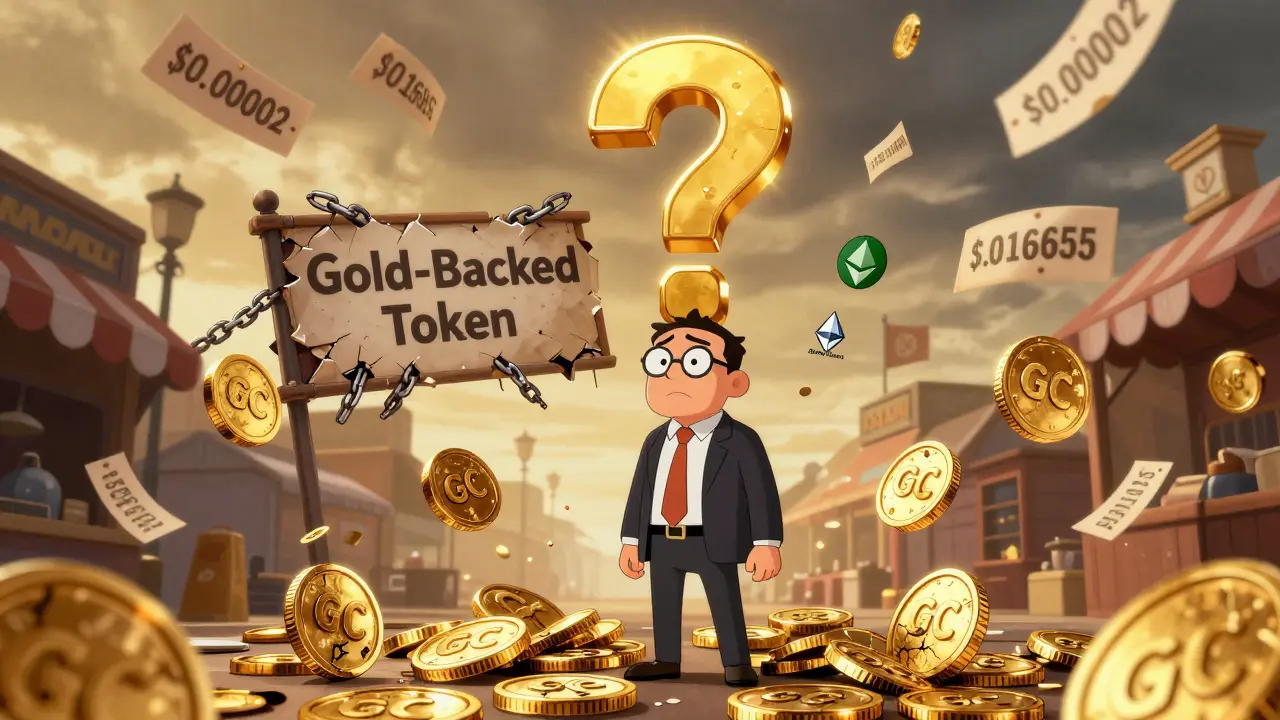
When you hear "Gold Coin" or "GC" in crypto, it’s easy to assume it’s some shiny new digital gold. But here’s the truth: Gold Coin (GC) isn’t one coin. It’s a mess of different tokens, all using the same ticker, with wildly different values, blockchains, and even purposes. If you’re thinking about buying it, you need to know which GC you’re actually looking at - because most of them are barely trading, and some might not even be real.
What is Gold Coin (GC) actually?
Gold Coin (GC) is a token name used by multiple unrelated projects, mostly launched in 2024. The most talked-about version claims to be backed by physical gold, gemstones, and real estate. It’s built on two major blockchains: BNB Smart Chain (BEP20) and Ethereum (ERC-20). The idea sounds simple: take the stability of gold and turn it into a digital token you can send, store, and trade like Bitcoin. But here’s where it gets messy. The project says it issued 10 billion GC tokens total - 5 billion on each blockchain. But then you check CoinPaprika, CoinGecko, or Binance, and they report completely different numbers. One says the current supply is 200 million. Another says it’s capped at 100 million. No one agrees. And that’s just the start.Price chaos: Why no one knows how much GC is worth
As of February 2026, GC’s price varies wildly across platforms:- CoinPaprika: $0.00002000 (but also lists $0.016655 elsewhere)
- Binance: $0.00002
- Tapbit: $0.000020
- CoinGecko: $0.0001225
- DigitalCoinPrice: $0.0000199
- GC (Golden Currency) - the gold-backed token on BEP20/ERC-20
- GCoin (Hedera) - a real estate investment token on Hedera Hashgraph
- Gric Coin - an agricultural token in Nigeria
Market cap and trading volume: A ghost town
The market cap for the main GC token is listed as near $0 on some sites. Others say it’s around $580,000 - still tiny compared to even the smallest real cryptocurrencies. The 24-hour trading volume? Sometimes under $2,000. That means fewer than 100 people are trading it in a full day. This makes GC a micro-cap coin - the riskiest kind. A single large buy or sell can swing the price 20% in minutes. There’s no institutional interest. No major exchange supports it. No real news flow. If the team stops updating, the price could vanish overnight.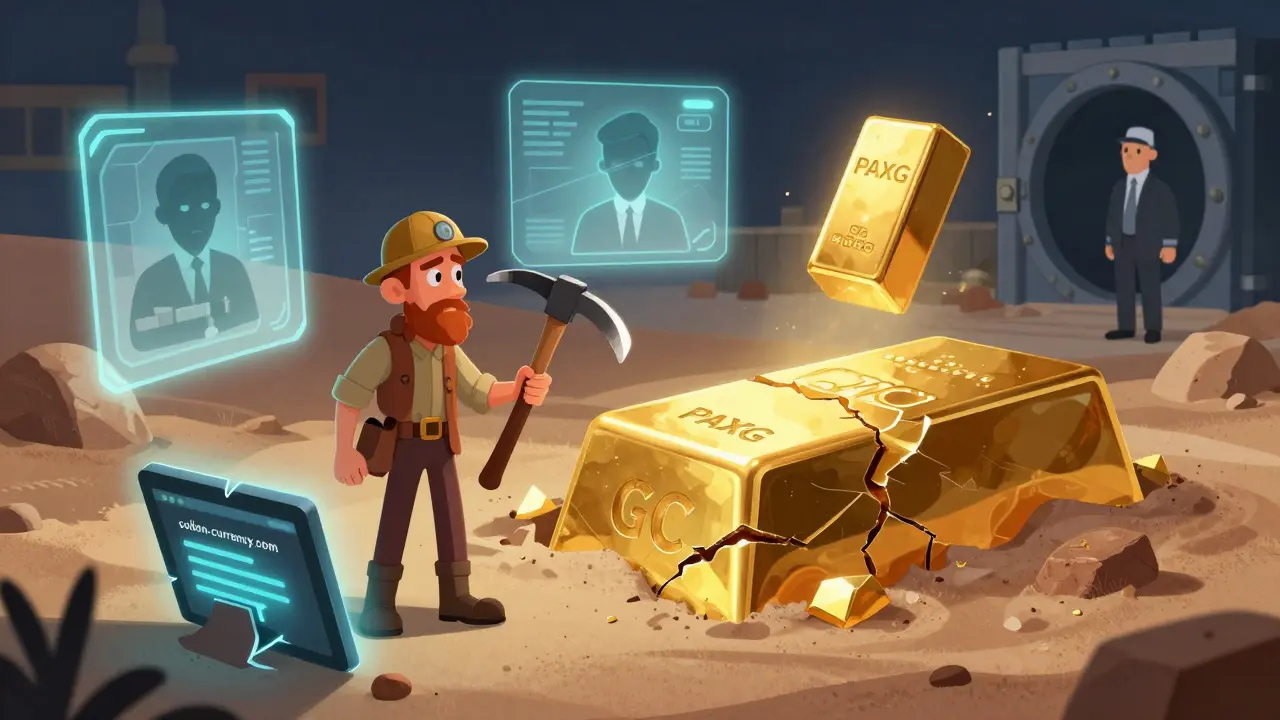
What’s the real use case? Logistics, not gold
The project claims GC is about gold storage and trading. But if you dig into the whitepaper, the real goal is logistics. Specifically, using blockchain to track gold and gemstone supply chains from mine to jeweler. They say they’ve partnered with mining firms and fuel suppliers in Southeast Asia. That’s actually a smart idea. Supply chains for precious metals are full of fraud, hidden shipments, and fake certificates. Blockchain could fix that. But here’s the catch: no one outside the project has verified those partnerships. There are no press releases, no public case studies, no names of companies involved. So while the concept has merit - tokenizing real-world assets like gold and linking them to logistics - there’s zero proof it’s working. The token itself doesn’t let you claim physical gold. You can’t walk into a bank and exchange GC for a gold bar. It’s just a digital file.Risks you can’t ignore
If you’re thinking of investing in GC, here are the hard truths:- No clear team - No names, no LinkedIn profiles, no public founders. Just a website: golden-currency.com.
- Multiple GC tokens - You could buy the wrong one and lose everything.
- Zero liquidity - You might not be able to sell when you need to.
- Unverified claims - No proof of gold backing, no audits, no third-party verification.
- No community - No active Telegram, Discord, or Reddit. No one’s talking about it.
Is GC worth buying in 2026?
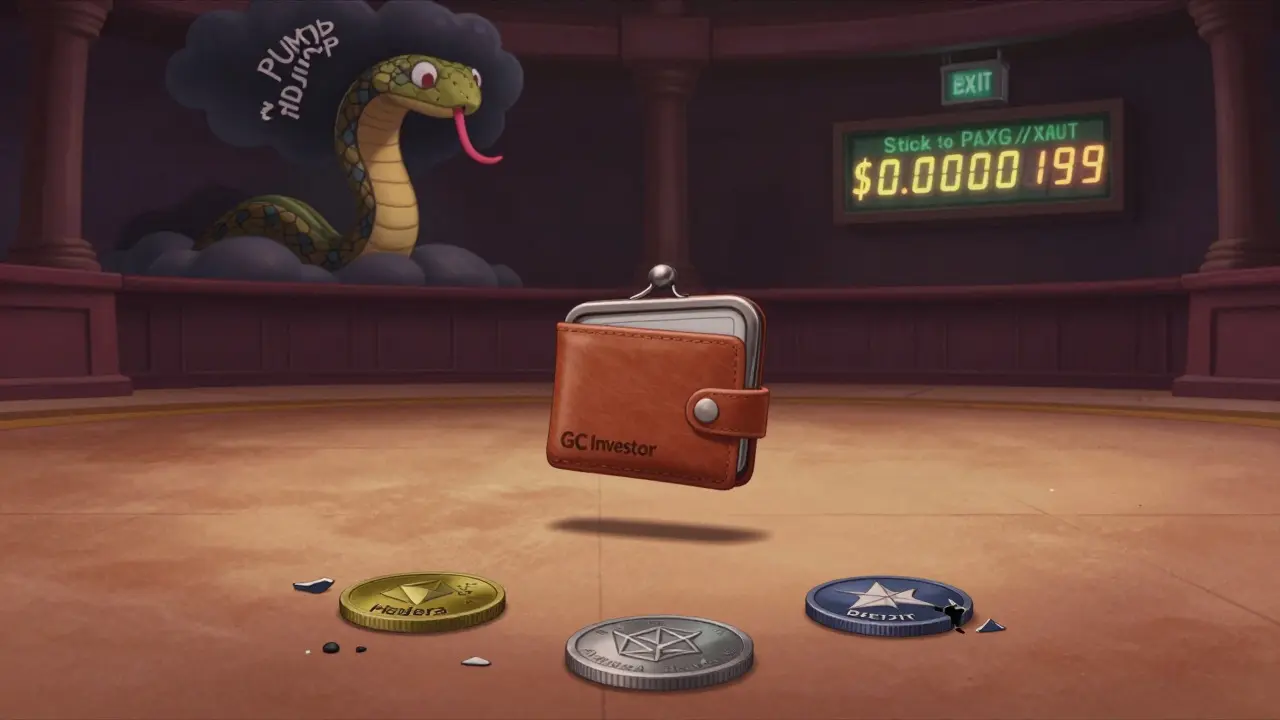
Short answer? Only if you’re okay losing everything. If you still want to try:- Go to CoinGecko or CoinPaprika and search for "GC"
- Check the contract address - not just the name
- Verify it’s on BEP20 or ERC-20 (not some obscure chain)
- Look at the trading volume - if it’s under $10,000/day, avoid it
- Never invest more than you can afford to lose
What’s next for Gold Coin?
The only path to relevance is if the team delivers real-world use. That means:- Publicly naming partners in mining or logistics
- Releasing audit reports from a trusted firm
- Getting listed on a major exchange like Binance or KuCoin
- Adding a way to redeem GC for physical gold
Is Gold Coin (GC) backed by real gold?
The project claims GC is backed by physical gold, gemstones, and real estate. But there’s no public audit, no vault reports, and no way to verify this. No third party confirms the gold exists. Without proof, it’s just a promise - not a guarantee.
Can I buy GC on Coinbase or Binance?
No, GC is not listed on Coinbase or Binance. It trades only on small, obscure exchanges like Tapbit and BitMart. These platforms have low liquidity and high risk. If you see GC on a major exchange, it’s likely a scam or a fake listing.
Why does GC have so many different prices?
Because there are multiple unrelated tokens using the "GC" ticker. One is on BNB Smart Chain, another on Ethereum, and others on Hedera and Polygon. Each has its own supply, price, and purpose. You need to check the contract address, not just the name, to know which one you’re dealing with.
Is Gold Coin a good investment for 2026?
No, not unless you’re speculating on extreme risk. GC has near-zero trading volume, no verified team, no real utility, and no market trust. It’s not a hedge against inflation. It’s not a stable asset. It’s a high-risk, low-liquidity token with no clear path to value.
What’s the difference between GC and PAXG or XAUT?
PAXG (Paxos Gold) and XAUT (Tether Gold) are regulated, audited tokens backed 1:1 by physical gold stored in secure vaults. You can redeem them for actual gold bars. GC has no such backing, no audits, and no redemption option. PAXG and XAUT are traded on major exchanges. GC isn’t.
bella gonzales
February 26, 2026 AT 08:04Elana Vorspan
February 26, 2026 AT 13:14Patrick Streeb
February 27, 2026 AT 16:56Curtis Dunnett-Jones
February 28, 2026 AT 20:47George Suggs
March 2, 2026 AT 15:59Jeff French
March 4, 2026 AT 12:49Paul Reinhart
March 5, 2026 AT 04:41Alyssa Herndon
March 5, 2026 AT 12:44Michael Rozputniy
March 5, 2026 AT 20:28Kenneth Genodiala
March 7, 2026 AT 11:33