 Jan, 19 2026
Humanode isn’t another crypto coin that tries to be faster, cheaper, or more scalable than Bitcoin or Ethereum. It’s trying to solve something deeper: who is really on the network. Most blockchains assume you’re a person, but they can’t prove it. That’s why bots, sybil attacks, and whale dominance are still problems. Humanode says: if you’re a real human, you should get one vote. Not because you own a lot of tokens, but because you exist.
How Humanode Works: One Human, One Node
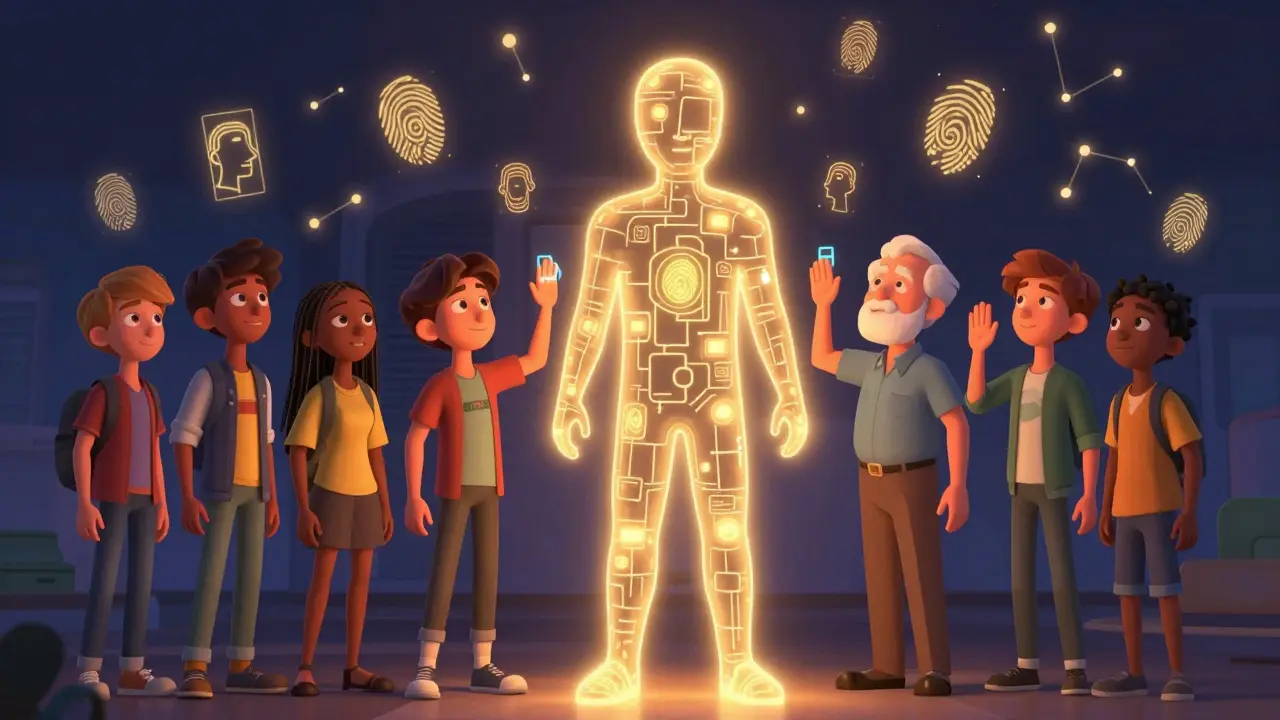
At its core, Humanode is built on a simple idea: one human = one node = one vote. Every person who wants to run a validator node on the network must prove they’re a real, unique human being - not a bot, not a fake identity, not a second account controlled by the same person.
Instead of requiring you to stake thousands of dollars in tokens like Ethereum, or buy expensive mining rigs like Bitcoin, Humanode uses biometric verification. When you sign up, your phone or device captures your facial features or fingerprint. That data is turned into a unique digital signature - not stored as a photo or raw scan - and locked into the blockchain as proof you’re human. No one else can use that signature. No one else can join with your identity.
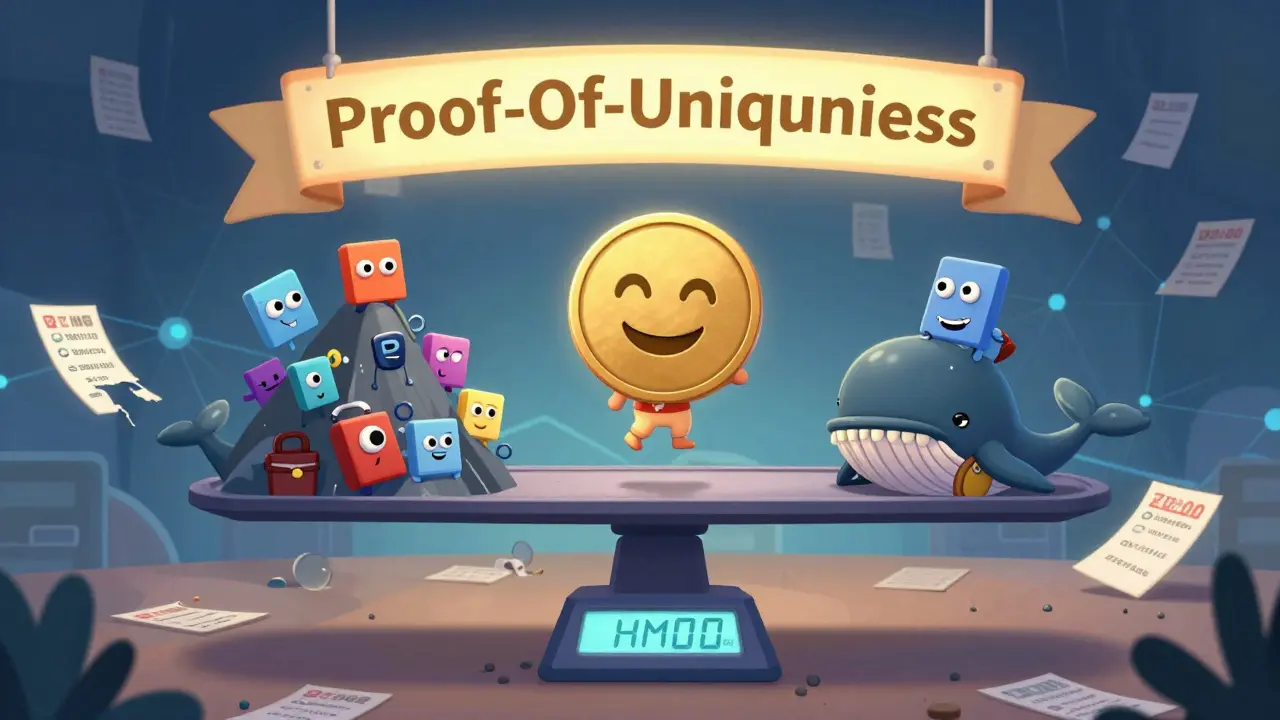
This is called Proof-of-Uniqueness and Proof-of-Existence. It’s not about how much you own. It’s about who you are. And that changes everything.
The HMND Token: More Than Just a Currency
The HMND token is the fuel of the Humanode network. Unlike most crypto coins, HMND isn’t just traded for speculation. It’s tied directly to how the network grows and functions.
There are 400 million HMND tokens total - no more, no less. As of early 2026, around 160 million are in circulation. That’s not because the team is hoarding it - it’s because new tokens are only released as the network earns more fees.
Here’s the twist: Humanode has a monetary system called Fath. If the total transaction fees collected by the network go up by 5%, the total supply of HMND increases by 5%. That new supply is distributed evenly to every current holder. So if the network gets busier, everyone holding HMND gets more - no mining, no staking, no luck required.
Node operators earn rewards from these fees. But here’s the key: you don’t need to buy HMND to run a node. You just need to pass the biometric check. That removes the ‘rich get richer’ problem seen in proof-of-stake chains. A student in Nairobi and a CEO in Tokyo can both run nodes - if they’re real humans.
Why This Matters: Solving the Sybil Problem
Every blockchain has a weakness: fake identities. A single person can create 10,000 wallets and control 10,000 votes. That’s called a Sybil attack. It’s why decentralized voting systems often fail. It’s why some DAOs are controlled by a handful of whales.
Humanode fixes this with biology. Your face or fingerprint is harder to fake than a wallet address. Even if someone steals your private key, they can’t replicate your biometric signature. That means governance on Humanode isn’t dominated by the richest. It’s dominated by the most numerous - real people.
This makes Humanode ideal for applications where trust in identity matters: digital voting, anonymous social networks, decentralized identity verification, or even online education platforms that need to confirm each student is real.
What Makes Humanode Different?
Compare it to other blockchains:
- Ethereum requires you to stake ETH to validate - so only those with money can participate.
- Bitcoin needs powerful hardware - so only those with capital can mine.
- Humanode requires you to be human - so anyone with a smartphone and a face can join.
And it doesn’t stop there. Transaction fees on Humanode are priced in USD equivalents, not HMND. That means if HMND’s price swings wildly, your cost to send a transaction doesn’t change. You pay for bandwidth and storage, not speculation.
It’s also built on Substrate, the same framework as Polkadot. That means it can connect to other blockchains and eventually interact with DeFi, NFTs, or DAOs built elsewhere - but with human identity baked in.
Challenges and Criticisms
It’s not all perfect. The biggest concern? Privacy.
Storing biometric data - even in encrypted form - on a blockchain raises red flags. Blockchains are immutable. Once data is written, it can’t be deleted. But laws like GDPR in Europe and BIPA in Illinois say you have the right to be forgotten. What happens if Humanode gets hacked? Can you erase your fingerprint signature? Right now, the answer isn’t clear.
Then there’s access. Not everyone has a modern smartphone with facial recognition. Elderly users, people in rural areas, or those with disabilities might be excluded. Humanode claims their system works with basic cameras and sensors, but real-world testing across diverse populations is still limited.
And then there’s adoption. As of early 2026, Humanode’s market cap sits around $3.5 million. That’s tiny compared to Ethereum’s $200 billion. It’s ranked #1576 on CoinGecko. Most people haven’t heard of it. The team has strong backers - Republic Capital, Tribe Capital, Wintermute, and even Polygon co-founders - but turning vision into mass adoption is a long road.

Who Is Using It? And Who Should Care?
Right now, early adopters are mostly privacy-focused developers, crypto theorists, and people tired of whale-controlled DAOs. Reddit and crypto forums have small but passionate threads. One user wrote: ‘Finally, a blockchain that doesn’t let billionaires vote 1000 times.’ Another said: ‘Storing my face on a blockchain feels like handing over the keys to a surveillance state.’
There’s no big app built on Humanode yet. No DeFi protocol. No NFT marketplace. But the potential is there. Imagine a voting system for a global community where each vote comes from a verified human - not a bot farm or a shell company. Or a social network where you can’t create 50 fake accounts to manipulate trends.
Humanode isn’t for traders looking for quick gains. It’s for people who believe the internet needs a new foundation - one where identity isn’t a commodity, but a right.
Is HMND Worth Buying?
If you’re looking for a crypto to flip in six months, HMND isn’t it. Its price has hovered between $0.015 and $0.035 since launch. Some analysts predict it could reach $0.24-$0.46 by 2026 - but that’s based on massive adoption, which hasn’t happened yet.
Its strength isn’t in price. It’s in concept. If Humanode succeeds, HMND could become the first crypto token tied to human existence, not speculation. That’s a big ‘if’ - but if it works, it could redefine how we think about digital identity.
Right now, it’s a high-risk, high-reward bet on a future that doesn’t exist yet. But if you believe the internet should be built for people - not bots, not whales, not corporations - then Humanode is one of the most interesting experiments in crypto today.
What’s Next for Humanode?
The team is working on improving the biometric verification system with a tool called Humanode BotBasher, designed to detect and block fake attempts. They’re also refining the Fath monetary algorithm to better respond to real network usage.
There’s no official roadmap, but the project’s GitHub shows steady activity from about 15 core contributors. That’s small compared to Ethereum’s hundreds, but for a niche project, it’s promising.
As digital identity becomes more critical - with Gartner predicting 20% of organizations will use blockchain-based identity by 2025 - Humanode could be in the right place at the right time. But only if it solves the privacy puzzle.
Margaret Roberts
January 20, 2026 AT 02:40Adam Fularz
January 21, 2026 AT 06:30Brenda Platt
January 22, 2026 AT 07:46Barbara Rousseau-Osborn
January 23, 2026 AT 19:44george haris
January 25, 2026 AT 10:47Athena Mantle
January 26, 2026 AT 12:51carol johnson
January 27, 2026 AT 14:45Paru Somashekar
January 28, 2026 AT 04:01Steve Fennell
January 29, 2026 AT 06:11Heather Crane
January 29, 2026 AT 12:41Catherine Hays
January 29, 2026 AT 17:45Melissa Contreras López
January 30, 2026 AT 22:48