 Sep, 5 2026
Imagine waking up to an email that your money is gone. Not lost in a hack, not frozen by regulators, but simply... closed. That was the reality for users of Artis Turba, a South African cryptocurrency exchange that shut its doors permanently in January 2022. If you’re researching this platform today, you might be confused by old articles praising its simplicity or wondering if it’s still around. It isn’t. This review digs into what Artis Turba was, why it failed, and what its collapse teaches us about choosing regional crypto platforms.
What Was Artis Turba?
Artis Turba was a centralized cryptocurrency exchange based in Centurion, South Africa, designed specifically for local traders who wanted to buy and sell digital assets using the South African Rand (ZAR). Launched in September 2018, it aimed to solve a specific pain point: many global exchanges didn’t support ZAR deposits or withdrawals easily. By offering direct fiat integration with local banks, it hoped to capture the entry-level market in South Africa.
The platform wasn’t trying to compete with giants like Binance or Coinbase on features. Instead, it focused on accessibility. The founders, Nigel and Nickey, built a simple interface where beginners could trade major coins without getting overwhelmed by complex charts or margin options. It supported popular cryptocurrencies like Bitcoin (BTC), Ethereum (ETH), Ripple (XRP), and its own native token, ARTIS.
The User Experience and Features
If you had used Artis Turba back in 2020, here’s what you would have experienced. The signup process required standard Know Your Customer (KYC) verification. You’d upload ID documents, wait up to 48 hours for approval, and then you were ready to trade. This was slower than some competitors who offered instant verification, but acceptable for a smaller platform.
Deposits were straightforward but limited. You could send crypto directly from another wallet, which was processed continuously on the blockchain. However, funding your account with cash meant initiating a bank wire transfer. Credit card deposits weren’t supported, which added friction for users wanting quick access. Withdrawals followed a similar pattern: crypto out instantly, fiat out on business days.
The trading engine itself was basic. There were no futures contracts, no staking programs beyond their affiliate scheme, and very few altcoins compared to modern standards. But for someone just wanting to swap ZAR for Bitcoin, it worked. The interface was clean, uncluttered, and intuitive.
The Native Token: ARTIS
Like many exchanges of its era, Artis Turba launched its own utility token, ARTIS. Introduced in November 2017, even before the exchange fully went live, the token had a total supply of 350 million units. At the time of closure, only about 29 million tokens were in circulation.
The value proposition for holding ARTIS was tied to the "Artis Affiliate Reward Program" (AARP). Holders received 50% of the trading fee revenue generated by the platform. On paper, this sounded great. In practice, low trading volumes meant these rewards were negligible. Once the exchange closed, the token lost its primary utility. Today, ARTIS trades at fractions of a cent on secondary markets, essentially worthless as a functional asset.

Why Did It Fail?
So, why did a platform with a clear niche disappear? The answer lies in liquidity and competition. CoinMarketCap classified Artis Turba as an "Untracked Listing," meaning its trading volume was so low it couldn’t reliably measure it. Low volume creates a death spiral: fewer traders mean wider spreads, which drives more traders away.
Furthermore, global exchanges began supporting ZAR through third-party payment processors or local banking partners. Platforms like Luno, VALR, and later Binance via P2P channels offered better liquidity, more coins, and often lower fees. Artis Turba struggled to keep up with the technological and financial demands of staying competitive.
Regulatory uncertainty also played a role. While the exchange claimed registration with the South African Financial Intelligence Center (FIC), this status was never independently verified publicly. As regulations tightened globally, smaller players found compliance costs rising faster than their revenue.
The Closure Timeline
The end came quickly. On January 13, 2022, users received an email announcing the permanent shutdown. Just two weeks later, on January 28, 2022, operations ceased entirely. The founders cited "business difficulties"-a polite term for running out of money or investors pulling out.
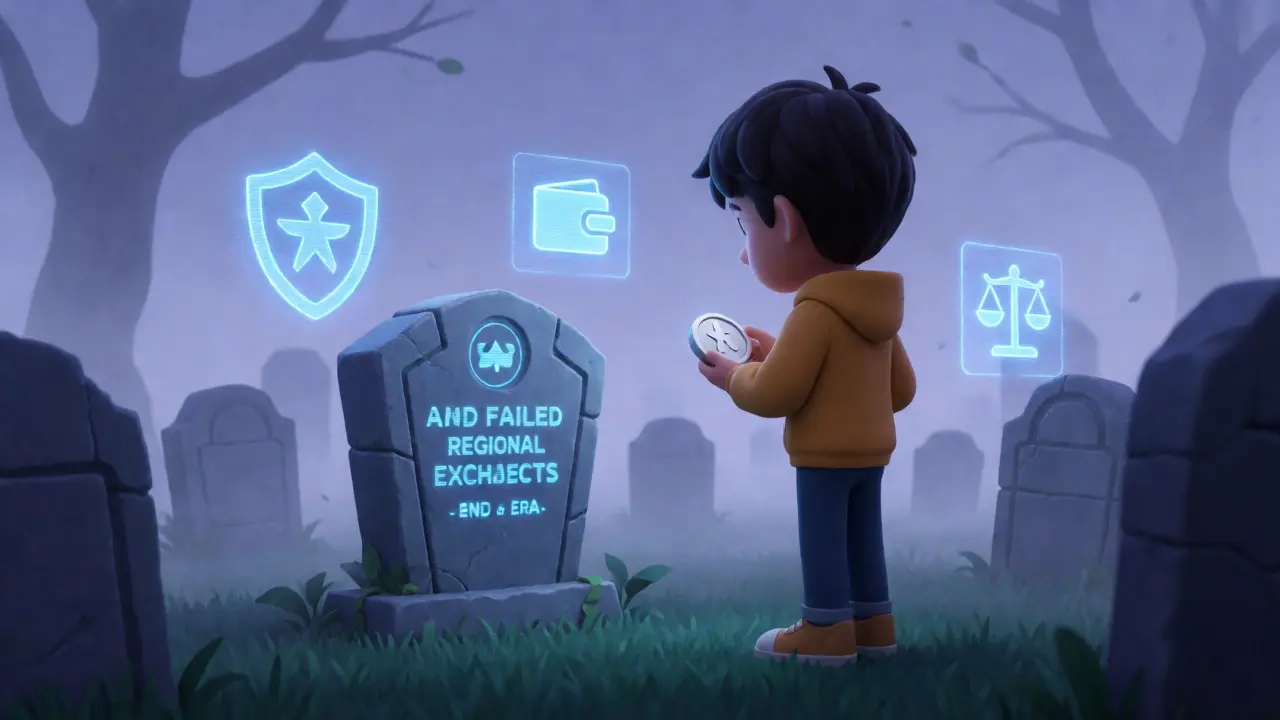
Support remained open for two months post-closure to help users withdraw remaining funds. Since then, there has been no revival, no acquisition, and no new management team taking over. The website remains offline or redirects to static pages, serving as a digital tombstone for the project.
Lessons for Crypto Investors
The story of Artis Turba isn’t unique. Dozens of small regional exchanges fail every year. Here’s what you should take away from this case study:
- Liquidity is king: An exchange needs high trading volume to ensure you can buy or sell at fair prices. Check volume data before trusting a platform.
- Check regulatory standing: Don’t take claims of FIC or SEC registration at face value. Look for independent verification or news reports confirming compliance.
- Diversify your holdings: Never keep all your crypto on one exchange, especially a small one. Use hardware wallets for long-term storage.
- Watch the token utility: Exchange tokens often lose value if the parent company struggles. Treat them as speculative bets, not safe investments.
| Feature | Artis Turba (Defunct) | Luno | VALR |
|---|---|---|---|
| Status | Closed (Jan 2022) | Active | Active |
| ZAR Support | Yes (Wire Transfer) | Yes (EFT/Cards) | Yes (EFT/Cards) |
| Asset Selection | Low (~12 coins) | Moderate | High |
| Fees | Variable/Low Volume | Tiered | Tiered |
| User Reviews | Minimal (1 rating) | Extensive | Extensive |
Who Should Have Used It?
In hindsight, Artis Turba suited a very specific type of user: a beginner in South Africa who wanted zero complexity and didn’t care about advanced trading tools. They needed a place to convert ZAR to BTC and hold it. For active traders, day traders, or those looking for DeFi integration, Artis Turba was never a viable option due to its lack of depth.
Today, if you are in Auckland or anywhere else, you likely won’t encounter Artis Turba. But if you are evaluating any small, regional exchange, ask yourself: Does it have enough volume? Is it regulated transparently? Can I withdraw my money instantly if things go wrong? If the answer to any of these is "no," you’re walking down the same path Artis Turba users took.
Is Artis Turba still operating?
No, Artis Turba permanently ceased operations on January 28, 2022. It is considered a defunct exchange.
Can I still withdraw funds from Artis Turba?
Withdrawal windows closed several years ago. Users who missed the final withdrawal period likely lost access to their funds unless they pursued legal action during the liquidation phase.
What happened to the ARTIS token?
The ARTIS token still exists on the blockchain but has lost most of its utility and value following the exchange's closure. It trades at negligible prices on secondary markets.
Was Artis Turba regulated?
The exchange claimed registration with the South African Financial Intelligence Center (FIC), but this status was never independently verified by major industry bodies during its operation.
Why did Artis Turba close?
The founders cited general business difficulties. Industry analysis points to low trading volumes, intense competition from larger global and regional exchanges, and insufficient revenue to sustain operations.