 Aug, 11 2026
Remember when you could mine Bitcoin on your laptop? Those days are long gone. In 2025, the landscape has shifted entirely to industrial-grade Application-Specific Integrated Circuits (ASICs). If you are looking to enter the market or upgrade your rig, the stakes have never been higher. The difference between a profitable operation and a money pit isn't just about raw power anymore; it is about energy efficiency, cooling infrastructure, and total cost of ownership.
The current market is dominated by a few key players pushing the boundaries of SHA-256 processing. We are seeing hash rates exceed 860 TH/s, but with that power comes significant heat and electrical demands. Choosing the right mining hardware requires understanding not just the specs sheet, but how those machines fit into your specific environment-whether that is a dedicated data center or a well-ventilated garage.
What is the most efficient Bitcoin miner in 2025?
The Bitmain Antminer S21e XP Hyd 3U is currently the most efficient, delivering 860 TH/s at just 13 J/TH. However, it requires complex hydro-cooling infrastructure.
Top-Tier Hydro-Cooled Champions
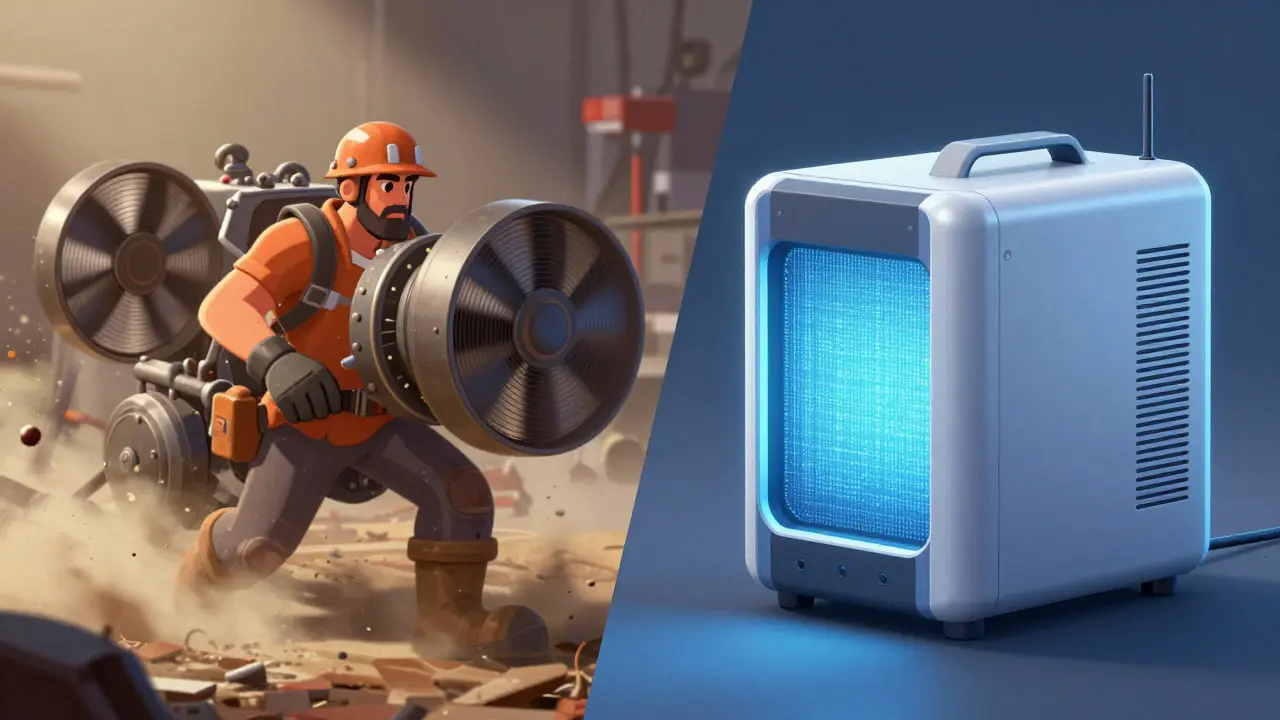
If noise is not an issue and you have the budget for specialized infrastructure, hydro-cooled systems are the undisputed kings of performance in 2025. These units operate significantly quieter than their air-cooled counterparts, often dropping below 50dB compared to the jet-engine roar of traditional fans. This makes them viable for urban environments or shared office spaces, provided you can handle the plumbing.
The flagship model leading this segment is the Bitmain Antminer S21e XP Hyd 3U, which was released in January 2025. It delivers an exceptional 860 TH/s hash rate while consuming 11,180W of power. At a price point of $17,210, it is an investment, but its efficiency of 13 J/TH means it remains profitable even in regions with moderate electricity costs. For those who need slightly less density but still want top-tier performance, the Bitmain Antminer S21 XP+ Hyd offers 500 TH/s at 5,500W for $12,700.
Another strong contender is the Auradine Teraflux AH3880. It provides 600 TH/s while consuming 8,700W, priced at a more accessible $7,800. This unit represents a sweet spot for operators who want high throughput without the extreme premium of the Bitmain flagship. Then there is the Bitdeer SealMiner A2 Pro Hyd, which delivers 500 TH/s with 7,450W consumption for just $3,958. This is arguably the best value proposition in the high-performance segment if you already have a liquid cooling loop installed.
Reliable Air-Cooled Workhorses
Not everyone wants to deal with coolant leaks or pump maintenance. Air-cooled ASICs remain the standard for many mid-sized operations due to their simplicity and lower initial setup complexity. While they are louder and less dense, they are plug-and-play in terms of thermal management-you just need good ventilation.
MicroBT’s Whatsminer M66S++ is a standout in this category. It achieves 356 TH/s with a power draw of 5,518W, priced at $8,660. Users consistently praise the M6x series for its robust build quality and reliability. It is a favorite among mining pool operators because it balances performance with a manageable footprint and easier maintenance cycles.
On the Bitmain side, the Antminer S21 XP remains a solid choice for those upgrading from older generations. Released in June 2024, it offers 270 TH/s at 3,645W. Its dimensions (449×219×293mm) and weight (18.7kg) make it easy to rack mount. The S21 Pro, released earlier in March 2024, offers 234 TH/s at 3,510W. While these models don’t match the sheer speed of the hydro-cooled giants, their lower entry price and simpler infrastructure requirements make them ideal for beginners or small-scale farmers.
Comparing Performance and Cost
To help you visualize the trade-offs, here is a breakdown of the top performers in the 2025 market. Note that prices fluctuate based on supply chain dynamics, so always check current listings before purchasing.
| Model | Hash Rate | Power Consumption | Efficiency (J/TH) | Approx. Price | Cooling Type |
|---|---|---|---|---|---|
| Antminer S21e XP Hyd 3U | 860 TH/s | 11,180W | 13.0 | $17,210 | Hydro |
| Auradine Teraflux AH3880 | 600 TH/s | 8,700W | 14.5 | $7,800 | Hydro |
| Bitdeer SealMiner A2 Pro Hyd | 500 TH/s | 7,450W | 14.9 | $3,958 | Hydro |
| Whatsminer M66S++ | 356 TH/s | 5,518W | 15.5 | $8,660 | Air |
| Antminer S21 XP | 270 TH/s | 3,645W | 13.5 | $7,599 | Air |
Infrastructure and Setup Realities
Buying the machine is only half the battle. You need to consider the physical and electrical demands. A single S21e XP Hyd 3U requires nearly 51 amps at 220V. Most residential circuits are not built for this. You will likely need professional electrical work to support even a small fleet of modern ASICs.
For air-cooled units, expect to install robust ventilation systems capable of handling 3,000-5,000W of heat output per machine. Without proper airflow, your chips will throttle down to protect themselves, killing your profits. Hydro-cooled systems require pumps, heat exchangers, and closed-loop tubing. While they run cooler and quieter, the installation complexity is high. Expect to spend an additional $2,000-$5,000 on cooling infrastructure for a hydro setup.
Network connectivity is standard across all major manufacturers, requiring only a basic Ethernet 10/100M connection. However, latency matters less than uptime. Ensure your router and network switch are reliable, as a disconnected miner earns nothing.
Profitability and Break-Even Analysis
In 2025, energy efficiency is the primary driver of profitability. Older generation machines operating at 30-50 J/TH are largely obsolete unless you have free or near-free electricity. Modern efficient machines remain profitable at electricity costs up to $0.08-$0.12 per kWh. If your local rate is above $0.12/kWh, you need to do serious math before buying.
Use a mining profitability calculator to estimate your break-even point. Factor in:
- Hardware cost
- Electricity rates (including demand charges if applicable)
- Cooling infrastructure costs
- Maintenance and replacement parts
- Pool fees (typically 1-2%)
With the current market price of Bitcoin and network difficulty, a highly efficient unit like the S21e XP Hyd might break even in 12-18 months under optimal conditions. Less efficient models may take 24+ months or never break even if electricity costs rise.
Market Trends and Future Outlook
The Bitcoin mining hardware market in 2025 is valued at approximately $8.2 billion annually, growing by 15-20% year-over-year. Bitmain maintains a dominant 60-65% market share, followed by MicroBT at 20-25%. Canaan, Auradine, and others compete for the remaining slice.
Looking ahead, Bitmain has announced plans for the S22 series in Q2 2026, targeting sub-12 J/TH efficiency. MicroBT is focusing on immersion cooling compatibility. The industry is moving toward standardized cooling interfaces to reduce deployment complexity. Chip fabrication is advancing to 3nm process nodes, promising further efficiency gains.
Regulatory developments are also shaping the market. Many jurisdictions now favor energy-efficient operations, potentially restricting older, inefficient models through environmental compliance rules. This trend benefits owners of modern, low-J/TH hardware.
Is it worth buying used mining hardware in 2025?
Generally, no. Used ASICs from 2022-2023 are often too inefficient (30+ J/TH) to be profitable at current electricity rates. Unless you have very cheap power, new generation hardware is safer.
How long do mining rigs last?
With proper cooling and maintenance, modern ASICs can last 3-5 years. However, economic viability usually ends sooner as newer, more efficient models hit the market.
Do I need a mining pool?
Yes. Solo mining is statistically unlikely to yield rewards for individual operators. Joining a pool ensures consistent, smaller payouts rather than rare large ones.
What is the biggest risk in mining today?
Electricity cost volatility and regulatory changes. Always secure a fixed-rate energy contract if possible, and stay informed about local mining laws.
Can I mine other cryptocurrencies with these ASICs?
Most 2025 ASICs are optimized for SHA-256 (Bitcoin). Some can mine Litecoin or Dogecoin via merged mining, but Bitcoin remains the primary revenue source.