 Aug, 10 2026
Imagine pouring millions into a crypto exchange, only to have your accounts frozen without a court order. That is the reality for businesses operating in Turkey today. If you are looking to launch or operate a digital asset platform in this market, the rules changed drastically in 2025. The days of regulatory ambiguity are over, replaced by a strict, capital-heavy framework that demands total compliance.
Turkey has moved from being a wild west for crypto trading to one of the most regulated environments in the emerging markets. For foreign investors and local entrepreneurs alike, understanding these new laws is not just about following rules-it is about survival. This guide breaks down exactly what it takes to get licensed, the massive costs involved, and the political risks that keep executives up at night.
The New Legal Framework: What Changed in 2025?
In March 2025, the Turkish government published two critical communiqués in the Official Gazette that reshaped the entire industry. These documents, known as Communiqué I (III-35/B.1) and Communiqué II (III-35/B.2), established the formal rules for Crypto Asset Service Providers (CASPs). Before this, operators navigated a gray area where enforcement was sporadic. Now, every aspect of founding and operating an exchange is codified.
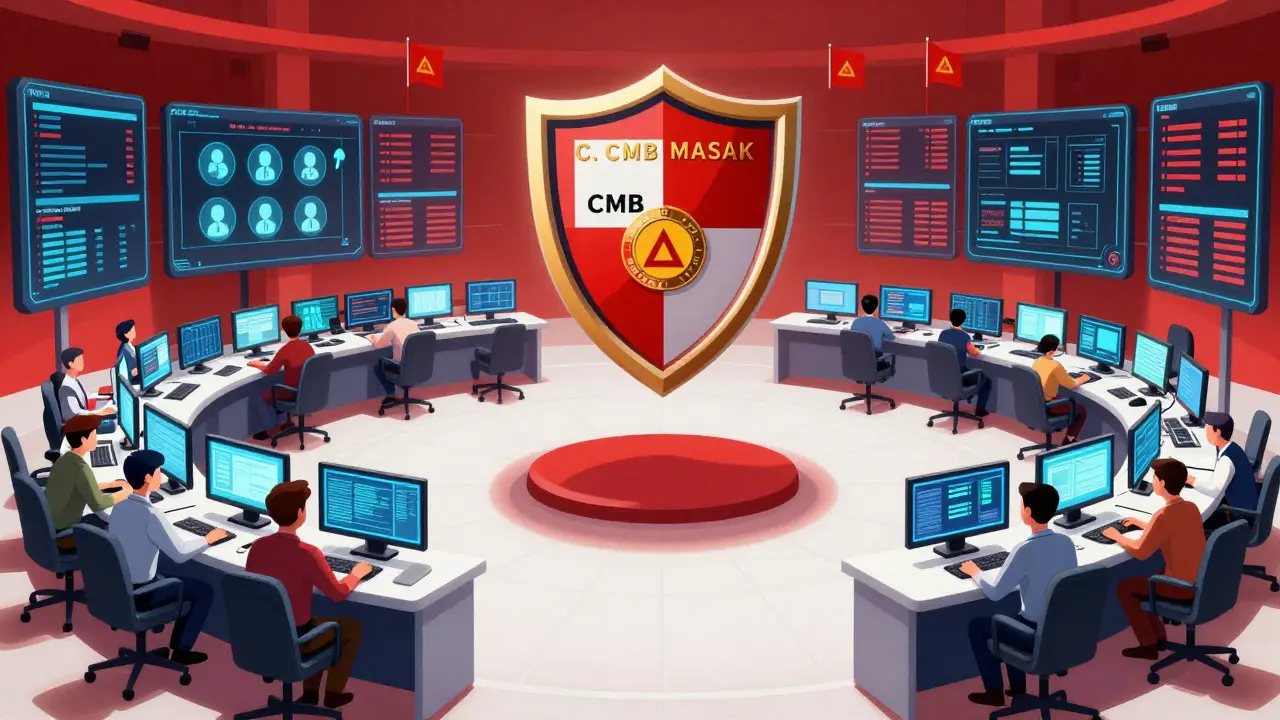
The primary regulator here is the Capital Markets Board of Turkey (CMB). They handle the licensing process, ensuring that applicants meet stringent operational standards. However, they do not work alone. The Financial Crimes Investigation Board (MASAK) plays a crucial role in monitoring transactions for money laundering. This dual-regulator system means you are answering to both financial stability watchdogs and anti-crime agencies simultaneously.
It is important to note that while exchanges can now operate legally, using cryptocurrency for payments remains strictly prohibited under Central Bank of Turkey (TCMB) regulations from 2021. You can trade Bitcoin, but you cannot buy bread with it. This distinction creates a unique environment where speculation is encouraged through regulation, but utility is suppressed.
Licensing Requirements: Capital and Structure
If you think getting a crypto license is cheap, think again. The Turkish authorities have set high barriers to entry to ensure only serious players remain. To apply for a license, your entity must be structured as a joint-stock company with shares issued in cash and registered by name. Anonymous ownership is off the table.
The capital requirements are steep:
- Standard Crypto Exchanges: Minimum paid-in capital of 150 million Turkish Lira (approximately $4.1 million USD).
- Custodial Service Providers: Minimum paid-in capital of 500 million Turkish Lira (approximately $13.7 million USD).
These figures represent a middle-ground approach globally. They are higher than many emerging markets but lower than established financial hubs like Singapore or the UK. However, compared to the EU's MiCA framework, Turkey exceeds capital thresholds while offering fewer protections for cross-border operations.
| Jurisdiction | Min. Capital (Approx. USD) | Regulatory Body | Foreign Participation |
|---|---|---|---|
| Turkey | $4.1M - $13.7M | CMB / MASAK | Restricted |
| Singapore | $500K+ | Monetary Authority of Singapore | Open |
| Estonia | €25K+ | Financial Intelligence Unit | Very Open |
| UK | Variable (Fit & Proper) | FCA | Open |
Beyond the initial deposit, you face ongoing annual fees. Platforms must pay 1% of their total income (excluding interest) to the CMB and another 1% to TUBITAK (the Scientific and Technological Research Council). This results in a flat 2% revenue tax on top of standard corporate taxes. It is a significant burden that eats directly into profit margins.
Compliance and AML/KYC Obligations
Getting the license is only half the battle. Keeping it requires rigorous adherence to Anti-Money Laundering (AML) and Know-Your-Customer (KYC) protocols. The Turkish model is aggressive in its surveillance capabilities.
You must implement mandatory identity verification for all transactions exceeding 15,000 Turkish Lira (roughly $425 USD). But it does not stop there. Your systems must capture canceled and unexecuted transactions, requiring sophisticated logging infrastructure. Real-time reporting to regulatory authorities is mandatory. If your system flags suspicious activity, you have little room for discretion.
The power of MASAK is particularly concerning for operators. They hold the authority to freeze crypto and bank accounts linked to suspicious activity without prior court approval. This means a single flagged transaction could halt your entire operation overnight. Licensed exchanges report that this creates a culture of extreme caution, often leading to over-compliance where legitimate user funds are frozen due to false positives.
Restrictions on Foreign Operators
If you are an international exchange looking to enter the Turkish market, prepare for friction. Unlike Malta or Estonia, which actively court global crypto businesses, Turkey maintains tight controls on foreign participation.
Non-resident CASPs face severe restrictions on active marketing within Turkish territory. While they are not entirely banned, their ability to acquire local customers is hampered by limitations on local presence and advertising. The regulatory preference is clearly for domestically incorporated entities that submit fully to Turkish jurisdiction. This aligns with broader national goals of controlling capital flight and maintaining monetary policy sovereignty.
Furthermore, the integration with Turkish banking systems is complex. Fiat currency operations require deep ties to local banks, which are themselves heavily scrutinized. International applicants often struggle with the "fit-and-proper" tests for key management personnel, which demand clean legal records and financial integrity proofs that may not translate easily across different legal systems.
Enforcement Actions and Market Disruption
The theoretical rules become stark when you look at enforcement. In July 2025, Turkish authorities blocked 46 unlicensed exchanges, including major decentralized platforms like PancakeSwap. This action did not just remove competitors; it concentrated market activity among the few licensed operators, creating a quasi-monopoly environment for compliant firms.
However, the enforcement landscape carries political risks. The detention of ICRYPEX founder on July 28, 2025, amid allegations linking crypto funding to government critics, raised eyebrows in the industry. While officially framed as a financial crime investigation, it suggested that regulatory tools might be used for broader political control. For any business operator, this adds a layer of non-commercial risk that is difficult to quantify but impossible to ignore.

How to Navigate the Application Process
Preparing a successful application is a marathon, not a sprint. Legal practitioners in Istanbul report that comprehensive preparation typically takes 6 to 12 months. Here is what that timeline looks like:
- Corporate Restructuring: Forming the joint-stock company, ensuring share registration, and meeting capital thresholds.
- Compliance System Development: Building or buying transaction monitoring software that meets MASAK’s real-time reporting standards.
- Internal Control Policies: Drafting detailed cybersecurity measures, audit frameworks, and risk management protocols.
- Due Diligence: Undergoing fit-and-proper tests for founders and board members.
- Submission: Compiling bilingual documentation (Turkish and English) for the CMB.
English-speaking legal support is essential. Specialized law firms in Istanbul provide the bridge between international business practices and Turkish bureaucratic expectations. Do not attempt to navigate this alone. The probability of success depends heavily on how well your application demonstrates operational readiness and shareholder integrity.
Market Context and Future Outlook
Despite the heavy regulations, the market potential remains huge. Turkey’s young, tech-savvy population and high inflation rates drive strong demand for cryptocurrency as a hedge against currency devaluation. With unlicensed platforms removed, licensed exchanges see increased customer confidence and reduced competition.
However, the future is uncertain. Regulatory evolution continues throughout 2026, with potential refinements to capital requirements and service definitions. The balance between attracting investment and maintaining strict control will likely shift based on domestic economic conditions. Keep a close eye on announcements from the CMB and TCMB, as changes can happen quickly.
What is the minimum capital required for a crypto exchange license in Turkey?
For a standard crypto exchange, the minimum paid-in capital is 150 million Turkish Lira (approx. $4.1 million USD). For custodial service providers, the requirement jumps to 500 million Turkish Lira (approx. $13.7 million USD).
Can foreign companies obtain a crypto license in Turkey?
Yes, but with significant restrictions. Non-resident CASPs face limits on active marketing and local presence within Turkish territory. The regulatory framework prefers domestically incorporated joint-stock companies.
Who regulates crypto exchanges in Turkey?
The primary licensing authority is the Capital Markets Board of Turkey (CMB). However, the Financial Crimes Investigation Board (MASAK) enforces AML/KYC rules and has the power to freeze accounts without court orders.
Is it legal to use cryptocurrency for payments in Turkey?
No. Despite the licensing of exchanges, the Central Bank of Turkey (TCMB) prohibits the use of cryptocurrency for payments. It is treated as a speculative asset, not legal tender.
What are the ongoing annual fees for licensed exchanges?
Licensed platforms must pay an annual fee of 1% of their total income (excluding interest) to the CMB and another 1% to TUBITAK, totaling 2% of revenues.
How long does the licensing process take?
Legal experts estimate that comprehensive application preparation and approval typically requires 6 to 12 months, including corporate restructuring and compliance system development.