 Jun, 26 2026
For five years, El Salvador stood alone as the world’s first country to make Bitcoin a decentralized digital currency that was adopted as official legal tender by the nation of El Salvador starting in September 2021 legal tender. It was a bold, high-stakes experiment led by President Nayib Bukele. The goal? To bring financial services to the 70% of citizens who lacked bank accounts and to slash the cost of remittances, which make up a huge chunk of the economy. But if you are looking at the situation today, June 2026, the picture has changed dramatically. The headline isn't about adoption anymore; it’s about restrictions.
In January 2025, the government officially abolished Bitcoin’s mandatory legal tender status. This wasn’t a sudden crash or a technical failure. It was a calculated retreat driven by intense pressure from the International Monetary Fund (IMF). So, what does this mean for you? Whether you are an investor watching the "Volcano Bonds," a business owner in San Salvador, or just someone curious about how a nation can pivot on its head regarding crypto, understanding this shift is crucial. The strategy didn't die; it mutated. Let’s break down exactly what happened, why it happened, and where things stand now.
The Rise: Why El Salvador Went All-In
To understand the restrictions of 2026, you have to look back at the ambition of 2021. El Salvador had been dollarized since 2001. While this brought stability, it also meant the country had no control over its monetary policy. They couldn’t print money to stimulate the economy during a crisis. President Bukele saw Bitcoin as a way to regain some sovereignty and, more importantly, to solve a practical problem: banking exclusion.
About 4 million people in El Salvador were unbanked. Traditional banks viewed them as too risky or not profitable enough. Bitcoin, with its borderless nature and lower transaction fees via the Lightning Network, promised a solution. The government rolled out the Chivo Wallet the official state-sponsored mobile application designed to facilitate Bitcoin transactions and payments for citizens and businesses in El Salvador, giving every citizen $30 worth of Bitcoin to start. They mandated that all businesses accept Bitcoin if they accepted cash. It was aggressive. It was unprecedented. And for a while, it seemed like it might work.
By 2025, the numbers looked impressive on paper. An estimated 82% of small businesses technically accepted Bitcoin payments. More Salvadorans had Bitcoin Lightning wallets than traditional bank accounts. The government’s Strategic Bitcoin Reserve Fund had grown to 6,102 coins, valued at roughly $500 million. On the surface, it looked like a success story for crypto adoption.
The Crackdown: IMF Pressure and Legal Changes
But here is where the story gets complicated. While merchant acceptance was high, actual usage remained surprisingly low. Only about 1% of remittances-the lifeblood of the Salvadoran economy-were actually being sent via Bitcoin. People liked having the option, but they didn’t trust the volatility. When Bitcoin drops 20% in a week, you don’t want to pay your rent in it.
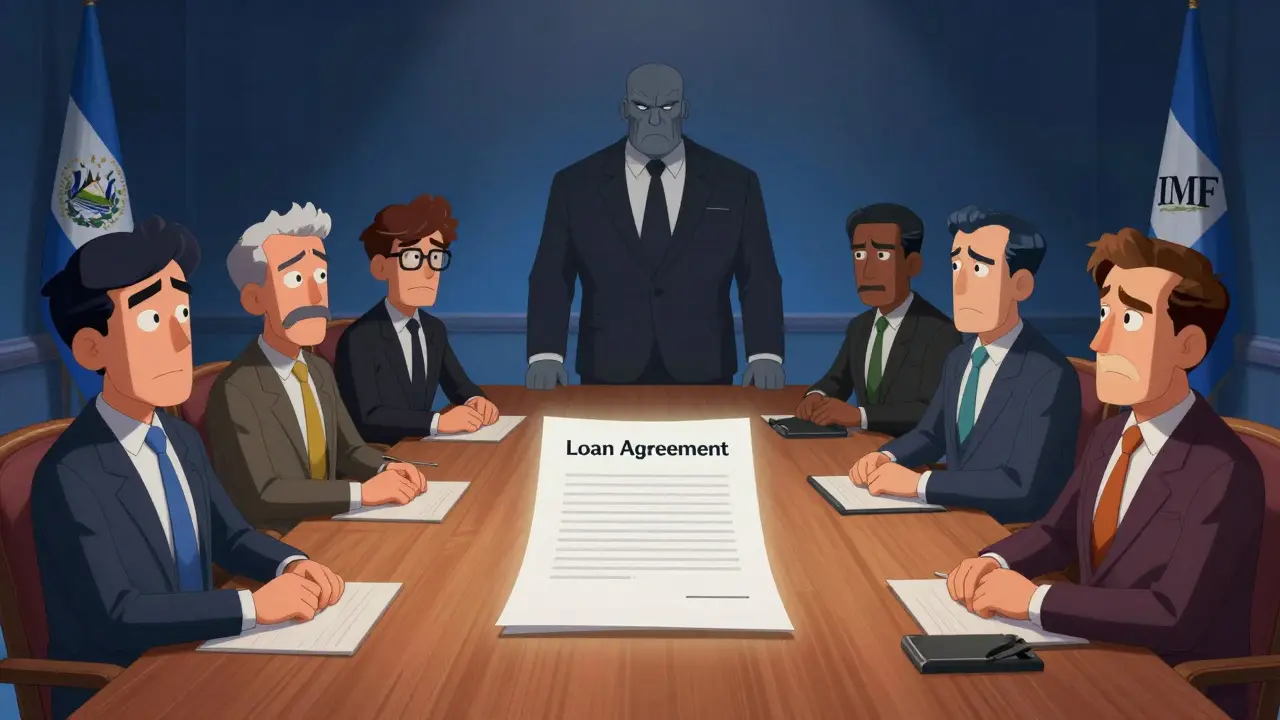
This gap between policy and reality became a major point of contention with the International Monetary Fund. The IMF, which oversees global financial stability, viewed El Salvador’s strategy as a systemic risk. They argued that forcing a volatile asset as legal tender undermined fiscal transparency and economic stability. In exchange for a $1.4 billion financial assistance package-a lifeline for the country’s debt management-the IMF demanded one thing: end the mandatory use of Bitcoin.
In January 2025, El Salvador complied. The law changed. Businesses were no longer required to accept Bitcoin. The "mandatory" part of legal tender was gone. This was the birth of the current restriction era. The government didn’t ban Bitcoin; it removed the stick. Now, using Bitcoin is purely voluntary for private entities. This shift satisfied the IMF, allowing the loan to proceed, but it signaled a major pivot in national strategy.
What Changed for Users and Businesses?
If you are running a shop in San Salvador today, the rules are different. Before 2025, you could face fines for refusing Bitcoin. Now, you can say no without penalty. This has led to a natural cooling off. Many merchants, who previously displayed QR codes out of fear of non-compliance, have started removing them. They prefer the stability of the US Dollar.
However, this doesn’t mean Bitcoin is dead in El Salvador. Far from it. The government still holds its reserves. In fact, despite ending the legal tender mandate, the state continued buying Bitcoin. By March 2025, they added another 8 BTC to their holdings. Why? Because the government distinguishes between legal tender (what you must accept) and strategic reserve (what they invest in).
For the average citizen, the experience has shifted from confusion to clarity. You aren’t forced to deal with crypto volatility for your daily groceries. But if you want to send money to family abroad using Bitcoin to save on fees, you still can. The infrastructure, like the Chivo Wallet and various exchanges, remains operational. The restriction is legal, not technical.
| Feature | Pre-January 2025 (Legal Tender) | Post-January 2025 (Current Status) |
|---|---|---|
| Mandatory Acceptance | Yes, for all businesses accepting cash | No, purely voluntary for private sector |
| Government Stance | Aggressive promotion and subsidies | Strategic reserve accumulation, reduced public spending |
| IMF Relationship | Tense, blocked access to loans | Cooperative, $1.4B loan approved |
| Remittance Usage | Targeted for growth, stayed ~1% | Stable, niche usage among tech-savvy users |
| Merchant Sentiment | Compliance-driven, mixed enthusiasm | Market-driven, mostly reverted to USD |
The New Strategy: Hub, Not Mandate
So, if the legal tender status is gone, what is El Salvador doing now? They are pivoting to become a regional hub for blockchain innovation rather than a forced adoption zone. Think of it like Silicon Valley versus a government-mandated tech program. One thrives on freedom and talent; the other struggles with compliance.
In January 2025, El Salvador hosted the PLANB Forum, the largest crypto assets conference in Central America. This signaled that the government still wants to be seen as a leader in the space. They are focusing on attracting foreign investment, fostering startups, and leveraging their existing infrastructure. The idea is to create an ecosystem where crypto companies want to set up shop because of favorable regulations and energy costs (thanks to their geothermal-powered mining operations), not because citizens are forced to use it.
This approach aligns better with global trends. Most countries are exploring Central Bank Digital Currencies (CBDCs) or strict regulatory frameworks for crypto, not adopting it as money. By dropping the legal tender label, El Salvador has reduced its isolation from international financial institutions. They can now participate in the global economy more freely while still maintaining a strong identity as a "Bitcoin-friendly" nation.

Challenges That Remain
Even with the restrictions lifted from businesses, challenges persist. The biggest one is trust. Once you tell people their money might lose half its value overnight, it’s hard to win back their confidence for daily transactions. The volatility of Bitcoin remains a barrier for widespread consumer adoption beyond speculative investing.
There is also the issue of environmental impact. Critics have long pointed out that Bitcoin mining consumes significant energy. El Salvador countered this by powering its mining rigs with volcanic geothermal energy. While this mitigates the carbon footprint, it doesn’t eliminate concerns about resource allocation. Should a developing nation prioritize crypto mining over other infrastructure needs? The debate continues.
Furthermore, the "Volcano Bonds"-Bitcoin-backed bonds issued by the government-remain a point of scrutiny. These bonds allow investors to lend money to El Salvador in exchange for Bitcoin returns. If Bitcoin prices stay high, it’s a win. If they crash, the country faces debt servicing issues. With the legal tender shield removed, these bonds are now purely financial instruments, subject to market risks without the backing of national fiat policy.
What This Means for the Future
Looking ahead to the rest of 2026 and beyond, El Salvador’s strategy is likely to remain hybrid. The government will continue to hold Bitcoin as a reserve asset, betting on its long-term appreciation. Meanwhile, the private sector will operate primarily in US Dollars, with Bitcoin serving as a niche payment method for those who choose it.
This is actually a healthier position than before. Forced adoption created resentment and compliance fatigue. Voluntary adoption creates genuine demand. If Bitcoin proves useful, people will use it. If it doesn’t, they won’t. The removal of restrictions allows the market to speak clearly.
For other countries watching, El Salvador serves as a cautionary tale. You cannot legislate technology into mainstream usage overnight. Infrastructure, education, and trust take time. The initial push provided valuable data, but the retreat to a voluntary model shows that even the most determined governments must respect market forces and international financial realities.
Is Bitcoin still legal tender in El Salvador in 2026?
No. As of January 2025, El Salvador abolished the mandatory legal tender status of Bitcoin to comply with IMF conditions. Businesses are no longer required to accept Bitcoin, though individuals and companies can still choose to use it voluntarily.
Why did El Salvador remove Bitcoin's legal tender status?
The decision was made to secure a $1.4 billion loan from the International Monetary Fund (IMF). The IMF opposed the mandatory use of Bitcoin due to concerns about financial stability, transparency, and the risks associated with cryptocurrency volatility.
Does the El Salvador government still own Bitcoin?
Yes. Despite ending the legal tender mandate, the government continues to accumulate Bitcoin. By March 2025, their Strategic Bitcoin Reserve Fund held approximately 6,102 BTC, valued around $500 million at the time.
Can I still use the Chivo Wallet in El Salvador?
Yes, the Chivo Wallet remains operational. However, its usage has shifted from a mandatory tool for compliance to a voluntary option for those wishing to transact in Bitcoin or receive remittances.
How does the new strategy affect businesses?
Businesses are relieved of the obligation to accept Bitcoin. Most have reverted to using the US Dollar for daily transactions to avoid volatility. Those that still accept Bitcoin do so based on customer demand and specific niche markets.
What are Volcano Bonds?
Volcano Bonds are Bitcoin-backed bonds issued by the El Salvador government. Investors lend funds to the country and receive returns in Bitcoin. They remain active but carry higher risk now that Bitcoin is not supported by legal tender status.
Routh Middaugh
June 27, 2026 AT 09:18It is honestly fascinating to see how the narrative has shifted so drastically in just a few short years. The initial push was so aggressive, yet the reality of daily life for the average Salvadoran never quite matched the hype. I think we can all agree that forced adoption rarely works in any context, let alone with something as volatile as cryptocurrency. It is interesting to note that the IMF essentially held the keys to the kingdom here. Without that loan, the whole experiment might have collapsed under its own weight anyway.
Carl Belgrave
June 28, 2026 AT 07:05Bukele played us all for fools. He sold this as financial freedom but it was just a vanity project to boost his ego and distract from real issues. Now they are back to square one begging the IMF for handouts because their 'bold strategy' failed. Typical third-world leadership trying to play god with money they don't understand. We should be laughing at them, not analyzing their pivot strategies like they are geniuses. This is what happens when you ignore basic economic principles for political clout.
Daniel J. Cox
June 30, 2026 AT 03:49I guess time will tell if this hybrid model actually sticks or if it's just another temporary fix 🤷♂️. It seems like a lot of drama for a country that really just needed stability. The geothermal mining angle is pretty cool though, even if the rest feels messy.
Abby Martin
July 2, 2026 AT 01:34You guys are missing the forest for the trees. This isn't about Bitcoin failing; it's about the government realizing they can't force people to use technology they don't trust. The fact that they kept buying BTC while dropping the legal tender status shows they still believe in the asset, they just realized the mandate was counterproductive. Most of you probably wouldn't last a week without your bank apps working perfectly, so judging a developing nation for trying to innovate is pretty hypocritical. They are learning on the fly, which is more than most governments do.
nancy jarecki
July 2, 2026 AT 10:20The semantic drift in this discourse is palpable. One must distinguish between the ontological status of legal tender and the pragmatic utility of digital assets. The El Salvadorian state engaged in a performative act of technological sovereignty that ultimately succumbed to the hegemonic pressures of international financial institutions. It is not surprising that the voluntary adoption rates remained abysmal; behavioral economics suggests that risk aversion trumps ideological alignment in transactional contexts. The removal of the mandatory clause is merely a capitulation to neoliberal orthodoxy, disguised as strategic pivoting. How quaint.
Robert Hundley
July 3, 2026 AT 04:50Look, I'm just happy they got the IMF deal sorted out 😊. Honestly, forcing small business owners to accept crypto was a nightmare waiting to happen. Imagine going to buy lunch and the owner sweating because the price dropped since they opened the register. Letting the market decide is always the better move. Plus, keeping the reserves means they aren't totally out of the game, just playing a different position now. Go team! 🚀
Ryan Peters
July 3, 2026 AT 06:22Let's cut through the jargon here. This is a classic case of regulatory capture by globalist elites. The IMF doesn't care about 'financial stability'; they care about control. By stripping the legal tender status, they neutered El Salvador's attempt at monetary sovereignty. Sure, the bonds are still there, but without the backing of fiat policy, they're just speculative instruments for degenerate gamblers. The US would never allow this kind of experimentation within its borders because it threatens the petrodollar hegemony. Don't let them sell you on the idea that this was a 'smart pivot'. It was a surrender.
ross harris
July 3, 2026 AT 10:39Oh, look at the little ants marching in line again. So Bukele tried to paint the town red with digital gold and the big bad IMF came along with a bucket of gray water. Classic tragedy. You had your fun, El Salvador, but now back to the dreary routine of dollars and debt. The irony is thick enough to cut with a knife that they used volcanoes to mine the very thing that nearly broke them. A beautiful disaster, really. Like watching a car crash in slow motion while everyone argues about the color of the smoke.
Nicole Woessner
July 4, 2026 AT 18:33i feel like people forget how hard it is to change cultural habits overnight. you can pass laws all day long but if people dont trust the system they wont use it. the fact that only 1% of remittances went through bitcoin says everything. maybe the tech wasnt ready or maybe the education wasn't there. either way its good they stepped back before things got worse. hope the regular folks are doing okay with all this chaos
Jon Milton
July 6, 2026 AT 17:05We must recognize that every society goes through periods of radical experimentation. El Salvador’s journey offers profound insights into the tension between technological optimism and institutional inertia. While the outcome may seem like a retreat, it is arguably a maturation of policy. The aggressive phase served as a stress test for the ecosystem. Now, the focus shifts to sustainable integration rather than coercive adoption. This aligns with broader philosophical trends where freedom of choice supersedes mandated participation. It is a lesson in humility for policymakers everywhere.
Maurice Flynn
July 8, 2026 AT 11:53It’s all part of the grand design, really. Sometimes you have to try the impossible to see what’s actually possible. The energy spent on this could have gone elsewhere, sure, but the data gained is invaluable. I’m rooting for them to find a middle ground that actually benefits the citizens, not just the investors. Keep pushing forward, even if the path gets twisty.
Rob Morton
July 9, 2026 AT 01:02I wonder if the next wave of countries looking to adopt similar models will learn from this specific sequence of events. The distinction between holding reserves and mandating usage seems critical. It makes me curious about how other nations might structure their relationships with decentralized assets without triggering the same IMF response. There is a delicate balance between innovation and fiscal responsibility that many leaders struggle to grasp.
Carl Hanzel
July 9, 2026 AT 03:17Everyone here is acting like this was some great democratic evolution. It was a bailout. Plain and simple. They gambled with the national economy and lost, so now they are dancing for the IMF. Don't romanticize the failure. The people who suffered were the ones who couldn't afford the volatility, not the speculators making profits on the side. This isn't a lesson in policy; it's a warning against incompetence dressed up as progress.