 Jul, 2 2026
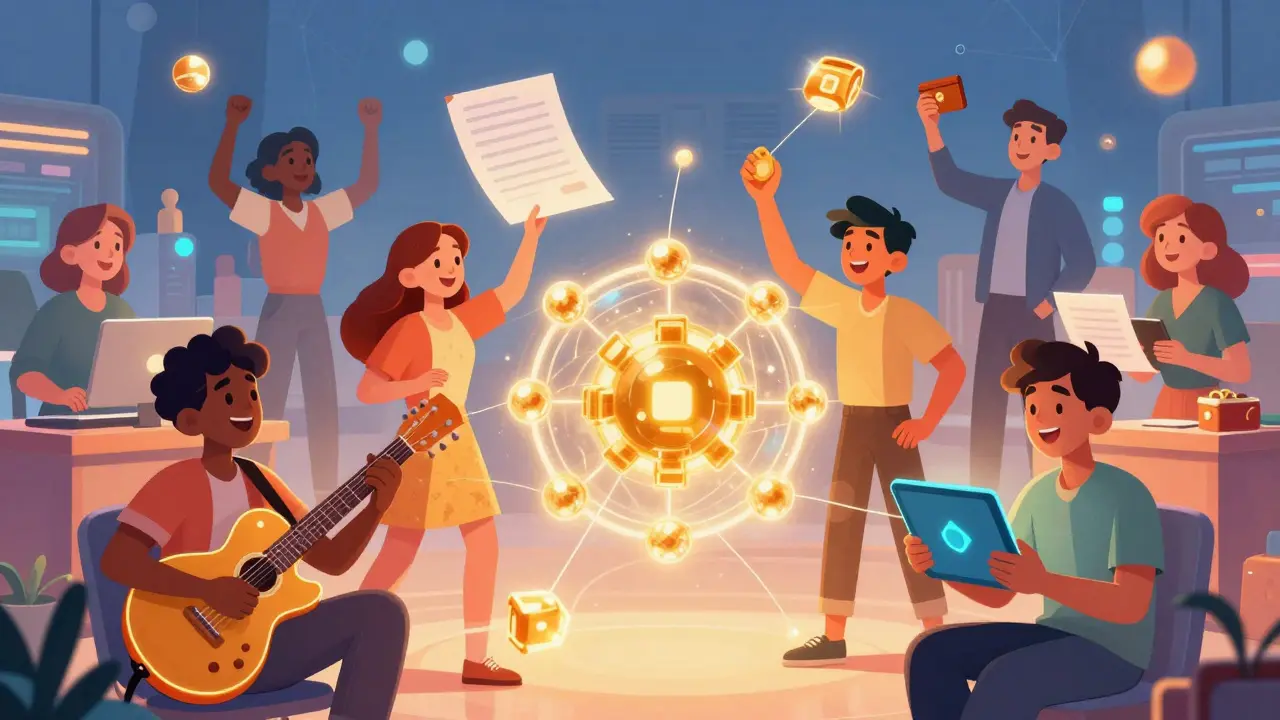
Imagine spending months perfecting a digital album or writing a series of articles, only to have a platform take half your earnings before you even see a dollar. For years, this was the standard deal in the creator economy. You built the audience; they kept the keys. But by mid-2026, that dynamic is shifting. The blockchain creator economy is a decentralized ecosystem where creators own their data, control monetization via smart contracts, and earn directly from fans without traditional intermediaries is no longer just a buzzword for crypto enthusiasts. It’s becoming a viable alternative for anyone tired of opaque algorithms and steep platform fees.
The numbers tell a stark story. In 2023, the global creator economy was valued at roughly $250 billion, yet nearly half of full-time creators earned less than $15,000 a year. Traditional platforms like YouTube, Patreon, and TikTok typically take cuts ranging from 30% to 50%. Meanwhile, blockchain-based platforms are operating with fees as low as 1% to 2.5%. This isn’t just about saving money; it’s about ownership. When you publish on a centralized site, you’re renting space. On the blockchain, you’re building equity.
How Blockchain Changes the Money Flow
The core difference lies in how value moves. In the traditional model, money flows from fan to platform, then to creator, often with delays and hidden deductions. In the blockchain model, smart contracts are self-executing code on a blockchain that automatically distributes payments based on predefined conditions handle the transaction. These contracts live on networks like Ethereum, Polygon, or Solana. They ensure that when someone buys your work, the payment goes straight to your wallet, minus a tiny network fee.
But the real game-changer is secondary sales. If you mint your art or music as an NFT (Non-Fungible Token) is a unique digital certificate of ownership recorded on a blockchain, enabling verifiable scarcity and resale rights, you can program it to pay you a royalty every time it’s resold. Let’s say you sell a digital piece for $1,000. A collector flips it for $5,000 two years later. With a 10% royalty clause in the smart contract, you automatically receive $500. That revenue stream doesn’t exist on Instagram or Spotify. Since 2021, Chainalysis reports that NFT secondary sales have generated $18.9 billion in revenue. Much of that has flowed back to creators who understood how to structure their assets correctly.
Consider the case of Nigerian musician Tems. In 2024, she released her album 'Born in the Wild' as a collection of NFTs. While traditional streaming platforms netted her around $187,000, her secondary NFT sales brought in $1.2 million. That’s not luck; it’s structural advantage. By owning the distribution channel, she captured value that would otherwise have gone to record labels and streaming services.
| Feature | Traditional Platforms (YouTube, Patreon) | Blockchain Platforms (Mirror, Audius) |
|---|---|---|
| Platform Fees | 30% - 50% | 1% - 2.5% |
| Secondary Royalties | None | 5% - 10% automated |
| Payout Speed | 3 - 5 business days | 15 - 30 seconds |
| Data Ownership | Platform retains user data | Creator owns all data |
| Global Access | Limited by banking restrictions | Open to anyone with internet |
The Global South Advantage
While Western creators debate algorithm changes, creators in emerging markets are using blockchain to solve basic survival problems. Banking infrastructure in many parts of Africa, Southeast Asia, and Latin America is fragmented. International transfers can take weeks, incur high fees, or get frozen entirely. For a blogger in Nairobi or a designer in Jakarta, this is a daily headache.
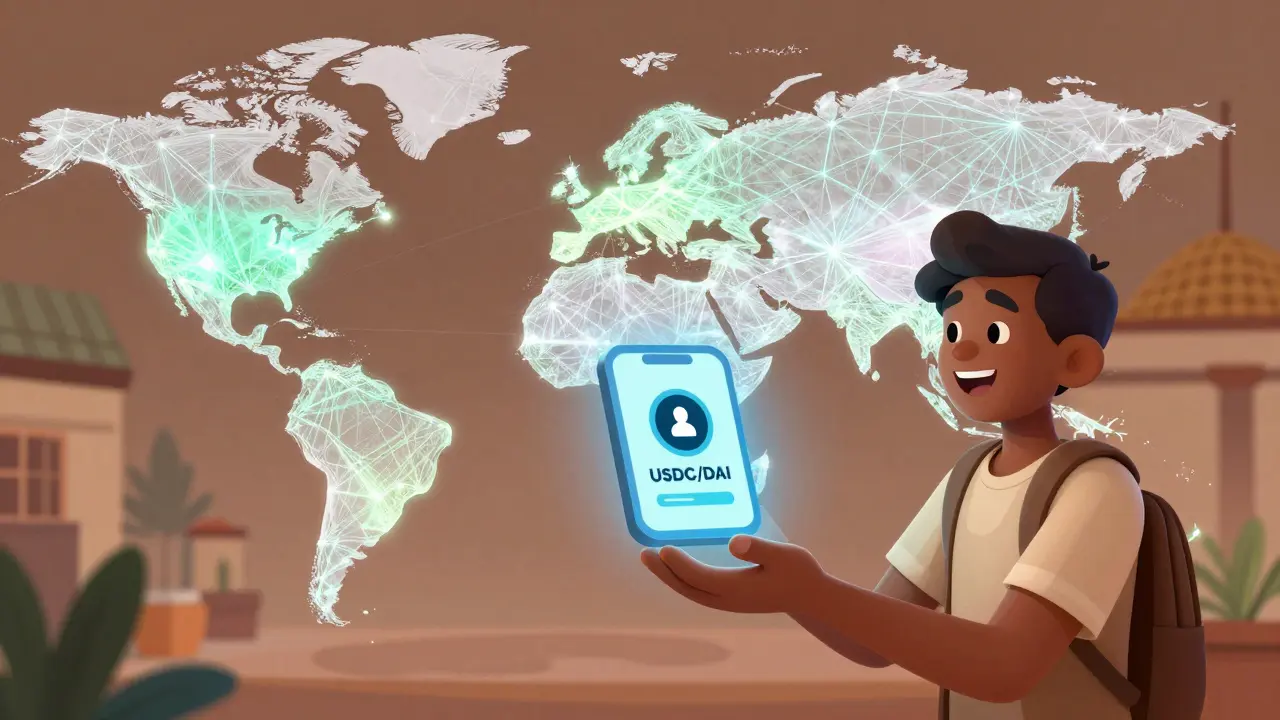
Blockchain bypasses these bottlenecks. Payments in stablecoins like USDC or DAI settle in minutes, regardless of borders. A survey by Built In covering 1,200 creators across Lagos, Jakarta, São Paulo, and Mumbai found that 78% reported increased income stability after switching to blockchain payments. One Reddit user shared a story that sums it up: after waiting three months for a $500 payment from a French advertiser through traditional channels, she switched to USDC and received the funds in 22 minutes. No bank holidays, no intermediary delays.
This accessibility is driving growth. The Global South’s creator economy reached $5 billion in 2025 and is projected to hit $30 billion by 2032. As more creators in these regions adopt Web3 tools, the geographic center of gravity for digital creation is shifting. It’s not just about technology; it’s about financial inclusion.
Overcoming the Learning Curve
If the benefits are so clear, why hasn’t everyone switched? The barrier isn’t cost; it’s complexity. According to Blaize Tech’s 2025 usability study, 68% of new creators need two to three weeks to become proficient with blockchain tools. Setting up a non-custodial wallet like MetaMask or Phantom, managing private keys, and understanding gas fees can feel overwhelming compared to clicking "Sign Up" on Patreon.
Then there’s the issue of security. In a traditional system, if you forget your password, customer support resets it. In a non-custodial wallet, if you lose your seed phrase, your funds are gone forever. Chainalysis’ 2025 Creator Economy Security Report notes that 14% of surveyed creators lost assets due to phishing attacks. This risk requires a mindset shift: you are your own bank, which means you are also your own security team.
However, the landscape is improving. Layer-2 solutions like Polygon have reduced transaction fees by 98% compared to Ethereum mainnet, making micro-transactions viable. Tools like Koinly now automate cryptocurrency tax reporting, easing compliance burdens. And education is catching up. Programs like Coinbase Learn’s 'Blockchain Creator Certification' have helped 63% of successful creators bridge the knowledge gap. The key is starting small: connect a wallet, mint one test NFT, and learn the interface before committing significant capital.
AI and Blockchain: The New Power Couple
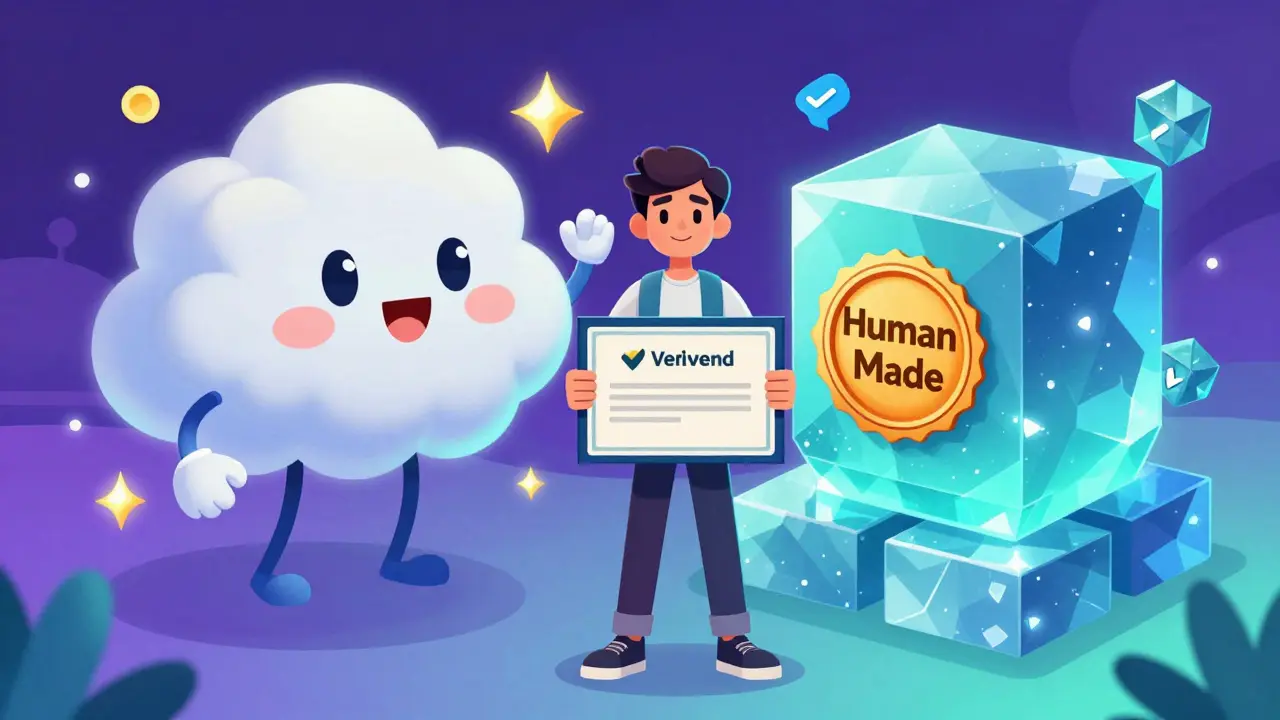
As we move deeper into 2026, another force is reshaping the creator economy: Artificial Intelligence. AI can generate images, write text, and compose music in seconds. This abundance threatens to devalue human-created content. But blockchain offers a counterbalance. By proving authenticity and origin, blockchain helps distinguish human work from AI-generated noise.
Platforms like Ocean Protocol allow creators to monetize their data directly, including the datasets used to train AI models. Meanwhile, initiatives like Deepfake Passport use zero-knowledge proofs to verify that a piece of content was created by a specific human. A16z Crypto’s 2025 State of Crypto report highlights this synergy: "Blockchains offer a counterbalance to the apparent centralizing forces of AI systems." In other words, AI creates volume, but blockchain ensures value remains with the original creator.
This integration is critical for long-term sustainability. As AI lowers the barrier to entry for content creation, differentiation will come from trust and provenance. Creators who establish verifiable identities on-chain will be better positioned to command premium prices in a saturated market.
Regulatory Realities and Future Outlook
No discussion of blockchain is complete without addressing regulation. Professor Gary Gensler of MIT warned in 2025 that regulatory uncertainty remains the biggest barrier to mainstream adoption. As of Q1 2025, only 37 countries had clear cryptocurrency frameworks. The EU’s MiCA regulations, effective January 2025, provided the first comprehensive legal structure, but the US remains fragmented, with 28 states having varying rules.
Despite this, enterprise adoption is accelerating. IBM’s 2025 enterprise survey found that 91% of businesses are actively investing in or planning blockchain adoption. Gartner predicts blockchain will generate $3.1 trillion in new business value by 2030. For creators, this means more institutional support, better tools, and clearer guidelines.
Looking ahead, the industry is consolidating. Gartner expects 40% of current blockchain creator platforms to merge or shut down by 2027, while the remaining 60% capture 35% market share. The introduction of the 'Creator Royalty Standard' (CRS-20) in Q4 2025 aims to harmonize secondary sales royalties across platforms, reducing friction for creators moving between ecosystems. Deloitte concludes that blockchain creator infrastructure has passed the scalability threshold necessary for mass adoption, with transaction speeds now matching traditional payment systems at 2,500 transactions per second on leading Layer-2 solutions.
The future isn’t about replacing traditional platforms entirely. It’s about offering choice. Creators can maintain a presence on YouTube for discoverability while using blockchain for direct monetization and ownership. This hybrid approach maximizes reach while minimizing dependency on any single entity.
Is the blockchain creator economy safe for beginners?
It carries risks, primarily related to user error and security. Unlike traditional platforms, there is no customer support to recover lost funds. However, with proper education-such as learning to use hardware wallets and verifying URLs-the risks are manageable. Start with small amounts to build confidence.
Do I need to know coding to use blockchain creator tools?
No. Most modern platforms like Mirror or Foundation offer user-friendly interfaces that abstract away the technical complexities. You don’t need to write smart contracts yourself; you just need to understand how to interact with them through the platform’s dashboard.
How do taxes work for blockchain earnings?
Tax laws vary by country, but generally, cryptocurrency transactions are taxable events. In many jurisdictions, receiving crypto as payment is considered income, and selling NFTs may trigger capital gains tax. Use specialized software like Koinly to track transactions and generate tax reports accurately.
Can I still use social media if I join the blockchain creator economy?
Can I still use social media if I join the blockchain creator economy?
Absolutely. Many successful creators use a hybrid model. They use Twitter, Instagram, or TikTok for discovery and audience building, then direct fans to their blockchain profiles for direct purchases and community engagement. This leverages the strengths of both systems.
What happens to my NFTs if the platform shuts down?
Your NFTs remain yours. Because they are stored on the blockchain, not on the platform’s server, you retain access via your wallet address. Even if the marketplace disappears, you can view and transfer your assets using any compatible wallet or explorer.