 Jun, 24 2026
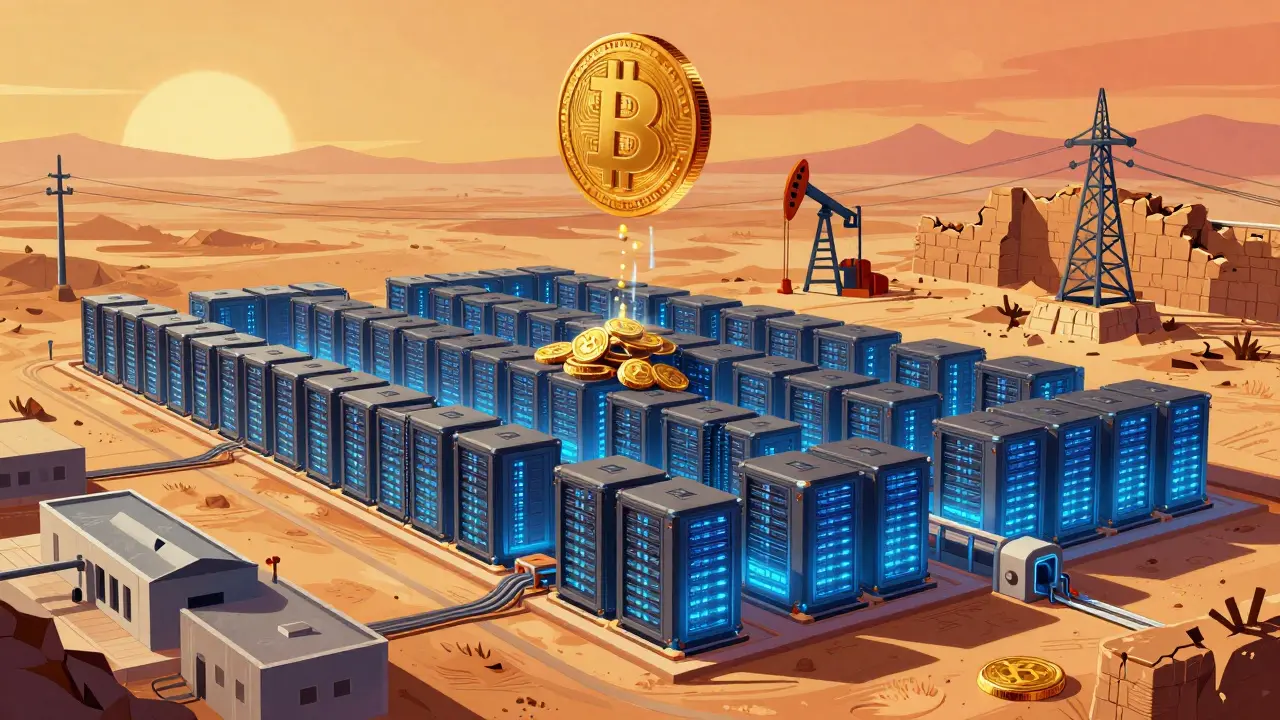
Imagine a country cut off from the global banking system. No SWIFT transfers. No access to US dollars. Now imagine that same country turning its surplus energy into a digital currency that anyone in the world can use. This isn't science fiction; it is the reality of Iran's Bitcoin mining, a sophisticated state-level strategy designed to circumvent international sanctions. Since the United States withdrew from the Joint Comprehensive Plan of Action (JCPOA) in 2018, Tehran has transformed from a cautious observer of cryptocurrency into one of the world's most aggressive adopters. Today, Iran accounts for roughly 4.5% of all global Bitcoin mining operations, generating hundreds of millions of dollars annually while effectively bypassing traditional financial intermediaries.
The Shift From Ban to State-Sponsored Mining
To understand where we are today, you have to look at how quickly things changed. Initially, Iran mirrored China’s early regulatory approach: they legalized cryptocurrencies but banned their use as payment methods. The goal was to control the flow without stifling innovation. But around 2020, the strategy shifted dramatically. Facing crushing economic pressure and isolated from Western banks, the Iranian government realized that Bitcoin wasn't just an asset class-it was a lifeline.
The regime began legalizing crypto payments for imports and developed a comprehensive licensing system for mining farms. By 2022, they had issued licenses for more than 10,000 mining operations. They also permitted approximately 90 cryptocurrency exchanges to operate domestically. This created a parallel financial ecosystem. Instead of trying to stop the flow of money, the state started channeling it through controlled pipes. A think tank attached to the president’s office even published reports highlighting cryptocurrency's role in sanctions avoidance, signaling that this was "all but an official policy."
The Role of the IRGC and Military Infrastructure
You cannot talk about Iran’s crypto strategy without mentioning the Islamic Revolutionary Guard Corps (IRGC). This powerful military branch didn't just watch from the sidelines; they got directly involved. Between 2019 and 2020, under direct orders from Supreme Leader Ali Khamenei, the IRGC accelerated its entry into cryptocurrency mining. Why? Because Bitcoin generation was viewed as compensation for lost access to US dollar transactions.
The infrastructure behind this effort is massive and deeply integrated with state resources. The most prominent example is a 175-megawatt Bitcoin farm in Rafsanjan, Kerman province. This facility is a joint venture between IRGC-linked enterprises and Chinese investors. These operations often sit on military bases or within facilities controlled by religious foundations like Astan Quds Razavi. Investigative reports describe this network as a "crypto cartel" that systematically exploits national electricity resources.
These state-affiliated miners enjoy rock-bottom electricity tariffs-often effectively free due to political connections. They ignore electricity bills entirely or receive subsidies that make their operational costs near zero. In contrast, miners in the United States pay anywhere from $0.03 to $0.08 per kWh. This cost advantage allows Iranian operators to maximize hash rate output while minimizing expenses, creating a competitive edge that persists despite sanctions risks.
Monetizing Energy: The Oil-to-Bitcoin Swap
Let’s put the scale into perspective. The electricity consumed by Iranian miners requires the equivalent of approximately 10 million barrels of crude oil annually to generate. That represents roughly 4% of Iran’s total oil exports in 2020. Essentially, instead of exporting some of its oil to burn in cars abroad, Iran burns that oil domestically to power servers that mine Bitcoin.
This swap makes strategic sense for a sanctioned nation. Oil sales require complex logistics, shadow fleets, and risky cash transactions. Bitcoin mining converts abundant natural gas reserves-a resource Iran has in surplus-into a portable, borderless asset. Miners receive payments directly in Bitcoin, which can then be converted to other cryptocurrencies or used for international transactions. It creates a decentralized foreign exchange mechanism that bypasses the SWIFT system entirely.
| Jurisdiction | Global Hash Rate Share | Primary Motivation | Electricity Cost Advantage |
|---|---|---|---|
| United States | ~35% | Commercial Profit | Moderate ($0.03-0.08/kWh) |
| Kazakhstan | ~18% | Energy Surplus Export | High (Cheap Coal/Hydro) |
| Russia | ~11% | Sanctions Evasion / Profit | Very High (State Subsidies) |
| Iran | ~4.5% | Sanctions Circumvention | Extreme (Near Zero via Subsidy) |
Bypassing Banks: The Flow of Crypto Out of Iran
The real test of any sanctions-evasion strategy is whether the money actually leaves the country. By 2024, $4.18 billion worth of cryptocurrencies had flowed out of Iran, marking a 70% increase from the previous year. This demonstrates the strategy's expanding effectiveness. How do they move it?
Recent investigations revealed that Iranian firms, including entities affiliated with the IRGC, processed $8 billion worth of transactions through major exchanges like Binance since 2018. While Binance operates globally, these flows often pass through intermediaries. Blockchain analytics firms like Elliptic, Chainalysis, and TRM Labs have documented that Beijing’s "teapot" refineries, UAE/Hong Kong free-zone shell companies, and TRON-based stablecoin systems now account for the majority of Iran-linked cryptocurrency flows.
In August 2025, Iran executed its first official import order using cryptocurrency, totaling $10 million. This was a significant milestone. It proved that the state could not only mine Bitcoin but also spend it to buy goods internationally without touching the traditional banking sector. This capability extends beyond simple mining. Iran signed bilateral cryptocurrency cooperation agreements with Russia in November 2018 and has negotiated deals with eight additional countries, including Austria, Germany, and South Africa, for crypto-based financial transactions.

Risks and Criticisms: Grid Strain and Centralization
Despite the strategic success, this approach comes with heavy costs. The most immediate impact is on Iran’s domestic power grid. Energy sector analysts warn that mining facilities consume electricity that could otherwise serve civilian and industrial users. During peak summer months, this competition for power contributes to nationwide blackouts and infrastructure strain. Ordinary citizens suffer rolling blackouts while state-affiliated mining farms run continuously.
There is also a broader concern about centralization. Bitcoin was designed to be censorship-resistant and decentralized. When a single state controls nearly 5% of the network’s hash rate, it introduces systemic risks. If those miners were to coordinate, they could theoretically influence transaction validation. More immediately, it creates exposure risks for international financial institutions. Any Bitcoin transaction has a corresponding probability of involving fees paid by Iranian miners, complicating compliance for global banks.
Furthermore, intelligence analysts warn that these cryptocurrency operations directly fund IRGC missile programs and support for proxy organizations including Hezbollah and the Houthis. This makes enforcement a national security priority for Western nations, not just a trade issue. The "sanctions-evasion machine" adapts continuously, using reflagged vessels and new wallet clusters, but the core reliance on cheap energy remains a vulnerability if domestic supply falters.
Future Outlook: Will Crypto Replace Oil?
Looking ahead, Iran plans to increase cryptocurrency mining capacity by 50% over the next two years. New facilities are being established in Bushehr and Khuzestan provinces, leveraging surplus electricity from natural gas plants. However, experts argue that cryptocurrency is no panacea. Price volatility, evolving international regulations, and technical limitations mean it cannot completely replace traditional export revenues.
As of mid-2025, Iran operates one of the world's most adaptive sanctions-evasion networks, utilizing over 320 tankers in its "dark fleet" alongside cryptocurrency operations. The future likely involves a hybrid model: continuing to mine Bitcoin for liquidity while maintaining oil exports through shadow channels. Technological trends favoring more energy-efficient algorithms may reduce Iran's competitive advantages based on cheap fossil fuels, forcing further adaptation. For now, however, the strategy works well enough to keep the economy afloat and the regime supplied.
How much of the global Bitcoin mining market does Iran control?
According to estimates by blockchain analytics firm Elliptic, Iran controls approximately 4.5% of all global Bitcoin mining operations. This makes it one of the top four mining jurisdictions worldwide, ranking behind the United States, Kazakhstan, and Russia.
Why did Iran start promoting Bitcoin mining?
Iran adopted Bitcoin mining primarily to circumvent international sanctions imposed after the US withdrawal from the JCPOA in 2018. By converting abundant natural gas and electricity into Bitcoin, Iran can generate foreign currency reserves and facilitate international trade without relying on the US-dominated SWIFT banking system.
Is Bitcoin mining legal in Iran?
Yes, Bitcoin mining is legal and heavily regulated by the Iranian government. The state issues licenses for mining farms and has established special economic zones for these operations. However, using cryptocurrency as a direct payment method for retail transactions was initially banned, though policies have evolved to allow crypto payments for certain imports.
What role does the IRGC play in Iran's crypto strategy?
The Islamic Revolutionary Guard Corps (IRGC) plays a central role. Under orders from Supreme Leader Ali Khamenei, the IRGC established large-scale mining farms, such as the 175-megawatt facility in Rafsanjan. These operations benefit from subsidized electricity and political protection, effectively forming a state-backed "crypto cartel" that generates revenue for military and proxy activities.
Does Iran's Bitcoin mining affect its power grid?
Yes, significantly. The electricity consumed by Iranian miners is equivalent to burning 10 million barrels of oil annually. This massive demand exacerbates the country's ongoing power grid crisis, leading to frequent blackouts for civilians and industries, especially during hot summer months when mining facilities continue to operate uninterrupted.
How does Iran move Bitcoin out of the country?
Iran uses a complex network of intermediaries to move crypto assets. This includes partnerships with international exchanges, shell companies in UAE and Hong Kong, and "teapot" refineries in China. Recent data shows billions of dollars flowing through platforms like Binance, often converted into stablecoins or fiat currencies in third-party jurisdictions to avoid direct sanctions enforcement.
Can international sanctions stop Iran's Bitcoin mining?
It is difficult. While sanctions restrict access to cutting-edge mining hardware and limit formal banking interactions, the decentralized nature of Bitcoin allows Iran to continue operating. Enforcement relies on blockchain analytics to identify and block specific wallets, but Iran constantly creates new addresses and uses mixing services or third-country intermediaries to obscure the origin of funds.