 Aug, 20 2026
Imagine holding your Bitcoin the world's first decentralized cryptocurrency but wanting to use it in a lending app or trade it on a decentralized exchange without selling it. That’s the exact problem Interlay a Polkadot-based blockchain network designed to bring Bitcoin into the multi-chain DeFi ecosystem was built to solve. Launched as a parachain on March 11, 2022, Interlay allows users to lock their BTC on the Bitcoin mainnet and mint an equivalent amount of interBTC a 1:1 Bitcoin-backed asset issued on the Interlay chain. This lets you keep your original Bitcoin safe while using the digital twin for DeFi activities like trading, lending, and staking.
The native token of this network is INTR the utility and governance token of the Interlay protocol. If you’re asking "what is Interlay crypto coin?", you are likely looking at INTR. It serves three main jobs: governing the protocol, paying transaction fees, and acting as collateral for the bridge. Unlike many hype-driven tokens, INTR has a specific technical role that ties its value directly to the usage of the Bitcoin bridge.
Key Takeaways
- Core Function: Interlay bridges Bitcoin to Polkadot, allowing BTC holders to access DeFi without custodial risk.
- Token Role: INTR is used for governance voting, paying network fees, and securing the bridge via collateral.
- Security Model: Uses a non-custodial, collateralized bridge where interBTC is backed 1:1 by real Bitcoin plus extra security deposits.
- Supply Dynamics: Total planned supply is 1 billion INTR over 4 years, followed by 2% annual inflation for treasury funding.
- Ecosystem Status: Active Polkadot parachain with a niche but stable position in the Bitcoin-DeFi interoperability space.
How Interlay Bridges Bitcoin to Polkadot
Most wrapped Bitcoin tokens rely on centralized companies to hold the actual coins. If that company goes bankrupt or gets hacked, your wrapped token might become worthless. Interlay takes a different approach. It uses a technology stack called BTC-Relay a system that verifies Bitcoin transactions on the Polkadot chain combined with the XCLAIM framework an open-source protocol for trustless cross-chain communication.
Here is how the process works in practice:
- Locking: You send your Bitcoin to a specific address managed by the Interlay network. These addresses are controlled by "vaults"-operators who stake collateral to ensure they behave honestly.
- Minting: Once the network confirms your Bitcoin is locked, it mints an equal amount of interBTC on the Polkadot side.
- Usage: You can now move this interBTC to other chains connected to Polkadot or use it in DeFi protocols within the Polkadot ecosystem.
- Redemption: When you want your Bitcoin back, you burn the interBTC. The vault releases your original Bitcoin from the lock.
This design means you don’t have to trust a single company with your assets. Instead, you trust the code and the economic incentives of the vault operators. If a vault tries to run away with your Bitcoin, they lose their staked collateral. This makes the system "trust-minimized," meaning you need to trust fewer parties than in traditional finance.
Understanding the INTR Token Utility
The INTR token the native asset of the Interlay parachain isn't just a speculative asset; it has hard-coded functions in the protocol. Think of it as the fuel and steering wheel for the Interlay machine.
- Governance (Stake-to-Vote): Holders can lock their INTR to gain voting power on protocol changes. Similar to Curve Finance’s model, locking longer gives you more votes and higher staking rewards. This ensures that long-term supporters have a bigger say in the project’s direction.
- Transaction Fees: Every time you interact with the Interlay chain-whether minting, burning, or transferring interBTC-you pay a fee in INTR. These fees go to the collators (block producers), incentivizing them to keep the network running smoothly.
- Collateral: INTR can be used as additional security backing for synthetic assets. While interBTC is primarily backed by Bitcoin, INTR helps secure the broader financial products built on top of the network.
This multi-role design creates demand for the token beyond just price speculation. As more people use the bridge, more fees are paid in INTR, and more people stake it to participate in governance.

Tokenomics and Supply Schedule
One of the most common questions about new crypto projects is: "How much will there be?" For Interlay, the plan is transparent. The total initial supply is set at 1,000,000,000 INTR. However, unlike Bitcoin which has a hard cap of 21 million, INTR has an inflationary schedule after the initial emission period.
| Allocation Category | Percentage of Supply | Purpose |
|---|---|---|
| Vault Rewards | 30% | Incentivizes operators managing Bitcoin custody |
| Treasury & Airdrops | 35% | Funds development, maintenance, and community incentives |
| Governance Staking | 5% | Rewards for locking INTR to vote on proposals |
| Team & Backers | 20% | Vested allocation for developers and early investors |
| Reserve | 10% | Buffer for future ecosystem growth and development |
After the first four years, when the 1 billion INTR is fully emitted, the protocol introduces 2% annual inflation. This new supply goes entirely to the protocol treasury. This model is similar to how many sustainable DeFi projects operate: they generate ongoing resources to fund development without needing to sell old tokens, which could cause sell pressure. The 2% inflation is relatively low compared to some high-yield farming tokens, aiming to balance sustainability with token holder dilution.
Security and Risk Factors
No bridge is perfectly safe, but Interlay’s architecture adds layers of protection. The core security comes from the Polkadot relay chain the central hub that secures all parachains including Interlay. Since Interlay runs on Polkadot’s Nominated Proof-of-Stake consensus, its state transitions are secured by the same validators protecting the entire Polkadot network. This is a significant advantage over standalone chains that might have smaller validator sets.
However, risks remain. Because the bridge relies on "vaults" to hold the actual Bitcoin, there is a counterparty risk if a vault misbehaves. To mitigate this, vaults must post collateral. If they fail to redeem interBTC when requested, their collateral is slashed (taken away) to cover the loss. Additionally, the market capitalization of INTR remains small compared to major cryptocurrencies. In recent snapshots, its rank has fluctuated between #3,300 and #4,500 on major trackers. This means liquidity can be thinner during volatile markets, so slippage (price impact) might be higher when buying or selling large amounts.
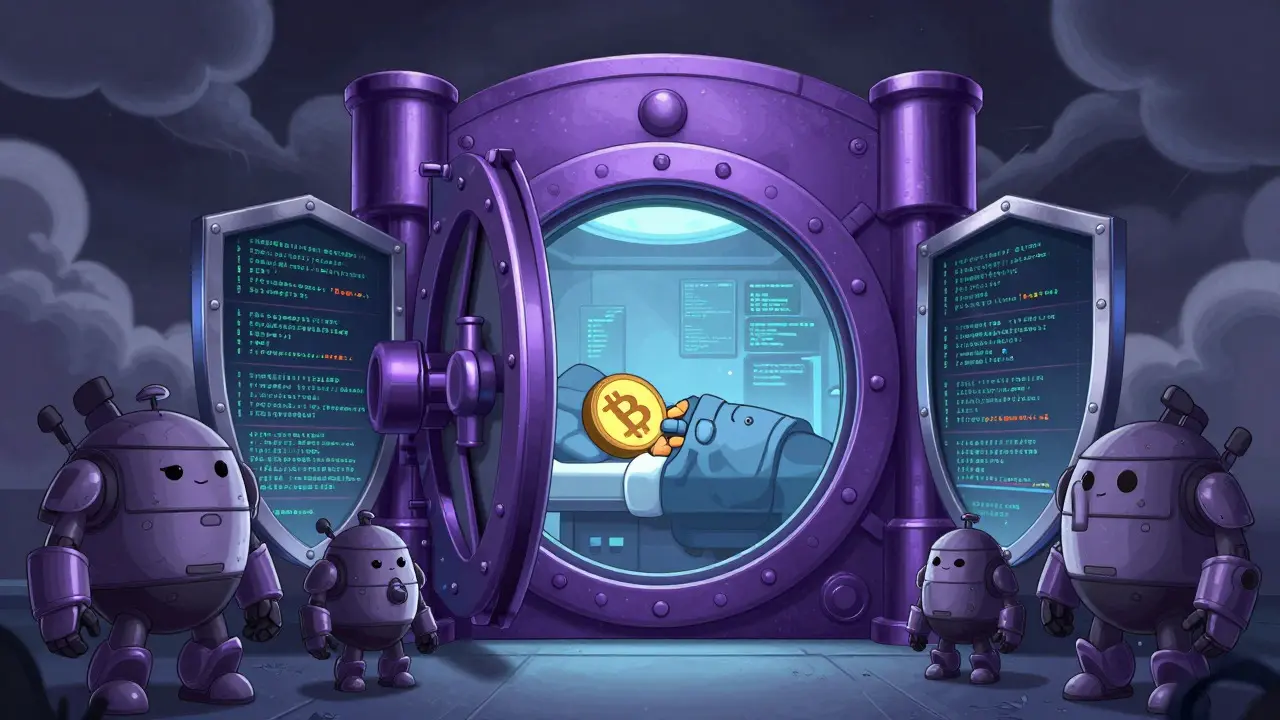
Current Market Position and Outlook
As of mid-2026, Interlay remains an active part of the Polkadot ecosystem. Its primary product, interBTC, continues to serve as a way for Bitcoin holders to enter DeFi. The project won its parachain slot in February 2022 by locking nearly 2.75 million DOT in a crowdloan, showing strong initial support from the Polkadot community.
The team has been working on "Interlay v2," which aims to expand Bitcoin finance to unbanked populations. This suggests a roadmap focused not just on tech specs, but on real-world adoption. While the token price has seen volatility typical of small-cap assets, the fundamental utility of bridging Bitcoin to a robust L0 like Polkadot keeps it relevant. For users, the key takeaway is that Interlay offers a technically sound, non-custodial path for Bitcoin DeFi participation, provided you understand the specific risks of cross-chain bridges and small-cap liquidity.
Frequently Asked Questions
Is Interlay (INTR) a good investment?
Like any small-cap crypto asset, INTR carries higher risk due to lower liquidity and price volatility. Its value depends heavily on the success of the interBTC bridge and the growth of the Polkadot ecosystem. Investors should consider its unique position in Bitcoin-DeFi interoperability but should also monitor the project's user activity and TVL (Total Value Locked) rather than just price action.
What is the difference between INTR and interBTC?
INTR is the native governance and utility token of the Interlay network, used for fees and voting. interBTC is a derivative asset issued on the network, backed 1:1 by real Bitcoin. You use INTR to pay for the service of creating or redeeming interBTC, but interBTC itself represents your Bitcoin exposure in the DeFi environment.
Is Interlay safer than Wrapped Bitcoin (WBTC)?
Interlay uses a non-custodial, collateralized model where multiple vaults share responsibility, secured by Polkadot’s consensus. WBTC is typically managed by a consortium of custodians. Both have different risk profiles: Interlay relies on smart contract logic and vault slashing, while WBTC relies on institutional custodians. Neither is risk-free, but Interlay minimizes reliance on a single corporate entity.
How do I buy Interlay (INTR)?
You can purchase INTR on various centralized exchanges that list Polkadot parachain tokens, such as Coinbase or Kraken, depending on your region. Alternatively, you can swap for it on decentralized exchanges within the Polkadot ecosystem using DOT or other compatible assets. Always check current listings before trading due to potential liquidity variations.
What happens if a vault fails to redeem my Bitcoin?
If a vault fails to honor a redemption request, the Interlay protocol allows for the slashing of that vault’s collateral. This collateral is then used to compensate users or cover the cost of retrieving the funds. The system is designed so that the penalty for misbehavior is severe enough to discourage it, making failure a rare but manageable economic event.