 Dec, 2 2025
OneRare Ingredient Staking Calculator
Expected Ingredients
Important Note: Ingredient distribution is randomized. Your results are approximate based on average probabilities.
There’s no OneRare Ingredient NFT airdrop. Not right now, not in the way most people expect. If you’re searching for a free drop of NFTs to grab and flip, you’re looking in the wrong place. OneRare doesn’t hand out ingredient NFTs like candy. It makes you work for them - and that’s the whole point.
What OneRare Actually Is
OneRare isn’t just another crypto game. It’s the Foodverse - a blockchain-based food metaverse built on Polygon. Think of it as a global kitchen where every ingredient, dish, and recipe is an NFT. You don’t just collect digital food. You farm it, cook it, trade it, and even fight for it in mini-games. The platform launched its first gaming zone in late 2024, and it’s already pulling in players from over 40 countries.
Unlike games where you slay dragons or build castles, OneRare lets you make ramen, tacos, or pad thai - and earn NFTs for doing it. The catch? You need ORARE tokens to start. There’s no free lunch here. But if you’re into food, culture, and blockchain, it’s one of the most unique Web3 experiences out there.
How You Actually Get Ingredient NFTs
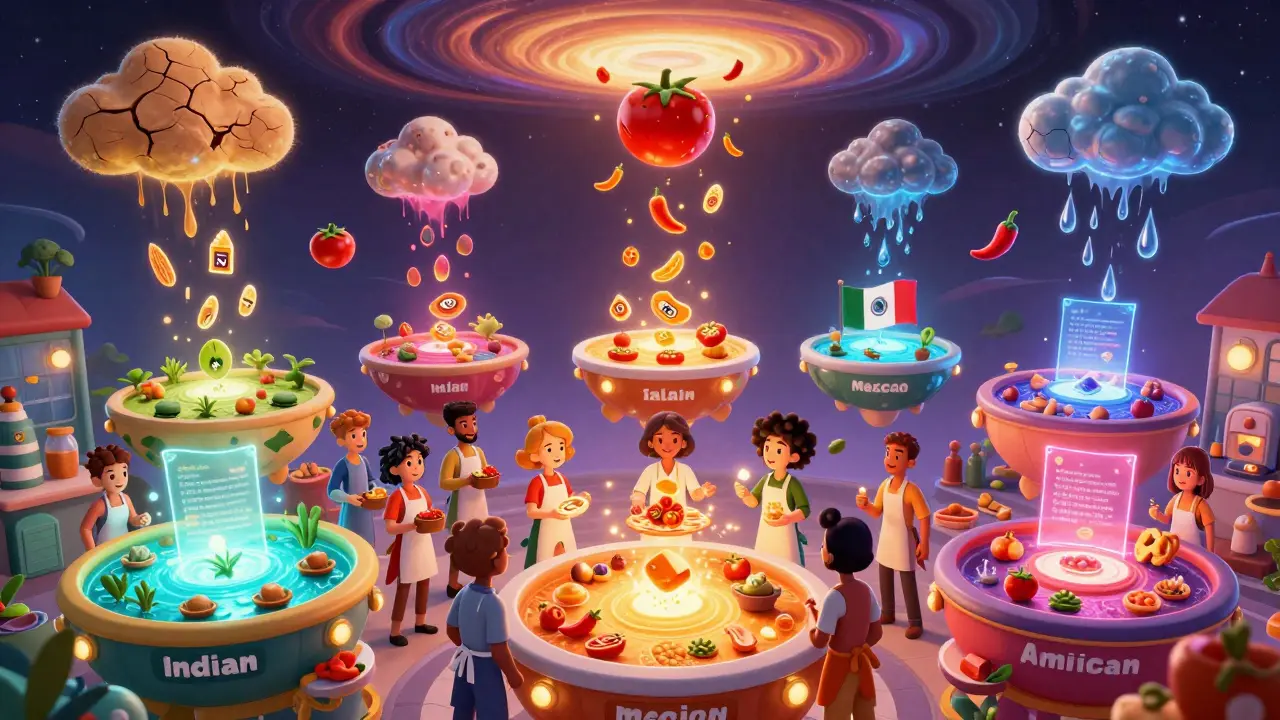
Forget airdrops. OneRare’s ingredient NFTs come from farming. You stake your ORARE tokens in one of six themed farming pools. Each pool is tied to a global cuisine: Indian, Italian, Japanese, Mexican, American, and Mediterranean. The pools don’t give you the ingredients you want. They give you random ones.
Every hour, the system emits ingredient NFTs like tomato, onion, garlic, rice, or chili pepper - and they’re distributed randomly to everyone staking in that pool. You can’t choose. You can’t predict. You just wait. If you stake 100 ORARE in the Italian pool, you might get basil one day, olive oil the next, and nothing for three hours. That’s the game.
There’s no manual claiming. No sign-up form. No wallet whitelist. You just stake, and the NFTs show up in your wallet automatically. It’s automated, transparent, and designed to mimic real farming - where you plant seeds and hope the weather holds.
The Foodverse: Four Zones, One Goal
The Foodverse is split into four zones, each with a role:
- Farm: Where you stake ORARE and farm ingredient NFTs. This is your only way to get the basics.
- Farmer’s Market: A marketplace where you can sell your extra ingredients, buy rare ones you can’t farm, or trade dish NFTs. Need saffron? It costs 500 ORARE here - and it’s not farmable at all.
- Kitchen: This is where you turn ingredients into dishes. Combine potato + oil + salt? You mint a French Fries NFT. Burn the ingredients. Done. That dish NFT is yours forever. You can sell it, use it in games, or show it off.
- Playground: Mini-games where you use your Ingredient or Dish NFTs to win more NFTs. Think cooking races, ingredient scavenger hunts, or flavor battles. Win, and you get bonus NFTs - sometimes even chef-collab exclusives.
Each zone feeds into the next. You farm to get ingredients. You trade or buy what you’re missing. You cook to make dishes. You play to win more. It’s a loop - and the more you play, the deeper you get.
Real-World Food Problems, Digital Consequences
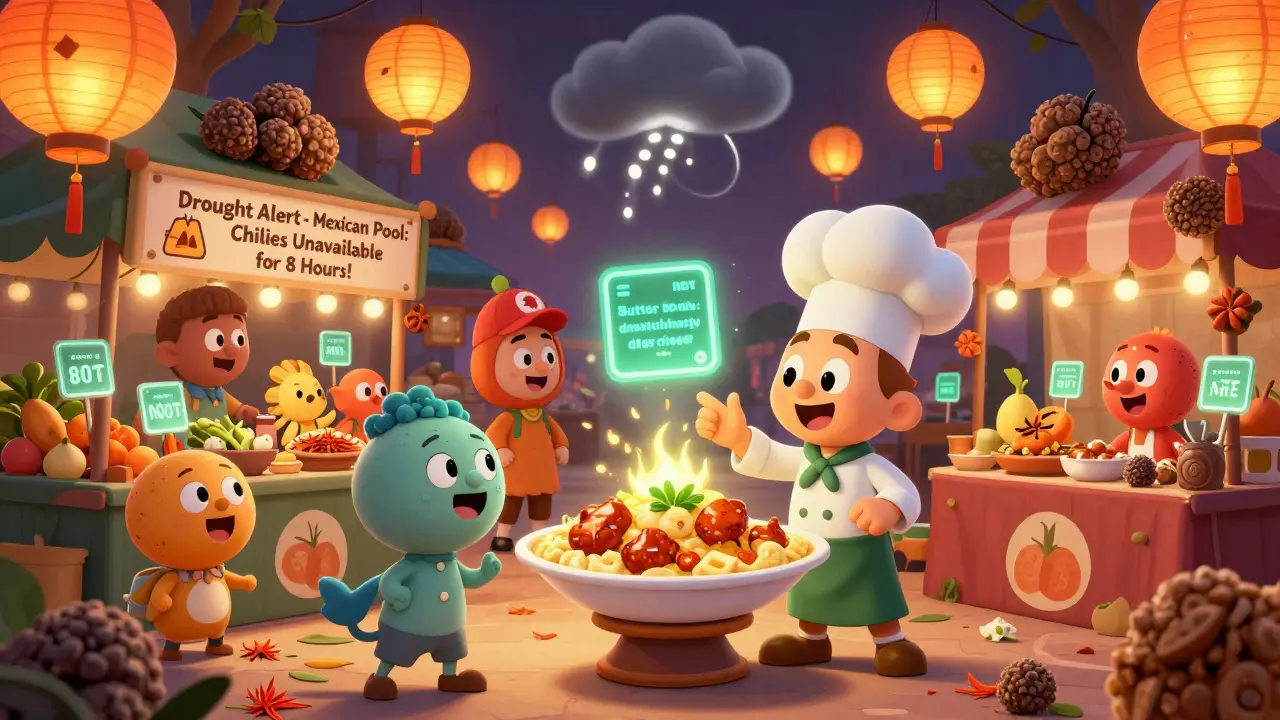
OneRare doesn’t ignore reality. The Farm has weather events. Droughts. Floods. Pest outbreaks. Global warming spikes. When one hits, certain ingredients stop spawning for hours - sometimes days. If a drought hits the Mexican pool, chili peppers vanish. Supply drops. Price spikes in the Farmer’s Market.
This isn’t just flavor. It’s economics. Players watch the weather alerts like stock traders. If you’ve got a stockpile of onions and a tornado’s coming for the Indian pool, you might hold off on selling. Or buy up garlic before the pest attack wipes it out. The system mirrors real food supply chains - and it’s surprisingly tense.
Chefs, Restaurants, and Real-World NFTs
OneRare isn’t just a game. It’s a collaboration engine. They’ve partnered with real chefs and restaurants to drop exclusive NFTs. You won’t find these in the Farm. You get them by winning games, trading, or special events.
Confirmed partners include:
- Saransh Goila (Indian cuisine icon)
- Zorawar Kalra (Michelin-starred Indian chef)
- Anthony Sarpong (Michelin-starred chef from Ghana)
- Reynold Poernomo (MasterChef Australia finalist)
- Several U.S.-based restaurant chains
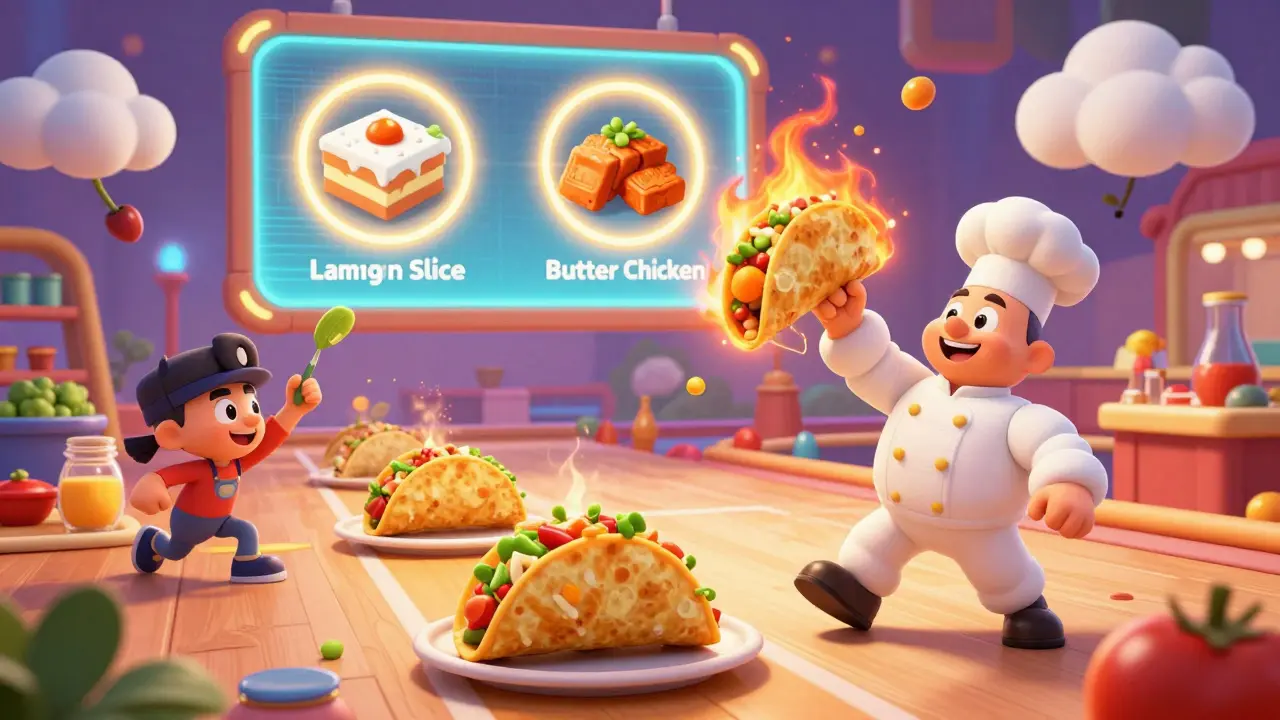
These chefs have minted NFTs of their signature dishes - think Goila’s Butter Chicken or Poernomo’s Lamington Slice. These aren’t just digital collectibles. They’re digital certificates of culinary legacy. Some are rare. Some are limited. Some can only be unlocked by winning a specific mini-game.
Why No Airdrop? And Why That’s Okay
You might wonder: Why no airdrop? Why make people stake tokens instead of giving them away?
Because OneRare isn’t trying to attract speculators. It’s trying to build a living food culture. Airdrops attract people who want free stuff and leave when the next one drops. Staking attracts people who want to play, cook, trade, and stay.
Think of it like a farmers market that only lets you in if you’ve invested in the land. You’re not just buying a product. You’re becoming part of the ecosystem. The ingredient NFTs have value because they’re earned, not given. And because they’re tied to real culinary traditions, they carry meaning.
There’s no hype cycle here. No pump-and-dump. Just a slow, steady game where your knowledge, patience, and strategy matter more than your wallet size.
How to Start Today
If you want to get into OneRare, here’s what to do:
- Get a Polygon-compatible wallet (MetaMask or Trust Wallet work).
- Buy some MATIC (Polygon’s native token) and swap it for ORARE on a DEX like QuickSwap or SushiSwap.
- Go to onerare.io and connect your wallet.
- Choose a farming pool (start with Italian or Mexican - they’re popular and stable).
- Stake your ORARE. Wait. See what you get.
You don’t need a lot. 50 ORARE is enough to start. You’ll get your first ingredient NFT within 24 hours. From there, it’s up to you. Cook. Trade. Play. Learn.
What You Can’t Do
Don’t expect to:
- Get free NFTs without staking
- Choose which ingredient you farm
- Undo a dish once you’ve cooked it (ingredients burn)
- Trade dish NFTs for cash on the platform (they’re for use in-game, not fiat)
OneRare isn’t a crypto casino. It’s a digital food lab. Treat it like one, and you’ll enjoy it.
Where This Is Headed
OneRare is already talking about expanding to AR cooking experiences, real-world restaurant partnerships (think ordering a dish in Tokyo and getting its NFT version), and even NFT-based food education. Imagine learning to make sushi by playing the game - and earning your NFT certification.
The long-term vision? A decentralized global food culture, preserved and shared through blockchain. Not as a meme. Not as a flip. But as something real - and delicious.
Is there a OneRare Ingredient NFT airdrop right now?
No, there is no active ingredient NFT airdrop for OneRare. Ingredient NFTs are earned by staking ORARE tokens in the Farm zone of the Foodverse. They are distributed randomly every hour based on your stake - not given for free.
How do I get ORARE tokens?
Buy ORARE on decentralized exchanges like QuickSwap or SushiSwap using MATIC (Polygon’s token). You’ll need a Web3 wallet like MetaMask or Trust Wallet connected to the Polygon network.
Can I farm specific ingredients like garlic or saffron?
No. Each farming pool emits randomized ingredients. You can’t choose what you get. Saffron and other rare ingredients are only available for purchase in the Farmer’s Market - not through farming.
What happens when I cook a dish?
When you cook a dish, the ingredient NFTs you used are permanently burned. You can’t get them back. But you earn a Dish NFT, which you can trade, use in mini-games, or display in your profile.
Are OneRare NFTs worth anything?
Yes - but not in the way you think. Ingredient NFTs have value based on scarcity and weather events. Dish NFTs tied to celebrity chefs are rarer and more collectible. Their value comes from use in the game and cultural significance, not speculation.
Can I play OneRare without spending money?
No. You need ORARE tokens to stake and farm. There’s no free-to-play mode. But you can start with as little as 50 ORARE. The game rewards patience and strategy, not large investments.
Althea Gwen
December 2, 2025 AT 13:41Steve Savage
December 3, 2025 AT 11:10Joe B.
December 4, 2025 AT 01:30Tatiana Rodriguez
December 5, 2025 AT 10:18justin allen
December 6, 2025 AT 04:25samuel goodge
December 7, 2025 AT 03:36Durgesh Mehta
December 8, 2025 AT 11:50Sarah Roberge
December 9, 2025 AT 22:33Jess Bothun-Berg
December 11, 2025 AT 12:05Nora Colombie
December 13, 2025 AT 11:26Mani Kumar
December 14, 2025 AT 10:02Sharmishtha Sohoni
December 16, 2025 AT 06:23Rod Filoteo
December 16, 2025 AT 15:28Layla Hu
December 17, 2025 AT 20:09Greer Dauphin
December 17, 2025 AT 22:50Bhoomika Agarwal
December 19, 2025 AT 05:39Katherine Alva
December 19, 2025 AT 14:50