 Aug, 18 2026
For years, the financial sector crypto prohibition in Qatar has been one of the strictest in the Gulf region. If you are a trader or investor looking for local exchange options, the answer is still no. The ban isn't just a rumor; it is law. Since February 2018, the Qatar Central Bank (QCB) is the central banking authority responsible for monetary policy and financial stability in Qatar has explicitly stopped banks from touching cryptocurrencies. Then, in December 2019, the Qatar Financial Centre Regulatory Authority (QFCRA) is the regulatory body overseeing the Qatar Financial Centre, ensuring compliance with international standards tightened the screws, banning virtual asset services within the Qatar Financial Centre (QFC) is an international financial center located in Doha that offers a common law legal framework. So, why does this matter to you? Because while your neighbors in Dubai or Bahrain can trade Bitcoin freely, Qatari institutions cannot. But there is a twist. In September 2024, the rules changed slightly. The door closed on coins but opened for tokens.
The Legal Basis: From Total Ban to Regulated Tokenization
To understand where we stand in August 2026, we have to look at the two key documents that define the landscape. First, there is Circular No. (6) of 2018 from the QCB. This document told all licensed financial institutions in Qatar to stay away from crypto. It wasn't a suggestion; it was a directive. Second, the QFCRA Alert of 2019 expanded this ban to the QFC jurisdiction. It prohibited exchanging virtual assets for fiat, transferring them, and even safekeeping them. At that point, if you were a bank in Doha, holding a customer's Ethereum was practically illegal.
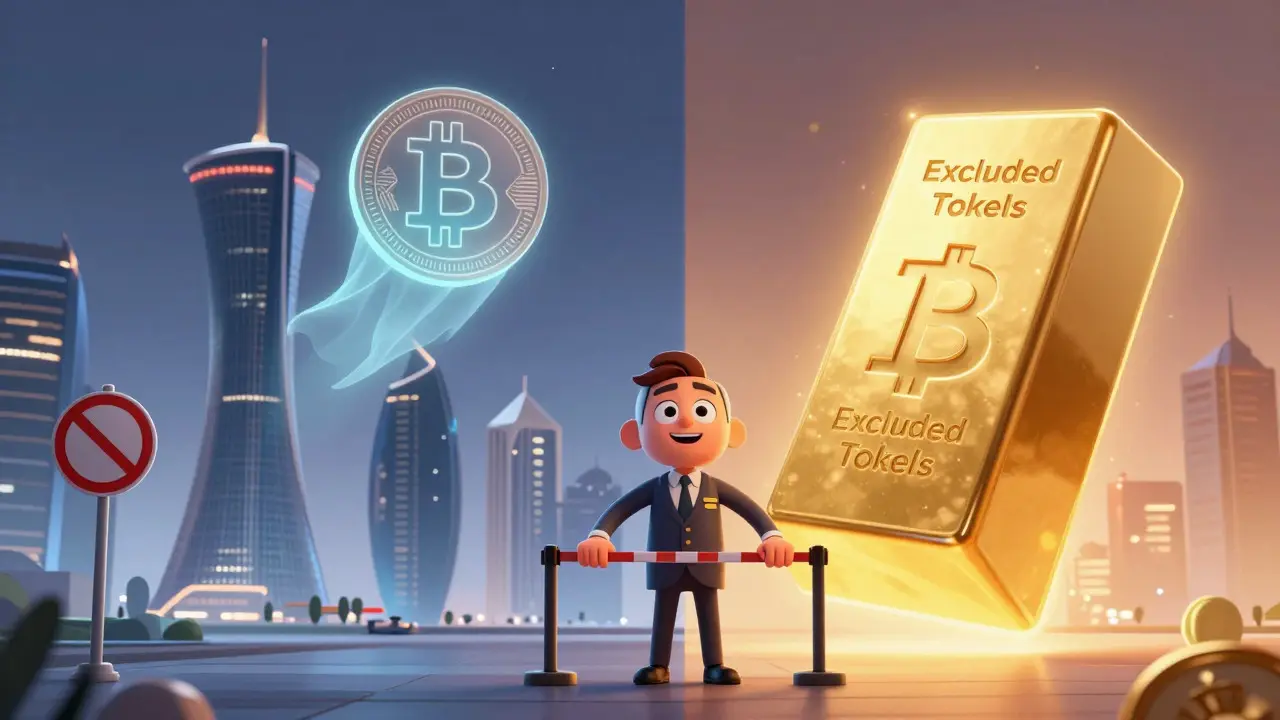
However, the story didn't end there. On September 1, 2024, the QFC Authority and QFCRA launched the QFC Digital Assets Regulations 2024 is a legal framework allowing the tokenization of real-world assets while excluding speculative cryptocurrencies. This is the game-changer. The new rules create a specific category called "Excluded Tokens." These are assets that don't represent a right to property or act as a substitute for currency. In plain English, this means cryptocurrencies are digital assets like Bitcoin and Ethereum that are volatile and not backed by physical goods, stablecoins, and central bank digital currencies remain banned. But everything else? That's fair game. You can now tokenize a building, a bond, or a piece of art. The distinction is crucial: you can own a digital share of a real estate tower, but you can't buy a Bitcoin on a local exchange.
What Counts as Banned vs. Allowed?
Confusion often arises here, so let's break it down. The regulations draw a hard line between "speculative" assets and "utility" assets. If an asset exists solely to be traded for profit based on market sentiment, it's likely banned. If it represents ownership or a claim on something tangible, it's allowed.
| Asset Type | Status in Qatar | Reasoning |
|---|---|---|
| Bitcoin (BTC) | Prohibited | Falls under 'Excluded Tokens'; no underlying asset value |
| Ethereum (ETH) | Prohibited | Falls under 'Excluded Tokens'; speculative nature |
| USDT / USDC (Stablecoins) | Prohibited | Considered substitutes for currency/payment means |
| Tokenized Real Estate | Permitted | Represents ownership rights in physical property |
| Sukuk (Islamic Bonds) | Permitted | Regulated financial instrument with clear cash flows |
| Commodity Tokens | Permitted | Backed by physical commodities like gold or oil |
This distinction allows Qatar to embrace blockchain technology without taking on the volatility risks associated with crypto markets. For institutional investors, this means you can use smart contracts to settle trades faster, but you can't use them to speculate on price movements of unbacked coins.
How Qatar Compares to Its Neighbors
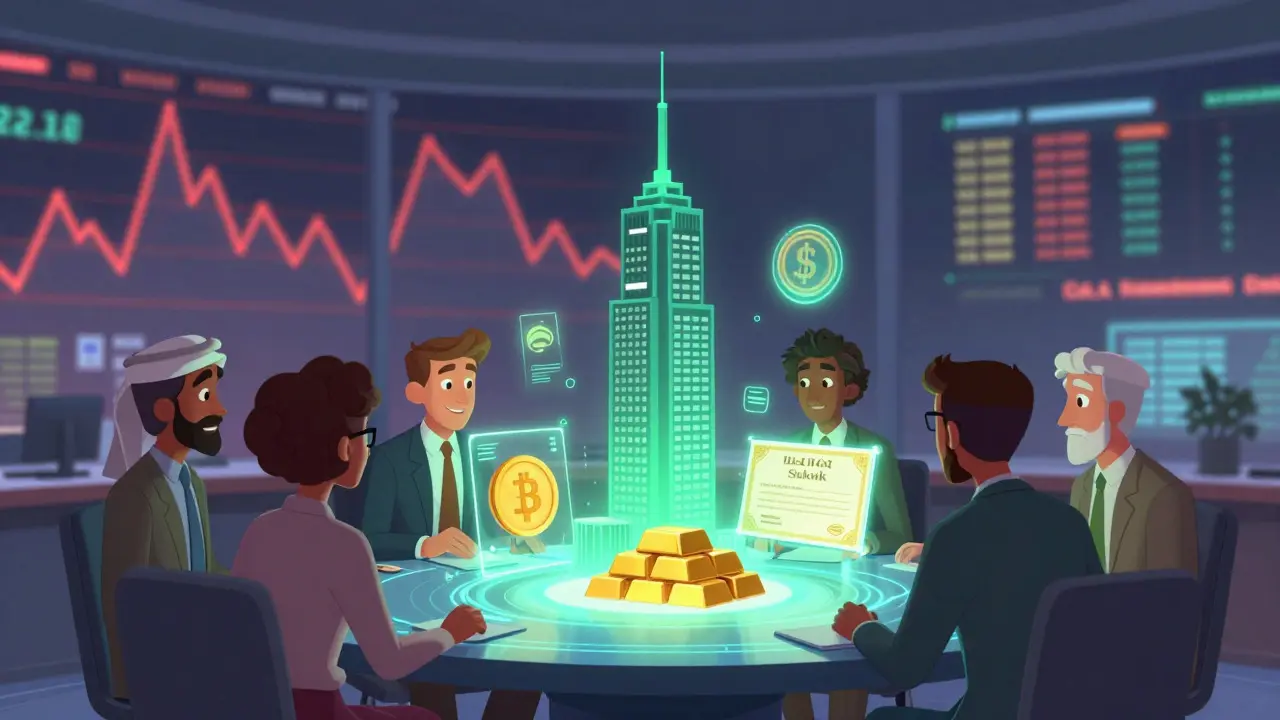
If you look across the Gulf Cooperation Council (GCC) is a political and economic union of Arab states bordering the southern coast of the Persian Gulf, the picture varies wildly. The United Arab Emirates (UAE) is a federal state in Western Asia known for its progressive approach to cryptocurrency regulation via VARA has gone full throttle. With the Virtual Assets Regulatory Authority (VARA) in Dubai, the UAE captures about 68% of the region's crypto trading volume. It’s a hub for exchanges and startups. Bahrain followed suit early, launching a crypto-asset module in 2019 that licenses exchanges. Saudi Arabia sits in the middle, having issued a framework in 2023 but not yet fully licensing retail exchanges.
Qatar, along with Kuwait, remains at the conservative end. Kuwait actually maintains a comprehensive ban on almost everything, including mining and payments. But Qatar has softened slightly by creating this niche for tokenization. Is this better or worse than the UAE model? It depends on who you ask. Dr. Ibrahim Al-Hashimi, a finance professor at Qatar University, argues that Qatar understands the difference between speculation and utility. He believes this aligns with the country’s conservative financial tradition. On the other hand, critics like blockchain consultant Ahmed Mansoor argue that by banning stablecoins, Qatar is missing out on liquidity mechanisms that could help its tokenized markets grow. The Financial Stability Board (FSB) is an international standard-setter and coordinator for financial stability issues has noted that this exclusion creates fragmentation between traditional and emerging markets. Still, for those prioritizing stability over hype, Qatar’s approach makes sense.
The Reality on the Ground: Costs and Compliance
Let’s talk numbers. If you are a business trying to operate in this new tokenization space, it’s not cheap. As of early 2025, setting up a compliant operation costs around QAR 850,000 (roughly $233,500 USD). You’re looking at a 6-to-8-month timeline for full compliance. That’s a significant barrier for small players. According to a survey by OneEquity, 63% of compliance officers said they needed specialized blockchain training. That tells you how steep the learning curve is. It’s not just about knowing the law; it’s about understanding the tech.
But is it working? Early signs are positive. Barwa Real Estate Company tokenized a QAR 150 million commercial property in Q1 2025. The result? Settlement times dropped from 30 days to just 48 hours. That’s a massive efficiency gain. However, retail investors are frustrated. On Reddit’s r/CryptoQatar forum, users complain about having to use offshore exchanges, which adds about 2.5% more in fees and KYC hurdles per transaction. For a casual trader, that’s annoying. For an institution, it’s manageable. As of March 2025, only 12 businesses had registered under the new framework, but the QFC received 47 formal inquiries from international asset managers. The interest is there, but the adoption is slow. Why? Because the rules are strict, and the costs are high. It’s a controlled environment, not a free-for-all.
Future Outlook: Will the Ban Lift?
Many people ask: will Qatar ever allow Bitcoin? The short answer is probably not anytime soon. Industry analysts project the prohibition on cryptocurrencies will hold through 2030. Instead, the focus is on expanding the tokenization framework. The QFC’s 2025-2027 roadmap includes carbon credits, intellectual property rights, and even art collections as potential targets. This suggests Qatar wants to be a hub for institutional-grade digital assets, not a playground for day traders.
There is pressure, though. A February 2025 survey by Qatar University found that 68% of citizens aged 18-35 support limited legalization of crypto. That’s a lot of young people wanting access. The government is listening, but cautiously. Governor Sheikh Bandar bin Mohammed Al Thani of the QCB stated in January 2025 that the priority is investor protection and financial system stability. Until the global crypto market matures further, Qatar is likely to stick to its strategy: keep the coins out, bring the tech in. For now, if you want to invest in crypto from Qatar, you’ll need to look offshore. But if you’re an institution looking to tokenize real assets, Doha might just be the place to be.
Frequently Asked Questions
Is Bitcoin legal in Qatar in 2026?
No, Bitcoin is not legal for trading or investment by financial institutions in Qatar. It falls under the category of 'Excluded Tokens' defined in the QFC Digital Assets Regulations 2024, which prohibits assets that do not represent a right in any property or act as a substitute for currency.
Can I buy cryptocurrency using a Qatari bank card?
It is risky and often blocked. While not always explicitly forbidden for individuals in every single transaction context, the QCB circular prohibits financial institutions from engaging with crypto. Many Qatari banks block transactions to foreign crypto exchanges. Using offshore platforms is the common workaround, but it comes with higher fees and compliance hurdles.
What is the difference between crypto and tokenization in Qatar?
Crypto refers to unbacked digital currencies like Bitcoin, which are banned. Tokenization refers to representing real-world assets (like real estate or bonds) on a blockchain. Tokenized assets are permitted because they have underlying value and are regulated under the QFC framework, offering legal recognition of ownership rights.
Are stablecoins like USDT allowed in Qatar?
No, stablecoins are currently classified as 'Excluded Tokens' and are prohibited. The QFCRA considers them substitutes for currency or means of payment, placing them in the same restricted category as cryptocurrencies and central bank digital currencies.
How much does it cost to start a tokenization business in the QFC?
As of 2025, the average setup cost for a compliant tokenization operation is approximately QAR 850,000 (around $233,500 USD). The process typically takes 6 to 8 months for full compliance implementation, including legal opinions and technical specifications.
Aaron Morrissey
August 20, 2026 AT 02:45It is a most magnificent spectacle to observe how the rigid walls of tradition are slowly, yet surely, crumbling under the weight of technological inevitability. One cannot help but marvel at the sheer audacity of this regulatory framework, which seeks to cage the wild spirit of digital finance within the polite confines of 'utility' and 'ownership'. It is a delicate dance, a high-wire act performed on the precipice of financial stability and innovation, where every step must be calculated with exquisite precision. The notion that we can separate the speculative from the substantive is perhaps the most beautiful illusion in modern economics, a shimmering mirage in the desert of market volatility. Yet, here they stand, holding fast to their definition of value, refusing to let the ghost of Bitcoin haunt their banking halls. It speaks volumes about the cultural psyche of a nation that prioritizes order over chaos, structure over freedom. The transition from total prohibition to regulated tokenization is not merely a legal update; it is a philosophical shift, a redefinition of what money means in the twenty-first century. We are witnessing the birth of a new era, one where the intangible becomes tangible through the alchemy of blockchain code. It is a story written in the language of risk management and asset backing, a narrative that will echo through the corridors of global finance for decades to come.
Patrick Quairoli
August 20, 2026 AT 19:26its all a big con job by the banks to keep us poor while they tokenize their own real estate. you know they are hiding something. the feds dont want you to have free money so they ban btc. its all about control. wake up sheeple. the qatar govt is just playing along with the deep state. look into the circular no 6. its a psyop. they want you to buy tokens of buildings instead of owning your own wealth. classic. the rich get richer by making compliance expensive. $233k to start? lol. only for the elites. the rest of us are stuck using offshore scams. its a rigged game. trust no one. especially not the central bank guys. they are all in on it. the stablecoin ban proves it. they hate liquidity. they want you trapped in fiat. stay woke. the truth is out there. probably in a server farm in doha. or maybe not. who knows. conspiracy everywhere. crypto is the only way out but they block it. genius plan if you ask me. terrible for us though. oh well. carry on.
Shawn Schaerer
August 22, 2026 AT 17:47One must consider the profound philosophical implications of such a bifurcated market structure. Is an asset truly valuable if its worth is derived solely from collective belief rather than intrinsic utility? This distinction between 'speculative' and 'utility' assets is not merely a regulatory convenience; it is a fundamental assertion about the nature of value itself. In a world where information is abundant, scarcity becomes the primary driver of price, and Qatar has chosen to regulate scarcity by banning the unbacked. This is a bold move, akin to declaring that only physical gold holds weight, while air is worthless. However, the cost of entry-QAR 850,000-is a significant barrier that effectively creates a two-tiered system: the institutional elite who can afford compliance, and the retail masses who are relegated to the shadows of offshore exchanges. This dichotomy raises questions about equity and access. Are we creating a financial aristocracy? Or are we protecting the common man from the ravages of volatility? The answer, as always, lies in the balance between protection and opportunity. We must remain vigilant, ensuring that the door to innovation remains open, even if the gatekeepers demand a hefty toll. The future belongs to those who understand the mechanics of this new paradigm. Do not sleep on the details. Read the regulations. Understand the law. Empower yourself with knowledge.
Hicham Mounir
August 24, 2026 AT 00:43Man, reading this made me feel like I was watching a slow-motion car crash in slow motion. Like, seriously? They banned the coins but let you tokenize a building? That feels so... specific. And expensive. Who has $233k just to set up a shop? It’s almost poetic in its exclusivity. You can’t buy a single satoshi of Bitcoin, but you can buy a digital slice of a skyscraper. It’s like saying you can’t eat the cake, but you can buy a picture of the cake. For the little guy, it’s frustrating. I get that they want stability, sure. But does it really need to be this hard? The 6-8 month timeline sounds like a nightmare for any small startup trying to break in. It’s all very polished and official, but it leaves a lot of people feeling left out in the cold. Maybe it’s for the best? Maybe it keeps the rug pulls away. But it also feels like it’s locking the door on anyone without deep pockets. Just my two cents. Hope they find a way to make it more accessible eventually. It’s a tough spot to be in, being a trader in Doha right now. Feels like being stuck in a glass box. Pretty view, but you can’t touch anything.
Sarah Campbell
August 25, 2026 AT 11:19Ugh why do they have to be so difficult?? 😤🇶🇦📉 It's like they don't get it! Everyone else is moving forward and they're still stuck in the past! 🙄💸 My cousin lives there and he's so mad about it too. He says it's unfair! Why can't we just buy BTC like normal people? 😡🚫 It's so annoying having to use offshore sites. Fees are crazy! 💰😫 And the KYC stuff is a pain. I just want to invest! Why is it so hard? 🤯📉 The government should listen to the young people! 68% support it! That's a lot! 🗳️❤️ Stop being so conservative! Let us trade! 🚀💎 It's not rocket science! Just let it happen! Please! 🙏✨ #CryptoFreedom #QatarBanSucks
Phelan Deihl
August 25, 2026 AT 15:36I think the comparison to UAE is interesting but maybe a bit misleading. Different cultures, different risks. Qatar is smaller, more centralized. A blowup in their financial sector would hurt them more relatively speaking. So the caution makes sense. Not necessarily bad, just different. The tokenization angle is neat though. Real estate settlement in 48 hours is actually pretty cool tech-wise. If they can scale that, it might change how property works in the region. But yeah, for the average person wanting to hold ETH, it's still a dead end. Just gotta use foreign apps. Annoying but manageable if you're not trading daily. The cost of compliance is definitely the killer factor for new entrants. Probably why adoption is slow. Only big players can play. Which brings us back to the inequality thing. But maybe that's the price of stability. Hard to say if it's worth it in the long run. Time will tell. Probably won't change much before 2030 anyway. So just wait it out I guess. Or move to Dubai if you really care about crypto. But then you lose the local connections. Trade-offs everywhere. Life is complicated.
michelle aguilar
August 27, 2026 AT 07:05Oh, how delightfully provincial.
One simply cannot imagine the audacity of a nation attempting to legislate the very nature of value.
It is, after all, a quaint effort to pin down the ethereal with the clumsy hands of bureaucracy.
And yet, here we are, observing this charming little experiment in financial conservatism.
How endearing, really, that they believe a building is more real than a blockchain.
The pretension of it all is simply overwhelming.
They speak of stability, of course, as if volatility were a disease to be cured, rather than a feature to be embraced.
It is a tragic misunderstanding of the modern world, dressed up in the rags of tradition.
One wonders if they have ever even touched a cryptocurrency, or if they merely read about it in a glossy magazine.
But then, who could expect depth from those who prefer the safety of the known?
It is a shallow pond, indeed, and we are all wading through it with great difficulty.
Perhaps next year they will decide that air is also a commodity, and charge us for breathing.
Until then, let us admire their effort, however futile it may be.
Truly, a masterpiece of regulatory confusion.
Don't you agree?
Lance Konig
August 27, 2026 AT 09:39The argument that stablecoins are 'substitutes for currency' is legally sound but economically naive. By banning USDT/USDC, Qatar removes the primary mechanism for hedging against inflation and facilitating cross-border payments without FX friction. This creates a fragmented ecosystem where tokenized assets lack the liquidity rails necessary for a robust secondary market. The 47 inquiries from international managers suggest interest, but without a payment layer, these assets become illiquid paperweights. The QFC roadmap mentions carbon credits and IP rights, which are excellent use cases, but they require a standardized, low-cost settlement layer. Without stablecoins, they will likely rely on traditional bank transfers for settlement, negating the speed benefits of the blockchain itself. The 2.5% fee penalty for offshore trading is a tax on inefficiency, further discouraging retail participation. This is a self-inflicted wound. The technology is ready; the regulation is lagging behind the economic reality. It is a case of perfect form and imperfect function. The result is a market that looks sophisticated on paper but struggles in practice. The key is to decouple payment utility from monetary sovereignty concerns. Allow the tokens, restrict the banks. That is the path forward. Anything else is just bureaucratic theater.
Dina Lazarova
August 28, 2026 AT 20:41One observes, with a certain weary detachment, the predictable unfolding of this regulatory saga. The prose is dense, the figures are precise, and the outcome is, quite predictably, status quo ante. To suggest otherwise would be to ignore the inertia of institutional power. The 'twist' of September 2024 is hardly a twist; it is a minor concession to the inevitable march of technology, wrapped in the familiar language of prudence. The cost of entry, QAR 850,000, serves its intended purpose: to ensure that only the well-capitalized enter the arena. This is not a flaw; it is a feature. It preserves the sanctity of the financial center from the chaotic whims of the retail investor. The comparison to the UAE is instructive, if somewhat superficial. Dubai sells dreams; Doha sells security. Both models have their merits, but for the serious institution, security often trumps volume. The future outlook, projecting the ban through 2030, is a reasonable estimate given the political landscape. There is no urgency to change, only a gradual adaptation. The young people's desire for crypto is noted, but rarely acted upon by those in power. It is a cycle that repeats across nations. We watch, we analyze, and we wait. The ball is in their court, and they will take their time. As they always do.
Walker Perry
August 30, 2026 AT 11:12they are keeping us down because they know the dollar is dying. qatar is just a puppet for the federal reserve. the ban is to stop you from escaping the fiat trap. look at the dates. 2018 ban. right when the dollar started weakening. coincidence? no. its a plan. the tokenization is just a distraction. they want you to own pieces of buildings instead of owning your own money. its all about surveillance. every transaction tracked. every asset controlled. the 68% of young people who support crypto are the enemy. they want to break the system. the system is good. the system is safe. the system is what they want. don't fight it. accept your place. the offshore exchanges are just another way to spy on you. the fees are a fine for trying to be free. wake up. the matrix is closing in. qatar is the front line. hold the line. protect the dollar. protect the status quo. the future is bright if you just follow the rules. don't ask questions. just comply. the ban will last forever. because the alternative is chaos. and they fear chaos. they fear you. stay in your lane. drive your car. pay your taxes. forget about bitcoin. it's a scam anyway. or is it? who knows. just obey.
Nia Franklin
August 31, 2026 AT 01:50oh wow!! this is such a fascinating topic!!! i love how they are trying to balance everything!!! 🌟✨ it's like a beautiful puzzle piece fitting into a larger mosaic of global finance!!! 🧩💖 the idea of tokenizing real estate is just so creative and modern!!! 🏠💻 it shows that even conservative places can adapt and grow!!! 🌱📈 i hope they continue to expand this framework to include more things like art and music!!! 🎨🎵 it would be amazing to see a whole new culture of digital ownership bloom in doha!!! 🌸👏 the costs are high but i think it's worth it for the long term!!! 💪💰 i'm so excited to see what comes next!!! 🚀🌈 let's keep the positive vibes going!!! ☀️😊 thank you for sharing this info!!! it helped me understand the nuances so much better!!! 🙏📚
Mohamed Shoaeb
August 31, 2026 AT 09:47Interesting read. The distinction between excluded tokens and permitted assets is clear. But the execution seems heavy. The 6-8 month compliance timeline is significant. It suggests a focus on quality over quantity. This might be a good thing for stability. But it slows down innovation. The Barwa example is promising. 48-hour settlement is impressive. If this scales, it could change the real estate sector. The ban on stablecoins is the biggest hurdle. Without them, liquidity is limited. International investors might hesitate. The 47 inquiries show interest. But 12 registrations is low. The gap is large. Costs are a major factor. QAR 850k is a lot for a startup. Maybe government incentives could help. The youth support is a pressure point. 68% is a strong signal. The government needs to balance tradition with progress. The UAE model is aggressive. The Qatar model is cautious. Both have pros and cons. The future will depend on global trends. If crypto matures, the ban might lift. But for now, tokenization is the way. It's a solid strategy. Not perfect. But workable. Good analysis overall. Thanks for the detailed breakdown.
Sonia Gomez Gomez
August 31, 2026 AT 21:03:) :D You really think this is fair? :) It's just a way for the rich to keep the poor down. :P The banks love it. :O They get to control everything. ;) While we struggle with fees. :| It's so unfair. :'( Why can't we just have our freedom? :@ The government doesn't care about us. :$ They only care about their profits. :X We deserve better. :o Wake up people. :/ This is a mess. :| Change is needed. :D Now. :)
SHIV SHANKAR KANTA
September 1, 2026 AT 16:11the essence of value is not in the metal nor the pixel but in the mind of the holder. qatar understands this. they seek to anchor the digital to the physical. a noble pursuit. yet the soul of the market resists. the ban is a shackle on the spirit of speculation. but perhaps speculation is a vice. perhaps stability is a virtue. we must choose. the path is narrow. the cost is high. the journey is long. but the destination is clarity. let us walk it together. with grace. with wisdom. with understanding. the future is ours to shape. but only if we listen to the wind. and the wind whispers of change. subtle. quiet. inevitable. do not resist. flow. like water. around the rocks of regulation. into the sea of opportunity. this is the way. this is the truth. this is the light. shine it. share it. spread it. let it illuminate the dark corners of the financial world. let it guide us home. to the heart of value. to the core of meaning. to the source of life. the end. the beginning. the alpha. the omega. all in one. the token. the coin. the dream. the reality. the truth. the beauty. the harmony. the peace. the joy. the love. the light. the way. the truth. the life. amen.