 Aug, 8 2026
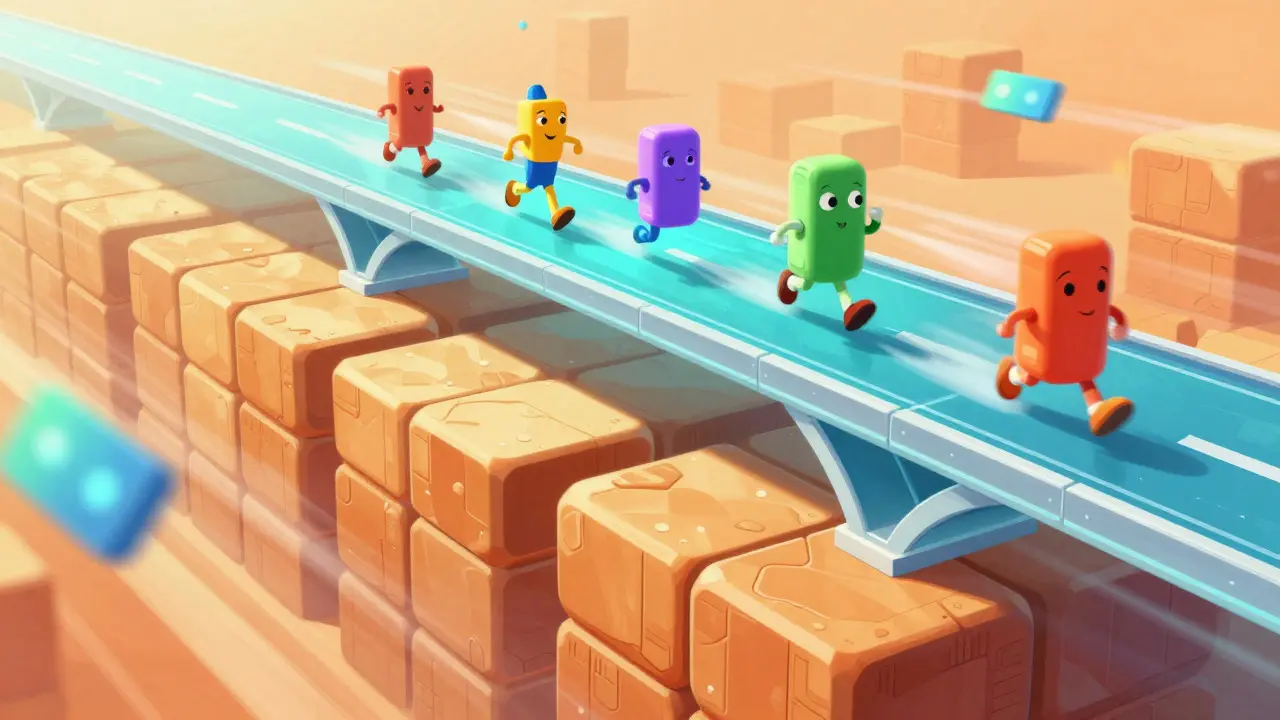
Imagine you are stuck in traffic on a single-lane highway. Every car moves at the same slow pace because there is only one path forward. Now imagine two different solutions to this problem. In the first scenario, construction crews build a massive expressway right next to the original road. Cars zip onto this new lane, bypassing the congestion entirely. In the second scenario, engineers widen the original highway, adding more lanes directly into the existing structure so all cars can move faster together.
This is exactly the dilemma facing blockchain networks today. As digital ecosystems grow, they hit a wall known as the Blockchain Trilemma, which suggests you can only have two of three things: security, decentralization, and scalability. To break this limit, developers have turned to two primary technologies: Layer 2 solutions and sharding. But which one actually works for your needs? The answer depends on whether you want a quick fix or a fundamental redesign.
Understanding Layer 2 Solutions: The Express Lane Approach
Layer 2 solutions are protocols built on top of an existing blockchain (Layer 1) to handle transactions off-chain before settling them back on the main network. Think of Layer 1 as the secure, slow-moving foundation-the judge that verifies finality-while Layer 2 acts as the busy clerk processing paperwork quickly outside the courtroom.
The most popular types of Layer 2s are rollups. There are two main varieties: optimistic rollups and ZK rollups. Optimistic rollups assume transactions are valid unless someone proves otherwise using fraud proofs. This method is easier to implement but requires a waiting period for challenges. On the other hand, ZK rollups use zero-knowledge proofs to mathematically verify every transaction instantly. While computationally heavier, they offer immediate finality and higher security guarantees.
Projects like Arbitrum, Optimism, and Polygon zkEVM dominate this space. They bundle hundreds of transactions into a single batch and submit it to Ethereum. This reduces gas fees significantly and increases speed. For example, a user swapping tokens on Arbitrum might pay pennies instead of dollars, and the transaction confirms in seconds rather than minutes. However, these solutions still rely on the underlying Layer 1 for data availability and security, meaning if Ethereum gets congested, Layer 2s can face bottlenecks too.
Demystifying Sharding: Widening the Highway
If Layer 2 adds a side road, sharding rebuilds the road itself. Sharding is a database partitioning technique applied to blockchains. It splits the entire network state into smaller pieces called shards. Each shard processes its own set of transactions and maintains its own state independently. Instead of every node validating every transaction, nodes only validate transactions within their assigned shard.
This parallel processing dramatically increases throughput. If a single chain handles 30 transactions per second (TPS), splitting it into 64 shards could theoretically allow the network to handle thousands of TPS simultaneously. The NEAR Protocol is a prime example of a blockchain built from the ground up with sharding. By distributing storage and computation across shards, NEAR claims to reduce storage costs by nearly 40% while maintaining high performance. Even if one shard experiences heavy traffic, others continue operating normally, preventing network-wide gridlock.
Ethereum’s roadmap also includes sharding components, specifically through Data Availability Sampling (DAS). While Ethereum initially focused on Layer 2s, the long-term vision involves sharding data to support thousands of rollups efficiently. This hybrid approach aims to combine the flexibility of Layer 2s with the raw capacity of sharded infrastructure.
Performance and Scalability: Speed vs. Capacity
When comparing performance, the distinction becomes clear. Layer 2 solutions provide immediate relief. They are ready now, deployed, and actively used by millions. They can boost effective throughput by 50% or more compared to the base layer, reaching up to 4,000 TPS in optimal conditions. This makes them ideal for applications needing fast, cheap transactions today, such as decentralized finance (DeFi) wallets and gaming platforms.
Sharding, however, offers deeper scalability potential. Because it changes how the core protocol operates, it doesn't just offload work-it multiplies capacity. A sharded network can scale linearly as more shards are added. For large ecosystems requiring sustained high volume, like metaverse environments or global payment rails, sharding provides a more robust foundation. Yet, implementing sharding is complex. It requires significant coordination among validators and introduces challenges in cross-shard communication, which can delay transactions if not handled correctly.
| Feature | Layer 2 Solutions | Sharding |
|---|---|---|
| Implementation Time | Immediate (already live) | Long-term (protocol upgrades required) |
| Scalability Limit | Limited by L1 data availability | Highly scalable via parallel processing |
| Security Model | Inherits from L1; relies on fraud/ZK proofs | Native protocol security; cross-shard risks |
| Cross-Chain Interaction | Requires bridges (complex/risky) | Native interaction within ecosystem |
| Cost Efficiency | Very low fees for users | Low fees, but depends on shard load |
| Best For | DeFi, NFTs, quick deployments | Large ecosystems, long-term growth |
Security Trade-offs: Trust Minimization
Security is where the philosophical differences between these approaches shine. Layer 2 solutions inherit security from their parent chain. Ethereum secures Arbitrum; Polygon secures zkEVM. This means if Ethereum remains secure, the Layer 2 is generally safe. However, this reliance creates centralization points. Sequencers (the entities ordering transactions on Layer 2) often hold significant power. If a sequencer goes rogue or fails, users may lose funds during the challenge window in optimistic rollups. ZK rollups mitigate this risk but require trusted setup ceremonies or advanced cryptographic assumptions.
Sharding distributes security differently. Each shard is secured by a subset of validators. The risk here is "single-shard attacks," where an attacker targets a specific shard with fewer validators. To counter this, protocols like Ethereum 2.0 propose random validator assignment and slashing penalties. NEAR uses a unique approach where validators rotate frequently, making targeted attacks difficult. While sharding keeps everything on-chain, reducing bridge risks, it introduces complexity in managing consensus across multiple shards. A bug in one shard could potentially affect the whole network if cross-shard dependencies aren't managed carefully.

Real-World Applications: Choosing Your Path
So, which should you choose? It depends on your project's goals. If you are building a DeFi application that needs to launch tomorrow with low fees, Layer 2 is your best bet. The ecosystem is mature, tooling is abundant, and liquidity is deep. Developers can deploy smart contracts on Arbitrum or Optimism without worrying about underlying infrastructure changes.
However, if you are designing a global-scale platform, such as a social media network or a metaverse, sharding might be superior. These applications require seamless interaction between many components. With Layer 2s, moving assets between different chains requires bridges, which are historically vulnerable to hacks. Sharding allows native cross-shard calls. NEAR demonstrates this by enabling apps on different shards to interact as if they were on the same chain, simplifying the user experience and enhancing security.
Vitalik Buterin, co-founder of Ethereum, notes that both approaches converge technically. Both use data availability sampling and proof systems. The difference lies in governance and autonomy. Layer 2s allow developers to experiment freely with custom rules, fostering innovation. Sharding enforces standardization, ensuring interoperability. The future likely holds a hybrid model: Ethereum will serve as a settlement layer for thousands of Layer 2s, supported by sharded data availability layers. This combines the agility of Layer 2s with the scalability of sharding.
Future Outlook: Coexistence and Evolution
The blockchain industry is not choosing one winner. Instead, we are seeing a layered architecture emerge. Layer 1s focus on security and data availability. Layer 2s handle execution and user interaction. Sharding optimizes data distribution. This modular design allows each component to evolve independently. As hardware improves and cryptography advances, both Layer 2s and sharding will become more efficient. Projects like Solana explore alternative scaling methods, but the trend toward modularity is undeniable.
For developers, understanding these nuances is crucial. You don't need to pick a side forever. Many projects start on Layer 2 for speed and migrate to sharded architectures as they scale. The key is aligning technology with business needs. Immediate scalability demands Layer 2. Long-term architectural integrity favors sharding. By grasping these distinctions, you can build resilient, efficient blockchain applications that stand the test of time.
What is the main difference between sharding and Layer 2?
Layer 2 solutions process transactions off-chain and settle them on the main blockchain later, acting like an express lane. Sharding splits the main blockchain itself into smaller parts (shards) that process transactions in parallel, effectively widening the highway. Layer 2 is an add-on; sharding is a structural change.
Which is more secure: Layer 2 or Sharding?
It depends. Layer 2 inherits security from its parent chain (like Ethereum), but relies on complex mechanisms like fraud proofs or ZK-proofs and third-party sequencers. Sharding offers native on-chain security but faces risks related to cross-shard communication and single-shard attacks. Generally, Layer 2 is considered safer for immediate use due to established L1 backing, while sharding requires careful protocol design.
Can Layer 2 and sharding work together?
Yes, and they likely will. Ethereum's roadmap envisions a future where sharding provides data availability for thousands of Layer 2 rollups. This hybrid approach combines the flexibility of Layer 2 execution with the massive scalability of sharded data storage, creating a highly efficient ecosystem.
Why does Ethereum prefer Layer 2 over pure sharding?
Ethereum prioritizes simplicity and security at the core level. By offloading execution to Layer 2s, Ethereum keeps its main chain lightweight and secure. Layer 2s allow for rapid innovation and experimentation without risking the stability of the base layer. Sharding was originally planned for execution but shifted to data availability to support these Layer 2s.
Is NEAR Protocol fully sharded?
Yes, NEAR Protocol uses Nightshade sharding, which dynamically adjusts the number of shards based on network demand. This allows NEAR to maintain high throughput and low fees while enabling seamless cross-shard interactions, distinguishing it from Layer 2-dependent ecosystems.