Crypto Exchange Dead: Why Exchanges Fail and What to Watch For
When a crypto exchange dead, a platform that once let users trade digital assets shuts down permanently, often leaving traders with frozen funds and no recourse. Also known as a failed crypto platform, a dead exchange isn’t just inactive—it’s vanished, with no customer support, no website updates, and often no way to withdraw your money. This isn’t rare. In 2024 alone, at least a dozen small exchanges disappeared without warning, and many more were flagged for fraud, wash trading, or outright scams.
What kills these platforms? It’s rarely one thing. Take WBF Exchange, a platform removed from Google Play and flagged for fake trading volume and delayed withdrawals. It wasn’t hacked—it was built to drain users. Same with SoupSwap, a DeFi exchange that claimed to be active on BSC but had zero trading volume, no audits, and no community by 2025. These aren’t accidents. They’re designed to look real until the money’s gone. The red flags? No public team, no real customer service, inflated volume numbers, and a complete lack of transparency. If you can’t find a single independent review that isn’t paid, walk away.
And it’s not just the small ones. Even exchanges with big names can collapse if they ignore regulation, mismanage funds, or get targeted by agencies like the SEC. The ones that survive are the ones that play by the rules, stay transparent, and keep their users’ money safe. The crypto exchange dead list grows every year—but you don’t have to be on it. Know what to look for. Check for audits, real trading volume, and whether the team is publicly identifiable. If it feels too good to be true, it probably is. Below, you’ll find real cases of exchanges that died, scams that fooled people, and the patterns that always repeat before the crash.
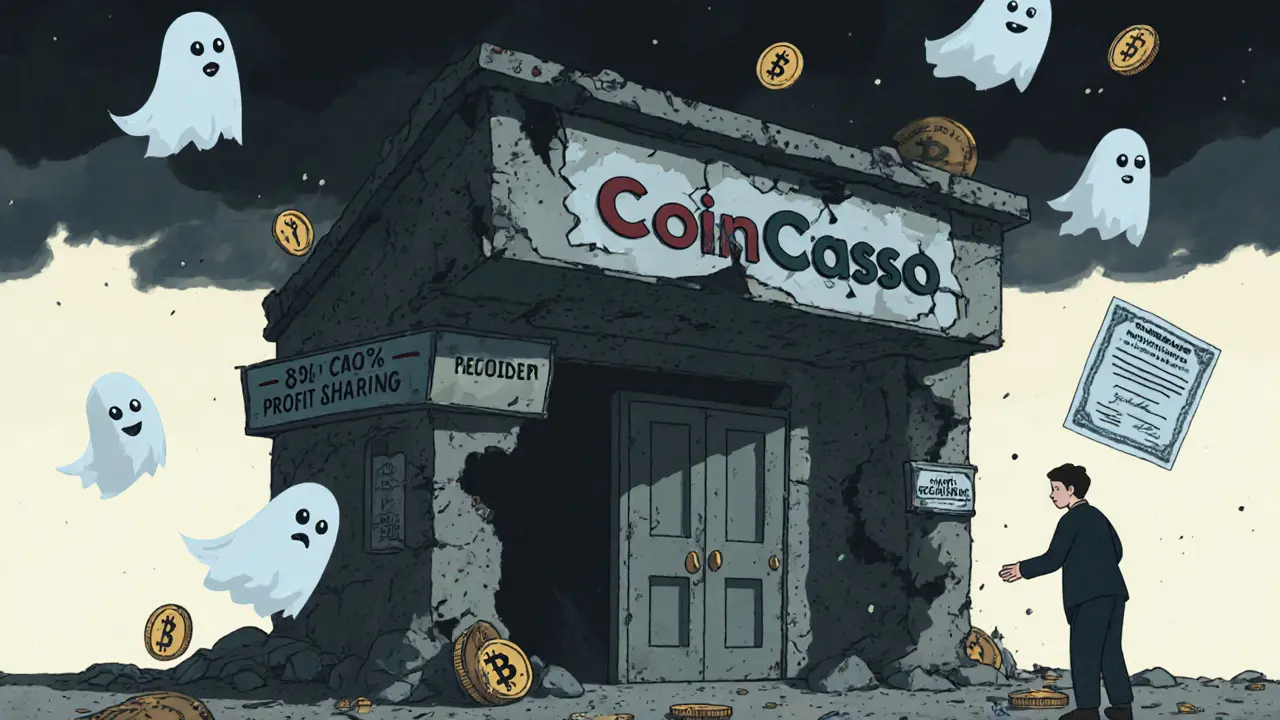
CoinCasso Crypto Exchange Review: Why This Platform Is Dead and Avoided by Experts
CoinCasso crypto exchange is a defunct and confirmed scam. Once claiming Estonian licenses and profit-sharing, it vanished in 2025 with users' funds. Learn why experts warn against it and what safe alternatives to use instead.