Developing Countries and Crypto: How Blockchain Is Changing Financial Access
When people in developing countries, nations with limited access to traditional banking and unstable local currencies turn to crypto, they’re not chasing get-rich-quick schemes. They’re solving real problems: no bank account? No problem. Inflation eating your savings? Crypto offers a lifeline. This isn’t theory—it’s happening right now in places like Nigeria, Vietnam, and Cuba, where people use Bitcoin to send money home, trade on decentralized exchanges, and even earn income through mining or airdrops.
blockchain finance, the use of decentralized ledgers to move value without banks is becoming the default for millions who can’t rely on their own governments. In Cuba, despite sanctions, citizens trade crypto legally through peer-to-peer networks. In Nigeria, where the central bank once banned banks from handling crypto, people still use it daily through WhatsApp groups and Telegram bots. cryptocurrency regulation, how governments control or ignore digital assets varies wildly—some countries ban it, others turn a blind eye, and a few, like El Salvador, make Bitcoin legal tender. The result? A patchwork of innovation where users build tools faster than laws can catch up.
What you’ll find here aren’t abstract ideas. These are real stories: how a miner in Kazakhstan replaced a shuttered Chinese operation, how a user in Argentina used a decentralized exchange to protect savings from hyperinflation, and why a dead meme coin like PUSSYINBIO is a warning sign—not a chance. You’ll see how people in places with weak financial systems use crypto exchanges like ProBit and Deliondex to access global markets, how airdrops like BUNI and VOW become income streams, and why tools like DID standards and privacy-preserving identity verification matter when you can’t trust institutions. This isn’t about speculation. It’s about survival, freedom, and building something better from the ground up.
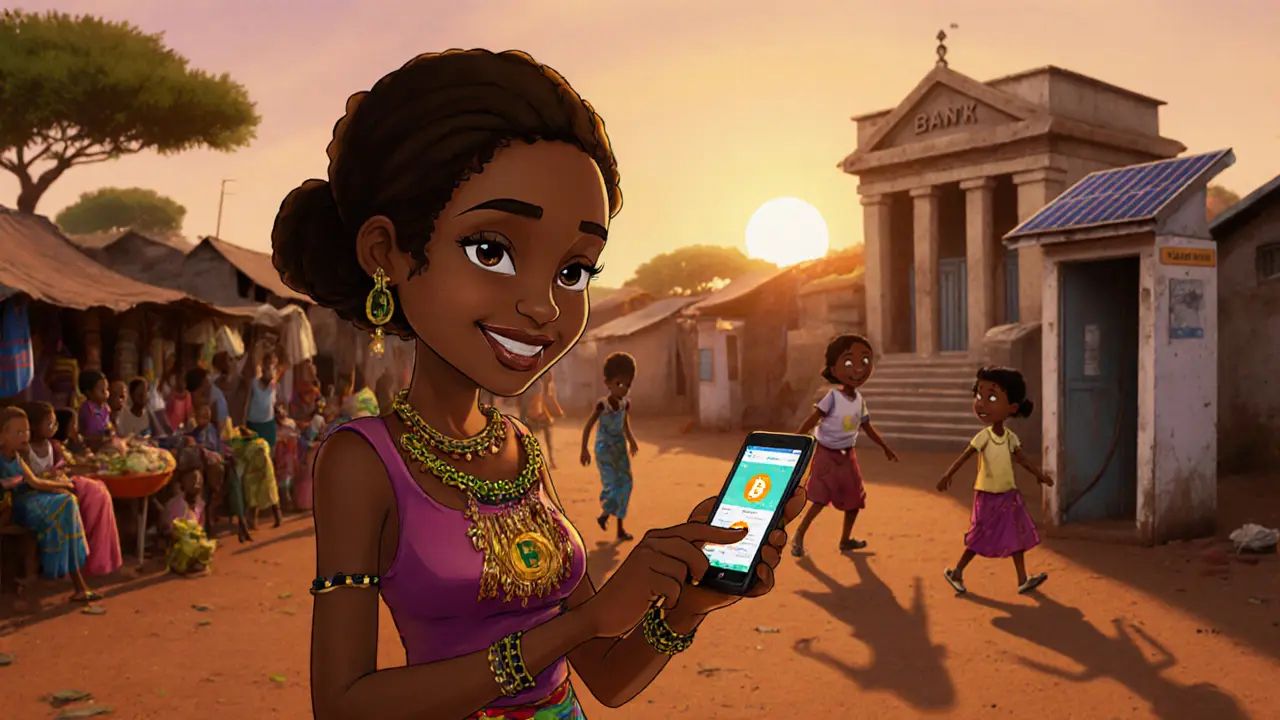
How Cryptocurrency Is Helping the Unbanked in Developing Countries
Cryptocurrency is giving millions in developing countries access to money for the first time-no bank account needed. From remittances to inflation protection, it's changing how people survive and grow.