 Jul, 19 2026
Imagine swapping tokens without waiting for confirmation or paying more than a fraction of a cent in gas. That is the promise of Uniswap v3 deployed on World Chain. For traders tired of Ethereum’s network congestion and high costs, this combination offers a compelling alternative. But does it actually deliver on its promises, or are there hidden traps? This review breaks down the real-world performance, costs, and risks of using Uniswap v3 on World Chain as of mid-2026.
The Core Problem: Why Move to World Chain?
Ethereum mainnet is powerful but expensive. During busy periods, simple swaps can cost $10 or more in gas fees, and transactions might take minutes to confirm. World Chain was launched in early 2024 specifically to solve these scalability issues. It is a Layer-1 blockchain designed for speed and low costs. By deploying Uniswap v3 here, you get the same trusted interface and security model as Ethereum, but with significantly lower friction.
The data supports this shift. According to benchmarking studies from 21Shares in July 2025, World Chain achieves block times of roughly 100 milliseconds. Compare that to Ethereum’s average transaction cost of $1.27 during normal conditions versus World Chain’s average of just $0.0003. If you are trading smaller amounts-say, under $1,000-the savings are massive. On Ethereum, fees could eat up 1% or more of your trade. On World Chain, they are negligible.
How Uniswap v3 Works on World Chain
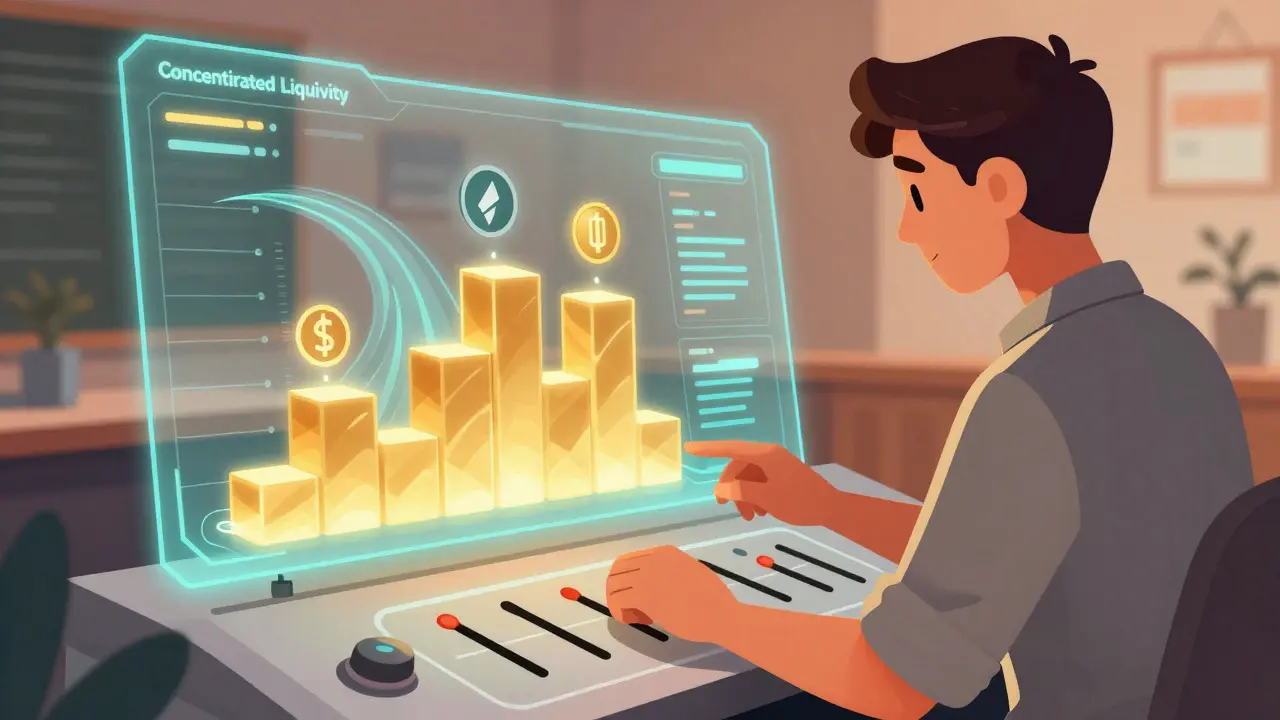
Uniswap v3 is not just a copy-paste job; it brings advanced features that change how you interact with the market. The most critical feature is Concentrated Liquidity. Unlike previous versions where liquidity was spread across all possible prices, v3 lets you deposit funds within specific price ranges. This increases capital efficiency by up to 4,000x according to Uniswap Labs’ internal testing.
For the average user, this means two things:
- Better Prices: Because liquidity is concentrated around current market prices, slippage is often lower for active pairs like USDC.E/WETH.
- Higher Yields for Providers: If you provide liquidity, you earn more fees because your money is working harder. However, this comes with higher complexity and risk.
Another key feature is Range Orders. You can deposit a single token (like ETH) and set a target price range. If the market hits that range, your tokens are swapped automatically. This acts like a limit order but allows you to earn swap fees while waiting. Data from Evacodes shows that range orders accounted for 22% of all liquidity positions on World Chain in June 2025, proving their popularity among savvy traders.
Performance and Costs: The Real Numbers
Let’s look at the hard metrics. As of July 2025, Uniswap v3 on World Chain processes approximately $6.44 million in daily trading volume. While this seems small compared to Ethereum’s billions, it represents 92% of all DEX volume on World Chain. This dominance suggests that serious users on this chain prefer Uniswap over competitors.
| Metric | World Chain | Ethereum Mainnet |
|---|---|---|
| Average Gas Fee | $0.0003 | $1.27 (normal) |
| Block Time / Finality | ~100ms | ~12 seconds |
| Transaction Speed | 47x faster | Baseline |
| Total Value Locked (TVL Share) | 0.8% of Uniswap Total | 42.3% of Uniswap Total |
| Primary Use Case | Retail trading, frequent swaps | Institutional, large-cap assets |
The fee structure on Uniswap v3 is flexible, offering three tiers: 0.05%, 0.30%, and 1.00%. Most stablecoin pairs (like USDC/DAI) use the 0.05% tier due to low volatility. Volatile pairs like ETH/USDC typically sit at 0.30%. This flexibility allows the protocol to accommodate different asset types efficiently.
User Experience: Is It Easy to Use?
If you have used Uniswap before, the interface will feel familiar. You connect your wallet (MetaMask works seamlessly), select World Chain from the network dropdown, and start swapping. For basic trades, the learning curve is minimal. A survey by Milk Road found that 92% of users completed their first trade within 15 minutes.
However, providing liquidity is a different story. Setting optimal price ranges requires understanding market dynamics. Boxmining reported that 68% of novice liquidity providers on World Chain earned 30-50% less than professionals because they chose poor price ranges. If you plan to provide liquidity, expect to spend 8-12 hours learning the mechanics before you see consistent returns.
Common complaints from users include:
- Price Feed Issues: During periods of low liquidity, price feeds can be inaccurate, affecting 17% of swaps according to Uniswap error logs.
- Lack of Education: Many users feel overwhelmed by the concept of impermanent loss and range management. Dedicated guides for World Chain are scarce.
Security and Regulatory Risks
Security is paramount in DeFi. Uniswap’s core code is battle-tested, having been audited extensively since its launch in 2018. However, deploying it on a newer chain like World Chain introduces new variables. Cybersecurity expert Alex Thorn noted in April 2025 that rapid deployment on new chains sometimes outpaces comprehensive security audits. While no major exploits have occurred on World Chain yet, the risk remains higher than on Ethereum.
Regulatory uncertainty is another concern. World Chain’s legal status is ambiguous in many jurisdictions. Unlike Ethereum, which has faced direct scrutiny from the SEC, World Chain operates in a gray area. CoinLaw reports that 67% of professional users are concerned about potential compliance risks. If regulations tighten, access to World Chain-based services could be restricted.
Who Should Use Uniswap v3 on World Chain?
This platform is ideal for:
- Retail Traders: Those making frequent, smaller trades who want to avoid high gas fees.
- Arbitrageurs: Users looking to exploit price differences between chains with low transaction costs.
- Experienced Liquidity Providers: Individuals who understand concentrated liquidity and want to maximize yields on emerging networks.
It is less suitable for:
- Beginners: The complexity of v3 liquidity provision can lead to significant losses if misunderstood.
- Institutional Investors: With only 0.8% of total Uniswap TVL, the depth may not support very large orders without slippage.
Future Outlook: What’s Next?
Uniswap v4 is scheduled to launch on World Chain in Q1 2026. This upgrade will introduce hooks and singleton deployment, potentially increasing capital efficiency by another 300%. Additionally, Uniswap governance approved a $2.5 million incentive program in July 2025 to boost liquidity on World Chain. If World Chain gains broader adoption and enters the top 10 blockchains by network value, Uniswap v3’s volume could grow exponentially. However, if the chain fails to attract developers, this implementation could remain a niche tool.
Is Uniswap v3 on World Chain safe to use?
The Uniswap smart contracts are well-audited and secure. However, World Chain is a newer network, so there is slightly higher risk compared to Ethereum. Always verify contract addresses and use hardware wallets for large amounts.
How do I add World Chain to MetaMask?
Go to Settings > Networks > Add Network. Enter Chain ID 4328, RPC URL https://worldchain.drpc.org, and Symbol WORLD. Ensure you have some native WORLD tokens for gas fees.
What are the gas fees on World Chain?
Gas fees are extremely low, averaging around $0.0003 per transaction. This makes it ideal for frequent trading and small-value swaps.
Can I provide liquidity on Uniswap v3 World Chain?
Yes, but it requires knowledge of concentrated liquidity. You must set price ranges for your assets. Novice providers often earn less due to suboptimal range selection.
How does Uniswap v3 compare to PancakeSwap on BNB Chain?
Uniswap v3 offers better capital efficiency through concentrated liquidity. PancakeSwap often has higher TVL due to farming incentives, but Uniswap provides more advanced tools for sophisticated traders.