 Aug, 14 2026
Remember the days when sending money across borders took three business days and cost a fortune? Now, imagine doing it in seconds for less than a penny. That’s the promise of decentralized finance (DeFi), and Venus Protocol is one of the heavy hitters in this space. But here is the real question: after years of hype, hacks, and market crashes, is Venus still a safe place for your crypto in 2026?
I’ve spent countless hours testing wallets, tracking gas fees, and diving into smart contract audits. If you are looking to earn yield on your idle assets or borrow against your holdings without a bank breathing down your neck, Venus might be on your radar. However, it is not as simple as clicking a button. There are risks, mechanics, and hidden costs you need to understand before you connect your wallet.
What Exactly Is Venus Protocol?
Let’s strip away the jargon. Venus Protocol is an algorithmic money market built on the BNB Smart Chain (formerly Binance Smart Chain). Think of it as a peer-to-peer lending platform where there is no middleman. Instead of a bank deciding if you get a loan, smart contracts do the math. If you have enough collateral, you get the loan. Simple, right?
Venus operates two main services:
- Lending & Borrowing: You deposit crypto (like BNB or USDT) to earn interest. Others borrow from that pool by putting up their own crypto as security.
- Venus Exchange (VEX): A decentralized exchange (DEX) aggregator that helps you swap tokens efficiently within the ecosystem.
The native token, XVS, acts as the governance key. Holders vote on which new coins can be listed and how parameters change. It’s community-driven, which sounds great until you realize that bad votes can lead to big losses.
Why BNB Smart Chain Matters Here
You might wonder why Venus chose BNB Smart Chain (BSC) instead of Ethereum. The answer is speed and cost. On Ethereum, a simple transaction could cost $5 to $50 during peak times. On BSC, it usually costs fractions of a cent and takes about 3 seconds. For active traders or people moving small amounts, this difference is massive.
This choice makes Venus accessible to everyday users, not just whales with deep pockets. However, lower costs often come with trade-offs in decentralization and security robustness compared to older, more battle-tested networks. BSC has faced criticism for its validator structure, which is more centralized than Ethereum’s proof-of-stake model. You need to weigh convenience against control.
How Lending and Borrowing Actually Works
Here is the core mechanic you need to grasp: over-collateralization. Unlike a mortgage where you might put down 20%, in DeFi, you usually need to lock up more value than you borrow. Why? Because crypto prices swing wildly.
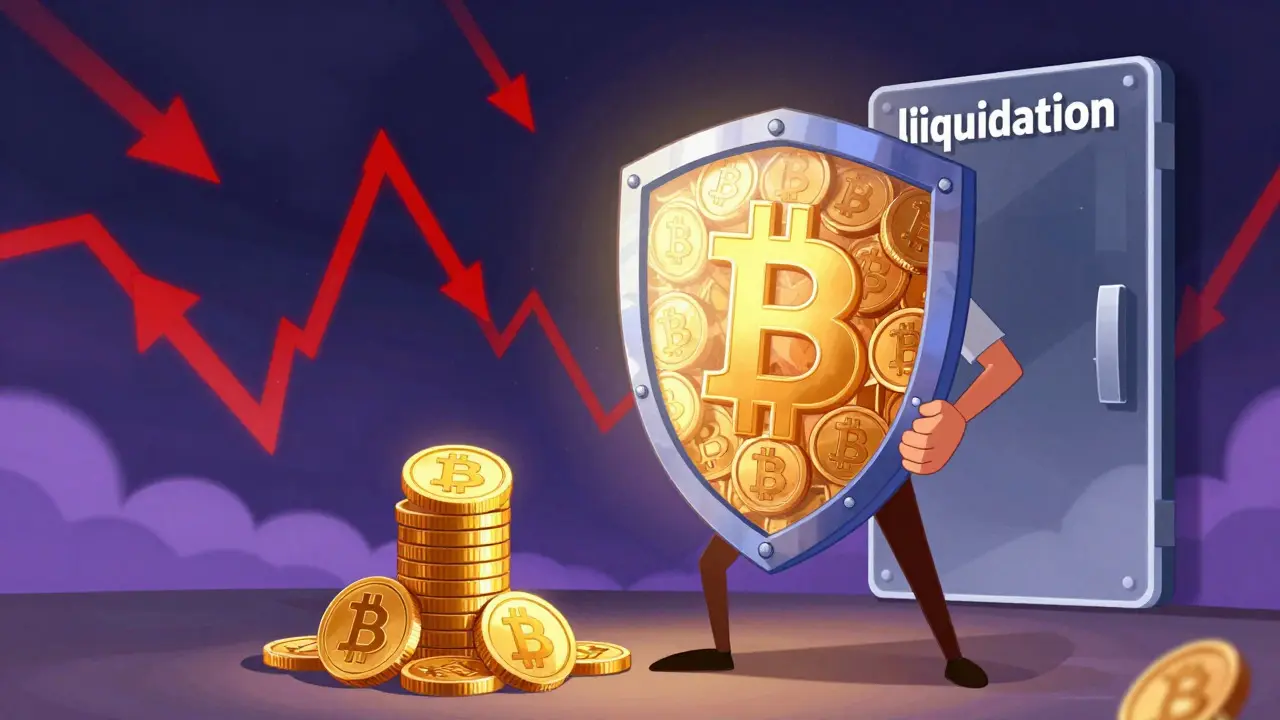
Imagine you want to borrow $1,000 worth of stablecoins. You might need to lock up $1,500 worth of BNB as collateral. If the price of BNB drops too much, your position gets automatically liquidated-meaning the protocol sells your BNB to cover the loan. This protects the lenders but can wipe out borrowers fast if they aren’t careful.
On the flip side, if you are a lender, you provide liquidity to these pools. In return, you earn an Annual Percentage Yield (APY). These rates fluctuate based on demand. When everyone wants to borrow, APY goes up. When nobody needs loans, it drops. It’s supply and demand, automated by code.
Venus vs. The Competition: A Realistic Look
Venus isn’t alone. It competes directly with giants like Aave and Compound. How does it stack up?
| Feature | Venus Protocol | Aave | Compound |
|---|---|---|---|
| Network | BNB Smart Chain | Ethereum + Multi-chain | Ethereum |
| Transaction Cost | Very Low (<$0.10) | High ($5-$50+) | High ($5-$50+) |
| Speed | ~3 seconds | Varies (15s - mins) | Varies (15s - mins) |
| Asset Variety | High (BSC focused) | Very High | Moderate |
| Governance Token | XVS | AAVE | COMP |
If you are already holding BNB or trading on Binance, Venus is the logical choice. The integration is seamless, and the fees won’t eat your profits. But if you hold mostly Ethereum-based assets, bridging them over to BSC adds complexity and risk. Aave offers a wider range of assets and deeper liquidity overall, but at a premium price.
Security Risks: What Could Go Wrong?
Let’s talk about the elephant in the room: security. DeFi protocols have been hacked billions of dollars. Has Venus been hacked? Yes. In 2021, a bug allowed attackers to mint fake tokens and drain millions. While the team managed to recover most funds through emergency measures, it was a stark reminder that code is only as good as its audit.
Since then, Venus has undergone multiple audits from firms like CertiK and PeckShield. They use Chainlink Oracles to feed price data, which is industry standard for preventing manipulation. However, oracle failures can still happen. If an oracle reports a wrong price, your collateral could be liquidated unfairly.
Also, consider smart contract risk. Even audited code can have bugs. You are trusting mathematics, not lawyers. Always start small. Never put all your eggs in one basket, especially in a relatively young ecosystem like BSC DeFi.

Who Should Use Venus? And Who Should Avoid It?
Venus is ideal for:
- BSC Native Users: If you live and breathe BNB, this is your home base.
- Yield Farmers: Those who want passive income on stablecoins or major alts.
- Traders Needing Leverage: Borrow stablecoins to buy more crypto without selling your long-term holdings.
It might not be for you if:
- You Are Risk-Averse: Volatility and liquidation risks are real.
- You Prefer Simplicity: Connecting wallets, approving transactions, and monitoring health factors requires attention.
- You Hold Only ETH: Bridging costs might outweigh the benefits.
Getting Started: A Step-by-Step Guide
Ready to try it? Here is how to navigate Venus safely:
- Set Up a Wallet: Download MetaMask or Trust Wallet. Ensure you are connected to the BNB Smart Chain network.
- Fund Your Wallet: Buy BNB on an exchange and send it to your wallet address. Keep some extra BNB for gas fees.
- Connect to Venus: Go to the official Venus website. Double-check the URL to avoid phishing sites. Click “Connect Wallet.”
- Supply Assets: Choose a coin you want to lend. Approve the transaction in your wallet. Confirm it.
- Monitor Your Position: Check your “Health Factor.” If it drops below 1, you are at risk of liquidation. Add more collateral or repay part of the loan.
Pro tip: Use hardware wallets like Ledger or Trezor for larger amounts. Software wallets are convenient but vulnerable to malware.
The Future of Venus in 2026
As we move further into 2026, DeFi is maturing. Regulations are tightening, and user experience is improving. Venus has adapted by integrating with cross-chain bridges, allowing easier access from other networks. The focus is now on sustainability-reducing inflationary token emissions and increasing fee revenue for the protocol.
However, competition is fierce. Newer protocols on Layer 2 solutions like Arbitrum and Optimism offer even lower fees and higher security guarantees. Venus must innovate to stay relevant. Its strength lies in its established user base on BSC and its proven track record since 2020.
Ultimately, Venus is a powerful tool, not a magic money machine. Treat it with respect, understand the risks, and never invest more than you can afford to lose. The world of DeFi is exciting, but it rewards the informed and punishes the careless.
Is Venus Protocol safe to use in 2026?
Venus has improved its security significantly since its early days, utilizing reputable auditors and Chainlink oracles. However, no DeFi protocol is 100% safe. Risks include smart contract bugs, oracle failures, and market volatility. Always use strong security practices and start with small amounts.
What is the minimum amount to lend on Venus?
There is no strict minimum, but due to transaction fees and rounding errors, it is practical to start with at least $10-$20 worth of assets. Smaller amounts may result in negligible returns after fees.
Can I lose my money on Venus?
Yes. As a borrower, you face liquidation risk if your collateral value drops. As a lender, you face smart contract risk and impermanent loss if providing liquidity to volatile pairs. Always monitor your positions closely.
How do I withdraw my funds from Venus?
Go to the “Supplied” section, select the asset, and click “Withdraw.” You will pay a small BNB gas fee. Ensure you have enough BNB in your wallet for the transaction. Withdrawals are instant on the BSC network.
Does Venus charge interest on withdrawals?
No, Venus does not charge interest on withdrawals. You only pay the network gas fee (in BNB). However, if you are borrowing, you must repay the accrued interest on your loan before withdrawing collateral.
Abigail Sparks
August 14, 2026 AT 15:35Stop sleeping on the gas fees difference. Ethereum is a luxury item for whales right now. If you are trying to move $50 and pay $15 in gas, you are already down 30% before you even start. Venus on BSC is the only logical play for small caps unless you have infinite patience and money.
OLIVER CHRISTIAN
August 16, 2026 AT 06:30Great breakdown of the mechanics here. I think people forget that over-collateralization is actually a feature, not a bug, when you look at it from a risk management perspective. It protects the lenders who are essentially providing the liquidity engine.
I’ve been using Venus for stablecoin yields since early 2023 and the APY fluctuations are manageable if you rebalance quarterly. The key is monitoring your health factor daily during high volatility weeks. Also, don’t ignore the XVS governance aspect because voting on new asset listings can directly impact which tokens get boosted incentives. It’s not just passive income; it requires active participation to maximize returns without getting liquidated unexpectedly.
miranda gamboa
August 17, 2026 AT 00:04The oracle dependency is still my biggest red flag honestly. Chainlink is robust but we saw what happened with other protocols when price feeds lagged by even seconds during a flash crash. Is there any redundancy mechanism built into Venus specifically for extreme market conditions or do we just pray the validators stay online?
OLIVER CHRISTIAN
August 17, 2026 AT 17:07They use multiple oracle sources now to mitigate single points of failure. It’s not perfect but it’s better than the early days. Just keep your collateral ratio healthy above 1.5x if you’re worried about slippage.
Rod Sidoroff
August 19, 2026 AT 07:13Typical retail FUD. If you cannot manage a 1.5x collateral ratio you have no business being in DeFi at all. The smart money uses leverage aggressively because they understand the math better than these cautious amateurs who treat their crypto like it’s in a savings account. Venus has survived two bear markets and countless hacks. The protocol is battle-tested unlike those shiny new L2 scams popping up every week promising zero risk.
Niall O'Rourke
August 20, 2026 AT 14:45Battle tested? Please. It was hacked in 2021 and lost millions. That is not battle tested that is lucky. And let us not pretend BSC is decentralized. It is basically Binance with a permissioned validator list. You are trusting a corporation not code. The whole premise of DeFi on BSC is an oxymoron to me
Rod Sidoroff
August 21, 2026 AT 10:00Oh look another contrarian who thinks decentralization means having thousands of nodes doing nothing useful. Efficiency matters. BSC moves fast and cheap. That is why it dominates volume. Your purity test is cute but does not pay bills. I make more yield on Venus in a month than you will on Ethereum in a year after gas fees
SHIV SHANKAR KANTA
August 22, 2026 AT 06:02The moral decay of this industry is staggering. We chase yield like rats in a maze while ignoring the fundamental instability of unbacked digital assets. Venus is just another casino dressed up as finance. The auditors are paid by the very entities they audit. Conflict of interest incarnate. When the music stops everyone will be naked. Prepare your souls not just your wallets
Mike Baca
August 22, 2026 AT 16:44Wow heavy stuff. But seriously i think you are missing the point of accessibility. Not everyone has $10k to park on Aave. For the guy in India or Brazil earning in USD but holding crypto, Venus is a lifeline. The fees on Eth are exclusionary by design. Maybe that is your privilege talking but for most of us low fees mean actual utility. Plus the XVS tokenomics have improved significantly with the buyback and burn mechanism so its not just inflationary spam anymore
Kelsey Anne
August 23, 2026 AT 17:03Buybacks are marketing fluff. Look at the TVL trends. They are stagnant compared to competitors on Arbitrum. Stop pretending it is a top tier protocol.
Mike Baca
August 24, 2026 AT 16:20TVL is cyclical. Right now liquidity is fragmented across dozens of chains. Venus holds its ground on BSC which is still huge. You are judging a fish by its ability to climb a tree.
Mohamed Shoaeb
August 26, 2026 AT 08:57i usually stick to simple staking but venus looks interesting for borrowing against BNB without selling. the tax implications of selling are annoying in my country so this helps avoid realizing gains immediately. just need to watch the health factor closely. anyone else using hardware wallets for this or is metamask safe enough for smaller amounts
Jennifer Ulmer
August 27, 2026 AT 23:11Hardware wallet is non-negotiable for anything worth more than a dinner out. Metamask is convenient but if your computer gets malware it is game over. Ledger integration with Venus works fine though sometimes the signing process is clunky. Worth the extra step for peace of mind.
Nikki keller
August 27, 2026 AT 23:30I appreciate the balanced view on risks. It is easy to get swept up in the hype of high APYs. The section on liquidation mechanics was particularly helpful. Many users underestimate how quickly prices can drop. It is important to treat DeFi as a tool rather than a set-and-forget investment strategy. Communication within the community about these risks should be prioritized to protect newer users.
Leah Humphrey
August 29, 2026 AT 17:16Another day another protocol review. The UI is cluttered and the documentation is outdated. Why would anyone use this when Uniswap V3 offers concentrated liquidity with better capital efficiency? The lending space is saturated and Venus is playing catchup with inferior tech stack.
Jillian Groskreutz
August 30, 2026 AT 21:28Uninformed take! Uniswap is a DEX, Venus is a lending protocol. Apples and oranges. Concentrated liquidity requires active management which most retail users fail at miserably. Venus provides passive yield with automated interest accrual. Do your research before spewing nonsense. The integration with BSC ecosystem makes it superior for native users despite the centralization critiques which are largely overstated given the security track record post-2021.
Carmene Jackson
August 31, 2026 AT 09:32Ugh you guys are so intense. I just want to earn some extra USDT on my idle BNB. Does it really matter if it is centralized or not as long as I get paid? My portfolio is up 5% this month thanks to Venus and I am happy. Let the nerds fight over decentralization purity while we count our green candles.
Hicham Mounir
August 31, 2026 AT 22:05It is okay to prioritize simplicity. Not everyone wants to be a full-time trader. The emotional toll of monitoring positions 24/7 is real. If Venus gives you peace of mind and steady returns then it is serving its purpose. Just remember to diversify eventually so one platform issue doesn't ruin everything. Take care of yourself first.