 Sep, 26 2026
Ever tried to play a blockchain game and felt like you were paying more in gas fees than for the actual item you bought? That friction has kept millions of players out of Web3 gaming. Enter Aviator, a project betting that the solution isn't just better graphics, but cheaper rails. Specifically, it’s built on the Base network, Ethereum’s Layer 2 scaling solution designed to make transactions nearly free.
If you’ve seen the ticker AVI popping up on your exchange watchlist, you might be wondering if this is the next big thing or just another micro-cap gamble. It’s not the biggest name in crypto-far from it-but its specific focus on bridging assets and hosting indie games on Base makes it a unique case study. Let’s break down what Aviator actually does, how its token works, and whether the tech behind it holds water.
The Core Problem: Why Base Needs Its Own Economy
To understand Aviator, you first need to grasp why it exists. Ethereum mainnet is secure, but it’s expensive. For a casual gamer wanting to buy a sword or trade an NFT, a $10 transaction fee is a dealbreaker. Base was created by Coinbase to solve this, offering EVM-compatible infrastructure with fees often under a cent. But infrastructure alone doesn’t create activity. You need applications, liquidity, and a native currency to incentivize users.
This is where Aviator Technologies, LLC steps in. They aren’t just building a game; they are building the plumbing for the Base ecosystem. Their goal is to lower the barrier to entry for developers who want to launch games without worrying about server costs, and for players who want seamless asset transfers between Ethereum and Base.
Two Pillars: Aviator Arcade and SkyBridge
The Aviator ecosystem rests on two main products. If you strip away the token hype, these are the actual utilities driving demand for the AVI coin.
- Aviator Arcade: This is a platform for publishing and playing HTML5 games directly on the blockchain. Unlike traditional App Stores, Aviator Arcade removes hosting fees for developers. Instead, revenue comes from in-game purchases paid in AVI tokens. This creates a circular economy: developers earn AVI, players spend AVI, and the value accrues to the token holders.
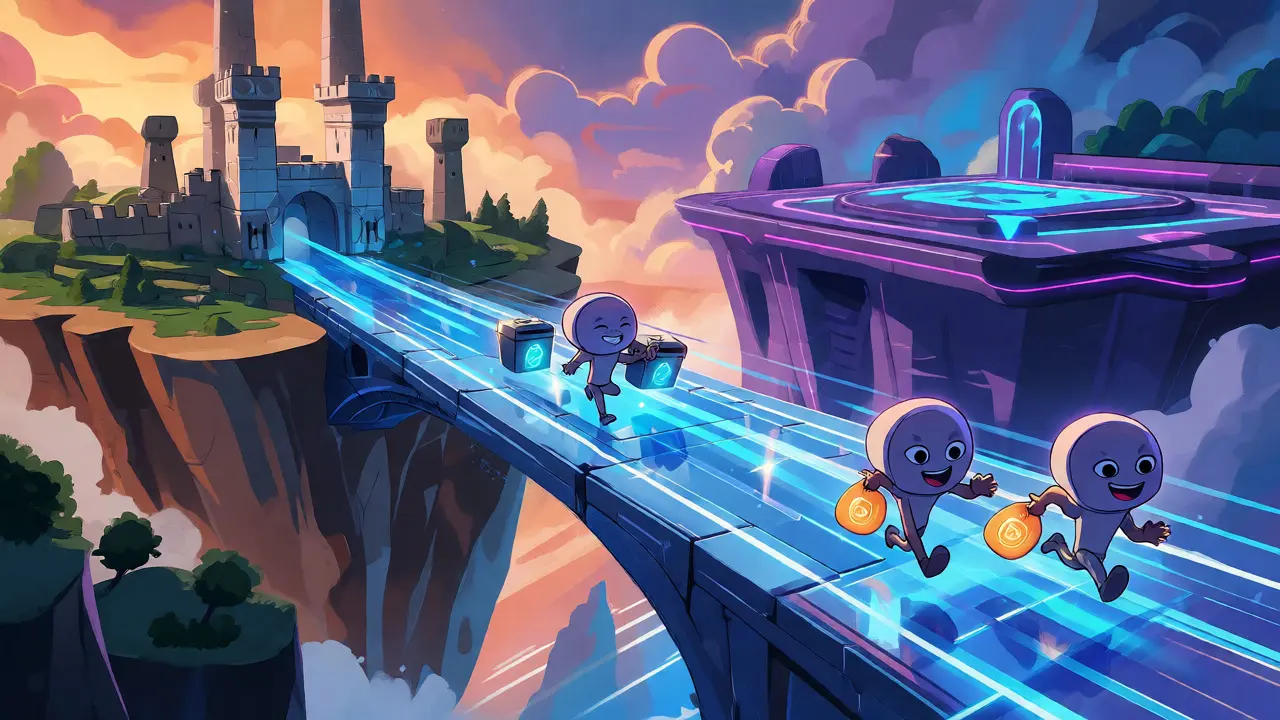
- SkyBridge: Think of this as a specialized highway for digital assets. While generic bridges exist, SkyBridge is optimized specifically for moving ERC-20 tokens and ERC-721 NFTs between Ethereum Mainnet and Base. Because it’s native to the ecosystem, it aims to offer faster settlement times and lower slippage compared to third-party aggregators.
The synergy here is key. Players use SkyBridge to move funds into the Base ecosystem cheaply, then use those funds in Aviator Arcade. The AVI token acts as the glue holding these two services together.
Tokenomics: What Does AVI Actually Do?
At its heart, AVI is an ERC-20 token. Don’t let the "ERC-20" label confuse you; while it lives on Ethereum technically, its primary utility is within the Base environment via the bridge. The total supply is capped at 9.24 billion tokens, with roughly 7.32 billion currently circulating.
The token serves three distinct functions:
- Utility Currency: Used to purchase items, skins, or access passes within Aviator Arcade games.
- Governance: Holders can vote on treasury decisions. Who gets a grant? Which game gets featured on the homepage? These choices are made by the community, not a centralized board.
- Staking Rewards: Developers who publish successful games receive AVI rewards, aligning their incentives with the long-term health of the platform.
It’s worth noting the discrepancy in market data you’ll see across sites. Some trackers report a market cap around $2.5 million, while others show figures closer to $16 million. This variance usually stems from different methods of calculating circulating supply versus locked reserves. Always check multiple sources before making a valuation judgment.
How to Buy and Store AVI
Because Aviator is a smaller-cap project, you won’t find it listed on every major exchange. As of late 2023 and early 2024, BitMart accounted for the majority of trading volume, handling over 85% of all AVI trades. Other venues include Uniswap V4 on Ethereum and Uniswap V2 on Base.
Here is the typical workflow for acquiring AVI:
- Connect a Wallet: Use MetaMask or Coinbase Wallet. Ensure you have ETH for gas fees if buying on Ethereum, or ETH on Base if buying via DEX.
- Choose Your Venue: For convenience, BitMart offers direct fiat-to-crypto pairs (like USDT). For decentralization purists, swapping ETH for AVI on Uniswap V2 (Base network) is cheaper and keeps custody in your hands.
- Watch for Slippage: Due to lower liquidity, large buys can cause price slippage. Break larger orders into smaller chunks to get a better average price.
Market Position and Competition
How does Aviator stack up against giants like The Sandbox (SAND) or Decentraland (MANA)? The short answer: it’s in a different weight class. SAND and MANA are multi-billion dollar ecosystems with massive virtual worlds. Aviator is a micro-cap player focusing on infrastructure and lightweight gaming.
| Feature | Aviator (AVI) | The Sandbox (SAND) | Decentraland (MANA) |
|---|---|---|---|
| Primary Chain | Base (L2) | Ethereum (L1) | Ethereum (L1) |
| Transaction Cost | Very Low (<$0.01) | High ($1-$10+) | High ($1-$10+) |
| Game Type | Arcade/HTML5 | Open World/Metaverse | Open World/Metaverse |
| Target Audience | Casual Gamers/Indie Devs | Hardcore Crypto Users | Land Owners/Creatives |
The advantage for AVI is accessibility. A user with $50 in their wallet can actually play dozens of games on Aviator Arcade. On Ethereum-based metaverses, that same $50 might disappear in gas fees before the player even logs in.
Risks and Roadmap: The Stratus Upgrade
No crypto analysis is complete without looking at the risks. The biggest hurdle for Aviator is liquidity. With daily volumes sometimes hovering in the thousands rather than millions, exiting a position can be difficult. Additionally, the project relies heavily on the success of the Base network itself. If Base adoption stalls, Aviator’s niche appeal diminishes.
However, the team has announced ambitious plans. The upcoming Stratus protocol (formerly known as SkyBridge V2) is slated to introduce a token buyback mechanism. The stated goal is to buy back AVI at $0.01 per token, aiming for a Fully Diluted Valuation (FDV) of $250 million at launch. If achieved, this would represent a significant appreciation from current prices. Whether this is realistic depends entirely on user growth and developer adoption.
Community feedback suggests that while the tech works, awareness is low. Telegram channels have around 5,000 active members, and Discord sees steady but modest traffic. For investors, this means high volatility and potential for both explosive growth and stagnation.
Frequently Asked Questions
Is Aviator (AVI) a good investment?
It depends on your risk tolerance. AVI is a micro-cap token with high volatility. Its value is tied closely to the adoption of the Base network and the success of its arcade platform. It offers higher potential upside than established coins but carries significantly more risk due to lower liquidity and market cap.
Where can I buy Aviator (AVI) tokens?
The primary centralized exchange for AVI is BitMart. You can also swap for AVI on decentralized exchanges like Uniswap V2 (on the Base network) and Uniswap V4 (on Ethereum).
What is the difference between Aviator Arcade and SkyBridge?
Aviator Arcade is a gaming platform where users play HTML5 games and spend AVI tokens. SkyBridge is a cross-chain bridge tool that allows users to transfer ERC-20 tokens and NFTs between the Ethereum Mainnet and the Base network seamlessly.
Does Aviator use Proof of Work or Proof of Stake?
Aviator is a token, not a blockchain, so it doesn't have its own consensus mechanism. It operates as an ERC-20 token on Ethereum and utilizes the Base network, which is an optimistic rollup secured by Ethereum's Proof of Stake consensus.
What is the total supply of AVI?
The maximum total supply of AVI is 9.24 billion tokens. Approximately 7.32 billion are currently in circulation, though exact numbers vary slightly depending on the data provider and lock-up schedules.