 Sep, 4 2026
You might have seen the name TYRANT pop up in your feed and wondered if it’s the next big thing or just another ghost town. It’s tied to a philosophical essay that Ethereum co-founder Vitalik Buterin famously liked, which gives it some serious street cred among crypto nerds. But here’s the kicker: as of late 2025, this token trades with barely enough volume to buy you a coffee. If you’re looking for a deep dive into what actually makes this coin tick-and why its market cap sits at a modest $303,775-you’ve come to the right place.
The Philosophical Roots of TYRANT
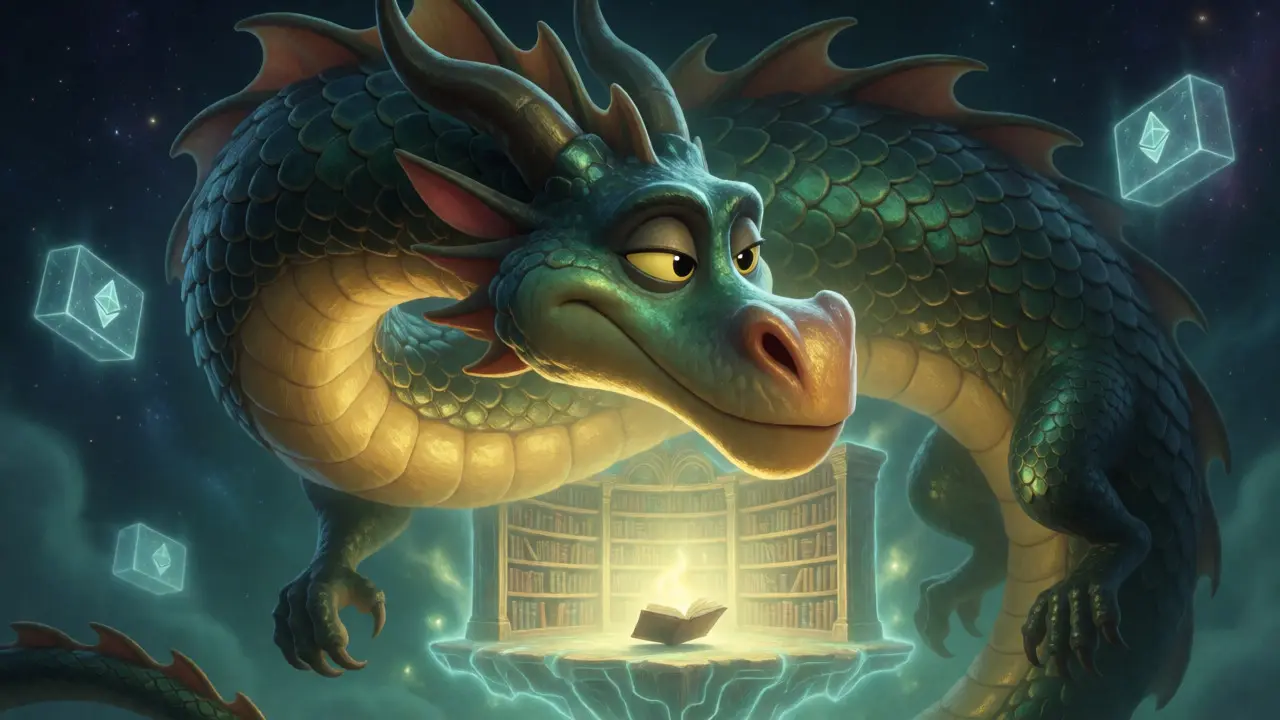
At its core, Fable Of The Dragon (TYRANT) is an Ethereum-based ERC-20 cryptocurrency inspired by philosopher Nick Bostrom's 2005 essay 'The Fable of the Dragon-Tyrant'. Also known simply as TYRANT, the project leans heavily on the intellectual legacy of Vitalik Buterin. In 2017, Buterin added "Fable of the Dragon Tyrant" to his Twitter bio, signaling his interest in using technology to combat aging and death. This isn’t just a random meme; it’s a conceptual bridge between high-level philosophy and blockchain utility.
The token doesn’t exist in a vacuum. It’s intrinsically linked to a narrative about mortality. While most meme coins rely on dogs or frogs, TYRANT relies on the idea that we can "kill" the dragon of aging through science and funding. This thematic depth attracts a specific type of investor who cares more about the story than the immediate price action. However, don’t confuse association with endorsement. There is no evidence that Buterin directly developed or promoted the token itself. His connection is purely ideological, stemming from his long-standing support for aging research.
Technical Specs: A Fixed Supply With Zero Tax
Technically, TYRANT is straightforward. It operates exclusively on the Ethereum blockchain as a standard ERC-20 token with no modifications to the base protocol. Unlike many modern tokens that implement complex tax mechanisms to fund marketing or liquidity pools, TYRANT features a 0% transaction tax. What you see is what you get. When you trade it, you pay only the network gas fees, not a percentage cut to the project developers.
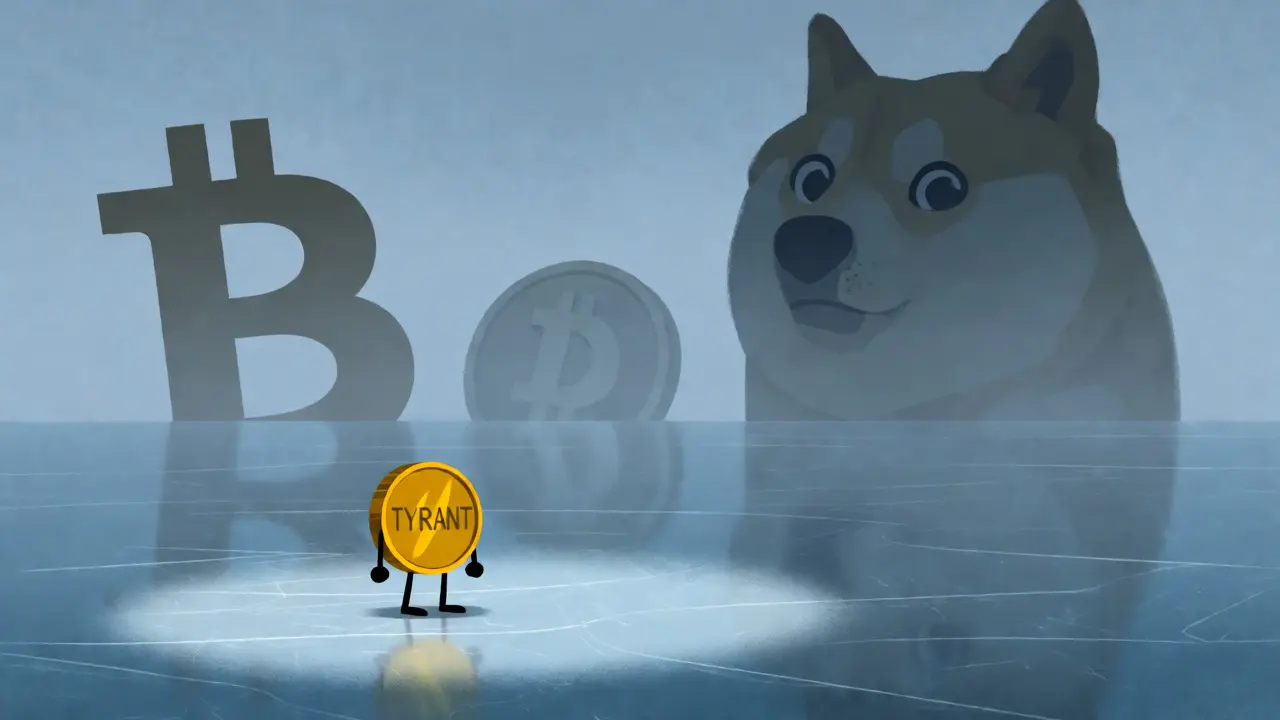
The supply model is equally rigid. There are exactly 10,000,000 TYRANT tokens in existence, and 100% of them are already circulating. There are no hidden unlocks waiting to dump on retail investors five years down the line. This fixed supply creates scarcity, but scarcity without demand is just empty air. As of October 2025, the total market capitalization hovers around $303,775, placing it deep in the micro-cap territory. For context, Bitcoin sits at over $1 trillion. TYRANT is less than 0.0003% the size of Dogecoin. It’s tiny, and that size dictates how it moves.
The NFT Component and Charitable Angle
Here is where things get interesting for collectors. TYRANT isn’t just a fungible token; it’s paired with a non-fungible token (NFT) collection. The project aimed to mint exactly 750 unique, procedurally generated dragon-themed NFTs. These aren’t just JPEGs for bragging rights. Half of the proceeds from these mints were directed to the Sens Research Foundation, an organization focused on aging-related disease research supported by Vitalik Buterin since 2018.
This charitable angle provides a tangible societal value proposition. If you bought an NFT, you weren’t just speculating on art; you were contributing to scientific research on longevity. Records show the Sens Research Foundation received $14,250 in ETH from these mint proceeds. That’s real money doing real work. However, the execution has been sparse. Since the initial launch, there have been zero subsequent NFT drops beyond the original 750 collection. The roadmap promised quarterly updates, but silence has largely taken over.
Market Performance and Liquidity Woes
If you plan to buy TYRANT, you need to understand the liquidity trap. Trading volume is exceptionally low. On a typical day, the 24-hour trading volume might be as low as $57.11. That means if you try to sell $1,000 worth of TYRANT, you could crash the price because there aren’t enough buyers on the other side. Most trading happens on MEXC exchange, which accounts for 87% of all activity, followed by decentralized exchanges like Uniswap v2.
Price volatility is another factor. While the token’s 30-day volatility is lower than the broader crypto average, its annualized performance tells a different story. Since its all-time high of $0.99 in early 2024, the token has declined by nearly 97%. It currently trades around $0.03. This underperformance is stark compared to the top 100 cryptocurrencies, which averaged a 42% decline over the same period. TYRANT lost almost twice as much value as the market average.
| Metric | TYRANT | Bitcoin | Dogecoin |
|---|---|---|---|
| Market Cap | $303,775 | $1.2 Trillion | $125 Billion |
| 24h Volume | $57.11 | $28 Billion | N/A (High) |
| Blockchain | Ethereum | Bitcoin | Dogecoin |
| Supply | 10 Million (Fixed) | 21 Million (Cap) | Inflationary |

Community Sentiment and Expert Analysis
Who is actually talking about this? Not many people. Reddit discussions are scarce, with only 17 mentions in the past year across major crypto subreddits. The few active threads often feature users complaining about the inability to exit positions due to low liquidity. One user noted, "Pure gambling token with zero utility," after losing significant value. Twitter sentiment mirrors this, with 68% of posts showing negative sentiment focused on illiquidity.
Expert opinions are mixed but lean cautious. Analysts point out that while the concept is unique, the lack of transparency regarding the development team raises red flags. Without a clear roadmap or verified team identities, TYRANT functions more like a piece of conceptual art than a sustainable financial instrument. No major research firms like Messari or Delphi Digital cover it, suggesting institutional investors view it as too insignificant for dedicated analysis.
Should You Buy TYRANT?
Buying TYRANT is a bet on the endurance of a niche philosophical narrative within the crypto space. It’s not a play on technological innovation or mass adoption. It’s a play on community memory and the lingering influence of Vitalik Buterin’s brand. If you believe that the story of defeating aging will continue to resonate, and you can stomach the extreme illiquidity, it might hold marginal appeal. But for most traders, the risks outweigh the rewards. The survival rate for projects like this-low liquidity, no dev activity-is below 15% after two years.
Before jumping in, ensure you have an Ethereum-compatible wallet like MetaMask and enough ETH for gas fees. Be prepared for slow transactions and potentially wide spreads when buying or selling. And remember, once you’re in, getting out might cost you more in slippage than you expect.
Is Vitalik Buterin involved in the TYRANT project?
No, Vitalik Buterin is not directly involved in the development or promotion of the TYRANT token. His connection is ideological; he popularized the essay "The Fable of the Dragon-Tyrant" by adding it to his social media bios. The token leverages this association for branding, but there is no official partnership or investment from Buterin himself.
Why is the trading volume so low for TYRANT?
Low trading volume stems from limited market awareness and minimal utility beyond speculation. With a market cap under $400k and no recent development updates, it fails to attract institutional or retail attention. Additionally, the lack of cross-chain deployments limits access to only those already operating on Ethereum.
Does TYRANT have any real-world use case?
Primarily, TYRANT serves as a speculative asset and a gateway to its associated NFT collection. The NFTs provided access to charitable donations toward aging research via the Sens Research Foundation. However, the token itself lacks functional utility like payments, governance, or staking rewards outside of holding the asset.
Where can I buy TYRANT crypto?
You can purchase TYRANT primarily on MEXC Exchange, which hosts the majority of its liquidity. It is also listed on Coinbase and decentralized exchanges like Uniswap v2. Note that liquidity on DEXs may be fragmented, leading to higher slippage for larger orders.
What happened to the TYRANT NFT collection?
The initial collection of 750 dragon-themed NFTs was minted successfully, with proceeds supporting aging research. However, despite promises of quarterly drops, no new NFT collections have been released since the launch. The existing NFTs remain on secondary markets like OpenSea, but trading activity is sporadic.