 Oct, 3 2026
Have you ever looked at the electric bill for a friend’s Bitcoin rig and wondered if there was a way to mine crypto without turning your home into a server farm? You’re not alone. Traditional mining requires expensive hardware, constant cooling, and a tolerance for noise that most people just don’t have. Enter Mineable, a Web3 ecosystem built on Ethereum that lets users earn passive block rewards through virtual GPU mining. It promises the profits of mining without the physical hassle, but does it actually deliver?
If you’ve seen MNB trending or heard whispers about "virtual mining," you might be confused about how this works. Is it real mining? Is it just another meme coin? As of October 2026, Mineable has carved out a niche by removing the biggest barrier to entry in crypto: hardware costs. This guide breaks down exactly what Mineable is, how its token economy functions, and whether it fits into your portfolio.
The Core Concept: Mining Without The Hardware
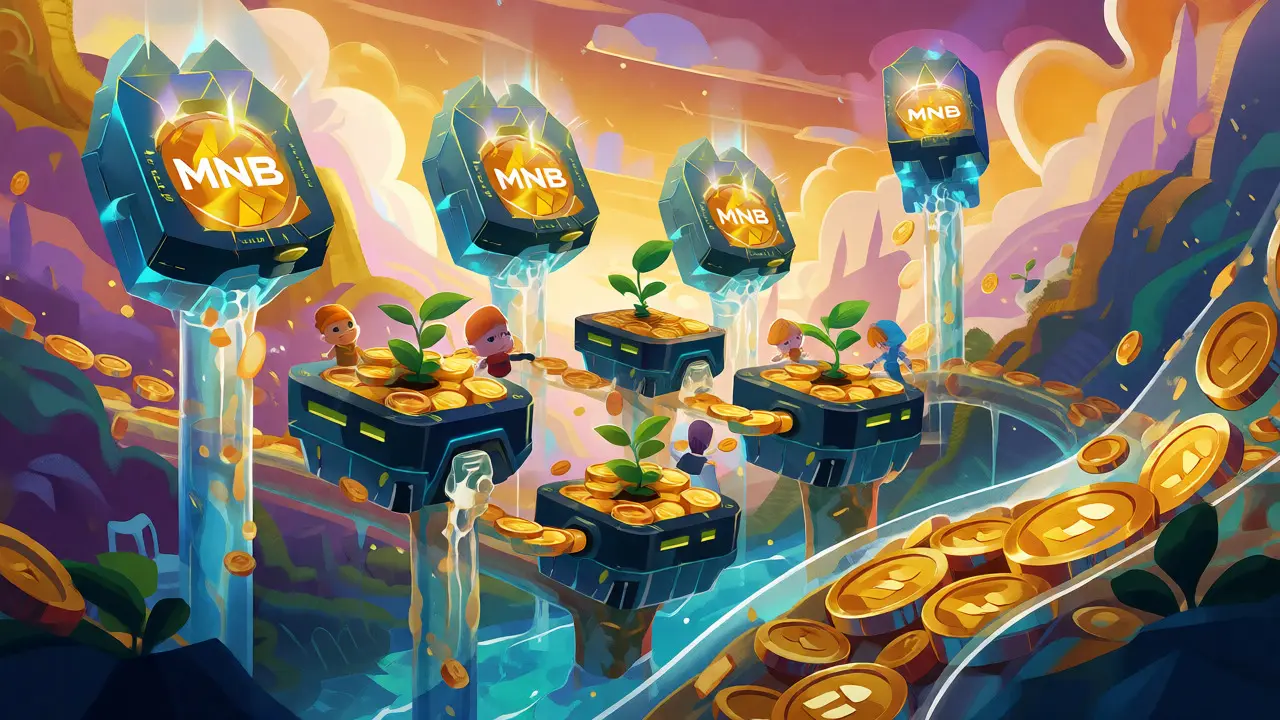
Mineable is a platform that simulates cryptocurrency mining using virtual GPUs deployed on the Ethereum blockchain. Unlike traditional mining, where you buy an ASIC or a high-end graphics card to solve complex mathematical puzzles, Mineable uses a smart contract system to represent these units digitally. When you purchase a virtual GPU, you aren't buying plastic and silicon; you're buying a claim on the network's hash rate distribution.
Here’s the simple logic: every time a block is mined on the Mineable network, rewards are distributed based on the share of virtual GPUs you hold. It’s like owning a slice of a power plant without having to build the plant yourself. The platform launched its official application in Q1 2023, moving from concept development in early 2022 to a live product with a Uniswap liquidity pool. The goal was always to make mining accessible to anyone, regardless of their technical expertise or living situation.
You might ask, "If there's no hardware, where does the value come from?" In Mineable’s case, value is derived from the utility of the MNB token. Users need MNB to deploy and upgrade these virtual GPUs. As more people join the network, demand for tokens increases, theoretically supporting the price. It’s a closed-loop economy designed to reward participation rather than electricity consumption.
How The Token Economy Works
At the heart of the ecosystem is the MNB token. This isn't just a speculative asset; it’s the fuel for the entire machine. If you want to increase your mining power, you use MNB to buy more virtual GPUs or upgrade existing ones. You can also sell these tokens back into the market if you decide to cash out your earnings.
The supply structure is deflationary by design. The maximum supply of MNB is capped at 1.5 billion tokens. As of late 2025, approximately 40% of this maximum supply was in circulation. The remaining tokens are locked up until they are mined or released according to the roadmap. This scarcity model is intended to prevent the runaway inflation that plagues many other altcoins.
| Metric | Value / Status | Notes |
|---|---|---|
| Max Supply | 1.5 Billion MNB | Fixed cap ensures long-term scarcity. |
| Circulating Supply | ~599 Million MNB | Approximately 40% of max supply as of Oct 2025. |
| Network Hash Rate | 58 TH/s | Simulated hash rate via virtual GPUs. |
| Block Time | 10 Minutes | New blocks generated every 10 minutes. |
| Active Miners | 81,490+ | User count participating in virtual mining. |
One critical detail to understand is the "Stage" system. Mineable operates in stages, currently in Stage 6 of 7. Each stage requires a certain number of GPUs to be deployed before advancing. Advancing stages often changes the reward dynamics, typically making it harder to earn rewards per unit but potentially increasing the value of the remaining scarce resources. This gamified progression keeps users engaged and strategically timing their investments.
Is It Actually Profitable?
Let’s talk numbers, because enthusiasm doesn’t pay the bills. As of October 2026, MNB trades at extremely low valuations compared to major cryptocurrencies. On Coinbase, the price hovers around $0.000023, while other exchanges report slightly different figures due to lower liquidity. The all-time high was reported at $0.11 on KuCoin, though some sources cite a much lower peak on Ethereum-based pairs. This volatility is typical for micro-cap tokens.
Your profitability depends entirely on two factors: the price of MNB and the cost of acquiring virtual GPUs. Since you aren’t paying for electricity, your break-even point is purely financial. If you bought MNB when it was cheap and the network grew, your ROI could be significant. However, trading volume remains low-often under $100 daily across major pairs-which means selling large amounts of MNB can crash the price temporarily. Liquidity is the hidden risk here.
Consider this scenario: You invest $100 in MNB today. You deploy virtual GPUs and start earning rewards. Over six months, you accumulate enough MNB to double your initial investment. But when you try to sell, you find that the order book is thin. You might only get 80% of the quoted price because there aren’t enough buyers at that exact moment. This slippage is a common pitfall in small-cap DeFi projects.
Environmental Impact and Ethics
Traditional Bitcoin mining consumes massive amounts of energy, often drawing criticism for its carbon footprint. Mineable positions itself as an eco-friendly alternative. Because the "mining" is simulated on the Ethereum blockchain, it doesn’t require physical hardware running 24/7. No fans whirring, no heat rising, no coal burned specifically to solve hashes for your personal gain.
This sustainability angle appeals to younger investors who care about ESG (Environmental, Social, and Governance) criteria. The platform emphasizes that it eliminates operational limitations associated with physical rigs. For someone living in an apartment in Auckland, for example, setting up a physical miner might be impossible due to noise and space constraints. Mineable solves this by keeping everything digital.
However, critics argue that calling it "mining" is a marketing stretch. It’s closer to staking or yield farming, where you lock up capital to earn rewards. The distinction matters if you’re looking for genuine decentralized security contributions versus financial speculation. Mineable bridges this gap by offering educational tools like the "Learning Chamber" and "Mineiac Jr," aiming to teach users about both the tech and the finance behind it.

How To Get Started With MNB
If you’re ready to test the waters, getting started is relatively straightforward, but you need to choose your storage method carefully. Since MNB is an ERC-20 token on Ethereum, it lives in any wallet that supports Ethereum assets.
- Self-Custody Wallets: Use MetaMask, Trust Wallet, or Ledger. This gives you full control over your private keys. Remember, if you lose your seed phrase, your MNB is gone forever.
- Custodial Exchanges: Platforms like ProBit Global or Uniswap v3 allow you to trade MNB directly. Some offer integrated staking or mining interfaces, simplifying the process for beginners.
- Paper Wallets: For long-term holders who don’t plan to touch their coins for years, offline paper wallets provide cold storage security against hacks.
Once you have MNB, you head to the Mineable dashboard. Here, you’ll see your available balance and options to deploy GPUs. The interface is designed to be intuitive, masking the complex smart contract interactions behind simple buttons. You select the number of GPUs, confirm the transaction, and wait for the next block generation cycle (every 10 minutes) to see your first rewards appear.
Risks And Red Flags
No crypto investment is without risk, and Mineable has specific vulnerabilities you should watch. First, centralization concerns. While the token is on Ethereum, the management of the virtual GPU system relies on the project team’s code. If the smart contracts have bugs or the team abandons the project, your virtual assets could become worthless.
Second, regulatory uncertainty. Governments worldwide are still figuring out how to classify tokens like MNB. Are they securities? Commodities? Utility tokens? Changes in regulation could impact how easily you can trade or tax your earnings. Always consult a local tax professional before realizing significant gains.
Finally, competition. Newer DeFi protocols offer higher yields with less friction. Mineable needs to continuously innovate-adding features like NFT integration or partnerships with entities like Web3Dubai-to stay relevant. If user growth stalls, the demand for MNB drops, and prices follow.
Is Mineable a scam?
Not necessarily. Mineable is a legitimate project with a working application, active community, and transparent roadmap. However, it is a high-risk, low-market-cap asset. Lack of widespread adoption and low trading volume can lead to price manipulation, so thorough due diligence is essential before investing.
Do I need special hardware to mine MNB?
No. That’s the main selling point. You do not need GPUs, ASICs, or any physical mining equipment. All "mining" happens virtually through smart contracts on the Ethereum blockchain. You only need a digital wallet and internet access.
Where can I buy MNB tokens?
You can purchase MNB on decentralized exchanges like Uniswap v3 (using ETH pairs) and centralized exchanges such as ProBit Global and KuCoin. Availability may vary by region, so check exchange support in your country.
How long does it take to see returns?
Rewards are distributed every 10 minutes when a new block is mined. However, seeing a noticeable profit depends on the current price of MNB and the number of GPUs you own. Small accounts may take weeks or months to accumulate significant balances.
Can I withdraw my virtual GPUs?
Virtual GPUs are non-transferable assets tied to your account within the Mineable ecosystem. You cannot move them to another wallet like an NFT. You can, however, sell the MNB tokens earned from them or liquidate your position by selling the underlying tokens.
Daniel Pearson
October 3, 2026 AT 15:21Calling this "mining" is honestly insulting to anyone who has actually run a rig. It's just staking with extra steps and a fancy name to trick people into thinking they're doing something technical when they're really just gambling on a low-liquidity token. You aren't contributing to network security, you're just feeding the ecosystem's demand curve.