 Jul, 6 2026
Imagine buying a ticket to a movie that ended four years ago. You still hold the ticket, it has a price tag on secondary markets, and people are still trading it. That is exactly what happens when you look at Snowbank (SB), a decentralized reserve currency protocol that officially shut down in February 2022 but whose token continues to trade on the Avalanche Network.
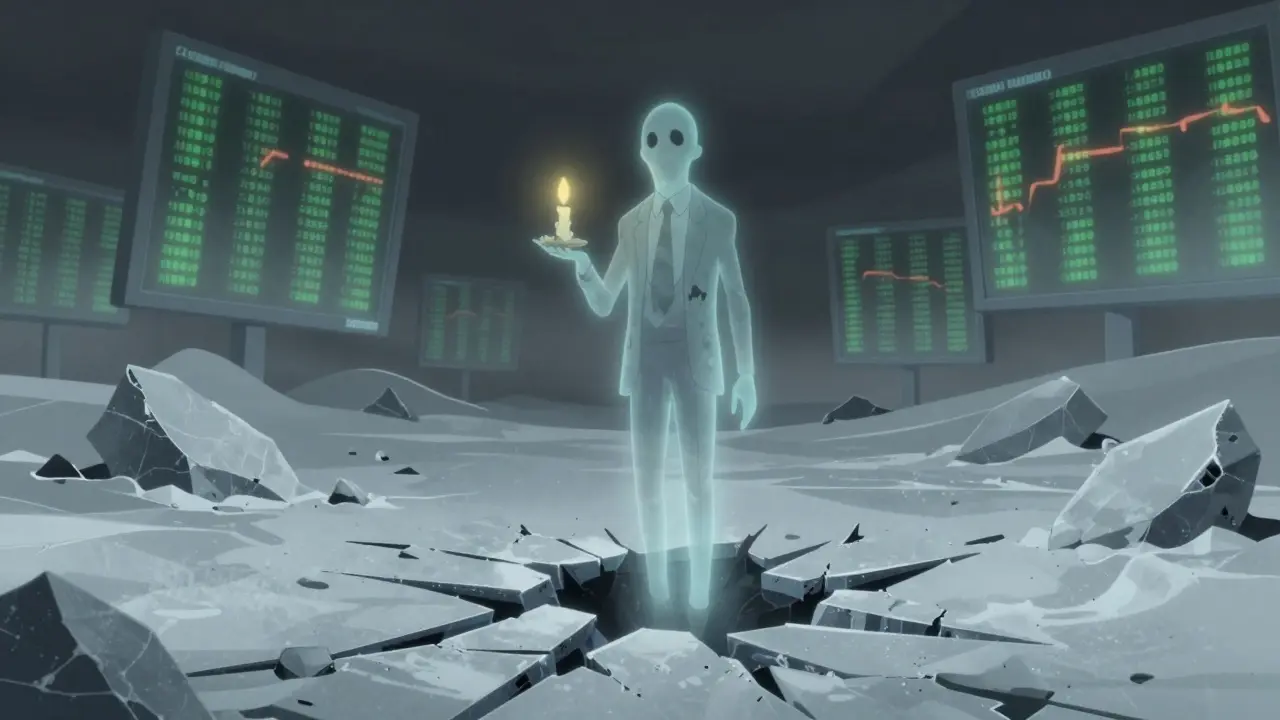
If you stumbled upon SB because of a sudden price spike or a confusing chart, you need to know one thing immediately: the project behind the token is dead. There is no active development, no governance updates, and no functional treasury managing the asset. Yet, as of July 2026, data aggregators like CoinGecko show SB trading around $259 with a market cap exceeding $36 million. This disconnect between reality and data feeds is dangerous for investors who don’t understand the history.
The Origin Story: An Avalanche Fork of Olympus
To understand why SB exists today as a ghost token, we have to look back at late 2021. The crypto world was obsessed with "decentralized reserve currencies." The pioneer of this trend was OlympusDAO, an Ethereum-based protocol that promised massive returns through staking and bonding mechanisms. Investors flocked to it, chasing annual percentage yields (APYs) that sometimes exceeded 10,000%.
Snowbank launched in November 2021 as a direct fork of Olympus, but with a twist: it ran on Avalanche, a blockchain known for faster transaction speeds and lower fees than Ethereum. The goal was simple. By moving the Olympus model to Avalanche, Snowbank aimed to make high-frequency rebasing and bonding cheaper for retail users. It positioned itself as a policy-controlled algorithmic currency designed to be a store of value and medium of exchange within the Avalanche ecosystem.
The team remained anonymous, typical for DeFi projects of that era. They relied on a DAO structure where holders voted on treasury management. The native asset, the SB token, was supposed to be backed by a basket of assets held in the treasury, primarily Magic Internet Money (MIM), a stablecoin from the Abracadabra.money protocol, and liquidity pool tokens involving AVAX.
How the Protocol Was Supposed to Work
Before it died, Snowbank operated on complex game-theoretic mechanics similar to its parent project. Here is how the system was designed to function:
- Treasury Backing: Each SB token was theoretically supported by underlying assets in the DAO’s treasury. The idea was that the intrinsic value of these assets would create a price floor, preventing the market price from falling indefinitely.
- Staking and Rebasing: Users could stake their SB tokens to receive sSB (staked Snowbank). Every few hours, the protocol would perform a "rebase," automatically compounding rewards into stakers’ balances. This generated the eye-watering APYs that attracted early adopters.
- Bonding: Instead of just buying SB on an exchange, users could provide other assets (like MIM or AVAX) to the protocol in exchange for discounted SB tokens over time. This mechanism helped grow the treasury while distributing new supply.
- Governance: As a DAO, Snowbank used a multi-signature wallet (specifically Gnosis Safe) to manage funds. Token holders voted on proposals regarding treasury composition and protocol parameters.
In theory, this created a self-sustaining loop. More bonding meant more treasury assets, which increased the backing per SB token, which should have driven up the price, attracting more stakers. In practice, however, this model relied heavily on constant inflow of new capital-a classic Ponzi-like dynamic common in yield farming schemes.
The Collapse: Why Snowbank Shut Down
By early 2022, the bubble surrounding Olympus-style forks began to burst. Interest in rebasing tokens plummeted as users realized the sustainability issues inherent in such models. New money stopped flowing in, causing the price of SB to crash.
In February 2022, the Snowbank DAO announced the end of the project. DappRadar reported that this shutdown occurred amid an all-time low in interest for rebasing experiments. The announcement included a mechanism for users to claim USDC (USD Coin) from the remaining treasury, signaling a wind-down rather than a pivot.
What happened next was messy. By mid-2022, the official website (snowbank.finance) became inaccessible. Community sentiment turned sour, with threads appearing on forums like Reddit’s r/Scams asking if Snowbank was a scam. While there were no formal legal rulings declaring it fraudulent, the lack of communication, the disappearance of the front-end interface, and the abrupt halt of operations left many users feeling burned.
Gate Learn, in a 2026 explainer, noted that the specific reasons for the closure remain somewhat opaque, highlighting a lack of definitive post-mortem documentation. This ambiguity is a red flag in DeFi. When a project dies quietly without a clear succession plan or transparent audit of final treasury distributions, trust evaporates.

The Current State of SB in 2026
Here is where things get confusing for new observers. If you check major crypto tracking sites today, SB looks alive. Let’s break down the data discrepancies as of July 2026:
| Platform | Price (USD) | Market Cap | Status Note |
|---|---|---|---|
| CoinGecko | ~$259.38 | $36.3 Million | Active trading data; low volume (~$180/day) |
| CoinMarketCap | ~$257.23 | Varies | Ranked #5192; low liquidity |
| Bitget | $0 | $0 | Data feed suspended or zeroed out |
| Coinbase | ~$226.06 | Inconsistent Supply Data | Outdated snapshot; max supply errors |
Why does SB still have a price? Because the smart contract for the SB token still exists on the Avalanche blockchain. Anyone can buy and sell it on decentralized exchanges (DEXs) like LFJ. However, the daily trading volume is microscopic-often under $400 per day across all venues. This means liquidity is extremely thin. A single large sell order could crash the price by 50% or more instantly.
The high nominal price ($250+) is misleading. It reflects a small circulating supply number being multiplied by a price derived from very few trades. Some platforms report a circulating supply of only ~159,000 SB, while others show conflicting figures due to the rebasing mechanics that were active before the shutdown. These inconsistencies make it nearly impossible to determine the true fully diluted valuation (FDV).
Is Snowbank a Scam?
This is the question most people ask. Legally, there is no ruling. But practically, it exhibits several traits associated with failed or deceptive projects:
- Abrupt Shutdown: The project ceased operations without a clear roadmap or migration path for users.
- Disappearing Act: The official website went offline, cutting off access to information and support.
- Anonymous Team: No doxxed founders were ever identified, making accountability impossible.
- Unresolved Treasury Questions: While a USDC claim process was mentioned, many users reported difficulties accessing their funds or understanding the final distribution.
However, labeling it a "scam" implies intentional fraud from the start. It is more accurate to describe Snowbank as a failed experiment. Many Olympus forks launched in late 2021 hoping to ride the wave of hype. When the music stopped, they collapsed. The difference between a failure and a scam often lies in transparency during the exit. Snowbank’s lack thereof leans toward the negative side.
Risks of Trading SB Today
If you are considering buying SB in 2026, you need to understand the risks. This is not an investment; it is speculation on a zombie asset.
- No Fundamental Value: The treasury that was supposed to back the token is gone or depleted. The price is purely driven by supply and demand on illiquid DEXs.
- Liquidity Risk: With daily volumes under $400, you might not be able to sell your position at the listed price. Slippage will be severe.
- Data Integrity Issues: As seen in the table above, different platforms show wildly different metrics. You cannot rely on standard analysis tools.
- Smart Contract Risk: Since the project is abandoned, there is no one to patch vulnerabilities in the old code. If a bug is found, exploiters could drain any remaining liquidity pools.
Furthermore, holding SB offers no utility. You cannot use it to govern anything, earn yield, or access services. It is a digital collectible with no issuer.
Lessons for DeFi Investors
Snowbank serves as a cautionary tale for anyone navigating the world of decentralized finance. The collapse of Olympus-style forks in 2022 taught the industry hard lessons about sustainability.
First, high APYs are rarely sustainable without new capital inflows. If a protocol promises 10,000% returns, ask yourself: where is that money coming from? Usually, it comes from later investors paying earlier ones. When the flow stops, the house falls.
Second, always check the status of the project. Just because a token has a ticker symbol and a price on CoinGecko doesn’t mean the company behind it is active. Look for recent GitHub commits, active Discord communities, and regular governance votes. If the website is down and the Twitter account hasn’t posted in four years, stay away.
Third, diversify your risk. Don’t put significant capital into niche, low-liquidity tokens on Layer 1 networks like Avalanche unless you fully understand the underlying mechanics and have verified the project’s ongoing viability.
Can I still earn yield by staking Snowbank (SB)?
No. The Snowbank protocol shut down in February 2022. The staking contracts are no longer active, and there is no mechanism to generate rewards. Any claims of current staking yields are likely scams.
Where can I buy or sell SB tokens?
SB can be traded on decentralized exchanges (DEXs) on the Avalanche network, such as LFJ. However, liquidity is extremely low, meaning you may face high slippage and difficulty executing trades at fair prices. Centralized exchanges like Bitget have effectively delisted or zeroed out the data.
Why does Snowbank still have a market cap?
The market cap is calculated based on the last traded price and the circulating supply recorded by data aggregators. Since the token contract still exists on the blockchain, sporadic trades occur, keeping the price non-zero. However, this market cap does not reflect real economic value or active usage.
Was Snowbank a scam?
There is no legal verdict calling it a scam. However, it is widely considered a failed project due to its abrupt shutdown, lack of transparency, and disappearance of the development team. Many users lost money, and the project exhibited characteristics common in unsustainable yield farming schemes.
Is SB backed by any assets?
Originally, SB was backed by a treasury containing Magic Internet Money (MIM) and AVAX liquidity tokens. However, since the project’s shutdown in 2022, the treasury has been wound down. There is currently no active backing or guarantee of value for the SB token.