 Jun, 27 2026
Have you ever stumbled upon a cryptocurrency with a name that sounds promising but data that looks broken? That’s exactly what happens when you search for Tregrity USD, also known by its ticker USD.I. On paper, it claims to be a next-generation stablecoin pegged to the US Dollar. In reality, it’s a confusing mix of placeholder data, contradictory metrics, and near-zero actual usage. If you’re considering buying or holding this token, you need to look past the marketing hype and understand the hard facts about its infrastructure, liquidity, and safety.
This article breaks down what Tregrity USD actually is, where it lives on the blockchain, and why major financial platforms treat it with extreme caution. We’ll examine the smart contract details, the lack of real-world trading volume, and the critical red flags that separate legitimate stablecoins from obscure experiments.
The Basics: What Is Tregrity USD (USD.I)?
Tregrity USD (USD.I) is a BEP-20 token deployed on the BNB Smart Chain that claims to function as a USD-pegged stablecoin. The project positions itself as a privacy-focused, accessible alternative to established coins like USDT or USDC. According to aggregator sites like CoinCarp and FIN-PLAN, the token has a declared maximum supply of 12 billion tokens.
However, "declared" is the operative word here. Unlike major stablecoins that publish monthly attestations from top-tier accounting firms, Tregrity USD lacks transparent proof of reserves. The official website, usditoken.io, describes the token as "next-generation" and promises multi-chain operability, including future deployments on Ethereum and Solana. Yet, there is no public whitepaper, no named executive team, and no verifiable legal entity behind the issuance. This anonymity is a significant departure from industry standards set by issuers like Circle (USDC) or Tether (USDT).
Technical Architecture and Blockchain Presence
To understand the risk, we have to look at the code. Tregrity USD exists primarily as a smart contract on the BNB Smart Chain (formerly Binance Smart Chain). The specific contract address is 0xa0Af324cC24ad0060bcE52dE359aFfD6deCb5cF2.
If you check this address on BscScan, the primary block explorer for BNB Chain, you’ll see a standard BEP-20 token structure. It supports basic functions like transfers and approvals. However, several technical aspects raise concerns:
- Lack of Audits: There are no publicly linked security audit reports from reputable firms like CertiK, Trail of Bits, or OpenZeppelin. Without an audit, users cannot verify if the contract contains hidden functions that could allow developers to freeze funds or mint unlimited tokens.
- Low Holder Count: Major stablecoins have millions of holders. Tregrity USD shows only tens of addresses holding the token on-chain. This indicates negligible adoption.
- No DeFi Integration: You won’t find USD.I in major lending protocols like Aave or Venus, nor in decentralized exchange pools like PancakeSwap or Curve. This means you can’t easily earn yield or swap it without high slippage or custom off-exchange arrangements.
The Data Contradictions: Why Aggregator Numbers Are Misleading
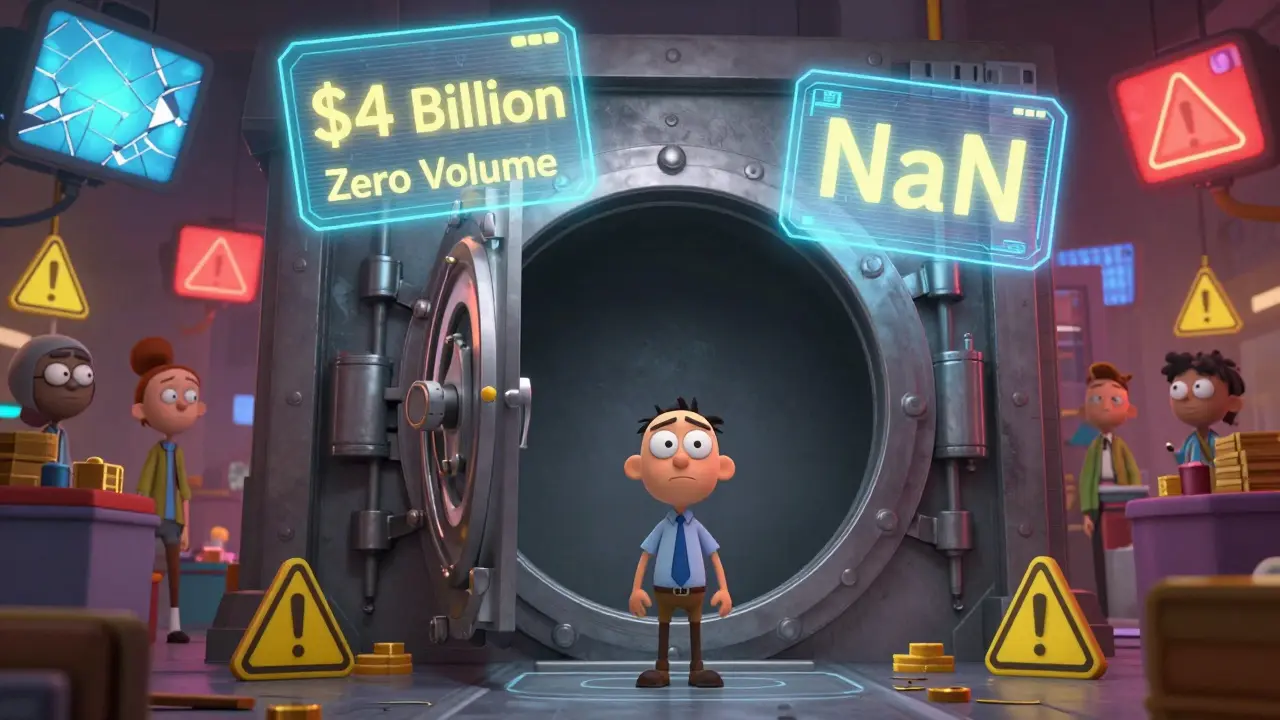
If you visit price tracking sites, you might see conflicting information. Some platforms list a market cap of over $4 billion, while others show zero. Here’s why these numbers don’t make sense:
| Platform | Reported Price | Market Cap | Circulating Supply | 24h Volume |
|---|---|---|---|---|
| FIN-PLAN | $1.00106 | $4.06 Billion | 0 Tokens | $0 |
| Binance (Price Page) | $1.000092 / NaN | $0 | 0 Tokens | $0 |
| Coinbase (Info Only) | $0.9996 | N/A | N/A | $0.00 |
| CoinCarp | No Price Data | N/A | N/A | N/A |
Notice the contradiction in the FIN-PLAN entry: a market cap of $4 billion requires billions of tokens in circulation, yet the circulating supply is listed as zero. This happens because many aggregators auto-generate data based on the assumed $1 peg rather than actual trade execution. Binance’s price widget shows similar glitches, displaying "NaN" (Not a Number) or default values because there is no active order book for USD.I on their exchange. Coinbase lists it for informational purposes only, explicitly stating $0.00 in traded volume. These aren’t signs of a thriving asset; they are signs of a token with no real market presence.
Major Red Flags for Investors
When evaluating any stablecoin, transparency is non-negotiable. Tregrity USD fails several key tests used by regulators and security researchers:
- No Verifiable Reserves: A stablecoin must be backed 1:1 by cash or equivalent assets. Tregrity USD does not publish bank statements, custodial agreements, or third-party attestations. Without this, the "peg" is just a promise, not a guarantee.
- Anonymous Issuer: The team behind Tregrity is not publicly identified. There are no LinkedIn profiles, corporate registrations, or contact details for support. If something goes wrong, there is no one to hold accountable.
- Lack of Regulatory Compliance: Unlike USDC, which operates under strict US money transmitter laws, or EUROe, which is regulated in Europe, Tregrity USD makes no mention of licenses from bodies like the NYDFS, MAS, or MiCA authorities. This exposes users to counterparty risk.
- Zero Liquidity: You cannot simply buy USD.I on a major exchange. Guides on sites like WEEX suggest using decentralized exchanges, but there are no visible liquidity pools on DEXs like Uniswap or PancakeSwap. Buying such a token would likely require a direct peer-to-peer transfer, which carries high scam risk.
How to Interact With USD.I (If You Must)
While we strongly advise against investing in opaque assets, understanding how to technically interact with the token can help you avoid common pitfalls. If you already hold USD.I or wish to inspect the contract, follow these steps:
- Set Up a Compatible Wallet: Use a wallet that supports the BNB Smart Chain, such as MetaMask. Ensure your RPC settings point to the correct BSC network (e.g., `bsc-dataseed.binance.org`).
- Add the Token Manually: Since USD.I is not widely indexed, you may need to add it manually. Paste the contract address `0xa0Af324cC24ad0060bcE52dE359aFfD6deCb5cF2` into your wallet’s "Import Token" section. The symbol should auto-fill as USD.I with 6 decimals.
- Verify Transfers Carefully: If receiving tokens, double-check the sender’s address. Because there is no centralized exchange backing, failed transactions cannot be reversed by customer support.
Be aware that there is no official fiat on-ramp. You cannot buy USD.I directly with a credit card or bank transfer through the project. Any guide suggesting otherwise is likely generic SEO content rather than accurate instruction.

Comparing Tregrity USD to Established Stablecoins
To put the risks in perspective, let’s compare Tregrity USD to industry leaders. The differences highlight why most traders stick to well-known options.
| Feature | Tregrity USD (USD.I) | USD Coin (USDC) | Tether (USDT) |
|---|---|---|---|
| Issuer Transparency | Anonymous / No Team Info | Circle Internet Financial (Public) | Tether Holdings Limited (Partial Attestations) |
| Reserve Proof | None Published | Monthly Grant Thornton Attestations | Quarterly Attestations by Moore Cayman |
| Regulatory Status | Unknown / Unlicensed | Regulated Money Transmitter (US) | Operating under various global jurisdictions |
| Liquidity | Negligible (No DEX Pools) | High (Billions in Daily Volume) | Very High (Dominant Market Share) |
| Security Audits | None Publicly Available | Regular Third-Party Audits | Regular Third-Party Audits |
The gap is stark. USDC and USDT offer deep liquidity, regulatory oversight, and proven track records. Tregrity USD offers none of these safeguards. For a stablecoin, stability comes from trust in the issuer and the ability to redeem at face value. Without those pillars, the asset is highly speculative and risky.
Conclusion: Proceed With Extreme Caution
Tregrity USD (USD.I) presents as a stablecoin but lacks the fundamental characteristics that make stablecoins useful: reliability, liquidity, and transparency. The contradictions in market data, the absence of a verified team, and the lack of security audits create a high-risk environment for anyone interacting with the token.
For most users, especially those new to crypto, sticking to established stablecoins like USDC, USDT, or DAI is the safer choice. These assets have survived multiple market cycles, undergo regular scrutiny, and provide the liquidity needed for daily trading. If you encounter Tregrity USD in a trading pair or investment opportunity, pause and ask for verifiable proof of reserves and identity. In the world of digital assets, if the data doesn’t add up, it’s usually better to walk away.
Is Tregrity USD (USD.I) a safe stablecoin?
Based on available data, Tregrity USD carries significant risk. It lacks published reserve attestations, has an anonymous issuing team, and shows no evidence of security audits. Unlike regulated stablecoins, there is no guarantee that the token is fully backed by USD reserves, making it unsafe for storing value.
Where can I buy Tregrity USD?
Tregrity USD is not listed on major centralized exchanges like Binance, Coinbase, or Kraken for spot trading. While some guides suggest using decentralized exchanges, there are currently no visible liquidity pools for USD.I on platforms like PancakeSwap or Uniswap. Acquiring it would likely require a direct peer-to-peer transfer, which is risky due to the lack of buyer protection.
Why do some websites show a high market cap for USD.I?
Many cryptocurrency aggregators automatically calculate market cap based on the assumed $1 peg and the maximum supply, even if no tokens are actually circulating or being traded. This results in misleading figures, such as a multi-billion dollar market cap alongside zero trading volume. Always verify data with on-chain explorers like BscScan rather than relying solely on price widgets.
What blockchain is Tregrity USD on?
Tregrity USD is deployed on the BNB Smart Chain (BSC) as a BEP-20 token. Its smart contract address is 0xa0Af324cC24ad0060bcE52dE359aFfD6deCb5cF2. While the project claims future multi-chain support, current activity is limited to this single chain with minimal transaction history.
Who is the company behind Tregrity USD?
The identity of the issuer is not publicly disclosed. The official website does not list team members, executive bios, or a registered legal entity. This lack of transparency contrasts sharply with major stablecoin issuers who provide detailed corporate information and compliance policies.
Has Tregrity USD been audited?
There are no publicly available security audit reports for the Tregrity USD smart contract from recognized firms like CertiK or OpenZeppelin. Without an audit, users cannot verify if the code contains vulnerabilities or malicious functions that could compromise user funds.